
process
Business process management (BPM) uses the process approach to achieve planned results and your strategic vision. Does your company do this effectively?
Read more
One of the most typical internal audit findings, or nonconformities, begins when an auditor discovers that workers are not following procedures, work instructions, process maps, or the documented plan for the work. However, a procedure deviation does not point to one universal ISO 9001 clause in every situation. The correct audit finding cites the specific […]
Read more
Scaling a business means increasing revenue or output without increasing costs and complexity at the same rate. Before adding volume, identify which work must be standardized, which capacity can flex, and which measures will show whether expansion is working. A practical scaling plan connects three systems: a repeatable hiring process, clear delegation to employees or […]
Read more
Learn how standard operating procedures create consistent, trainable processes, and use a practical checklist to draft an SOP that works.
Read more
Review business policies against purpose, authority, operational reality, clarity, ownership, and implementation requirements using a practical scorecard.
Read more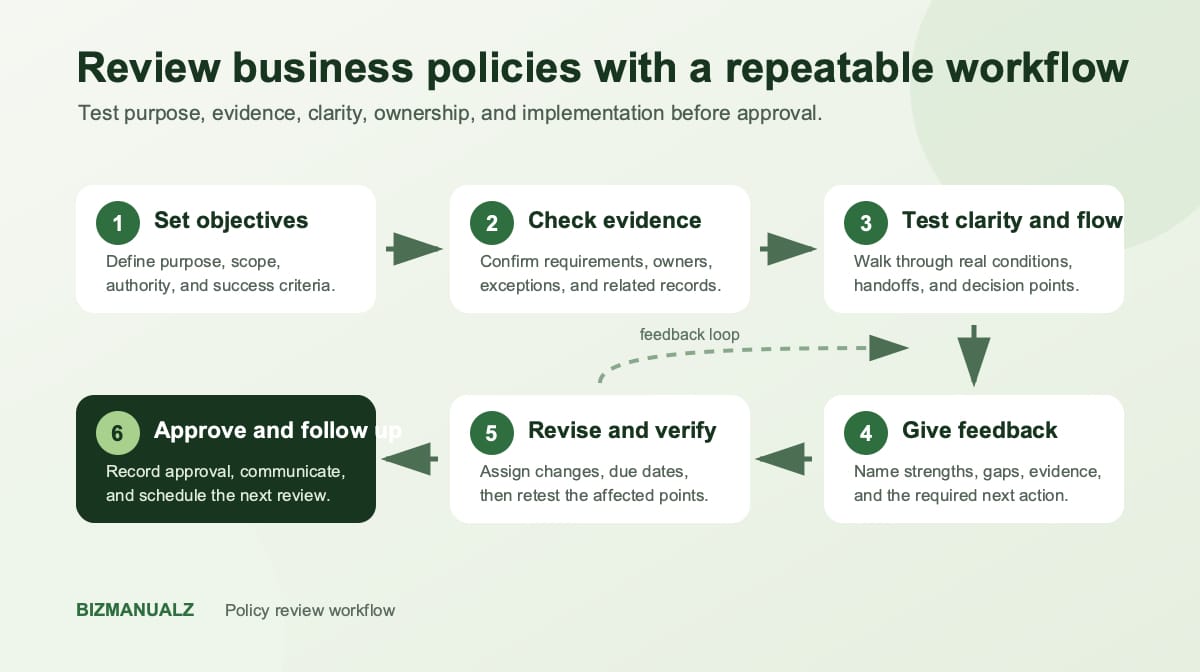
How does manufacturing flow differ from design flow, and how can you use these core processes to implement continuous process improvement?
Read more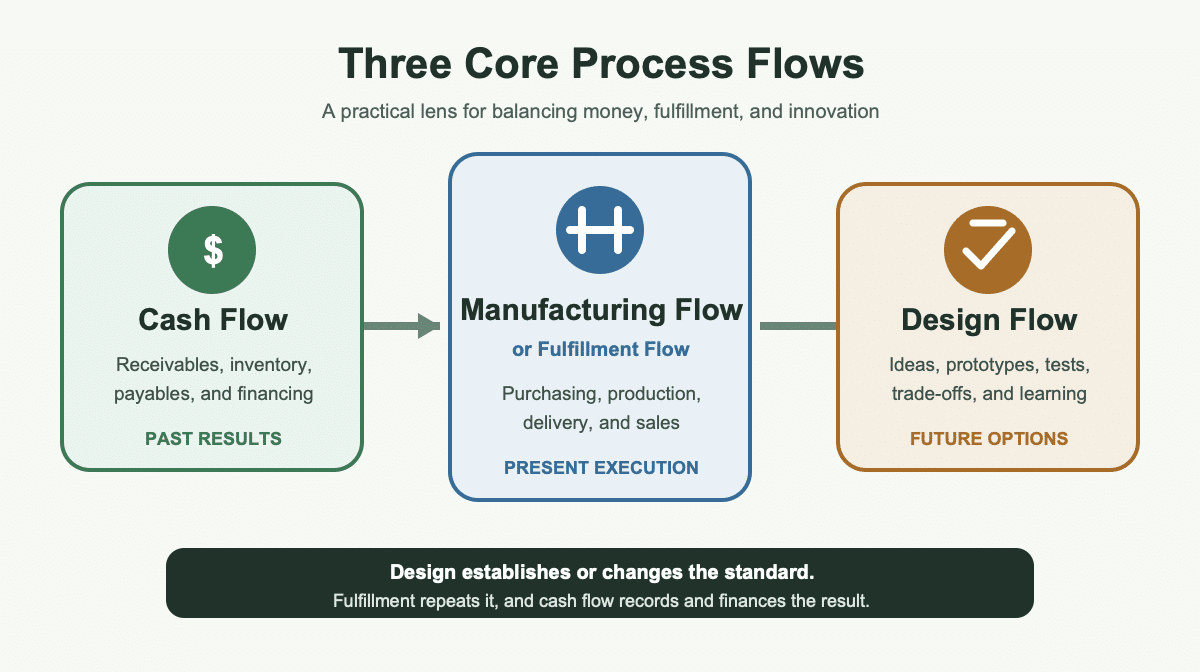
No one stays in the same role forever. A resignation, promotion, illness, retirement, or unexpected absence can quickly expose how much decision-making, customer knowledge, and operational context sits with one person. Why is succession planning so important? It protects continuity of service and productivity by preparing people, information, and interim authority before a critical role […]
Read more
Translation services can improve terminology consistency, cost control, project visibility, quality assurance, and confidential data handling when the workflow fits the content risk.
Read more
Managing an eCommerce supply chain means controlling the complete path from checkout through inventory allocation, picking, packing, shipping, delivery, and returns. Start by mapping those handoffs, choose a fulfillment provider that fits your products and order volume, test the connection with real-world scenarios, and measure whether orders reach customers accurately and on time. Supply chain […]
Read more
Best Manual Deals
-
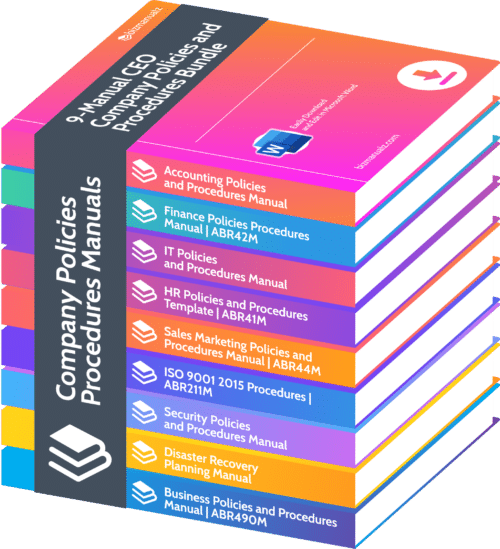 9-Manual CEO Company Policies and Procedures Bundle | Save 45%
$ 2,495.00
-
 ISO 22000 Food Safety Procedures Manual | ABR213M
Original price was: $ 395.00.$ 197.00Current price is: $ 197.00.
-
 ISO 22000 Seguridad de los Alimentos Procedimientos | ABR219M
Original price was: $ 395.00.$ 195.00Current price is: $ 195.00.
-
 ISO 9001 Quality Manual | ABR211MPM
$ 49.99
Business Manuals
-
 HR Policies and Procedures | ABR41M Employees Policy Examples
$ 495.00
-
 Sales Marketing Policies and Procedures Manual | ABR44M
$ 495.00
-
 ISO 9001 2015 Procedures | ABR211M
$ 495.00
-
 Finance Policies Procedures Manual | ABR42M
$ 495.00
-
 Accounting Policies and Procedures Manual | ABR31M
$ 495.00
-
 IT Policies and Procedures Template Manual | ABR34M Information Security Policy Manual
$ 495.00
-
 Security Policies and Procedures Manual | ABR32M
$ 395.00
-
 Disaster Recovery Planning Manual | ABR33M
$ 395.00
-
 AS9100 Quality Procedures Manual Rev D | ABR217M Aerospace QMS
$ 395.00
-
ISO 22000 Food Safety Procedures Manual | ABR213M
Original price was: $ 395.00.$ 197.00Current price is: $ 197.00.
-
9-Manual CEO Company Policies and Procedures Bundle | Save 45%
$ 2,495.00
-
ISO 22000 Food Safety Procedures Manual | ABR213M
Original price was: $ 395.00.$ 197.00Current price is: $ 197.00.
-
ISO 22000 Seguridad de los Alimentos Procedimientos | ABR219M
Original price was: $ 395.00.$ 195.00Current price is: $ 195.00.
-
ISO 9001 Quality Manual | ABR211MPM
$ 49.99
-
 How to Prevent Embezzlement Manual | ABR242DWD
Original price was: $ 49.99.$ 19.99Current price is: $ 19.99.