Policy Procedure Word Templates
Writing policies and procedures from scratch requires many steps beyond simply writing. A useful procedure begins with process mapping and interviews, then moves through research, drafting, review, approval, distribution, performance checks, and updates. Policy procedure Word templates give you a structured Microsoft Word starting point, so your team can focus on company-specific decisions instead of rebuilding the same document framework.
A template does not replace management judgment, legal review, or employee input. It organizes the work: responsibilities, activities, tasks, forms, references, document control, and approval details are easier to see, edit, and maintain when the basic structure is already in place.
What Are Policy Procedure Word Templates?
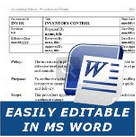
Microsoft Word templates are easily editable Word documents with ready-to-edit business process descriptions, activities, tasks, forms, and references. They provide a repeatable framework for documenting how work should be performed while leaving room for your organization’s requirements, terminology, controls, and approval process.

The distinction between a policy and a procedure matters. A policy states rules and expectations, while a procedure describes the operational steps used to carry them out. The University of Florida Policy Drafting Guide uses that same distinction and emphasizes clear, professional, consistently formatted documents. A template can support both document types, but the content should keep governance statements separate from step-by-step instructions.
What Does a Procedure Template Include?
Each Bizmanualz template includes ten common procedure writing elements. These elements turn a blank page into a business process outline that can be reviewed section by section.
- A consistent format that can support documented information and quality-management practices.
- A business process header with example meta-data.
- A document control block.
- A business process numbered outline.
- Example paragraphs covering a set of business process activities and tasks.
- Example forms needed by the business process being described.
- References for more information about the business process.
- References to functional jobs responsible for the actions.
- Procedure paragraphs written using active voice construction to define actions.
- Microsoft Word outlining, style sheets, and headers/footers for easier pagination.
How Should You Treat the Template Content?
Treat the document as a controlled starter set, not as a finished rulebook. Confirm that the purpose and scope match the work, replace example jobs with your actual roles, check forms and references, and remove activities that do not apply. If a requirement depends on a law, regulation, contract, or industry standard, have the appropriate subject matter expert verify it before approval.
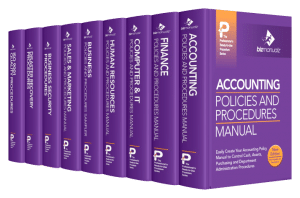
All of the Bizmanualz Policies and Procedures Manuals combine related documents into a complete and integrated starter set of business department manuals. The practical value is consistency across documents: the same header logic, responsibility format, document control block, and review pattern can be used throughout the manual.
How Does the Policy Procedure Process Work?
The policy procedure process has a target result: consistency. A document should describe the real process, identify who owns each action, and give employees enough information to perform the work. That is why writing policies and procedures starts with operational discovery rather than a blank Microsoft Word page.

Procedure Writing Process
For example, the procedure writing process includes the following sequence. The template helps with structure and formatting, but your team still supplies the process knowledge, decisions, and evidence.
- Map Process so the current flow and handoffs are visible.
- Determine Related Processes that supply inputs or receive outputs.
- Interview Personnel involved in the procedure, including the people who perform and supervise the work.
- Research applicable Best Practices, Laws, and Regulations.
- Format Procedure using the approved document structure and control fields.
- Write Procedure Draft in clear, active voice.
- Edit Procedure for accuracy, sequence, readability, and consistent terminology.
- Review Procedure with process owners and subject matter experts.
- Approve Procedure through the organization’s defined authority.
- Release and Distribute Procedure through the controlled system employees use.
- Check if a procedure is working as intended and ask whether anyone is using your procedure.
- Update Procedure when the process, control, system, risk, or requirement changes.
The U.S. Environmental Protection Agency’s SOP guidance likewise treats preparation and use as part of a quality system. That reinforces an important point: a procedure is useful only when it reflects actual work, is reviewed by the right people, and remains available and current.
How Much Do Procedures Cost?
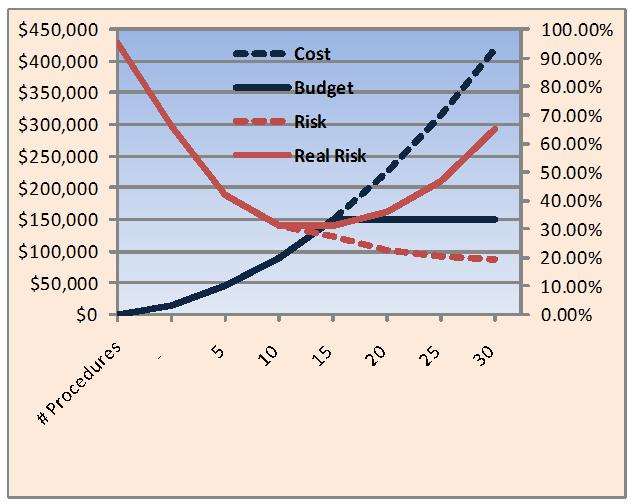
You will spend significant time before you have a well-written procedure on hand. Interviews, process maps, applicable requirements, drafting, editing, approval, training, and ongoing updates all require attention. The cost to writing policies and procedures can really add up when every document begins with a blank page.

A reusable format reduces repeated setup work. It can standardize headings, metadata, revision fields, responsibility language, and approval blocks before the first process interview begins. The savings vary by procedure and organization, so plan the work around complexity and risk rather than a fixed hours estimate.
How Do Templates Keep You From Starting From Scratch?
You don’t have to write procedures from scratch. Bizmanualz has already done most of the heavy lifting by providing example activities, tasks, forms, references, and a controlled document structure. The template gives reviewers something concrete to question and improve, which is more productive than debating an empty page.

Professionally Edited Procedures
Editors spend time writing, formatting, and editing each SOP procedure template. Subject matter experts review procedure content so that responsibilities and related activities are visible for customization. The documents clearly state who is responsible for what and how the procedure relates to other procedures, or even other departments.
Your organization still owns the final decision. Confirm each responsibility with the actual process owner, make sure employees can follow the sequence, and route the document through the required review and approval path. A polished template improves the starting point, but approval must be based on your real operating environment.
Commonly Used Procedures
Many procedure templates are universally applicable at the level of common business functions. Purchasing, accounts payable, information technology, hiring, customer complaints, document control, and internal auditing appear across many industries, even though the details differ.

That common foundation lets you make relatively small, company-specific changes where the process is routine, while reserving deeper work for regulated, high-risk, or highly specialized activities. The result should fit your industry, physical location, systems, roles, and organization’s requirements. Related guidance on business policies your company needs can help define the wider manual scope.
Customize, Review, Approve, and Maintain
Customization should cover more than names and logos. Verify the process owner, inputs, outputs, systems, records, exceptions, controls, performance measures, forms, and related processes. Then test the draft with employees who perform the work, resolve gaps, approve the controlled version, and communicate where it lives.
After release, watch for workarounds, repeated questions, errors, missed handoffs, and system changes. Those signals show where the procedure needs clarification or an update. A Word template makes revision easier because the document control block, headings, style sheets, and headers/footers are already organized.
Document control also prevents an editable file from becoming a collection of conflicting copies. Name the owner, revision, effective date, approval authority, and next review date. Store the approved version where employees can find it, restrict outdated versions, and make related forms available from the same controlled location. When a change is approved, explain what changed, who is affected, and when the new procedure takes effect. This closes the gap between editing a template and deploying a procedure that people can use consistently.
What Are the 10 Most Popular Policy Procedure Word Template Requests?
Policy procedure Word templates are often requested for recurring activities with clear ownership, records, and handoffs. The original Bizmanualz list spans accounting, sales, human resources, finance, information technology, and customer service.

- Purchasing Policy Procedure Templates in the Accounting Policies and Procedures Manual.
- Accounts Receivable Policy Procedure Template in the Accounting Policies and Procedures Manual.
- Complaints Policy and Procedure Template in Sales & Marketing.
- Accounts Payable Policy and Procedure Template in the Accounting Policies and Procedures Manual.
- Termination Policy and Procedures Template in the HR Manual.
- Credit Policy and Procedure Template in the Accounting Policies and Procedures Manual.
- Sales Order Policy and Procedures Template in the Accounting Policies and Procedures Manual.
- Auditing Policy and Procedure Template in the Finance Manual.
- Computer IT Security Policy and Procedure Template in Sample IT Policies and Procedures.
- Employee Handbook Policy and Procedures Template in the HR Manual.
Download Free Sample Policy and Procedure Templates
Before selecting a complete manual, review free sample policy and procedure templates to see how the format works. Look at the process header, document control, numbered outline, responsibility references, example forms, active voice, and Microsoft Word styles. The sample should help you judge how much company-specific editing your manual will require.
Editable Word documents make it practical to create a customized policy and procedures manual, but ease of editing is not the same as automatic readiness. Review the content, validate requirements, test the procedure, approve it, distribute it, and keep the controlled version current.
Policies and Procedures Savings Bundles
Many companies start with Accounting and Finance policies and procedures manuals. They then add Information Technology (IT), Human Resources (HR), or the Business Sampler, which together support the CFO Policies and Procedures savings bundle.
Adding Sales & Marketing, Security, Disaster, and ISO Quality Manuals expands that departmental coverage into the CEO Policies and Procedures discount bundle. Whether you use a single template or a complete manual set, the objective is the same: create controlled documents that employees can understand, use, and improve.
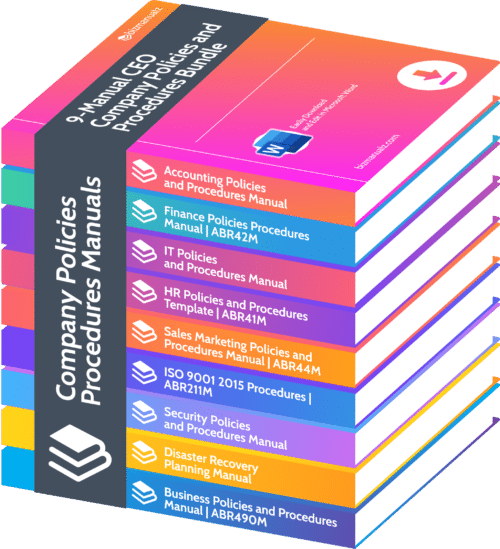
Policy procedure Word templates save time in writing and deploying company policies and procedures because they preserve a repeatable structure. They also make separate documents easier to compare, review, and maintain as one coherent manual. The strongest result still comes from careful process discovery, clear ownership, informed review, formal approval, practical distribution, and regular updates.
Frequently Asked Questions
What Are Policy Procedure Word Templates?
Policy procedure Word templates are editable documents that provide a structured starting point for policies, procedures, responsibilities, forms, references, and document control. Organizations customize them to match their actual processes and requirements.
How Do Policy Procedure Templates Save Time?
Templates reduce repeated setup and formatting work by supplying a ready-to-edit outline, example content, responsibility references, and control fields. The organization can spend more time validating the process and less time rebuilding document structure.
What Elements Are Included in a Procedure Template?
A procedure template may include a process header, meta-data, document control, a numbered outline, example activities and tasks, forms, references, responsible jobs, active-voice instructions, and Microsoft Word styles.
How Much Customization Does a Procedure Template Need?
Customization depends on process complexity, risk, industry, location, systems, roles, and applicable requirements. Every template should be reviewed by process owners and qualified subject matter experts before approval.
Can Policy Procedure Templates Work Across Different Industries?
Yes. Common functions such as purchasing, accounts payable, hiring, customer complaints, information technology, and internal auditing appear across industries, but each organization must adapt the details to its operating environment.