Remote Recruitment Mistakes To Avoid

Hiring remote staff is not the same as hiring an in-house employee, yet many managers run a remote-candidate interview exactly as they would an on-site one. Ask yourself: does your hiring process actually test whether someone can do the job from a distance, or does it just check whether they interview well on camera? Remote work is attractive for its flexibility and convenience, and more companies are offering remote positions than ever, but the differences in the hiring process are real and easy to underestimate.
Get remote recruitment right and you open your business to a global pool of expertise, a wider talent pool, and the ability to operate around the clock. Get it wrong and you spend months onboarding a hire who cannot work without constant supervision. This guide walks through seven common mistakes to avoid when recruiting great candidates for remote roles, and how to build a repeatable process for preparing your business for remote recruitment.
What Is Remote Recruitment?
Remote recruitment is the process of sourcing, interviewing, evaluating, and hiring employees who will work primarily outside a central office. It covers the same fundamentals as traditional hiring, defining the role, screening candidates, testing skills, and making an offer, but it places extra weight on the abilities that make distributed work succeed: written communication, self-direction, time management, and comfort with video conferencing and collaboration tools.
The goal is not simply to fill a seat. It is to identify people who will deliver results with little to no supervision, conform to your rules and standards, and stay connected to the rest of the team even when they never share a physical office. The mistakes below are the ones that most often derail that goal.
7 Remote Recruitment Mistakes To Avoid
Remote work can be attractive to candidates because of the flexibility and convenience it offers, and in turn various companies are offering remote positions. But there are some real differences in the hiring process, and the following seven mistakes are the ones that quietly cost businesses their best remote hires.
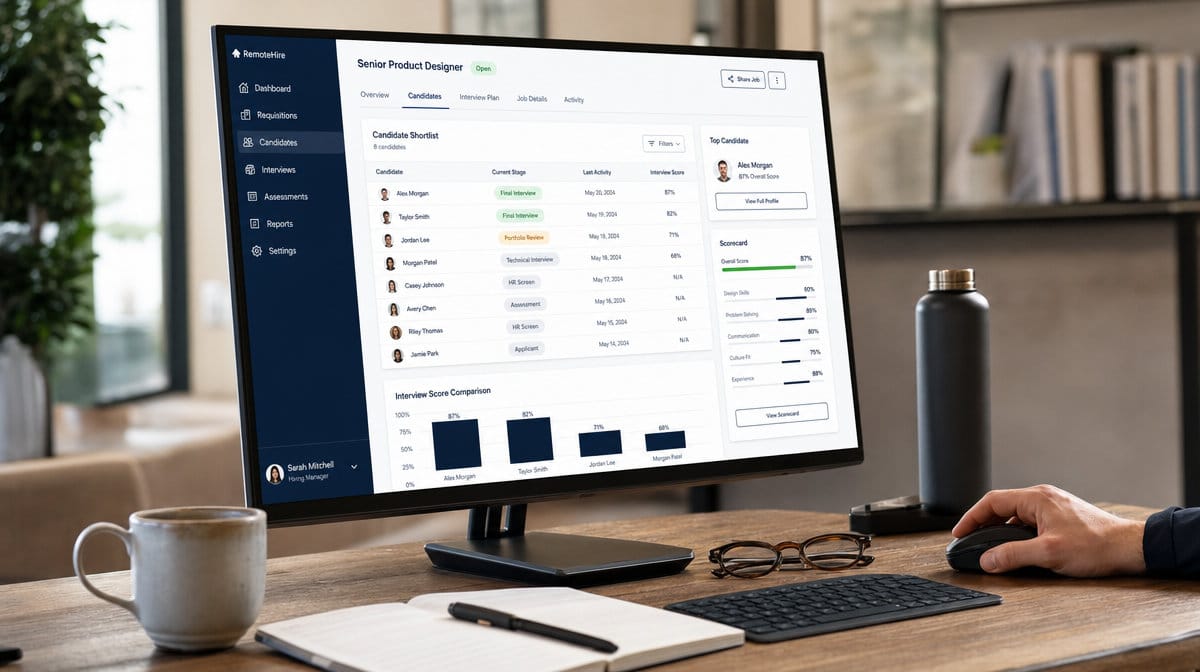
Treating the Interview Like an On-Site One
It is imperative to know that a remote-candidate interview is not the same as that of an in-house employee. As the hiring manager, you need to tailor interview questions that are specific to remote work and that help you understand the candidate’s work habits. Ask how they structure a day without a manager nearby, how they track their own deadlines, and how they communicate when a project stalls. A generic on-site script will not surface any of that.
Not Personally Meeting the Remote Hire
If you do not meet your remote hire face-to-face, you risk creating a disconnect between you and your candidate. When an in-person meeting is not possible, conducting an interview via Zoom, Google Hangouts, or another video conferencing tool is a good solution. Meeting someone in person is still easier for reading body language and seeing reactions to questions clearly, but when time and location make that impossible, use video conferencing as your next best option rather than skipping the personal meeting entirely.
Not Looking at Soft Skills
Although soft skills are not as obviously on-demand as technical skills, that does not mean you should overlook them. Soft skills pertain to communication ability, time management, language skills, teamwork, and cognitive and emotional empathy, and they matter even more when a person works alone for most of the day. To confirm that a candidate has both technical and soft skills, you can conduct a skill-based test that measures each one. The U.S. Equal Employment Opportunity Commission’s guidance on employment tests and selection procedures is a useful reference for keeping those assessments fair and job-related.
Not Training Remote Staff

Training is crucial for all employees, and that should be taken into consideration when it comes to your remote workforce. New hires may not be familiar with the remote tools used for virtual team productivity. When you hire remote staff, you need to train and test them for the job so you can measure their strengths and weaknesses and show them how your company works and what the expectations are for the role. Whether you offer training sessions online or in person, remember that training is an on-going process for everyone involved. The U.S. Small Business Administration’s guidance on how to hire and manage employees is a solid starting point for structuring that onboarding.
Overlooking Skills Needed to Perform Remote Work
Like all employees, remote workers have their own set of skills, so you need to understand their skillset when interviewing remote workers by asking the right questions. Candidates should demonstrate their skills and show they can conform to your rules and standards. A lack of previous remote work is a red flag worth noting, but it should not rule someone out completely if you see something else that makes them a valuable pick.
Not Asking About Past Experiences
Past experiences speak volumes when you are interviewing remote candidates. Although experience of remote working may not be strictly necessary for some companies, it can be extremely beneficial to hire someone who already knows how to meet expectations from a distance. Questions about past experiences also reveal how a candidate handles a heavy workload with little to no supervision, which is one of the clearest signals of remote readiness.
No Proper Communication
Leading remote employees is different, and communication with your remote staff is essential. All remote workers need to know about company resources, online tools, and services they can use. Whether it is about project timelines, introducing people to each other, or telling them which messaging system to use on a regular and emergency basis, do not be afraid to communicate all of it to every employee, including remote staff. Constant, clear communication is what keeps distributed workers from feeling left out.
How Do You Build a Repeatable Remote Hiring Process?
Hiring remote employees is a compelling solution for any business that wants to increase its talent pool and reach a global pool of expertise. It also opens up opportunities for running a business around the clock and saving money in the process. To capture that upside consistently, put effective interviewing processes and relevant training in place for every remote hire, and look at not just technical skills but also the soft skills that make remote work succeed.
Finally, make sure there is constant communication between you and your remote workers, and treat them as you would your in-house workers so they never feel left out. With the right qualities and plenty of training, your remote workers will deliver strong results for your company. Documenting each of these steps as a standard procedure is what turns a good hire into a repeatable outcome instead of a lucky one.
Frequently Asked Questions
What Is the Biggest Mistake in Remote Recruitment?
The most common mistake is treating a remote-candidate interview exactly like an on-site one. Remote roles require tailored interview questions about work habits, self-direction, and communication, because a candidate who interviews well in person may still struggle to deliver results with little to no supervision.
How Do You Interview a Remote Candidate?
Meet the candidate face-to-face when possible, and when it is not, use video conferencing such as Zoom or Google Hangouts rather than skipping the personal meeting. Ask questions specific to remote work, and use a skill-based test to confirm both the technical and soft skills the role requires.
Why Do Soft Skills Matter for Remote Hires?
Soft skills such as communication ability, time management, teamwork, and empathy determine whether a remote worker can stay productive and connected without daily in-person contact. Technical skills get the work done, but soft skills keep a distributed team functioning.
Is Prior Remote Experience Required?
Prior remote experience is beneficial but not always required. A lack of previous remote work is a red flag worth noting, yet a candidate with strong soft skills, self-direction, and a proven ability to meet expectations can still be a valuable pick.
How Do You Keep Remote Staff Engaged After Hiring?
Provide relevant training as an on-going process, give remote staff access to the right online tools and resources, and maintain constant communication about project timelines and expectations. Treating remote workers like in-house workers keeps them from feeling left out.