Why is it Important to Have Standard Operating Procedures?

Does your company lack structure when employees complete recurring tasks? Are staff members too dependent on a manager for routine decisions? Are you trying to streamline the processes of a rapidly expanding company? These are common signs that important work depends on memory, individual habits, or repeated explanations.
Standard operating procedures are important because they turn recurring work into clear, repeatable instructions. A well-designed SOP helps people understand responsibilities, follow the same essential steps, train new employees, document controls, and identify opportunities for improvement. It does not replace judgment, training, or supervision, but it gives the organization a reliable operating baseline.
Standard Operating Procedures: 7 Vital Reasons to Have Them
If you responded positively to the opening questions, integrating standard operating procedures into your processes may provide the structure you are looking for. SOPs can support operations, company growth, finance, customer service, safety, and other recurring activities when the instructions reflect how the work is actually performed.
Although standard operating procedures can be beneficial, some stakeholders are unwilling to devote the resources necessary for their development. The advantages become clearer when the first procedure addresses a visible problem, such as inconsistent results, repeated questions, delayed approvals, or confusion about responsibilities. A useful pilot gives decision-makers something concrete to assess before expanding the system.
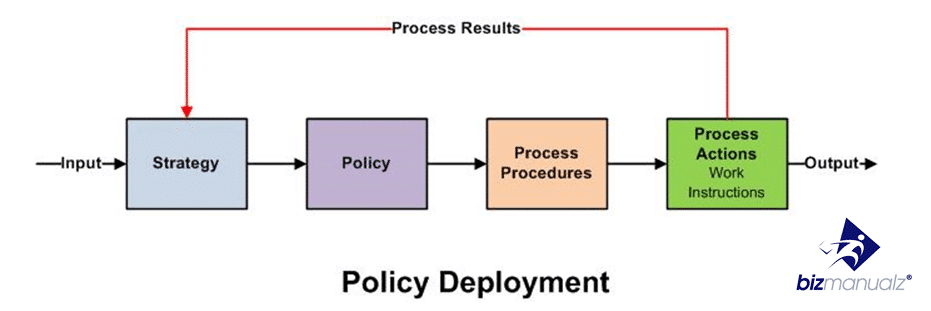
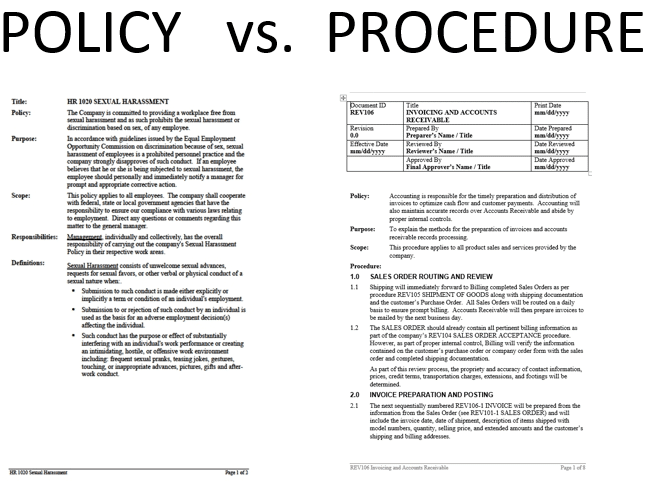
A useful procedure also fits within a larger document hierarchy. Strategy explains where the organization is going. Policies establish rules and expectations. Procedures describe the repeatable process. Work instructions provide task-level detail, and records show what happened. Keeping these layers distinct makes the system easier to use and maintain.
Why Are Standard Operating Procedures So Important?
A standard operating procedure is a collection of written instructions that outlines how tasks and responsibilities should be carried out. The EPA SOP guidance defines a standard operating procedure as written instructions that document a routine or repetitive activity. Although that guidance was created for quality systems, its central principle applies broadly: documented steps make recurring work easier to perform consistently, teach, review, and reconstruct.
An effective SOP gets to the point while providing enough detail for the intended user. It identifies the trigger for the work, the responsible role, the ordered steps, decision or approval points, required records, exceptions, and the expected result. The best level of detail depends on the risk and complexity of the task. A short checklist may be enough for a familiar routine, while a safety-sensitive or approval-dependent process may require more explanation.
A standard operating procedure can be used to organize almost any job assignment you can think of. Organizations use them to assist with a variety of areas, including operations, company growth, finance, quality, and legal concerns. Detailed guidelines should leave little room for confusion about what has to be accomplished, while still identifying where professional judgment is required.
1. SOPs Bring a Positive Shift to Your Company
Some workers express frustration because they are unsure of their responsibilities. Managers may want more structure around decisions, development, or promotion opportunities. Customers may receive different results depending on who performs the work. The appropriate SOP can make expectations visible and give employees a dependable starting point.
When you develop standard operating procedures, you provide individuals with greater predictability and clarity about how work should be done and why each control matters. Employees can see where their responsibility begins, where it ends, and when they need approval. Managers can coach against an agreed process instead of correcting a different informal method each time.
When employees know what is expected of them, fewer doubts arise about how things are done and why they are done. Managers and supervisors can discuss responsibilities, performance, and development against the same operating baseline. This greater structure can contribute to efficient work, but the procedure must be realistic, current, and supported by management.
Procedures should remain changeable. When a tool, regulation, customer requirement, or internal control changes, the process owner can review the SOP, involve the people who use it, approve a revision, and communicate the new version. That controlled change is more reliable than allowing each person to develop a separate workaround.
2. SOPs Produce Reliable Results
Maintaining consistency is essential to the operation and reputation of a successful company. Products and services may allow reasonable variation, but customers still expect a consistent standard. When a procedure defines the essential method, people are less likely to omit a critical stage or interpret the expected result in completely different ways.
The EPA guidance explains that SOPs can support consistent implementation even when personnel change and can help reconstruct earlier activities from the available records. That does not guarantee perfect work. It does reduce avoidable variation by giving employees a shared process, a place to record exceptions, and a basis for reviewing mistakes.
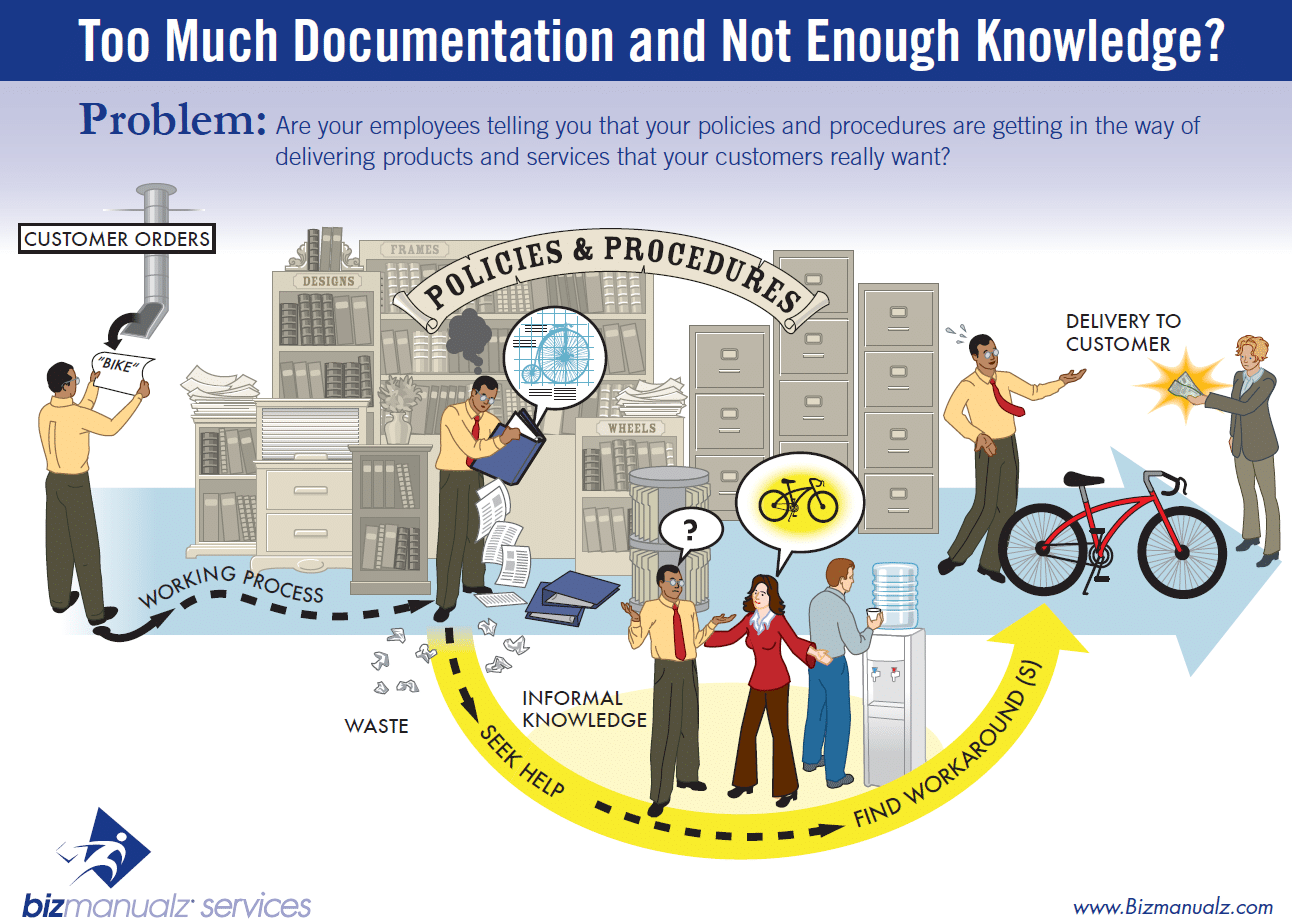
For example, a customer-order procedure can identify the required information, validation steps, approval limits, handoff to fulfillment, and record of completion. The SOP does not make every order identical, but it gives employees a consistent path for handling the parts that should not be improvised.
3. SOPs Improve Training and Management of Employees
When you have standard operating procedures in place, new personnel can discover essential information about how the company works. They can see how often a process occurs, the steps needed to complete it from beginning to end, the roles each employee plays, and the records they must create or retain.
New workers should be able to comprehend the frequency with which processes must be carried out, the steps that must be taken to finish a process from beginning to end, and the roles that each employee in their department plays in the process. This information helps them become acquainted with assignments and makes the intended results more predictable.
An SOP is a training resource, not a substitute for training. A supervisor still needs to explain context, demonstrate difficult tasks, observe the employee, answer questions, and confirm competence. The document gives both people a shared reference so coaching is connected to the actual process rather than to memory alone.

For existing employees, the procedure can clarify the intended result and make recurring feedback more specific. Instead of saying that someone handled a task incorrectly, a manager can identify the missed step, determine whether the instruction was clear, and decide whether the issue requires coaching, a process change, or a revision to the SOP.
In general, the standard operating procedure may serve as a guide that everyone can use to improve a job and ascertain that the process is functioning properly. It can clear up confusion about certain activities, make assignments predictable, and provide assistance when an employee becomes acquainted with unfamiliar responsibilities. The guide is most effective when it remains available at the point of work.
4. Standard Procedures Help Find Causes of Problems
When you thoroughly write out a process, you can uncover business difficulties that remained hidden inside informal work. A billing procedure may reveal a missing review step. Documenting staff onboarding may expose an unclear handoff between human resources, the hiring manager, payroll, and information technology. A purchasing procedure may show that nobody owns the exception path.
You may be amazed at how many problems become easier to assess when the actual process is visible. Writing down the ways in which people do things can reveal loopholes in service delivery, missing records, and activities that nobody clearly owns. Double-check the billing process, accounting process, and other critical handoffs before assuming a problem is caused by an individual.
The written procedure provides a baseline for investigation. When an error occurs, the team can ask whether the process was followed, whether the instruction was accurate, whether the employee had the required information, and whether the control itself is effective. Without that baseline, people may argue about what normally happens instead of examining evidence.

Accounting processes are a useful example because approvals, reconciliations, access, and records need clear ownership. The Bizmanualz CFO Series provides a starting point for documenting accounting controls and updating existing process documentation.
5. Procedures Support Workplace Safety
Every company should prioritize the safety of employees, customers, and visitors. A current, hazard-specific procedure can document required controls, personal protective equipment, equipment checks, escalation steps, and emergency actions. However, the document alone cannot guarantee safety or compliance. It must reflect the actual hazard, applicable requirements, available controls, and the way the work is performed.
OSHA safety training guidance explains that training should help workers understand workplace hazards, controls, program roles, and emergency actions. Procedures support that training by giving employees a reference they can use before and during the task. Supervisors still need to verify that the instructions are current, understood, and followed.
Procedures can also document compliance-related responsibilities, evidence, and review points. They help an organization state what employees are expected to do, but they do not replace legal advice, regulatory interpretation, inspection, or effective supervision. The Bizmanualz Company Policies Procedures Manual offers department-level examples that can be adapted to the organization’s real requirements.
6. SOPs Improve Organizational Effectiveness
A contract may remain unsigned when employees cannot identify the decision-maker. Someone in human resources may not know who can approve compensation for a new recruit. A purchasing request may wait because the value threshold, budget owner, or exception path is unclear. These are not only documentation problems, but an SOP can make the missing authority or handoff visible.
Uncertainty can otherwise delay significant business decisions. When you create an SOP for the most critical jobs, you make it simpler for employees to identify decision-makers, follow the required sequence, and confirm that the work was done correctly. The procedure should clarify authority without reducing the process to an instruction to follow orders.
For critical jobs, the procedure should name the responsible role, required inputs, approval point, expected output, and record of the decision. This helps employees move work forward without guessing, while keeping important judgments with the appropriate owner. Clear procedures also make it easier to see where the organization has created unnecessary approvals or duplicated work.
7. Procedures Establish Consistency in Customer Service
Do you have a plan for what happens when a customer reports a problem with a product or service? Without an established procedure, employees may record different information, promise different response times, or fail to assign an owner. A disappointed customer may not be contacted, and service requests may remain unfulfilled.
A customer-service SOP can define intake information, severity levels, acknowledgement timeframes, ownership, escalation conditions, follow-up, and closure records. The procedure should leave room for judgment and empathy while protecting the essential handoffs. Consistency does not mean treating every customer identically. It means making sure the organization does not lose the request or omit an important response.
Established protocols for appropriate follow-up timeframes keep personnel informed about new customer service questions. They also help the organization address a challenging situation consistently and determine whether the desired outcomes were achieved. A procedure cannot make every disappointed consumer happy, but it can prevent a complaint from disappearing between departments.
Which Process Should Receive an SOP First?
Start with a process where documentation will solve a real operating problem. Use the following SOP readiness scorecard as an illustrative example. Give the process one point for every yes answer. A high score does not prove that an SOP is required, but it helps you compare candidates using the same practical questions.
| Readiness question | Why it matters |
|---|---|
| Is the task recurring? | Repeated work benefits from a shared method. |
| Do errors create meaningful rework, cost, delay, or risk? | Documentation can make critical controls and checks visible. |
| Is the process safety-sensitive or compliance-related? | Roles, controls, evidence, and escalation need explicit treatment. |
| Does the work depend on an approval or decision point? | The SOP can identify authority and the exception path. |
| Does the process cross teams or involve a handoff? | Clear inputs, outputs, and ownership reduce dropped work. |
| Is the task difficult to train or easy to forget? | A procedure gives training and coaching a common reference. |
| Does the process directly affect a customer? | Consistent intake, response, escalation, and closure protect service quality. |
Begin with one or two high-value processes rather than attempting to document every activity at once. A process that is recurring, error-prone, approval-dependent, difficult to train, or customer-facing usually offers a clearer starting point. A standard operating procedure template can help you organize the owner, purpose, steps, controls, records, and review information.
A Step-by-Step Guide to Writing Exceptional Standard Operating Procedures
A good SOP should be condensed and straightforward, but it must still contain enough information for the intended user to perform the task correctly. Before drafting your own SOPs, clarify the process boundary, intended result, responsible owner, and audience.
I. Do Not Jump to Conclusions
Do not assume that new employees or people from another department share the same background knowledge as experienced staff. Explain unfamiliar terms, abbreviations, inputs, tools, and records. When specialized language is necessary, include a brief definition or glossary so the reader can use the procedure without searching for basic context.
Before writing, consider what the reader already knows and what additional information is necessary. Avoid making an assumption about specific activities simply because experienced staff consider them common knowledge. Clearly mentioned prerequisites, forms, definitions, and detailed instructions can make the procedure easier to absorb and apply.
At the same time, avoid filling the document with information that does not help the user complete the task. Ask what the reader must know, what decision they must make, what evidence they must record, and what could go wrong. This keeps the procedure informative without turning it into a long collection of unrelated background material.
II. Walk Through the Process Before Finalizing It
Never write and release an important standard operating procedure without walking through the steps. Use a dry run, pilot, controlled test, or observation of the real work, depending on the risk and nature of the process. The objective is to confirm that the order is practical, the required information is available, and the expected result can be achieved.
Going through the steps may reveal that something considered common knowledge needs to be recorded. It may expose a missing decision, an unavailable form, a duplicated approval, or an exception nobody has addressed. Use those findings to revise the draft before approval. The Bizmanualz guide to process mapping best practices can help make the sequence and handoffs visible.
III. Involve the Appropriate Staff
If you include only managers in the development of an SOP, you may miss how the work is actually performed. Writing a procedure should be a collaborative endeavor. Include someone who performs the process, someone accountable for the result, and any role responsible for a critical review, approval, safety control, or record.
Make certain that relevant staff members are engaged in the process. Someone closely aware of the process you are defining can answer questions that arise and provide a clear understanding of what has to be done to effectively perform the job. A writer adept at conveying complicated ideas can then turn that operational knowledge into usable instructions.
The process performer can identify practical details and exceptions. The owner can confirm the intended result and authority. A qualified writer or editor can make complicated ideas easier to understand. Keep in mind that an SOP is useful only when people can comprehend and apply it, so review the draft with representative users rather than relying on the writer’s familiarity.
IV. Include Useful Visual Aids
Accurate process maps, annotated templates, decision tables, and real photographs of equipment or work areas can simplify complex instructions. Use a visual only when it explains something that prose alone would make harder to understand. Every image should remain readable at the size shown and should have companion text for employees who cannot use the image.
Imagery, infographics, and real photographs of items or processes are helpful visual aids when they communicate complex ideas accurately. Some individuals are better able to absorb and comprehend information when it is presented in a visual form rather than in textual descriptions. A qualified graphic designer can assist when the visual must explain a complicated process, but accuracy matters more than decoration.
Do not use a decorative image as proof that a process is safe, tested, or compliant. Product screenshots should show genuine, current interfaces. Task photographs should depict the correct action and equipment. When a process changes, review its visuals along with the written steps so the SOP does not direct employees to an obsolete screen, form, or configuration.
Above all, visual aids should be informative and brief. A well-designed image can make a detailed task more convenient to understand, but long or boring descriptions should not simply be moved into a graphic. Keep the written explanation available, ensure labels are readable, and test the visual with someone who was not involved in its creation.
SOPs Boost Your Business
The typical company can benefit from standard operating procedures when they address real recurring work. SOPs provide structure for training, process improvement, safety controls, approvals, customer service, and recordkeeping. Their value depends on accuracy, usability, ownership, and regular review, not on the number of documents created.
One factor that contributes to the success of a company is excellent organization. Procedures alone do not achieve higher performance, but they can aid the delivery of improved experiences by making responsibilities, controls, and desired outcomes visible. Applied with training and management support, SOPs can also sustain improvements after the original process owner changes roles.
Start with a process where employees currently rely on memory or repeated explanations. Walk through the work, involve the appropriate staff, document the essential steps and controls, test the draft, and assign an owner and review date. For a structured starting point, review the Small Business Policies and Procedures Manual Template or contact Bizmanualz.
Author Bio: Burkhard Berger, founder of Novum™.