How To Take Your Technical Writing to the Next Level

Technical writers often reach a point where stronger sentences alone do not create stronger opportunities. Moving beyond one-off work on gig platforms usually requires an owned professional presence, deeper subject knowledge, and a clear niche that helps clients understand exactly what you do.
If you want to grow your career as a technical writer, earn more, build a stronger portfolio, or create your own company from the ground up, three levers matter most: how you present your work, how you continue learning, and how deliberately you choose the clients and problems you serve. The following steps show how to take your technical writing to the next level without losing the practical skills that made you valuable in the first place.
What Is Technical Writing?
Technical writing turns complex information into usable content for a specific audience. It is more than document compliance management, although controlled documents, policies, and procedures are important parts of the field. Technical writers also create product guidance, online help, training material, white papers, case studies, UX content, and other documents that help people complete a task or make a sound decision.
O*NET’s technical writer occupation profile describes work that includes organizing material according to standards, interviewing subject matter experts, editing other writers’ material, and selecting visuals that improve understanding. Those tasks explain why good technical writing depends on more than grammar. The writer has to understand the subject, the reader, the desired action, and the conditions in which the information will be used.
What Does the Next Level Look Like?
The next level is not a single title, degree, or rate. It is the point where your work shows repeatable professional judgment. Clients can see how you define an audience, learn a technical subject, structure information, handle reviews, and deliver a document that works in practice.
That proof may lead to a senior in-house role, a specialized consulting practice, or a stronger position as a contractor. Whatever path you choose, you need more than isolated writing samples. You need a clear professional story supported by evidence.
How Can You Build a Professional Technical Writing Presence?
Clients usually ask for work samples before they decide to place an order with you. If you are gaining work through gig platforms or freelance marketplaces, you may also have to pitch your services repeatedly. This can quickly become a perpetual cycle that is hard to break, especially when every proposal starts from zero.
The first step toward carving out your identity as an entrepreneurial writer is to create a solid web presence. A professional site gives prospective clients one place to evaluate your expertise, understand your services, and review samples that you own. It also helps you become relevant to your customers before a sales conversation begins.
Turn Your Website Into an Owned Portfolio
Your website isn’t just a place to throw together snippets from instruction manuals and how-to guides. It is an opportunity to demonstrate your professionalism, dedication, and expertise as a qualified technical writer. When you build a professional website, organize it around the questions a prospective client will ask: What can this writer handle? What industries do they understand? What evidence shows that their documents work?
A portfolio sample becomes more useful when you explain its context. Identify the audience, the problem, the constraints, your contribution, and the outcome. If confidentiality prevents you from showing client work, create an original sample based on a realistic scenario or anonymize the details with permission. The goal is to show how you think, not merely how a finished page looks.
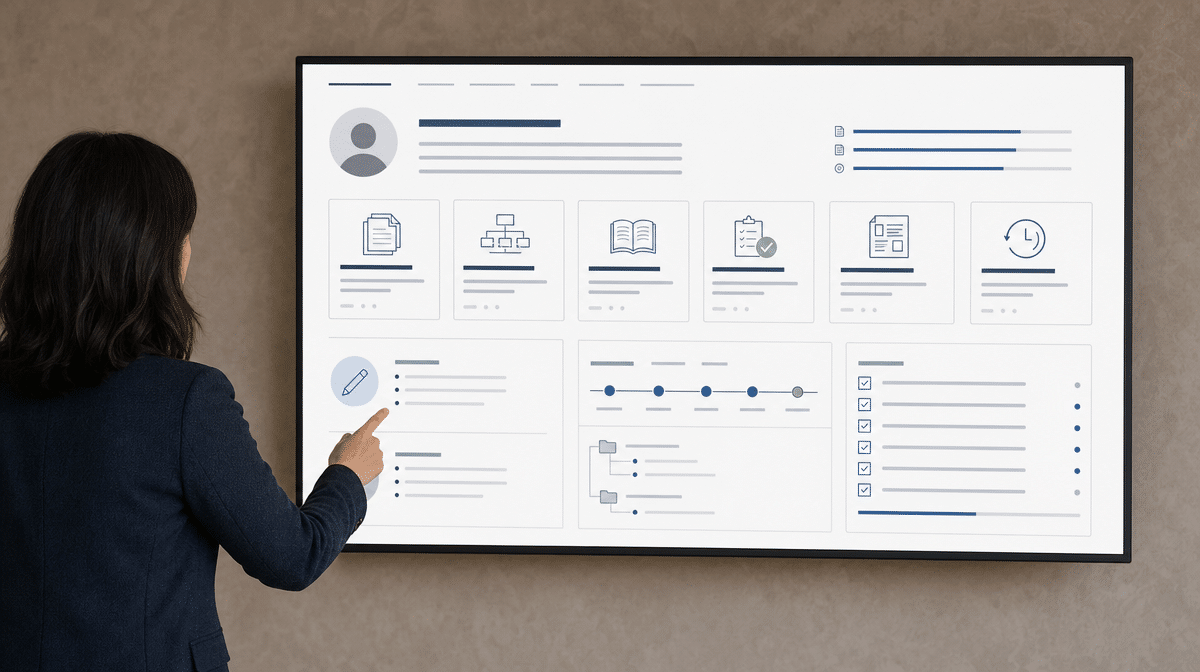
Write an About Page That Establishes Expertise
A strong About page should introduce you and make your qualifications easy to understand. Explain the industries, document types, and audiences you know. Describe the practical experience behind your work, such as collaborating with engineers, operations managers, software teams, compliance staff, or other subject matter experts.
Avoid turning the page into a personal autobiography or a list of vague qualities. Prospective clients need a concise reason to trust you with complex information. A useful About page connects your background to the problems you solve and the readers you help.
Make Your Services and Contact Paths Clear
Follow the About page with a services page that describes the work you actually want. Group services by deliverable, industry, or business problem. For example, you might offer standard operating procedures, software documentation, UX writing, white papers, or case studies. Clear boundaries help clients recognize a fit and reduce inquiries for work outside your focus.
There should be a Contact page as well, so anyone who is intrigued by your website knows how to get in touch with you. Keep the path simple. State what information a potential client should provide, such as the audience, deliverable, subject, timeline, and current source material. Do not make a qualified prospect search across several pages for a working contact method.
Publish Samples You Own
A blog can help you write about technical writing, demonstrate credibility, and publish samples that you own. It is not the only option. A focused case-study library, a set of annotated portfolio samples, or a short resource center can provide the same evidence with less publishing overhead.
Choose topics that reinforce the work you want to sell. A writer targeting operations teams might explain how to structure a procedure, control revisions, or interview a process owner. A software specialist might show how onboarding guidance changes for administrators and end users. Before publishing, edit and proofread each technical document as carefully as you would a client deliverable.
How Can You Expand Your Technical Writing Opportunities?
A polished website makes your existing ability visible. Continued education, focused positioning, and a disciplined delivery process increase the value behind that presentation. Together, they give you more ways to solve meaningful problems and build a portfolio that supports greater job opportunities.
Continue Your Technical Writing Education
You may choose to earn a degree in business if you are thinking about advancing your career, especially when business operations, marketing, or consulting are central to your niche. A degree can open additional opportunities, but it is not the only path. Targeted courses in a domain, structured-writing methods, information architecture, accessibility, research, editing, or project management may address a more immediate skill gap.
Start with the work you want to perform, then identify what you need to learn to do it credibly. Whether you apply that knowledge to founding your own company or continue writing as a contractor, education should produce evidence: a stronger sample, a better research method, a useful credential, or the ability to handle a more complex assignment.
Learn From Subject Matter Experts
Technical writers rarely work alone with complete source material. They interview people who understand the product, process, regulation, or system and turn that knowledge into a usable structure. Strong interviews uncover exceptions, decision points, prerequisites, risks, and the meaning behind unfamiliar terms.
Prepare questions in advance, confirm who owns each fact, and separate verified information from assumptions. After drafting, ask the subject matter expert to review technical accuracy while a representative reader tests usability. That division of responsibility helps prevent an expert-approved document that ordinary users cannot follow.
Pick a Focus Niche
Technical writing is a broad market, even if it is considered a discipline in itself. Choosing to serve a specific industry or document type usually narrows your potential client pool, but it makes your positioning clearer. It is easier to market yourself as a specialist when your experience, samples, and services point in the same direction.
Digital.gov’s guidance on writing for a specific audience reinforces the principle that useful content begins with what readers know, need, and must do. Apply the same audience discipline to your own career. Choose a niche where you understand both the subject and the people who use the finished material, then identify a focused niche you can support with real proof.

Potential areas to explore include:
- Software marketing copy for app developers when the work requires product knowledge and accurate translation of technical capabilities.
- UX writing for user-experience specialists who need clear labels, instructions, error messages, and guidance.
- Writing business policies and procedures for organizations that need consistent, controlled operations.
- White paper writing for an industry you understand, especially when the subject requires research and expert interviews.
- Case study writing for marketing firms when the deliverable must explain a complex implementation, method, or measurable result.
Build Proof Around Your Niche
Once you select a focus, build two or three samples that demonstrate it from different angles. A procedure writer might show a short policy, a detailed procedure, and a revision-control example. A software writer might create onboarding guidance, a troubleshooting article, and a release-note sample. A case-study specialist might show how interviews and evidence become a credible narrative.
Each sample should make your role clear. If you researched the topic, designed the information structure, wrote the draft, coordinated reviews, or tested the instructions, say so. Clients are evaluating your process as much as your prose.
Improve Your Delivery Process
A stronger career also depends on reliable delivery. Define the audience and purpose before drafting. Establish how source material will be collected, who approves technical facts, how versions will be controlled, and what completion means. These practices reduce rework and distinguish a professional technical-writing service from an order for words.
Review the finished document in the setting where it will be used. Check whether headings support scanning, steps follow the real sequence, warnings appear before the relevant action, links work, and visuals clarify rather than decorate. When possible, ask someone from the intended audience to perform the task. Their questions reveal gaps that expert reviewers may overlook.

Taking your technical writing to the next level is a sequence, not a single leap. Build a web presence that makes your services and expertise clear. Continue learning in ways that strengthen the work you want. Pick a focus niche, support it with samples you own, and use a repeatable process to deliver dependable results. Start with the weakest link in that sequence, improve it, and let the finished evidence strengthen the next opportunity.
Frequently Asked Questions
What Is Technical Writing?
Technical writing translates complex information into usable content for a defined audience. It includes policies, procedures, product guidance, online help, training material, UX content, white papers, and case studies.
How Can a Technical Writer Advance Their Career?
A technical writer can advance by building an owned professional presence, learning a valuable subject area, developing a focused niche, and showing a reliable research, review, and delivery process.
Should a Technical Writer Have a Professional Website?
A professional website is useful because it gives clients one place to understand services, evaluate expertise, review owned samples, and make contact. It should include clear About, Services, Portfolio, and Contact paths.
Do Technical Writers Need a Degree?
A degree can help in some roles or industries, but it is not the only route. Relevant subject knowledge, strong samples, targeted education, and evidence of a sound writing process may be equally important.
How Should a Technical Writer Choose a Niche?
Choose a niche where your subject knowledge, audience understanding, and preferred deliverables overlap with real client needs. Then build several samples that prove you can handle the work.