What is a Policy Manual?

A policy manual gives employees and managers one dependable place to find the principles that guide company policies, business processes, employee expectations, and organizational performance standards. Without that top level reference, individual policies and associated procedures tend to drift into departmental habits, old templates, and verbal rules that are hard to train, audit, or improve.
When writing a policy manual, think of it as the control document above the daily procedure. It explains what the company expects, why the expectation exists, who owns the policy, and where the supporting procedures, forms, and records live.
What Is a Policy Manual?
A policy manual is a structured collection of company policies that defines how an organization governs important business activities. It usually sits above department procedures, work instructions, forms, checklists, and records. A good manual gives each policy a clear purpose, scope, owner, and link to the procedures used to carry it out.
The manual does not need to describe every operational step. That is the job of procedures. Instead, the policy manual gives the common rules that help departments make consistent decisions, apply internal controls, and keep business processes aligned with management expectations.
What Is the Purpose of a Policy Manual?
The purpose of your policy manual is to document the principles and policies governing your company department practices. When those principles are applied consistently throughout the company, reports, records, transactions, and management decisions are more likely to reflect actual operational results.
The policy manual also gives employees a stable reference point. If a manager needs to approve a transaction, train a new employee, investigate a discrepancy, or update a procedure, the manual explains the policy standard the decision should support.
The principles and policies provide:
- The basis for an internal controls system.
- Criteria and guidance for business process decision making.
- Direction and guidance to ensure transactions, procedures, and records are uniform throughout the company.
- A reference for reviewing departmental or functional procedures before they are changed.
Internal controls provide a system of checks and balances intended to identify irregularities, reduce waste, discourage fraud and abuse, and assist in resolving discrepancies that are accidentally introduced in business process operations. The GAO Green Book describes internal control as a process management uses to help achieve objectives, run operations effectively, report reliable information, and comply with laws and regulations.
All additional departmental or functional policies and procedures should conform to the policies in your manual. All changes to policies and procedures should be reviewed to ensure that there are no conflicts with the policies stated in your policy manual.
How Do You Write a Policy Manual?
Writing a policy manual starts with the business areas that need consistent rules. Accounting, finance, human resources, information technology, sales and marketing, quality, food safety, and aerospace compliance each have different policy needs, but the writing discipline is similar. Define the policy area, state the purpose, clarify who is responsible, and point to the procedures that support the policy.
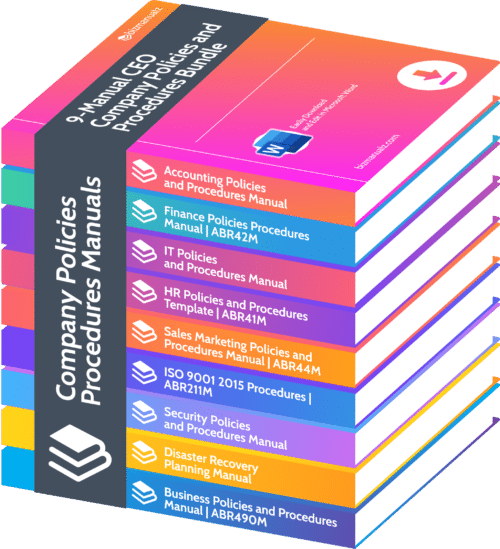
Bizmanualz policy and procedure manual products include sample policy manuals for common business areas, including accounting policies procedures, finance policies and procedures, Human Resources policies procedures, Information Technology policies procedures, Sales & Marketing policies procedures, ISO 9001 quality procedures, ISO 22000 food safety procedures, and AS9100 aerospace procedures. Those samples can help you see policy manual wording before you draft your own manual.
The sample wording should be treated as a guide, not a substitute for company judgment. Company policies should be drafted as appropriate and necessary to accurately reflect your company unique requirements, standards, risks, and operating model. You do not want to end up having to fix bad business policies because the manual copied a generic rule that did not fit the business.
What Should a Policy Manual Include?
Your policy manual starts at the top of the organization. It is a good idea to begin with an introduction to the purpose, scope, and responsibility for the manual. Including exclusions will clarify what is and what is not included in your policy manual.

A practical policy manual table of contents often includes:
Introduction
The introduction defines the purpose, scope, responsibility, and exclusions for the manual. It tells readers why the policy manual exists, who owns it, and which departments or processes are covered.
Governance
The governance section covers management responsibility, department organization, management commitment, and management policy. Many companies communicate this through mission, vision, and values. A department policy manual may repeat those statements or add laws, standards, or requirements that must be implemented.
Planning
The planning section explains how responsibility, authority, and communication work inside the management system. It can also describe management reporting and the importance of ethical business conduct. The SBA manage-your-business guide is a useful reminder that operating a business requires active planning, management discipline, and practical systems after launch.
Management Systems
After planning comes specific management systems policies. Different departments or business functions may use this section to explain general policies that are not attributed to one business process. This is common for business rules related to objectives, requirements, transactions, documentation, security, and human resources.
Processes, Procedures, and Controls
Next come the policies for individual business processes. A process consists of multiple policies and procedures. Each key business process can be listed with references to individual policies, associated procedures, required forms, approval points, and records.
Resource Management
The last element can include resource management. All of these business policies, processes, and procedures require resources. A final section on how resources are provisioned, how employees are trained, and how the work environment is maintained can round out your policy manual discussion.
How Does a Policy Manual Connect Policies to Procedures?
A policy manual should not stand alone as a shelf document. It should connect high level policy statements to the procedures employees use every day. That connection is what makes the manual useful for training, audits, compliance reviews, and process improvement.

For example, the revenue process may contain procedures for sales orders, inventory pulling, shipping, collections, and cash deposits. These can be described as a key business process. Other business processes may exist for purchasing, sales, marketing, finance, or IT security.
The policy manual explains the standards that govern those processes. The procedure explains the steps. A form captures the data. A record proves the work occurred. A process map can show how the work moves between roles. When each layer has a clear place, employees are less likely to confuse a policy statement with a step-by-step procedure.
What Is a Policy Manual Example?
A simple policy manual example might begin with an introduction, then move into governance, planning, management systems, processes, procedures, controls, and resource management. Under processes, the manual could list key business processes such as purchasing, revenue, finance, HR, sales, marketing, and IT security.
Within each process, the manual should reference individual policies and the procedures that support them. A purchasing policy may define approval authority. A purchasing procedure may describe how to request, approve, issue, receive, and close a purchase order. A record may show that the procedure was followed.
This structure gives your company a way to keep policy decisions, procedure details, and business process controls aligned. It also makes it easier to review updates. If a department changes a procedure, the policy manual provides the standard for deciding whether the change supports the company policy or creates a conflict.
How Should You Maintain a Policy Manual?
A policy manual should be reviewed whenever a business process, regulation, system, or department responsibility changes. It should also have a scheduled review cycle so old policies do not survive simply because nobody owns them.
Assign an owner for each policy area. Keep version history. Link policies to procedures and forms. Confirm that employees know where the current manual lives. When policies change, communicate the change before employees are expected to follow it.
Your policy manual is important to communicating company policies for business processes, employee expectations, and organizational performance standards. You can download free policies and procedures in MS Word for examples from many different departmental policy procedure manuals, or review guidance on formatting your own policies and procedures manual.
Frequently Asked Questions
What Is the Purpose of a Policy Manual?
The purpose of a policy manual is to document the principles, policies, responsibilities, and controls that guide company operations. It gives employees and managers a consistent reference for business process decisions.
What Should Be Included in a Policy Manual?
A policy manual should include an introduction, scope, responsibilities, governance policies, planning guidance, management system policies, process controls, procedures references, and resource management expectations.
How Is a Policy Manual Different from a Procedure Manual?
A policy manual explains what the company expects and why the rule exists. A procedure manual explains how employees perform the work step by step.
Who Should Own a Company Policy Manual?
Ownership depends on the policy area, but each policy should have an accountable manager or department owner. Senior management should approve companywide policies and make sure updates are communicated.
How Often Should a Policy Manual Be Reviewed?
A policy manual should be reviewed on a scheduled cycle and whenever laws, systems, processes, risks, or responsibilities change. Regular review keeps policies aligned with current operations.