What are Basic Purchasing Process Procedures?
Most companies need three core purchasing procedures: vendor selection, general purchasing, and accounts payable and cash disbursements. Add receiving and inspection whenever physical goods arrive, project purchasing when work is bought for field or construction projects, and shipping and freight claims when the company bears freight-loss or damage exposure.
Together, these purchasing procedures provide vendor selection and purchasing controls that support cash flow and reliable inputs to the company. To make intelligent purchases, you must obtain the right quality and quantity of materials from capable vendors, at an appropriate price, and at the right time.
Procurement Process Basic Purchasing Procedures
A purchasing process should match the kinds of products and services your company buys and the risks those purchases create. Clear controls help prevent unplanned spending, unsuitable materials, incomplete records, and supplier service that does not meet purchasing requirements. They also strengthen the competitive supply chain by making responsibilities and evidence visible.
Your buying manager, Purchasing Department, or other authorized purchasing role should maintain a common set of procedures and controls for company acquisitions. The exact design depends on what the company buys, who approves the commitment, and which regulatory or customer contract requirements apply.
Use the following matrix to decide which procedures belong in your procurement process. The purchasing policies and procedures manual provides editable source material for documenting these controls.
| Procedure | When It Is Needed | Minimum Control | Likely Owner | Record or Evidence |
|---|---|---|---|---|
| PUR101 Vendor Selection | Any company that relies on third-party suppliers | Defined qualification and approval criteria | Purchasing or department manager | Approved vendor record and evaluation notes |
| PUR102 General Purchasing | Recurring, inventory, supply, service, or capital purchases | Authorized request and order before commitment | Purchasing or designated buyer | Requisition, purchase order, and approval |
| PUR103 Project Purchasing | Construction, field, development, or equipment-rental projects | Purchases tied to the project plan, budget, quantities, and schedule | Project manager and purchasing | Project purchase log, quotes, and order records |
| PUR104 Receiving and Inspection | Physical goods are received | Count and condition checked before acceptance or stocking | Receiving or warehouse staff | Receiving report and rejection record |
| PUR105 Shipping and Freight Claims | The company ships or receives freight with loss or damage exposure | Damage documented and claims filed under carrier and contract terms | Shipping, receiving, or logistics | Bill of lading, photographs, claim, and carrier response |
| PUR106 Accounts Payable and Cash Disbursements | The company receives invoices and issues payments | Invoice matched to authorization and receipt before payment | Accounts payable and an authorized approver | Invoice, coding, approval, payment record, and reconciliation |
PUR101 Vendor Selection
The company ensures purchased products and services conform to specified requirements by selecting appropriate suppliers with the capability and systems to meet those requirements. This procedure should define how vendor performance capabilities are evaluated, approved, documented, and, when applicable, inspected for compliance with company policies and contract purchasing requirements.
Control suppliers to the extent necessary based on how purchased products, materials, or services affect the quality of the company’s own products and services. A low-risk office-supply vendor may need a lighter review than a supplier of safety-critical components, regulated materials, or customer-specified services.
PUR102 General Purchasing Procedures
The investment in physical inventory, supplies, services, and capital equipment should be facilitated through an authorized purchasing role and maintained at the lowest effective level consistent with operational needs. The procedure should cover the procurement of inventory, supplies, and capital equipment, the continuous analysis of inventory usage and balances, and completion of the related documents.
Define who can submit a purchase requisition, who approves it, when quotes are required, who can issue an order, and how exceptions are documented. Employees who need more detail on the transaction can review how purchase orders work.
PUR103 Project Purchasing Procedure
Use a project purchasing procedure when materials, services, tools, supplies, equipment, or equipment rental must arrive in correct quantities and in time to keep construction, development, or field work from being interrupted. The purchasing role should obtain a competitive price or documented value comparison and coordinate orders with the approved project plan, budget, specifications, and schedule.
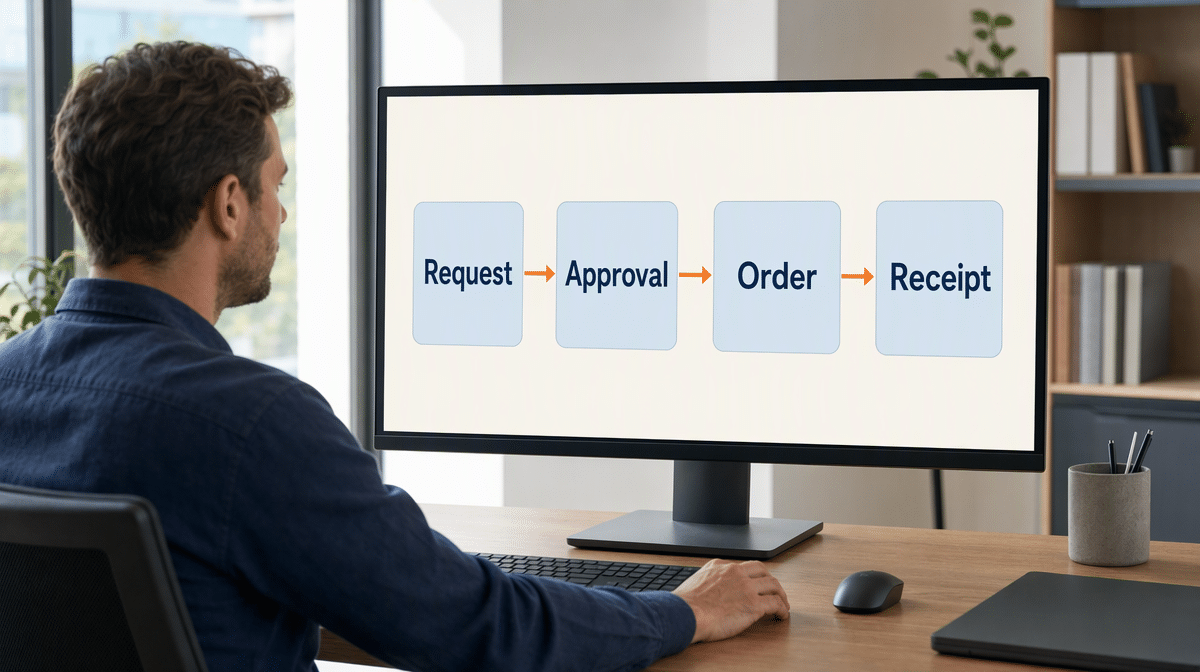
The workflow below is illustrative. It shows the control handoff from a project request through approval, order, and receipt. Your actual roles and approval limits should reflect the size, risk, and contract requirements of the project.
PUR104 Receiving and Inspection
Parts, components, goods, and materials should be received in an organized manner and checked for quantity, condition, and conformance before acceptance or stocking. The level of inspection should reflect item risk, supplier performance, specifications, and applicable contract requirements.
The procedure should explain how staff record a receipt, identify a discrepancy, separate or quarantine rejected items when necessary, notify purchasing, and decide whether the item will be returned, reworked, accepted under an approved exception, or otherwise disposed of. This creates the receiving evidence needed by inventory and accounts payable.
PUR105 Shipping and Freight Claims
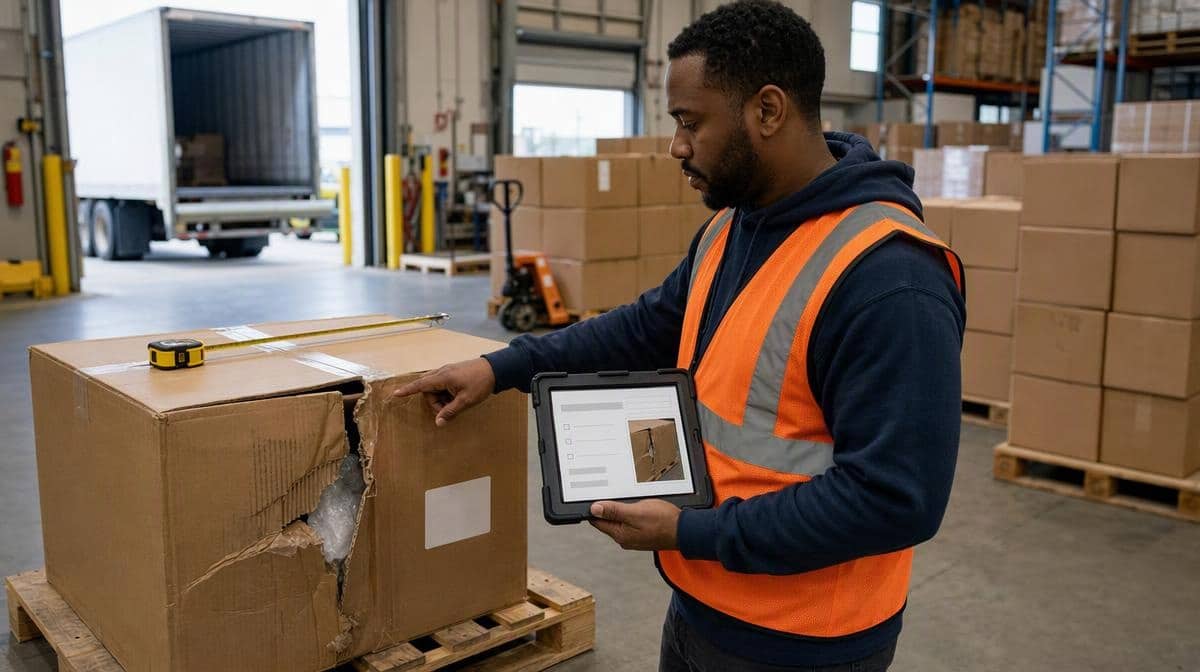
A shipping and freight-claims procedure helps minimize damage to goods and supports recovery when a shipment is lost or damaged. It should tell employees how to inspect the shipment, preserve packaging, photograph damage, note exceptions on delivery records, retain the bill of lading, notify the carrier, and track the claim to disposition.
For interstate motor-carrier freight claims, federal motor-carrier claim rules require a written claim that identifies the shipment, asserts carrier liability, and states a specified or determinable amount. Recovery still depends on the facts, evidence, carrier terms, contract, and applicable rules, so the procedure should not promise full reimbursement.
PUR106 Accounts Payable and Cash Disbursements
Internal controls are required so that only valid and authorized payables are recorded and paid. Accounts payable procedures should cover the accuracy of amounts, coding of general ledger accounts, appropriate timing of payments, documentation, recording, and issuance of payments for merchandise and non-merchandise purchases.
A three-way match compares the purchase order, receiving report, and vendor invoice before payment approval, while separation of purchasing, receiving, and payment duties reduces the chance that one person can cause and conceal errors. The GAO and CIGIE Financial Audit Manual documents these controls as an audit model. A private company should adapt the model to its size, staffing, risks, and obligations rather than treat federal audit guidance as a rule that applies automatically.
Basic Purchasing Procedures for Your Procurement Process
Process documentation is important because the purchasing process connects the people who request, approve, order, receive, and pay for the products and services your company requires. A documented procurement ordering system can support supplier relationships, cash flow, inventory control, and purchasing accountability, but the procedure must reflect how your company actually operates.
- List the purchasing events your company performs, including recurring supplies, services, inventory, capital equipment, projects, and freight.
- Assign an owner and approval authority for each event, including how exceptions and urgent purchases are handled.
- Standardize the records used for requests, purchase orders, receipts, inspections, invoices, freight claims, and payments.
- Define the handoffs between purchasing, project teams, receiving, inventory, accounts payable, and authorized approvers.
- Review vendor performance, purchasing exceptions, unmatched documents, rejected goods, and unresolved claims, then revise controls when the evidence shows a gap.
Download Free Policies and Procedures to see how editable Microsoft Word templates can help you build an accounting policy and procedure management system with financial internal controls.