What to Consider Before Moving Your Business to Another State?

Moving your business to another state is more than a change of address. Registrations, taxes, employees, equipment, utilities, suppliers, and customers can all depend on the same moving date. The move becomes much easier when every dependency has an owner and a deadline.
A detailed checklist helps you manage what must happen before, during, and after the move. These are the practical things to consider before moving your business to another state, from choosing a new office location to communicating the final change.
What Is an Interstate Business Relocation?
An interstate business relocation moves some or all of a company’s operations from one state to another. It can involve a new principal office, employees, equipment, licenses, tax accounts, registered-agent arrangements, and changes to the company’s legal registration.
Everything is easier with a detailed checklist, whether you are shopping at a grocery store or managing a business relocation. If you’ve decided to move your company to a new location, the amount of paperwork and the number of things to be done can become confusing or overwhelming. Treating the move like preparing a project management checklist helps you stay organized and makes the relocation process more efficient and simple.
What Should Be on a Checklist for Moving a Business to Another State?
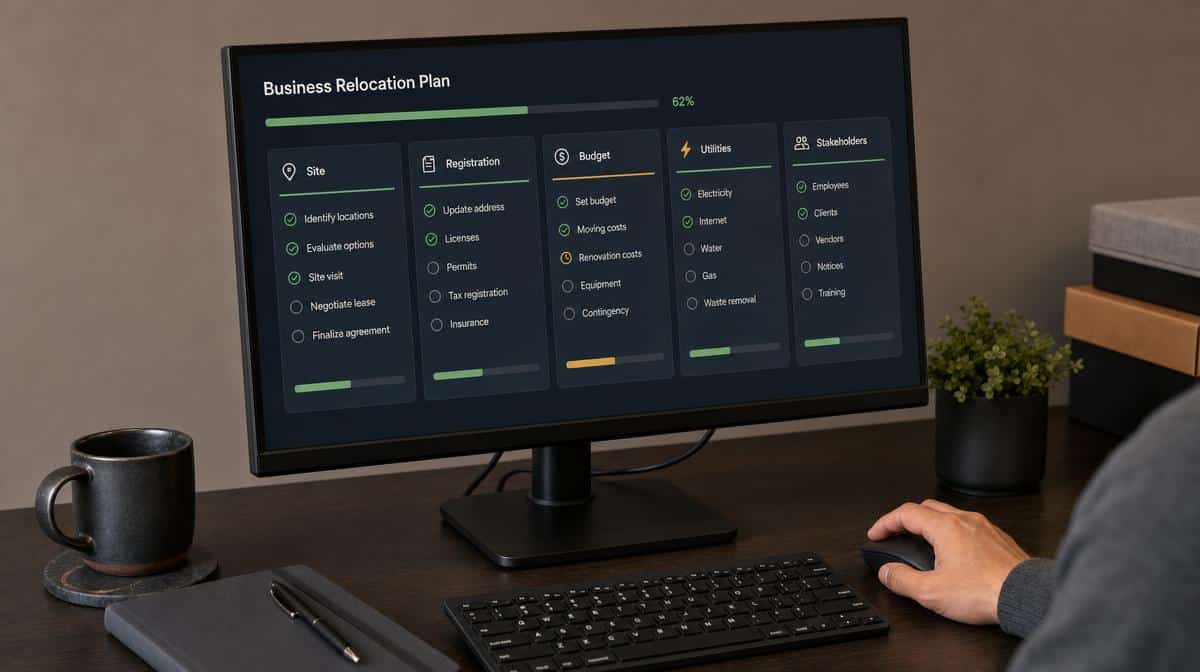
A useful business moving checklist covers the destination, people, legal and tax notices, budget, physical move, equipment, utilities, and communications. Build the plan far enough in advance to protect normal operations while each workstream changes location.
Choose a New Office Location
Relocating a business isn’t just about calling a moving company, putting computers in boxes, and leaving the state. Before you do any of that, make sure you’ve chosen the right destination. Your company should be located in a place where it can develop and grow.
Compare the taxes, economy, demographics, and cost of operating in each state you’re considering. Research the job market and determine whether it fits your staffing needs. Once you choose the state, do the same for the city, then focus on an office space that supports the people, equipment, inventory, parking, shipping, and customer access you expect to need.
Talk to Your Team and Split the Responsibilities
Open communication with employees will help you keep everything under control. Regular meetings with your team make it easier to identify potential problems and solve them on time. Hear suggestions from the people who understand daily workflows, equipment, customers, and suppliers.
Give every major part of the moving process a clear owner. Assign responsibility for the office search, state filings, budget, mover coordination, IT, utilities, employee plans, vendor notices, and customer communication. A simple responsibility matrix with deadlines and escalation points helps the team see dependencies and speeds up decisions.

Notify the Appropriate Agencies and Advisors
The legal path depends on your business structure, the state where the company was formed, the destination state, and whether the company is relocating or adding another operating location. An LLC or corporation might keep its original formation state and register through foreign qualification, use a conversion or domestication process where available, complete a merger, or dissolve and form a new entity. The U.S. Small Business Administration’s business registration guidance explains that state registration requirements depend on structure and location.
Before filing anything, talk with legal and tax advisors who understand both states. Identify the federal, state, and local agencies you do business with, including the old and new state business divisions, taxing authorities, payroll and unemployment agencies, and any licensing boards. Check whether permits or professional licenses transfer, require an address update, or require a new application. Do not dissolve an existing entity until advisors have reviewed contracts, leases, bank accounts, insurance, tax consequences, and continuity requirements.
Notify the IRS of a business mailing-address or location change using the current process for Form 8822-B, Change of Address or Responsible Party, Business. Update state tax accounts and confirm filing dates, final returns, annual reports, sales-tax registrations, payroll withholding, and property-tax responsibilities. Keep copies of approvals and confirmations with the project records.
Set a Moving Budget
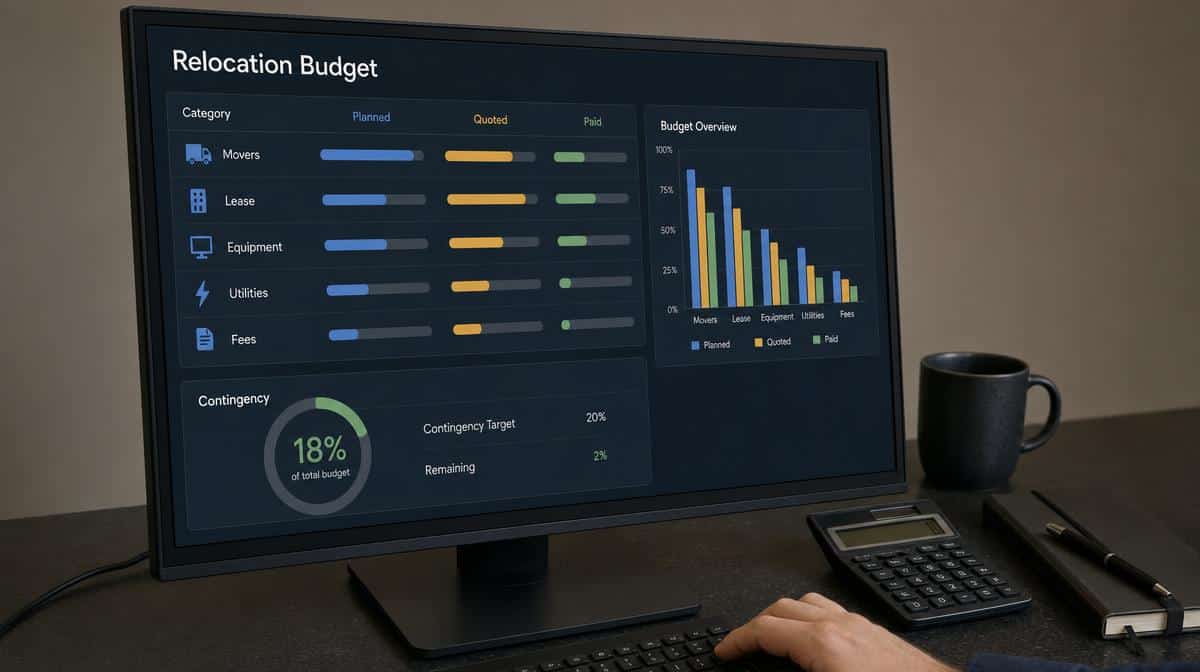
Start with a preliminary budget after you estimate how much everything will cost. Include the move itself, new things for the office, taxes you’ll have, lease deposits, utilities, technology setup, travel, employee support, insurance, and filing fees. You probably know what the company can afford, but unexpected expenses are common.
Separate planned costs from quoted and paid amounts. Add a contingency reserve, record assumptions, and identify who can approve changes. Compare the cost of downtime with the cost of overlapping leases, internet service, or vendor support for a short period. The least expensive line item is not always the least expensive operating decision.
Contact a Moving Company at Least a Month in Advance
Moving from one state to another takes time and preparation, so it’s best to reserve space on a moving company’s schedule well ahead of the moving date. For a complex office, warehouse, laboratory, or equipment move, start earlier. Ask about commercial-moving experience, licensing, references, valuation or insurance options, inventory controls, packing responsibilities, security, and claims procedures.
A professional company can handle packing and transportation while your team focuses on continuity, but scope and accountability must be clear. Document what the mover will pack, disconnect, transport, store, reassemble, and test. Photograph valuable equipment, record serial numbers, and decide who will confirm delivery at the new location.
Declutter and Create a List of Things to Buy
Before you start packing, consider the benefits of a lean 5S system. Go through the inventory and decide what should move to the new office, what should be stored, sold, recycled, donated, or securely destroyed, and what will be left behind.
If you’re planning to buy new equipment, compare that separate budget with the cost and risk of moving the current equipment. Make a list of what you’re moving and what has to be bought so that you don’t forget anything. Include furniture, computers, networking hardware, phones, security equipment, supplies, records, signage, accessibility needs, and specialized tools.
Cancel Current Utilities and Set Up New Ones
As the moving day approaches, contact each utility provider and schedule the service change. If the same provider exists in the state you’re moving to, you may be able to transfer the account. If not, compare the best available options at the new location and set up new utilities before the team arrives.
Plan for electricity, water, internet, phone numbers, cloud and network access, alarm monitoring, waste collection, mail, and any industry-specific service. A short overlap can reduce downtime and give the team time to test connections, phones, security, and critical equipment before the old service is canceled.
Confirm Your Registered-Agent Requirements
LLCs, corporations, and other registered entities generally need a registered agent in each state where they are formed or qualified to do business. A registered agent accepts official papers and legal documents on behalf of the company and must meet the state’s location and availability requirements.
If the current company or person serving in that role cannot continue in the destination state, choose a qualified replacement before filing. Research providers, read reviews, confirm the physical-address requirement, compare renewal fees, and verify how documents are delivered. Requirements vary, so confirm them with the relevant state office or advisor instead of assuming the same arrangement works everywhere.
Communicate the Business Move
Make sure to communicate effectively that your business is moving. Let customers, suppliers, employees, lenders, insurers, service providers, and other stakeholders know about the new location. Explain the dates that affect deliveries, meetings, billing, support, and access.
Update the website, invoices, contracts, email signatures, maps, directories, shipping instructions, and marketing materials. In the new state, use appropriate press releases, local announcements, or advertising to build a following in your new home. Tell the story about why you moved and how you made the decision. People understand a major operational change more easily when the reason, timeline, and practical impact are clear.
How Can a Business Moving Checklist Reduce Disruption?
Changing your current business operations is a big step. There are many things to consider before moving your business to another state. A business moving checklist keeps decisions, responsibilities, dates, costs, and evidence in one place, helping the team stay organized and simplify the move without losing sight of customers or daily work.
Frequently Asked Questions
How Far in Advance Should a Business Plan an Interstate Move?
Start planning several months ahead when the move affects employees, licenses, equipment, leases, or customers. Reserve movers at least a month in advance, and allow more time for state filings, office construction, technology, and specialized equipment.
Does a Business Have to Dissolve When Moving to Another State?
Not always. Depending on the entity and state laws, the business might use foreign qualification, conversion or domestication, a merger, or dissolution and re-formation. Legal and tax advisors should review the available paths before any filing.
Which Agencies Should a Business Notify About a Move?
The list can include the IRS, old and new state business offices, state and local taxing authorities, payroll and unemployment agencies, licensing boards, and permit offices. The exact list depends on the company’s structure, employees, property, and regulated activities.
What Should Be Included in a Business Relocation Budget?
Include movers, packing, travel, lease costs, equipment, utilities, technology, insurance, filing fees, taxes, employee support, and possible downtime. Add a contingency reserve and track planned, quoted, approved, and paid amounts separately.
Who Should Be Told That the Business Is Moving?
Notify employees, customers, suppliers, lenders, insurers, service providers, government agencies, licensing bodies, and delivery partners. Give each audience the new address, effective date, service impact, and a contact for questions.