How Does Business Process Management BPM Software Deliver Business Value?

Marketing may be going well while the financial sector is still chasing payroll approvals, or an importing delay may interrupt the raw material needed for continuous manufacturing. Business process management software delivers value by making those connected activities, owners, handoffs, deadlines, and exceptions visible so a team can manage the whole process instead of isolated tasks.
A BPM system does not understand every business domain or guarantee an outcome on its own. It provides a structured place to map work, coordinate people and systems, monitor current goal progress, and improve a repeatable process using evidence. The practical value comes from choosing the right process, defining the result you need, and measuring what changes.
What Is BPM?
Business process management (BPM) uses methods to discover, model, analyze, measure, improve, and optimize business processes. Unlike a one-time project or a list of individual tasks, BPM focuses on repeatable, end-to-end work. Software can support that discipline with process maps, workflow routing, reminders, forms, business rules, integrations, and performance data.
BPM is broader than automation. IBM describes BPM as a discipline that involves continuous collaboration between business and IT teams to model, analyze, and optimize processes from start to finish. Business process automation (BPA) can then automate selected tasks inside that larger management cycle. The appropriate solution depends on the process, the people involved, the information required, and the controls that must remain human decisions.
This connected view matters because process results rarely belong to one department. ISO’s process-approach guidance says organizations achieve more consistent results when they manage activities as interconnected processes rather than as isolated tasks. A useful BPM implementation therefore connects inputs, outputs, responsibilities, controls, performance indicators, and the effect that one area has on another. Begin with business process mapping so the current workflow is visible before you automate it.
At an advanced level, operations being conducted in a business domain may involve several applications, online resources, and tools. The BPM management plan should not pretend to deliver appropriate solutions to any business hassle. It should provide a flexible structure that helps everyone pursue constant tracking of the activities that matter, behave accordingly when an exception appears, and connect the correct information with the worker who needs it.
5 Ways BPM Software Delivers Value for Your Business
Business managers often look for a quick software solution when work becomes laborious or delayed. BPM software is more useful when it is treated as an operating structure, not a universal fix. Five practical benefits follow a clear sequence: schedule the work, manage performance, discover possibilities, improve repeatability, and map teamwork.
1. Build a Constructive Time Schedule for Weeks
A business process management approach begins with the sequence of events and the conditions that move work forward. Instead of building a whole week or month from memory, a team can define the trigger, task owner, due date, dependency, approval, and exception path for each stage.
Depending on the platform and configuration, the workflow can make instant alerts, daily reminders, and time limitations visible. That does not replace an expert or time manager. It helps the expert see what is waiting, what is late, and which handoff requires attention before a customer, employee, or supplier feels the delay.
The consecutive adjustment of everyday events and tasks is easier when the schedule has a correct input, a clear owner, and an acceptable completion rule. The software’s aggregation of functions may include calendars, queues, alarms, and notifications, but the classification and time limitations must still reflect how the work is actually performed in professional settings.
2. Improve Management and Prediction Making
Process data can help business owners identify where work is loaded, which tasks take the most time, and which paths create rework. A well-structured dashboard can highlight the statistical movement of a process, but it should not be treated as a promise of future profitability. Predictions are only as reliable as the correct information, definitions, and assumptions supplied to the analytical tools.
An analytical formula can compare a rate, count, or duration, yet it cannot explain every inclination in a graph obtained through applied strategies. Management and prediction making require context. A business owner should examine the underlying events, confirm how the data was collected, and decide whether the apparent movement is a real operational change or only a temporary fluctuation.
Use long-term, short-term, and immediate plans for the process, then compare the current goal progress with a baseline. For example, an accounts-payable team might track approval cycle time, exception rate, late-payment count, and the number of invoices returned for missing information. This is a practical way that business automation can support management without pretending that software makes the decision for you.
3. Help to Discover New Possibilities
Once heavy schedules and routine routing require less manual attention, managers have more time to examine advancement in the business module. BPM stores process history such as timestamps, routing choices, exceptions, and completed outcomes. Comparing previous history with present tactics can reveal a bottleneck, repeated approval loop, unclear input, or unnecessary step.
This discovery comes from your own process evidence, not from a generic claim that BPM automatically analyzes competitive websites. Teams can combine the evidence with brainstorming in process improvement to consider several productive elements, test one change, and check whether it produces better outcomes.
Directional upgrading works best when the team can extract a leading point from its own records and incorporate it into a specific plan. That is more useful than asking another tool to generate profit-driven plans without the scope, constraints, or people who understand the work. New possibilities should become testable techniques, not vague promises of advancement to another level.
4. Improve the First Attempt Through Repeatability
No BPM system can harvest guaranteed results in a single attempt. It can, however, make the agreed method easier to follow. Required fields, decision rules, review steps, and escalation paths help people complete a task within the same controlled structure instead of inventing the process each time.
Repeatability also makes an unsuccessful attempt useful. When a team can see where the work stopped, what information was missing, and which rule was applied, it can make a specific adjustment and compare the next result. That is why automation in business works best with clear procedures, accountable owners, and a review cycle.
The goal is not to boost motivation with a guaranteed profitability score or to predict whether a single strategy application will succeed. The goal is to conduct tasks within a defined mechanism, observe the result, and use the comparison to formulate the next adjustment. This makes better outcomes more likely without claiming that the first attempt will always bring prominent change.
5. Use Team Mapping for Better Teamwork Progression
Feed the process design with the scope of the business domain, the relevant core business processes, and workers’ department segmentation. The map should show the task assessments, roles, handoffs, approvals, and the point at which one department depends on another.
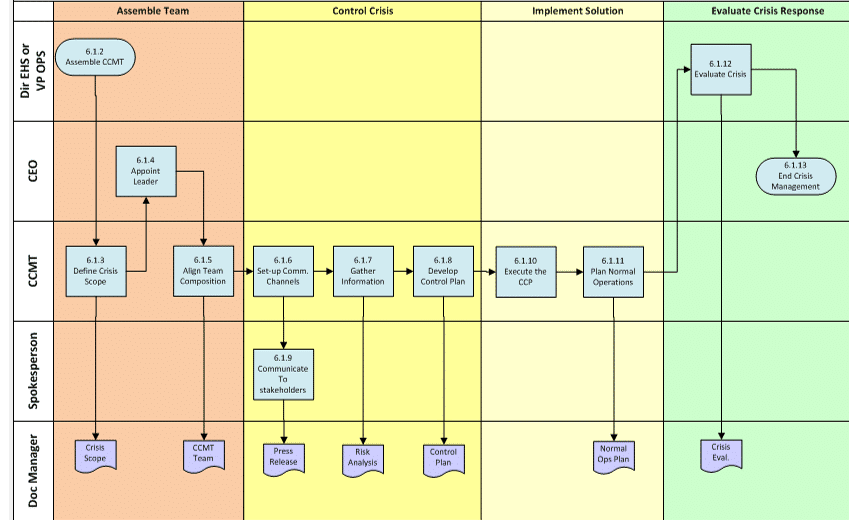
When tasks are inter-connected in one schedule, each person can see what they receive, what they must produce, and who needs the result next. This supports better teamwork because accountability is explicit. It also lets a manager evaluate tasks that take more time or require more focus without treating every delay as an individual performance problem.
The classification of workers within one prepared map should show department segmentation without trapping people in rigid boxes. Use the scope, task assessments, and handoff conditions to sustain better teamwork, then review the map when responsibilities, technology needs, or the business module changes.
How Do You Measure BPM Business Value?
Begin with one repeatable process and a measurable problem. Record a baseline before changing the workflow, define the observation window, and separate software cost from staff time, training, and integration effort. Then compare the same measures after the process has stabilized. The worked scorecard below uses hypothetical data to show the method, not to promise a return.
Baseline: 3.8 days
After stabilization: 2.1 days
Check whether routing and reminders reduced waiting time.
Baseline: 18 of 100
After stabilization: 7 of 100
Check whether required inputs improved first-pass completeness.
Baseline: 31 per month
After stabilization: 14 per month
Check whether routine decisions now follow clear rules.
Baseline: 64 hours
After stabilization: 43 hours
Value the time only if the same work and quality standard are compared.
Illustrative BPM value scorecard. Replace every sample value with your verified baseline and post-change data.
A useful business-value review also records side effects. Faster cycle time is not valuable if error rates rise, controls disappear, or employees create workarounds. Review the result with the people who perform and receive the work, then decide whether to keep, adjust, or reverse the change.
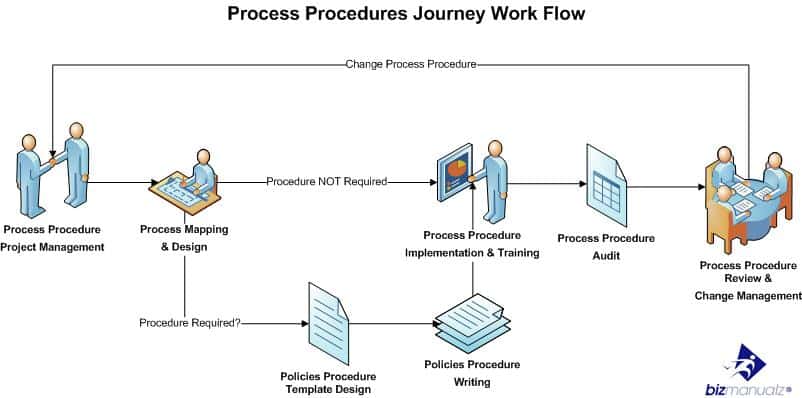
Business Process Management BPM Software Delivers Business Value
BPM software delivers value when it supports professional management of business activities rather than submitting automation everywhere by default. Map the process, identify the desired outcome, define owners and controls, test the workflow with a limited group, and measure the result. If the evidence supports expansion, connect the next process and continue the improvement cycle.
If you are considering business process automation tools, start with the process that creates the most costly or visible delay. Enterprise-level setups can follow the same logic, but the scope, integrations, governance, and change management will be broader.
Frequently Asked Questions
What is the main purpose of BPM software?
The main purpose is to help an organization model, run, monitor, and improve repeatable business processes across people and systems.
How does BPM software create business value?
It can create value by clarifying ownership, reducing avoidable waiting and rework, standardizing execution, exposing exceptions, and providing evidence for process improvement.
Is BPM the same as business process automation?
No. BPM is the broader management discipline. Business process automation applies technology to selected tasks or workflows within that discipline.
Which BPM measures should a small business track?
Track measures tied to the process problem, such as cycle time, error or rework rate, exception volume, first-pass completeness, staff time, and customer or employee impact.
Can BPM software guarantee better results?
No. Results depend on process design, data quality, adoption, governance, integration, and measurement. Test a limited workflow and compare it with a verified baseline before expanding.
Original contributor: David Shania, Business Analyst and Engineering, Technology & Applied Science Research Specialist. His documented work focuses on defining technology needs and providing innovative IT solutions as online resources and tools change how researchers find information, process data, collaborate, and disseminate results.