How Do You Schedule Social Media Content?

Creating social media posts one at a time can lead to missed publishing windows, rushed approvals, and inconsistent messaging. A scheduling process gives your team time to prepare valuable content, review it against company policy, and publish it when the audience is most likely to see it.
How do you schedule social media content without turning the calendar into another administrative burden? Start with the right program, then connect it to a social media policy, an idea database, a content calendar, a team workflow, and a simple measurement routine.
What Is Social Media Scheduling?
Social media scheduling is the practice of preparing posts in advance and assigning each one a platform, owner, approval status, publication date, and time. A scheduling program then places approved content into a queue and publishes it automatically, while the team remains responsible for quality, replies, and changes.
This is more than automation. A reliable system connects daily publishing to your larger social media strategy. It also helps the business maintain a recognizable voice instead of posting sporadically or reacting to every trending topic.
How Do You Select a Social Media Scheduling Program?
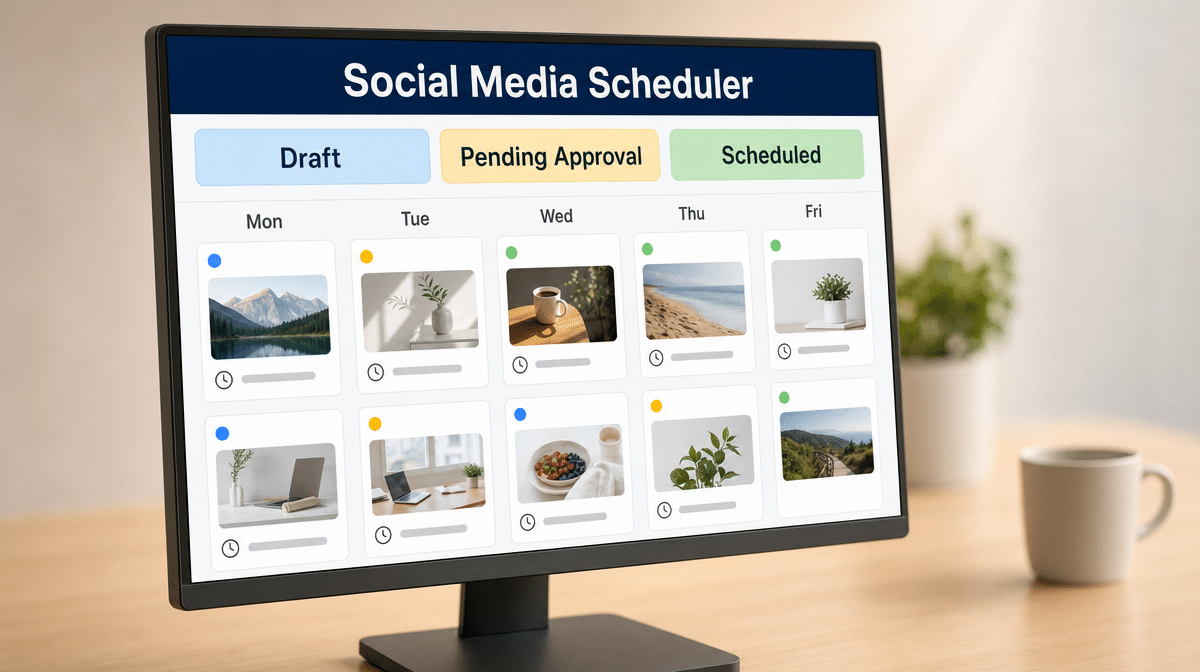
You might be surprised by how many programs are designed to create, approve, and schedule social media posts. Sked Social is one example of a tool built for this work, but the best choice depends on your channels, team size, approval needs, and reporting requirements. Avoid choosing a program only because it has the longest feature list.
Compare Cost, Account Limits, and Permissions
Price is usually one of the main concerns business owners have when choosing new technology. Compare the plan price with the number of social profiles, user seats, scheduled posts, and approval steps included. A low-cost plan can become expensive if every additional employee or account requires an upgrade.
If a large pool of employees helps create and schedule posts, look for role-based permissions rather than simply seeking unlimited accounts. Writers may need permission to create drafts, editors may need approval rights, and only designated managers should be able to publish or change account connections.
Check the Approval and Calendar Workflow
The program should make the status of every post obvious. A useful workflow separates ideas, drafts, items pending approval, scheduled posts, and published content. It should also show conflicts, gaps, and repeated topics before they reach the audience.
Look for a shared calendar, comments, version history, notifications, and a record of who approved each item. These features reduce side conversations and prevent an outdated draft from replacing the approved version.
Protect Brand Awareness and Consistency
Businesses that post content sporadically are less likely to build the brand awareness they want. The scheduler should help your team balance educational, promotional, customer, and company content while maintaining a consistent brand identity on social media.
Consistency does not mean repeating the same message everywhere. Each platform has its own audience behavior and format. The calendar should preserve the main idea while giving the team room to adjust the copy, image, length, and publishing time for each channel.

What Factors Make Social Media Scheduling Work?
A program can publish content, but it cannot decide what your organization should say or who is accountable for the result. Before filling the queue, define the rules, sources, responsibilities, and review cycle that support the social media scheduling program.
Start with a Social Media Policy
Your social media policy defines the organization’s framework for posts. Who can post, where can they post, what can they discuss, how often can they publish, and what is inappropriate on company accounts? It is helpful to use a team approach because ethics, risk, and acceptable opinions can look different across departments.
The policy should address account access, confidential information, customer privacy, copyright, required disclosures, crisis escalation, and the process for correcting a mistake. The Federal Trade Commission’s social media disclosure guidance is a useful reference whenever employees, partners, or influencers discuss a material relationship with the business.
Create a Social Media Idea Database
One of the hardest parts of developing social media posts that sell is coming up with good ideas. Posting anything and everything can alienate the audience. Rather than waiting until the last minute, brainstorm with the team and create an idea database.
Set Google Alerts for stories related to your industry, record common customer questions, review sales conversations, and invite employees to contribute examples from their work. Polling the social media audience and using social listening can also reveal topics people want the brand to cover.
Give every idea a short description, audience, objective, potential channel, source, and owner. The database should contain more ideas than the calendar needs, allowing the team to choose strong topics instead of publishing weak material just to fill a slot.
Develop a Social Media Content Calendar
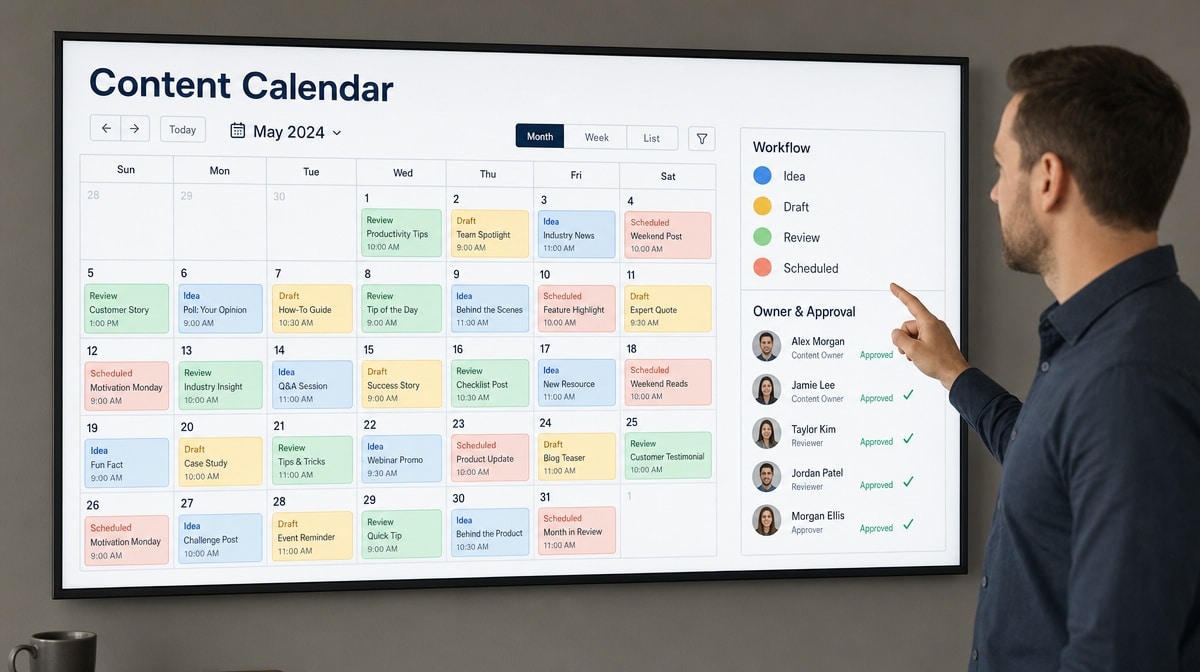
If you want to keep upcoming posts organized, develop a social media content calendar. The calendar shows which post is planned for each day of the upcoming month and makes it easier to spot empty periods, crowded campaigns, repeated messages, and missing formats.
For each item, record the topic, platform, audience, objective, draft link, asset requirements, owner, reviewer, status, publication time, and campaign tag. Consider whether a weekly or monthly theme will help connect the posts, but leave room for timely updates and customer conversations.
Get Your Team Involved in Social Media
One of the biggest mistakes you can make with social media marketing is trying to take on all of the work alone. Important tasks fall through the cracks when one person must develop every idea, write every post, create every graphic, review every hashtag, answer every comment, and interpret every report.
Create a team workflow and assign responsibilities for graphics creation, copywriting, hashtag development, editing, approval, publishing, and response monitoring. Closely monitoring the quality of work is also important, but the review should use clear standards rather than last-minute personal preference.
Define a backup owner for every important account and campaign. If an employee is unavailable, the queue should continue without sharing passwords or giving broad administrator access to people who do not need it.
Monitor Your Social Media Posts’ Success
If you want to optimize the program, closely monitor the engagement each post receives. Reach, impressions, clicks, comments, shares, saves, video completion, and conversions answer different questions. Choose the social media metrics every business should track based on the objective instead of treating every interaction as equally valuable.
Compare results by topic, format, platform, publishing time, and audience segment. The Pew Research Center’s social media fact sheet also shows why audience and platform choices should be reviewed periodically rather than assumed to be permanent.
Use the insights from social media analysis to improve the idea database and the next content calendar. Providing more of the posts the audience responds to can expand reach, but continue testing new subjects so the program does not become repetitive.
How Do You Maintain a Social Media Scheduling Program?
A scheduling program works best as a repeating management cycle. Review the policy when risks or responsibilities change, keep the idea database stocked, plan the calendar before deadlines arrive, assign every task, and examine results after publication.
Hold a short calendar review at a consistent interval. Remove stale items, confirm approvals, check that assets are ready, and decide whether current events require a pause or adjustment. This routine makes creating and publishing social media posts easier without giving up human judgment.
Frequently Asked Questions
What Is Social Media Scheduling?
Social media scheduling is the process of preparing posts in advance, assigning ownership and approval, and placing approved content in a queue for publication at planned times.
Why Should a Business Use a Social Media Content Calendar?
A content calendar makes upcoming posts visible to the team, prevents gaps and duplication, coordinates campaigns, and gives writers, designers, reviewers, and account owners enough time to complete their work.
What Should a Social Media Policy Cover?
A social media policy should define who can post, which accounts they can use, acceptable topics and behavior, approval requirements, access controls, disclosures, privacy rules, and the escalation process for mistakes or crises.
Who Should Be Involved in Scheduling Social Media Posts?
The workflow may involve an idea owner, copywriter, designer, editor, approver, publisher, and response manager. Smaller teams can combine roles, but every responsibility should still have a clear owner and backup.
How Should You Measure Scheduled Social Media Content?
Match measures to the post’s objective. Review reach, clicks, comments, shares, saves, video completion, or conversions by topic, format, platform, and publication time, then use the findings to improve the next calendar.