How to Get to Best Practices Faster?

It seems like a simple question: how do we get to best practices faster? The answer usually starts with less invention and more comparison: understand the process you have today, compare it against a proven standard, and close the gaps that matter most.
Bizmanualz helps with both paths. You can select a policy and procedure manual from our published products and start from documented examples, or you can begin with a gap analysis to determine what is needed to close the gap between where your processes are now and where you want them to go.
What Is the Fastest Way to Get to Best Practices?
The fastest way to get to best practices is to start with a baseline, compare that baseline to a proven process, and then improve the highest-value gaps first. Best practices are not magic phrases. They are documented methods that have been tested, repeated, and adapted until they produce consistent results.
That is why a practical best-practice effort looks more like a process review than a brainstorming session. You clarify what work is actually happening, compare it with a reliable reference point, and then decide whether you need a manual, a process map, training, a dashboard, audits, or a deeper improvement project. The NIST Baldrige performance excellence program is one useful example of benchmarking operations against defined practices rather than relying on guesswork.

How Do You Start Getting to Best Practices Faster?
There are two options to choose from. You can select a policy and procedure manual from the Bizmanualz product library that is closest to the process you want to improve, or you can start with a gap analysis to determine what is needed before you adopt a new procedure.
The manual-first path works when the process is common, the goal is clear, and your team mainly needs examples, forms, and standard operating procedures to adapt. The gap-analysis path works when the current process is unclear, inconsistent, or already partly documented but not producing the results you want.
Either way, avoid re-creating processes when strong examples already exist. You can update your current processes to a set of best practice standard operating procedures, saving the trouble and expense of researching everything yourself. Streamlined processes are simple to understand and easy to implement in Microsoft Word templates.
Review Your Current Process
What are you doing now, and what do you want to improve? It is important to start by clarifying processes that are in place now and developing a baseline of the current work process so that you can measure improvement.
A baseline does not need to be elaborate. A simple process map, a list of current policies and procedures, and a few performance measures can show whether the process is documented, stable, and producing the desired results. Without that baseline, improvement becomes opinion-based and it is difficult to prove whether the change worked.

How Do You Compare Your Current Process to Bizmanualz Best Practice Processes?
Once you have reviewed the current process, compare what you found with Bizmanualz best practice processes. The goal is not to copy blindly. The goal is to understand where your current system is missing a policy, procedure, form, responsibility, review step, or improvement method.
1. Do You Have a Clearly Identified System in Place?
Did you find policies and procedures or process maps in place, or did you need policies and procedures examples? If you do not have a clearly identified system, the fastest first move is often documentation. Employees need to know what the process is before they can improve it.
No need to re-create processes when we already have them. A business can often start from an existing manual, adjust the procedure to match its roles and systems, and then train the team on the approved version.
2. Is a System in Place But Not Stable?
A system may exist, but it may not be stable or consistently working to produce the desired results. In that case, support processes are necessary for the system to work effectively. Management system support processes include:
- Visual Management Dashboard
- Frequent Internal Audits
- Regular Management Reviews
- Annual Strategy Planning
These support processes make the management system visible. A dashboard shows whether the process is working, internal audits test whether procedures are being followed, management reviews evaluate system performance, and strategy planning keeps improvement tied to business goals.

3. Is a Stable System in Place But Improvement Is Needed?
There is always improvement possible, no system is perfect. Did you find clear improvement goals in place, and is there a roadmap for implementing change? Some example improvement goals include:
- Simplify the process so that it will be used by employees.
- Increase the number of sales leads or the number of leads converting to sales or other desirable actions, such as obtaining a sample product or requesting contact.
- Reduce the number of manufacturing defects or increase quality and customer satisfaction.
- Improve supplier capabilities, supplier relationships, or supply chain quality.
When you lead your improvement project, you can customize the improvement process with an extensive library of best-practice processes to save time and money on research and development. Start with easy incremental improvements that involve your current staff and can be sustained by them. Improvements should be realistic, achievable, and sustainable so they are achieved consistently and the benefits add up fast.

4. Are Improvements Getting Harder to Justify?
Improvement may have been made, and further improvement may be getting more difficult to justify. At this point, the Cost of Quality should be tracked. As improvement takes hold, further improvements can start to be more difficult to justify on a return on investment basis.
If this is happening, you may need more sophisticated tools, advanced quality methods, and more training in Lean Six Sigma to make the waste easier to see. At this stage, the best-practice question shifts from “What should we document?” to “Where is the next measurable improvement?”
Where Is Your Company on Its Journey?
Where your company sits on this journey determines the next practical action. A business without a clear system needs process maps and procedure examples. A business with an unstable system needs management reviews, dashboards, internal audits, and regular planning. A business with a stable system needs targeted improvement goals and a roadmap for change.
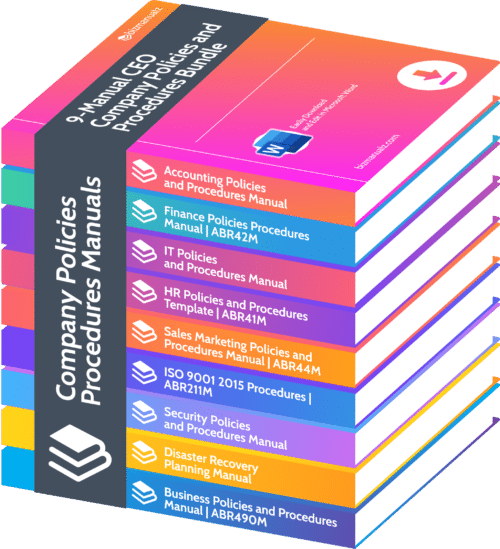
A Bizmanualz quality consultant trained in advanced ISO and Lean Six Sigma methods can help establish and improve your business process. The do-it-yourselfer can also read about project management tools and use them to manage an improvement project. Anyone can comb through the manuals product website and select individual policies, procedures, and forms manuals, or choose collections such as the Company Policies and Procedures set.
Frequently Asked Questions
What Is the Fastest Way to Get to Best Practices?
The fastest way is to review the current process, compare it with a proven procedure or manual, and then close the highest-value gaps first.
Why Should You Start With a Process Baseline?
A baseline shows what is happening now, which makes it possible to measure whether a new procedure, dashboard, audit, or improvement project actually worked.
When Should You Use a Procedure Manual?
Use a procedure manual when the process is common enough to start from documented examples, forms, responsibilities, and standard operating procedures instead of creating everything from scratch.
What Support Processes Help Best Practices Stick?
Visual management dashboards, internal audits, management reviews, and strategy planning help keep processes visible, measured, reviewed, and aligned with business goals.
How Do You Know When Improvement Needs More Advanced Tools?
When easy improvements are complete and further changes are harder to justify, track cost of quality and consider advanced methods such as Lean Six Sigma to identify waste more precisely.