
Bizmanualz blog
A control can look sensible on paper and still fail every time real work moves through it. Approvals may be rushed, reconciliations may be skipped, access may remain open after an employee changes roles, or evidence may exist without proving that anyone reviewed it. Internal audit testing turns those assumptions into evidence. It gives auditors […]
Read more
Most business processes do not fail all at once. They become slower one extra approval, duplicate entry, unclear handoff, and temporary workaround at a time. Because each problem looks small, the organization adapts around it until customers wait longer, employees chase information, and managers spend their day resolving exceptions. Process improvement ideas give you practical […]
Read more
Most businesses do not suffer from a shortage of documents. They suffer from policies in one folder, approvals in another, audit findings in email, and process knowledge that exists only in someone’s head. The arrangement can look workable until a deadline slips, an employee follows an obsolete procedure, or a customer asks for evidence that […]
Read more
A short writing window disappears quickly when the first half is spent choosing a topic, checking email, and revising the opening sentence. To be productive and write an article in minutes, you need more than faster typing. You need a prepared idea, protected time, and a clear boundary between drafting and editing. The seven tips […]
Read more
Internal audits rarely fail because an auditor forgot to ask a single question. They fail when the scope is vague, evidence is inconsistent, testing is not documented, or findings disappear into a report with no owner. A practical audit checklist turns those weak points into visible control steps. An internal audit checklist gives the audit […]
Read more
A contract term, safety instruction, or customer message can lose critical meaning when it moves between languages. Basic language proficiency or machine output may be enough for casual communication, but companies need professional translation services when accuracy, consistency, confidentiality, or legal consequences matter. That need has grown alongside the localization of business strategy. Companies now […]
Read more
A clear explanation of business policy, its main parts, practical company policy examples, and how policies guide consistent decisions.
Read more
Most business processes look simpler from a conference room than they do at the point of work. A few boxes and arrows can hide ten informal handoffs, three workarounds, and a decision that changes depending on who is available. Ask the people doing the work to explain the same process separately, and you may hear […]
Read more
A promising idea is only the beginning of starting a business. This question is especially relevant for founders wondering where and how to look for funds when a company requires significant investment. The harder task is deciding which people are a genuine fit and what evidence will persuade them to take the opportunity seriously. Business […]
Read more
Business growth is rarely shaped by a single decision. It depends on how well a company removes purchase friction, uses resources, organizes work, accesses talent, and reaches customers. Ask yourself: can the business grow if its payment options, workforce model, and customer channels no longer match how people buy and work? Small business owners need […]
Read more
Best Manual Deals
-
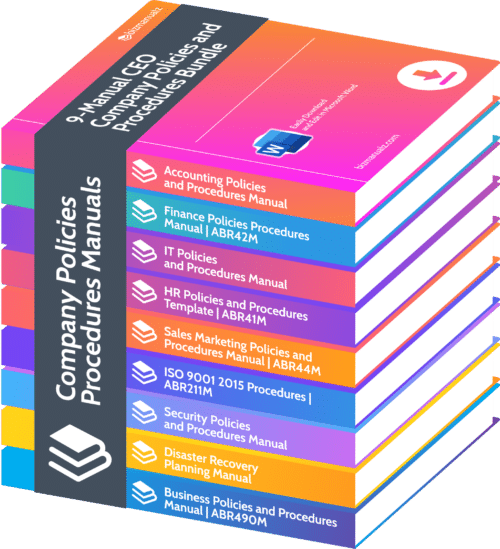 9-Manual CEO Company Policies and Procedures Bundle | Save 45%
$ 2,495.00
-
 ISO 22000 Food Safety Procedures Manual | ABR213M
Original price was: $ 395.00.$ 197.00Current price is: $ 197.00.
-
 ISO 22000 Seguridad de los Alimentos Procedimientos | ABR219M
Original price was: $ 395.00.$ 195.00Current price is: $ 195.00.
-
 ISO 9001 Quality Manual | ABR211MPM
$ 49.99
Business Manuals
-
 Finance Policies Procedures Manual | ABR42M
$ 495.00
-
 Accounting Policies and Procedures Manual | ABR31M
$ 495.00
-
 IT Policies and Procedures Template Manual | ABR34M Information Security Policy Manual
$ 495.00
-
 HR Policies and Procedures | ABR41M Employees Policy Examples
$ 495.00
-
 Sales Marketing Policies and Procedures Manual | ABR44M
$ 495.00
-
 ISO 9001 2015 Procedures | ABR211M
$ 495.00
-
 Security Policies and Procedures Manual | ABR32M
$ 395.00
-
 Disaster Recovery Planning Manual | ABR33M
$ 395.00
-
 AS9100 Quality Procedures Manual Rev D | ABR217M Aerospace QMS
$ 395.00
-
ISO 22000 Food Safety Procedures Manual | ABR213M
Original price was: $ 395.00.$ 197.00Current price is: $ 197.00.
-
9-Manual CEO Company Policies and Procedures Bundle | Save 45%
$ 2,495.00
-
ISO 22000 Food Safety Procedures Manual | ABR213M
Original price was: $ 395.00.$ 197.00Current price is: $ 197.00.
-
ISO 22000 Seguridad de los Alimentos Procedimientos | ABR219M
Original price was: $ 395.00.$ 195.00Current price is: $ 195.00.
-
ISO 9001 Quality Manual | ABR211MPM
$ 49.99
-
 How to Prevent Workplace Violence Manual | ABR32MWV
Original price was: $ 49.99.$ 19.99Current price is: $ 19.99.