How Do You Use Artificial Intelligence in a Small Business?

Small businesses, from one-person startups to IT and marketing agencies, often operate with fewer people, less data, and less specialist capacity than large-scale enterprises. Artificial intelligence can narrow part of that gap by handling repeatable work, surfacing patterns, and helping a small employee roster focus on client servicing, meaningful project production, and decisions.
AI is not a substitute for judgment, accurate data, or accountable employees. The practical question is where machine learning AI algorithms and generative tools can support day-to-day operations without adding unnecessary cost, privacy exposure, or risk. How do you use artificial intelligence in a small business?
What Is Artificial Intelligence for a Small Business?
Artificial intelligence is a broad category of systems that can recognize patterns, generate content, classify information, make recommendations, or automate parts of a task. Machine learning is one method used to build these systems, while generative AI creates new text, images, audio, or other content from patterns learned in data. For a small business, the useful distinction is not the technical label. It is whether a tool can perform a bounded task reliably enough to save time or improve a decision.
The U.S. Small Business Administration’s guidance on AI for small business recommends starting small, testing whether a tool adds value, and having another person review AI products. That approach lets small-scale enterprises learn through a controlled pilot before connecting a tool to sensitive data, customer communications, or important decisions.
Ordinary automation follows predefined rules, such as sending a reminder when an invoice becomes overdue. AI can work with less structured inputs, such as classifying the subject of an email or summarizing a long customer conversation. Many useful systems combine both approaches. The AI interprets information or proposes an action, while the workflow applies a known rule, records the result, and sends unusual cases to a person.
8 Tips on How Small Businesses Use Artificial Intelligence
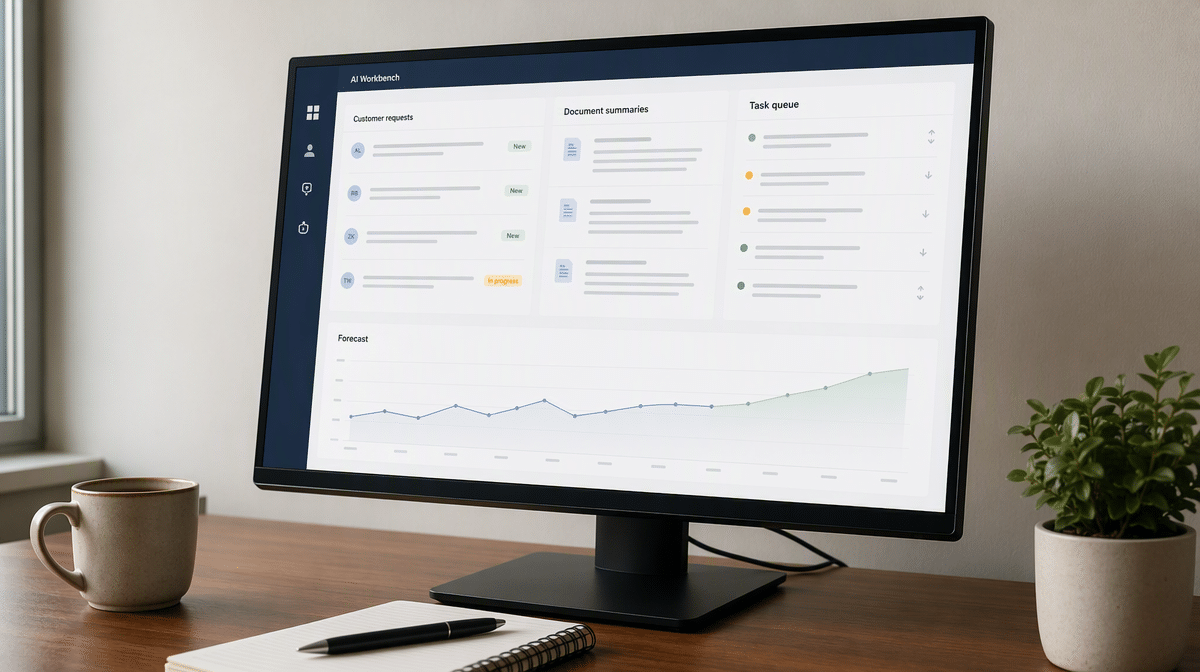
Small businesses can use AI to assist with capacity, scheduling, customer service, cybersecurity monitoring, performance reviews, marketing automation, operational issue detection, and data organization. These applications work best when the business defines the task, supplies appropriate data, sets an owner, and reviews the output. A lack of clean or relevant data remains a primary implementation challenge because a system cannot produce dependable recommendations from records that are incomplete, inconsistent, or out of date.
Cost-Efficient Means of Making Up for a Small Employee Roster
Small businesses can consist of anything from ten employees to a single person managing the business. This puts them at a disadvantage compared with mid-sized and large-scale enterprises in terms of the volume of work they can handle. With AI algorithms at their disposal, small enterprises can delegate parts of repeatable tasks while focusing on client servicing and meaningful project production.
The safest starting points are high-volume, low-consequence activities such as sorting requests, summarizing internal documents, preparing a first draft, classifying records, or identifying items that need attention. An employee should still approve customer-facing content, financial entries, personnel decisions, and other consequential outputs. This keeps the tool in a supporting role and makes the time savings measurable.
Scheduling and Workflow Management
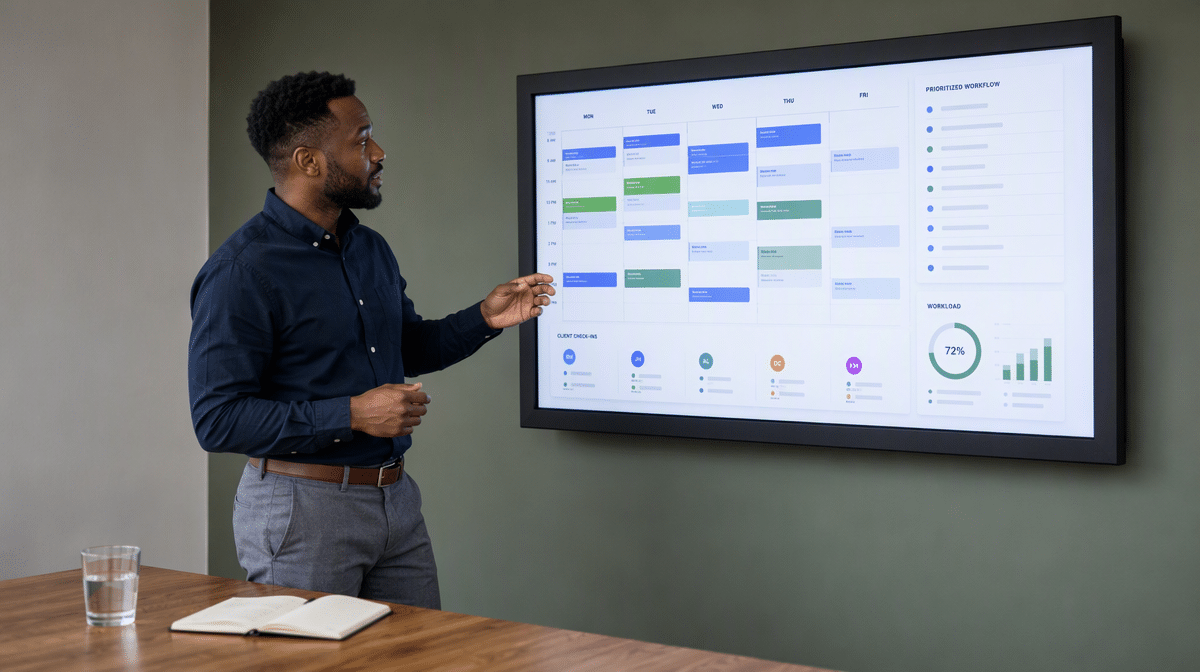
Managing client appointments, remote client check-ins, conferences, and other business obligations is a full-time job in itself. Using an AI tool to streamline the workflow process can enable professionals to focus their energy on productive tasks instead of micromanagement. Prioritization can also become easier as the system learns from user behavior patterns over time. Teams weighing collaborative AI agents for this kind of work can compare the leading Otto by Workato alternatives side by side.
A useful workflow assistant can group similar requests, propose a schedule, flag an approaching deadline, or route an item to the correct owner. The business should define which conflicts require human review and prevent the tool from changing commitments without an authorized employee. Clear rules make AI-assisted scheduling easier to audit and less likely to create silent errors.
Chatbot Servicing Integration
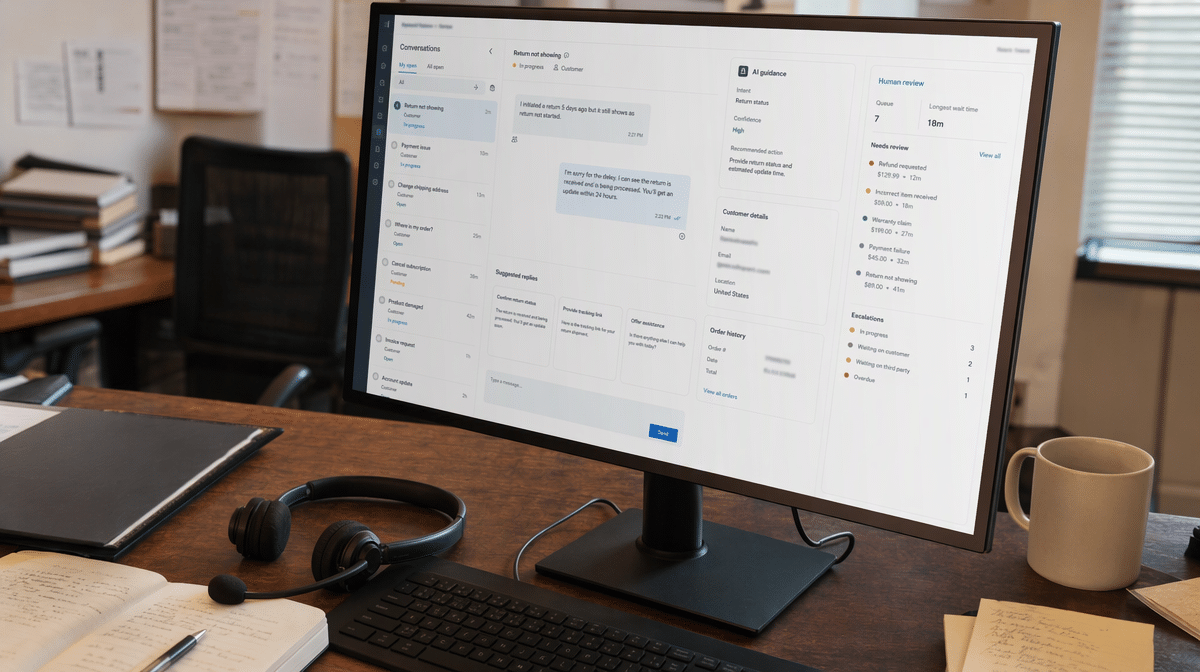
Customer support is one of the most essential services a business can provide. A chatbot can answer common customer FAQs, collect account details, route a request, and offer basic help outside normal working hours. This can improve response time across time zones and language barriers without pretending that every query can be resolved automatically.
Build the chatbot from approved information, tell customers when they are interacting with automation, and create an obvious path to a person. Employees should review difficult conversations, translation-sensitive messages, refunds, complaints, and any answer involving confidential information. Conversation logs also need the same privacy, retention, and access controls applied to other customer records.
Automated Cybersecurity Measures
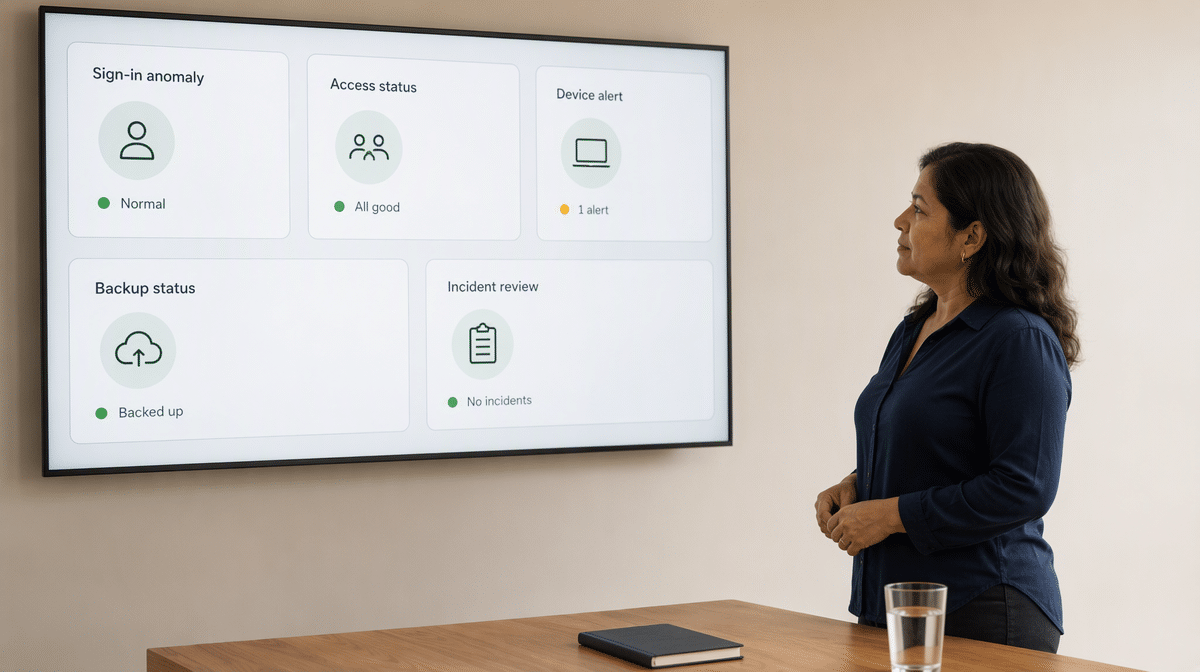
The reputation of small and large businesses alike rests on whether they can protect corporate data effectively. AI-enabled security tools can help analyze sign-in activity, device behavior, email, and network events faster than a person could review them by hand. They may surface unusual patterns or prioritize alerts so an employee or managed security provider can investigate.
AI does not replace a security program or accountable IT expertise. Small businesses still need multi-factor authentication, timely patches, tested backups, restricted access, staff training, an incident response plan, and qualified help when risk exceeds internal capacity. Automated algorithms should strengthen those controls, not create a false choice between software and responsible oversight.
Performance Reviews and Informed Decision-Making
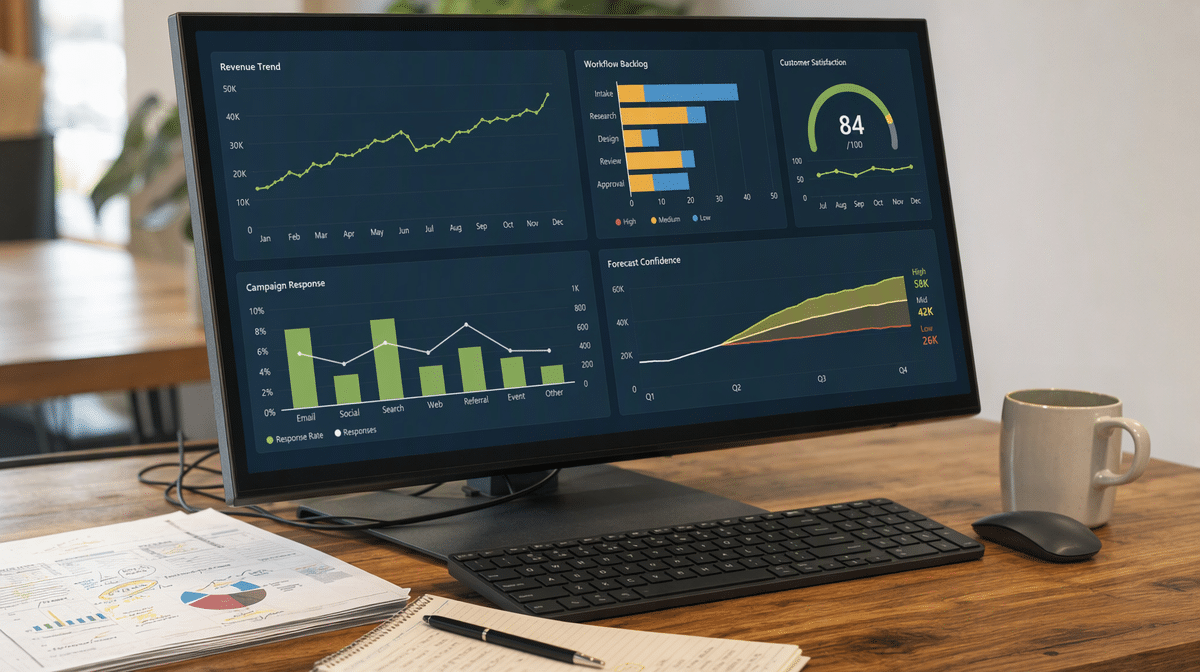
Software solutions dedicated to improving business performance should remain on the radar of a small business. These applications can scour data for patterns and vectors that relate to future business plans. The result can be a clearer view of customer demand, workflow delays, cost changes, service quality, and other signals that deserve attention.
Recommendations should be treated as decision support, not proof. An owner needs to confirm where the data came from, whether it represents the current business, which assumptions shaped the output, and how a wrong recommendation would affect clients. Used carefully, the tool can help a team make more precise investments and improve the overall quality of its work.
Marketing Automation Opportunities
Marketing the business is just as important as managing ongoing projects and servicing clients. With a small staff roster, that work can be difficult to sustain, which is why marketing automation can be useful. AI can help draft variations, group audiences, summarize campaign results, suggest topics, and assist with localization for international stakeholders.
The business remains responsible for claims, permissions, brand voice, and the treatment of customer data. A person should review marketing content before publication and confirm that segmentation does not exclude or target people unfairly. Automation should streamline advertisement efforts and market research preparation while leaving strategy and approval with the team.
Detect Operational Issues Before They Cause Problems
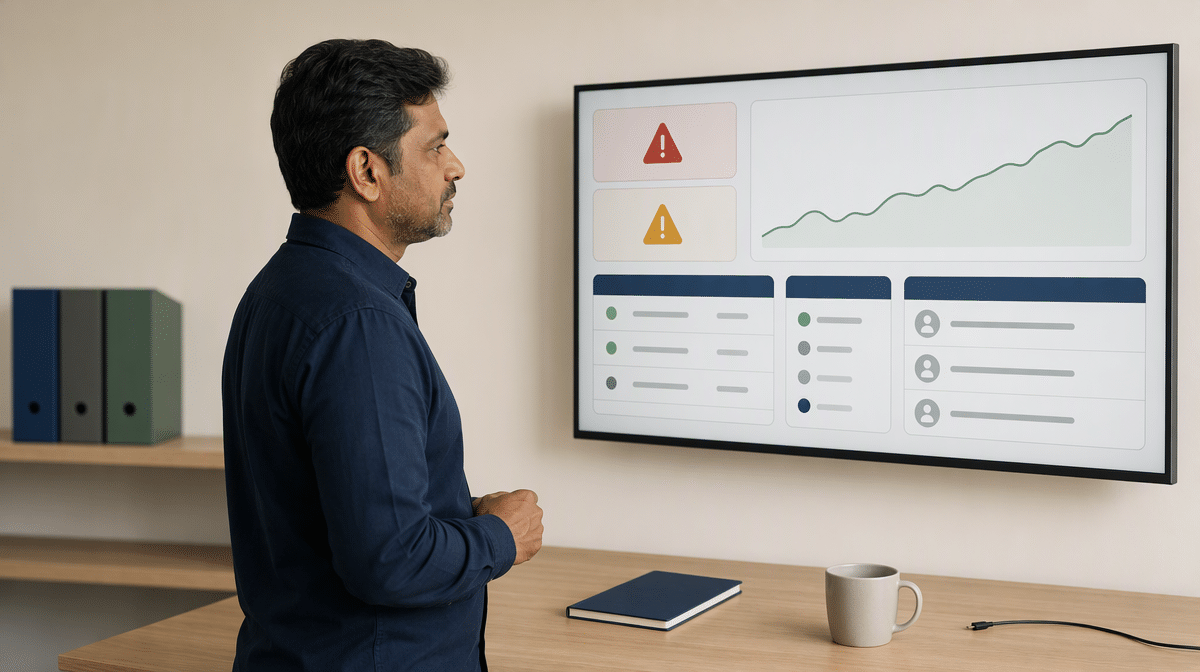
Operational problems can crop up at any point in a workflow and cause severe issues for the business. Problems with finance, data security, client satisfaction, and product quality can all lead to decreases in reputation and revenue. With an AI tool at their disposal, small teams can detect unusual patterns based on previous performance and investigate before a minor signal becomes a larger failure.
An alert is only the beginning of the response. The process owner must verify the signal, understand its cause, decide whether immediate containment is necessary, and solve problems and improve processes. AI can help a business without dedicated data analysts focus attention, but it cannot own the corrective action.
Streamlined Data Storage and Indexing
The longer a business stays operational, the more data it accumulates, making records difficult to manage by hand. Migrating the business to the cloud and storing data for future reference can support efficient operations. AI tools can help small-scale enterprises classify records, suggest personalized filters and tags, extract key fields, and make approved information easier to find.
Automatic indexing needs rules for access, retention, accuracy, and deletion. Sensitive records should not be sent to an external AI service until the business has reviewed the provider’s terms, security, and data-use practices. Employees also need a way to correct a bad label or missing record so the index improves instead of repeating the same mistake.
How Should Small Businesses Use Artificial Intelligence Responsibly?
The applications of AI in a small business environment are broad, but the best first project is usually narrow. Choose a repeated task with a clear owner, define the expected result, protect confidential data, test several real examples, and compare the time and quality with the current method. Expand only when the pilot produces dependable value.
The NIST AI Risk Management Framework organizes responsible AI work around governing, mapping, measuring, and managing risk. A small business does not need a large compliance department to use that logic. It can document the purpose of a tool, the data it uses, the person accountable for review, the way errors are reported, and the condition that would cause the tool to be paused.
Before selecting a product, write a short use-case statement: the problem, the users, the information involved, the expected benefit, and the unacceptable outcomes. Then review the vendor’s security, retention, model-training, access, and deletion terms. A business should know whether its information can be reused to train a service and whether administrators can remove data when the relationship ends. These questions are especially important for financial, employee, health, legal, or customer records.
New software solutions will continue to appear, but novelty is not the goal. Small businesses should use artificial intelligence where it improves a real workflow, supports better decisions, or gives employees more time for customers and productive work. Clear controls, human review, and measured results turn an interesting tool into a useful business capability.
Frequently Asked Questions
What Does Artificial Intelligence Mean for a Small Business?
For a small business, artificial intelligence means software that can recognize patterns, generate content, classify information, make recommendations, or automate part of a task. Its value depends on whether it improves a defined workflow while employees remain accountable for the result.
Which Small-Business Tasks Should Use AI First?
Start with frequent, bounded, low-consequence tasks such as sorting requests, summarizing approved documents, proposing schedules, drafting internal material, or flagging records for review. Test the output against the current method before expanding the use.
Does AI Replace Employees in a Small Business?
AI can reduce manual work and help a small employee roster handle more volume, but it does not replace judgment, customer relationships, accountability, or specialist expertise. Employees should review consequential outputs and handle exceptions.
What Are the Main Data and Security Risks of AI?
The main risks include exposing confidential information, using inaccurate or biased data, accepting false outputs, granting excessive access, and relying on a vendor without understanding its data practices. Access controls, approved use cases, human review, and incident procedures reduce these risks.
How Can a Small Business Measure Whether AI Works?
Compare the pilot with the current process using time saved, error rates, response time, customer outcomes, employee effort, and total cost. The business should also track exceptions and harms, not only speed, before deciding to expand the tool.
A small business considering an AI teammate can use the Anthropic AI Employee alternatives pilot scorecard to test context intake, approval, connected work, procedure handoff, and maintainability.