What Is the Cost of Poor Quality?

Ask any operations leader where the money leaks and most will point at the obvious line items, the scrap pile or the overtime sheet. The bigger drain is quieter, and it hides inside work that looks perfectly productive. If you want to explain the importance of quality to management, you have to translate it into the language management already speaks, which is cost and return on investment. Quality pioneer Philip Crosby described the cost of quality as the cost of nonconformance. Joseph Juran, another quality guru, framed the same idea as the cost of poor quality, the expense a business absorbs as a direct result of work that does not conform to requirements.
So what is the cost of poor quality, and why does it matter to the people who sign the checks? Put simply, it is the price of getting things wrong: the rework, the inspection, the returns, and the lost sales that would disappear if the work were right the first time. Frame it that way and quality stops sounding like an abstract virtue and starts looking like a number on the income statement. That is the shift this article is built to help you make.
What Is Cost of Quality?
When you talk to management, you need to make a business case for quality based on the costs you believe you can reduce versus the investment required, and you need to phrase it in the language of return on investment. How do you build that case? It starts with understanding both the cost of quality (COQ) and the cost of poor quality, then connecting the two to decisions leadership already cares about, the way the Baldrige performance excellence framework ties quality to overall business results.
The cost of quality is typically explained as four elements: prevention, appraisal, internal failure, and external failure costs. Before we get there, here is a simpler lens. Your business really has three things to worry about:
- What is productive work?
- What work do you need to perform to ensure the work stays productive?
- Where is the unproductive work, the lean waste?
Your cost of poor quality consists mainly of that unproductive work. The goal in quality is to focus on the productive work, keep it productive, and get rid of the rest. Sounds simple? It can be, except that separating productive work from unproductive work is genuinely hard, because the two often look identical. When you carry a lot of waste, you also need extra unproductive work just to manage the waste, so the noise compounds.
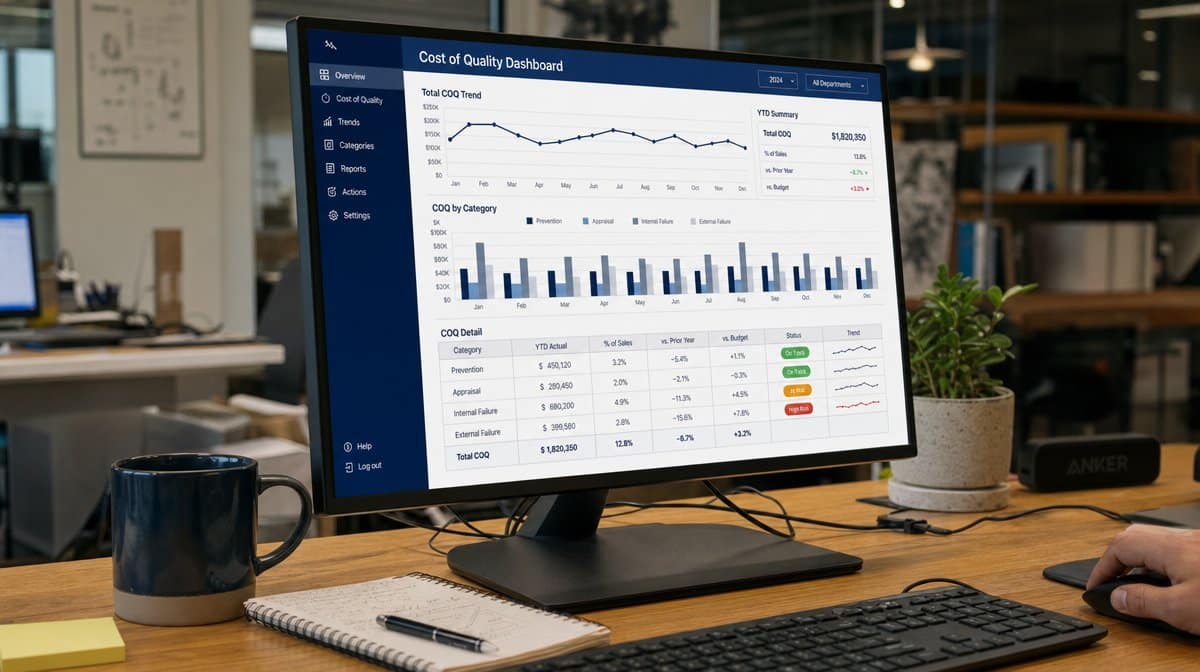
Cost of Poor Quality (COPQ)
The traditional cost of quality discussion focuses on four elements: prevention, appraisal, internal failure, and external failure costs. Taken together, these are also known as the cost of poor quality, or COPQ for short. Work through each one and you can put a dollar figure against nonconformance instead of arguing about it in the abstract.
1. COPQ Prevention
Prevention should be thought of as a good thing, more an investment in good quality than a cost of poor quality. Because you do spend money on prevention, it counts as a cost, but it is the cheapest money you will spend. You know the old saying: an ounce of prevention is worth a pound of cure. In quality, that is exactly how the math works out.
If you cannot design quality in from the beginning, you will have to inspect quality in at the end, and then still absorb the internal and external failure costs on top. Prevention is where a quality manager should focus. Unfortunately, most quality managers end up focusing on correction instead.
Prevention cost examples include:
- Quality control plans
- Lean error proofing
- Capability studies
- Supplier evaluations
- New product reviews
- Policies, procedures, and work instructions
- Quality improvement meetings, projects, and events
- Failure Modes and Effects Analysis (FMEA)
- Quality awareness, education, and training

2. COPQ Appraisal
Appraisal costs are best thought of as inspection and testing costs. Appraisal work exists to confirm that prior work was productive, so it ensures conformance to standards and performance requirements before anything moves downstream. It does not make the product better on its own; it tells you whether the earlier steps were done right.
Examples of appraisal costs include:
- Source inspection
- First Article Inspection (FAI)
- In-process inspection and final testing
- Internal auditing of product, process, or services
- Voice of the Customer audits
- Measuring and test equipment calibration

3. COPQ Internal Failures
Internal failure costs occur before the product is shipped or the service is completed for the customer. It pays to look at process failures too, not just the familiar material failures, because a missed step upstream can be as expensive as a defective part.
Internal failure examples include:
- Scrap and rework
- Re-inspection and re-testing
- Material review
- Safety accidents
- Process failures, data entry errors, and missing information
- Missed process steps
- Expedited shipping
- Supplier returns processing
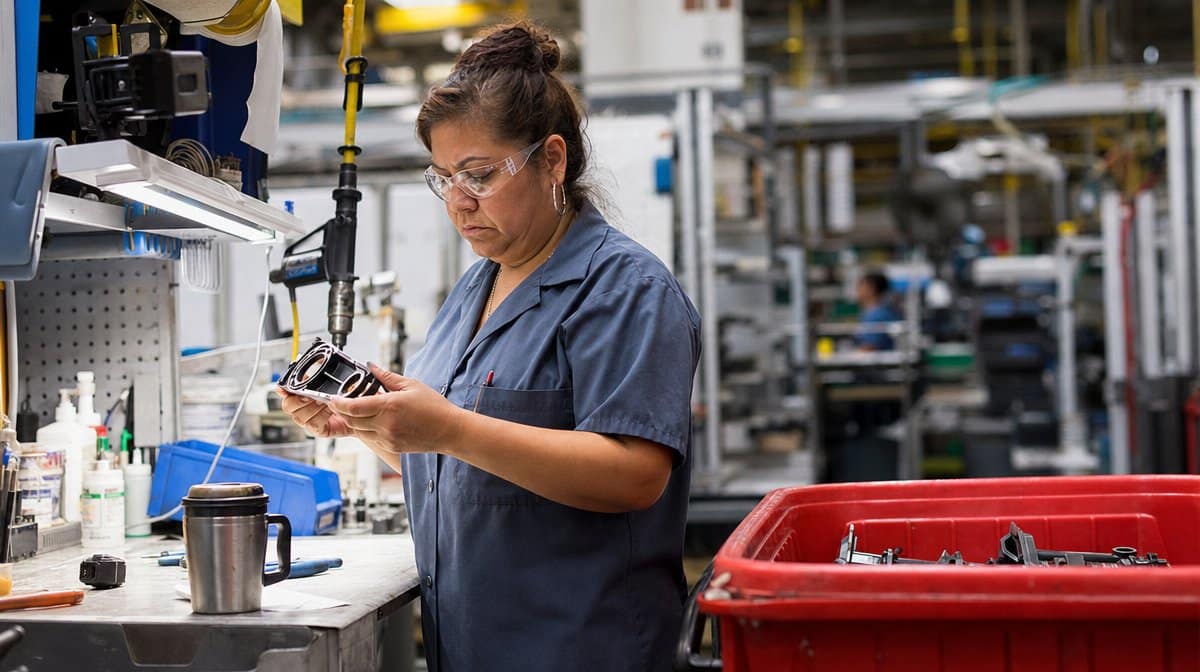
More COPQ to Think About
To capture the whole picture, you should also account for the non-traditional costs. Some people file these under internal failure costs, but they are large enough and hidden enough to deserve their own attention.
Inventory Handling Cost
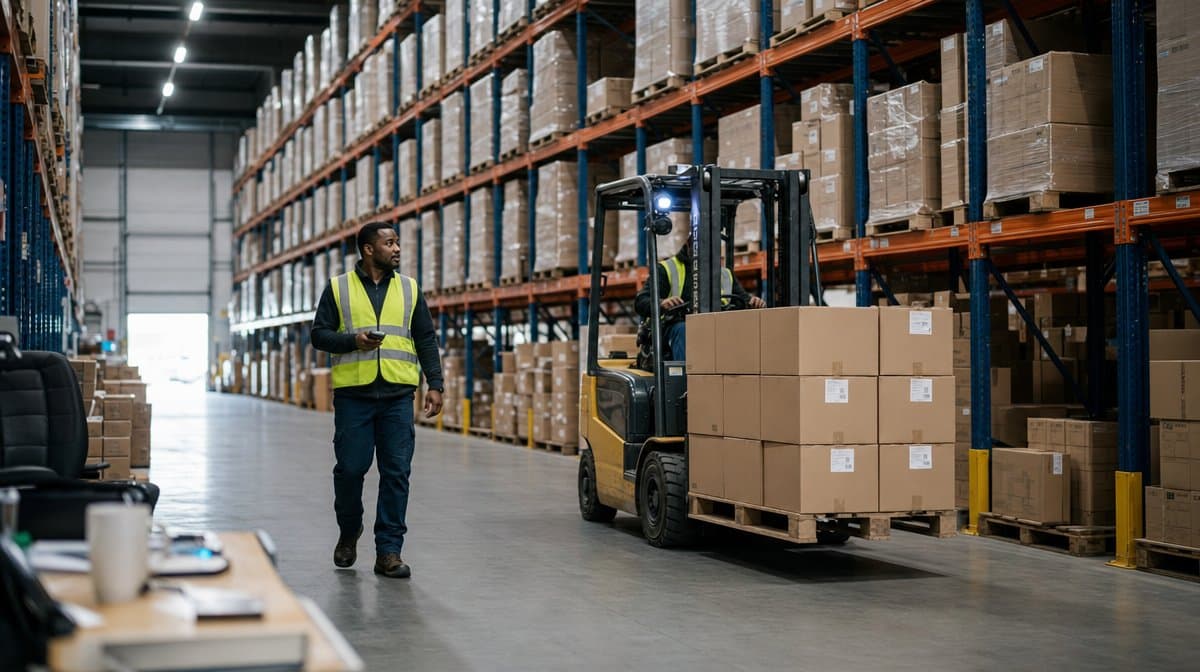
Consider inventory handling. If you carry a lot of inventory (in lean, inventory is considered waste), then you need material handlers to move it along. Those handlers look like productive work. Ask them and they will tell you, with total sincerity, that they are being productive moving inventory around the plant.
Management thought it was productive work when it bought the forklifts, right? But if you can design a system of balanced work cells that align the work in a single piece flow, like an assembly line, then you no longer need forklifts to move material from one cell to another. It just flows. So the inventory, the forklifts, and the material handlers all contribute to your cost of poor quality. Look around the company and you will find plenty of unproductive work masquerading as productive work. It just takes a lean eye to tell the difference.
Cost of Quality in Sales and Marketing
Every process contributes to the cost of poor quality. Sales and marketing are processes too, and they add to the cost of quality just like operations does. Salespeople can enter an order wrong, lose a sale through a faulty sales process, or spend too much time with the wrong customers.
Marketing can hand development too many features to build, define the market poorly, or fail to give sales the information it needs. Customer service handles the complaints, problems, and issues that flow downstream. But if you had fewer issues, you would need fewer customer service people to absorb them. The cost is real even when it never shows up on a scrap report.
Sales and Marketing Inputs
Sales and marketing are frequently excluded from quality. Many people assume quality relates only to manufacturing, sometimes because quality reports into manufacturing. The bottom line is that bad inputs equal bad outputs, and sales and marketing failures can trickle down into manufacturing failures. You are only as strong as your weakest link.
The next time you review your enterprise strategy for growing sales, look at your cost of quality metrics alongside it. They tell you almost everything about how capable your business is of responding to customers, competitors, and employee demands.
4. COPQ External Failures
External failure costs occur anytime after the product is shipped or the service is complete. When failures show up years later, it is important to attribute each one to the correct production year, its born on date, so you can trace the true cause instead of blaming whatever was running when the complaint arrived.
External failure examples include:
- Processing customer complaints, claims, or returns
- The actual customer return
- Warranty claims
- Product recalls
- Lost sales

So, What Is the Cost of Poor Quality?
Cost of quality (COQ), also referred to as the cost of poor quality (COPQ), is defined by most practitioners as the sum of prevention, appraisal, internal failure, and external failure costs. Understanding your COQ or COPQ gives quality the ability to explain itself to management in management’s own language of cost. Do that well and you have discovered how to make the business case for quality, moving the conversation from opinion to numbers leadership can act on.
Download Free Policies and Procedures to see how easy it is to edit MS Word templates and build your own policy and procedure management system.
Frequently Asked Questions
What Is the Cost of Poor Quality (COPQ)?
The cost of poor quality is the total expense a business absorbs because work does not conform to requirements. It is commonly measured as the sum of prevention, appraisal, internal failure, and external failure costs, and it represents money that would be recovered if the work were done right the first time.
What Are the Four Categories of the Cost of Quality?
The four categories are prevention costs, appraisal costs, internal failure costs, and external failure costs. Prevention and appraisal are the money you spend to avoid and detect problems, while internal and external failures are the money you lose when defects reach a later stage or the customer.
What Is the Difference Between COQ and COPQ?
In practice the terms are used interchangeably. Cost of quality (COQ) is the umbrella that includes both the good spending on prevention and appraisal and the losses from failures. Cost of poor quality (COPQ) emphasizes the failure side, the waste and losses that better quality would eliminate.
Why Does the Cost of Poor Quality Matter to Management?
It translates quality into the language of cost and return on investment. Once leadership sees that scrap, rework, returns, and lost sales are recoverable dollars, quality improvement becomes a business decision with a clear payback rather than an abstract goal.
How Can a Business Reduce Its Cost of Poor Quality?
Shift spending toward prevention. Investing in quality control plans, error proofing, capability studies, training, and documented policies and procedures reduces the far larger internal and external failure costs, which lowers total cost of poor quality over time.