How Do You Effectively Solve Business Problems?

Recurring business problems rarely stay in one department. Inconsistencies show up as uneven performance, weak earnings, late payments, excess inventory, poor meetings, and customer complaints. The symptoms look separate, but they often share a missing-process cause: people do not have a clear, repeatable way to do the work.
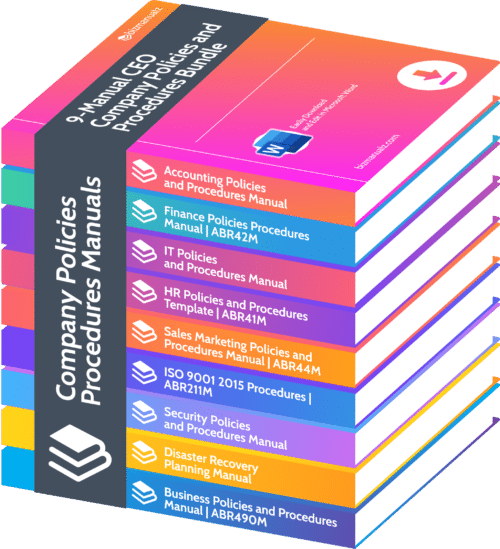
Policies set direction, while procedures turn that direction into assigned steps, controls, records, and review points. Used together, they help an organization effectively solve business problems across the ten core operating areas below, many of which are covered in the Bizmanualz CEO Company Policies Procedures Manuals.
What Is Business Problem Solving With Policies and Procedures?
Business problem solving is the disciplined work of identifying a performance gap, finding its root cause, choosing a corrective action, and checking whether the result holds. A policy defines the rule or objective. A procedure documents who does what, when it happens, which information or tools are required, and what evidence shows the work was completed.
This distinction matters because a one-time fix can hide a recurring failure. Before documenting a new procedure, identify the root cause of the business problem. Then design the procedure around the control, decision, handoff, or record that prevents the problem from returning.
A practical procedure should be detailed enough to produce a reliable result without trying to describe every possible exception. Start by observing the work as it happens, mapping the normal path and the most costly failure points, and asking the employees involved where delays or rework begin. That evidence keeps the document grounded in operations rather than management assumptions.

How to Solve Business Problems With Policies and Procedures
If your business is like most, you are dealing with inconsistencies, uneven performance, and weak earnings. Focusing on business processes provides a practical way forward. Policies and procedures for critical business processes establish the framework and direction needed to apply best practices to urgent business issues.
Effective policies and procedures develop consistency, focus employees on goals, and improve cash flow. They work best when each procedure has an owner, a defined trigger, clear inputs and outputs, a record of completion, and a review measure. The following ten areas show how that operating discipline can solve business problems without turning every exception into a new rule.
Accounting Procedures
Fulfilling your fiduciary responsibility to customers, shareholders, and employees can be a problem when accounting work depends on memory or individual habits. Accounting is a process for tracking asset, cash, and information transactions. Accounting procedures help ensure the consistency, reliability, and accuracy of those transactions, which in turn builds trust in financial statements.
Document approval limits, account reconciliations, record-retention requirements, access controls, and the review of unusual transactions. Assigning responsibility and retaining evidence makes errors easier to detect and correct. The U.S. Small Business Administration also emphasizes the need to manage accounts receivable, accounts payable, and available cash as connected parts of financial management.
Accounts Receivable Procedures
Reduce accounts receivable (A/R) aging and support even cash flow by defining how invoices are created, checked, delivered, followed up, disputed, and escalated. Every company needs practical strategies for writing accounts receivable procedures. The accounts receivable process is the heart of your cash cycle because a sale does not pay a bill until the cash arrives.
Set invoice timing, customer credit rules, collection intervals, dispute ownership, and aging-report reviews. Salespeople can find plenty of customers, but without cash-paying customers, you cannot pay your bills. That connection belongs in coordinated accounts payable procedures so outgoing commitments reflect actual cash availability.

Sales Procedures
Standardize sales pipeline management to support a consistent stream of revenue. Sales procedures allow you to take control of the sales and marketing cycle by defining stages, qualification requirements, ownership, handoffs, and follow-up expectations. Developing measurements, sales assignments, and target markets remains important, but those elements must connect to the daily actions that move an opportunity forward.
Use a regular pipeline review to examine stalled opportunities, next actions, conversion patterns, and forecast assumptions. A procedure should not force every deal into the same script. It should make the minimum standard visible so managers can distinguish a deliberate exception from a missed step.
Include the information required at each handoff, such as customer need, decision criteria, commercial terms, and the next committed action. When marketing, sales, finance, and delivery use the same definitions, managers can diagnose whether a shortfall comes from lead quality, qualification, follow-up, pricing, or execution.
Disaster Recovery Procedures
When disaster strikes, an orderly and timely response helps a business control the inevitable chaos. Delayed decisions, unclear authority, missing contact information, and untested backups can turn a contained incident into a prolonged interruption. Every company needs defined steps for disaster management planning that match its people, facilities, suppliers, records, and technology.
A useful plan names the response team, communication channels, recovery priorities, alternate work arrangements, backup ownership, and test schedule. Ready.gov recommends building a business continuity and emergency response plan that addresses communications, information technology recovery, continuity responsibilities, and practice exercises. Test the procedure often enough to discover gaps before a real emergency does.

Human Resources Procedures
Human resources decisions create legal, financial, and cultural risk when managers apply different standards to similar situations. Well-defined employee hiring and termination practices help managers make consistent decisions and retain the records needed to explain them. Current human resources procedures should address recruiting, hiring, training, retention, performance management, leave, discipline, and termination.
Procedures must also reflect nondiscriminatory practices and the employment rules that apply in each relevant jurisdiction. They cannot guarantee compliance by themselves. Train managers, control access to sensitive records, define escalation points, and schedule reviews when laws or operating conditions change.
Consistency does not mean ignoring individual circumstances. It means using the same decision criteria, approval path, and documentation standard while allowing qualified HR or legal review where facts differ. This balance helps reduce arbitrary treatment and gives employees a clearer understanding of expectations.
Quality Procedures
Nonconformance, corrective action, and auditing processes improve customer satisfaction, product performance, and process quality when they are connected. The ISO 9001 quality standard addresses quality control, quality assurance, and quality management practices through a process-based system. Learning how to meet quality standards with ISO 9001 can help an organization reduce costly rework and overtime while improving quality and customer confidence.
Define how employees identify a nonconformance, contain its immediate effect, investigate cause, approve corrective action, and verify effectiveness. Review trends rather than closing each issue in isolation. Repeated defects, supplier failures, or audit findings often reveal a process weakness that deserves a broader correction.
Quality records should make the path from problem to verified correction easy to follow. Useful measures include defect frequency, rework hours, response time, recurrence, supplier performance, and customer impact. The purpose is not to produce paperwork, but to show whether the corrective action changed the result.
Customer Communications Procedures
Collecting data from customer feedback and complaint handling processes can drive real improvement. Poor customer communication is a common cause of dissatisfaction, especially when customers receive inconsistent answers or do not know who owns the next step. Understanding why customer satisfaction is important helps connect individual responses to retention, reputation, and process performance.
Define response times, escalation paths, approval authority, handoffs, and the records required for complaints and commitments. If you know what your target customer wants, your business has better information for improving service. Close the loop by grouping recurring feedback, assigning corrective actions, and telling affected teams what changed.

Shipping and Receiving Procedures
Understanding the velocity of all materials purchased and sold can reduce unnecessary inventory and assets. Excess inventory ties up cash, consumes space, and can hide inaccurate records. Shipping and receiving therefore requires coordinated processes for material handling, inventory management, asset acquisition, asset disposition, damage reporting, and order verification.
Document supplier requirements, receiving inspections, quantity checks, storage locations, shipment authorization, and exception handling. These policies and procedures help ensure that you receive what you want, when you want it, in the quantity you want, with quality built in. Track shortages, damage, late receipts, returns, and picking errors so recurring waste becomes visible.

Management Procedures
Management is largely about communication, which is why improving internal communication benefits the whole company. Communicating strategy, company goals, current performance, and operating constraints helps motivate and focus employees. Without a consistent management rhythm, priorities shift informally and different departments act on different assumptions.
Develop, document, implement, and monitor procedures for meetings, decisions, approvals, reporting, and cross-departmental handoffs. Assign owners and deadlines, record decisions, and review whether promised actions occurred. Management must also demonstrate commitment to the standards it expects, whether those standards govern internal processes or work that directly affects customers.
Compliance Procedures
Conformance to regulations, statutes, contracts, and standards is a problem for many organizations because requirements come from several sources and change over time. This is where policies and procedures can help your organization. A compliance procedure translates an applicable requirement into ownership, recurring tasks, evidence, monitoring, and escalation.
Some documented information is required by specific standards, contracts, or regulations, while other procedures are management controls chosen by the business. Examples include ISO-related quality controls, SOX internal-control obligations for covered public companies, and government requirements affecting HR. Maintain a requirements register, assign control owners, preserve evidence, review changes, and test whether the control works as intended.
Link each requirement to the procedure, record, and review that demonstrate conformance. When an audit identifies a gap, capture the finding, immediate correction, root cause, corrective action, owner, due date, and effectiveness check. That chain turns compliance from a periodic scramble into a maintained operating process.

Policies and procedures solve business problems when they are tied to a real cause, used by the people doing the work, and reviewed against results. Start with the area where inconsistency creates the greatest cost or risk. Document the minimum reliable method, assign ownership, train the people involved, measure the outcome, and revise the process when evidence shows it is not working.
Frequently Asked Questions
How Do Policies and Procedures Solve Business Problems?
Policies define the rule or objective, while procedures assign the steps, owners, controls, records, and review points. This consistency makes recurring failures easier to prevent, detect, and correct.
Which Business Processes Should Be Documented First?
Start with a process where inconsistency creates the greatest financial, customer, safety, continuity, or compliance risk. A/R aging, recurring quality defects, critical approvals, and emergency response are common priorities.
How Can Procedures Improve Cash Flow?
Accounts receivable procedures improve invoice timing, follow-up, dispute handling, and aging review. Coordinating those steps with accounts payable and inventory controls helps a business match outgoing commitments to available cash.
Why Are Disaster Recovery and Compliance Procedures Important?
Disaster recovery procedures establish response roles, communications, priorities, backups, and testing before an emergency. Compliance procedures translate applicable requirements into assigned controls, evidence, monitoring, and escalation.
How Do Procedures Improve Consistency?
A procedure gives employees a shared method for completing work, handling exceptions, and recording results. Managers can then compare performance, identify gaps, and improve the process using evidence instead of assumptions.