How To Maximize Your Productivity in Gmail

A crowded inbox is only half the productivity problem. The other half is scattered contact data: duplicate records, outdated addresses, unclear ownership, and conversations that cannot be connected to the right person. Gmail becomes far more useful when you treat Google Contacts, scheduling, and a few disciplined email habits as one communication system.
This guide explains how to maximize your productivity in Gmail by organizing Google Contacts, connecting the tools your team already uses, cleaning up old information, and using Undo Send and Schedule Send with intention. The goal is not to spend more time in email. It is to make each visit to your inbox more accurate, focused, and useful.
What Is Gmail Productivity?
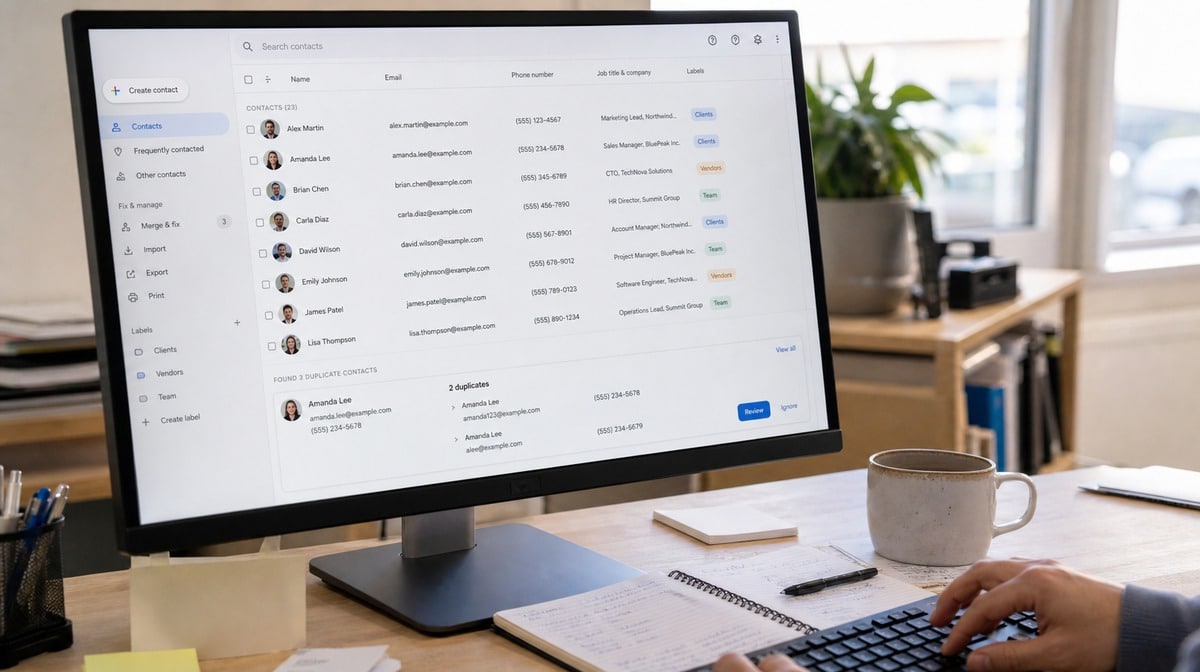
Gmail productivity means handling messages and the contact information behind them with the least avoidable friction. A smartphone replaced the wristwatch, desk calculator, landline, camera, and notebook for many people. Gmail and Google Contacts can play a similar multitool role for business communication when the information inside them stays organized.
Your Gmail account is connected to features that can simplify professional and personal communication, but those features only help when you use them consistently. Accurate contacts reduce search time, make meeting invitations easier, and help you communicate more effectively. Good inbox boundaries help you avoid reacting to every new message as it arrives.
What Can Google Contacts Do?

Google Contacts is not the most prominent feature in Gmail or Google Workspace, but it can shape how productive you are every day. You can store hundreds or thousands of records, keep phone and email details together, and maintain useful context about the people you work with.
The beauty of Google Contacts is not merely that you can store hundreds, if not thousands, of people’s contact information and merge phone contacts with your email account. You have other useful possibilities at your disposal, too. It is easy to filter and segment contacts based on useful categories, synchronize contacts through the devices you use, and import or export records when the business process calls for it.
- Merge duplicate contacts so repeated records do not crowd search results.
- Use labels to filter and segment contacts by customer, vendor, department, project, or another category that fits your work.
- Synchronize contacts across the devices you use, subject to the account and device settings your organization permits.
- Import or export contacts when you move systems, create an approved backup, or need a controlled handoff.
Google Contacts also works with Google Calendar, Drive, and Meet. Updated records make it easier to invite the correct people, share the correct files, and avoid sending a message to an obsolete address. Contacts that live in separate Google Accounts cannot always be merged, so decide which account should hold the authoritative record before a cleanup project begins.
The service can work in isolation or in unison with other Google offerings, including Calendar and Drive. You can organize your schedule when contacts stay updated and set up meetings through Google Meet for a video conference. The same contact record then supports several parts of the communication process instead of forcing you to re-enter the person’s information each time.
Use a simple naming convention for labels and review it before adding new ones. If one employee uses “prospects,” another uses “leads,” and a third creates a label for every campaign, the directory becomes harder to scan. A short shared vocabulary keeps filtering useful without turning contact organization into a separate administrative project.
Which Gmail and Contact Integrations Improve Productivity?
Google Contacts works most directly with Google’s own services. Other connections depend on the product, account tier, administrator settings, and whether your team uses a native sync, an import, or a third-party connector. That distinction matters because an integration that copies records once is not the same as a governed two-way synchronization.
Communication tools such as Slack may use a Google Workspace directory for invitations or rely on another connected system. Sales teams can synchronize contact activity with platforms such as Salesforce or HubSpot when the approved configuration supports it. These connections can reduce repetitive import and export work, but someone still needs to define which system owns each field and who can edit it.
Before connecting systems, identify the business outcome. A calendar connection may help schedule meetings. A CRM sync may help sales and marketing teams see client activity. A shared directory may help employees find current internal or external contact details. Clear ownership prevents a convenience feature from becoming another source of duplicate or conflicting data.
Test the connection with a small set of records before moving the full directory. Confirm how additions, edits, deletions, and field conflicts behave in both systems. Then document the direction of sync and the person responsible for exceptions. This small control can prevent a well-intentioned integration from multiplying outdated information across the business.
How Should a Business Share Google Contacts?
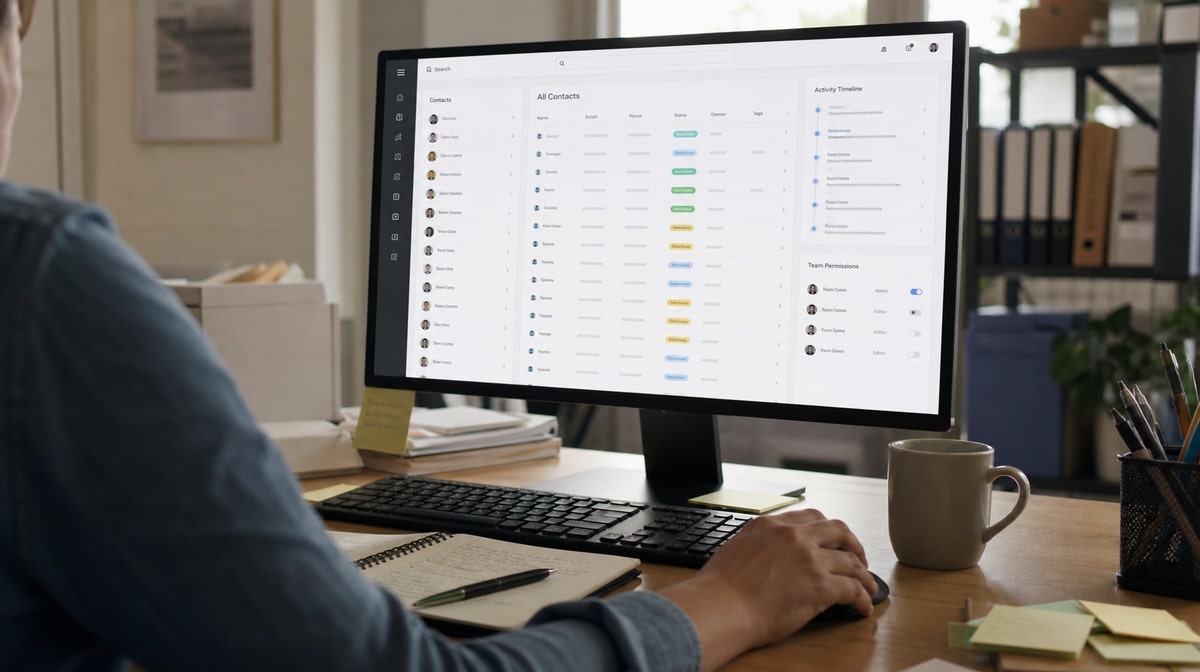
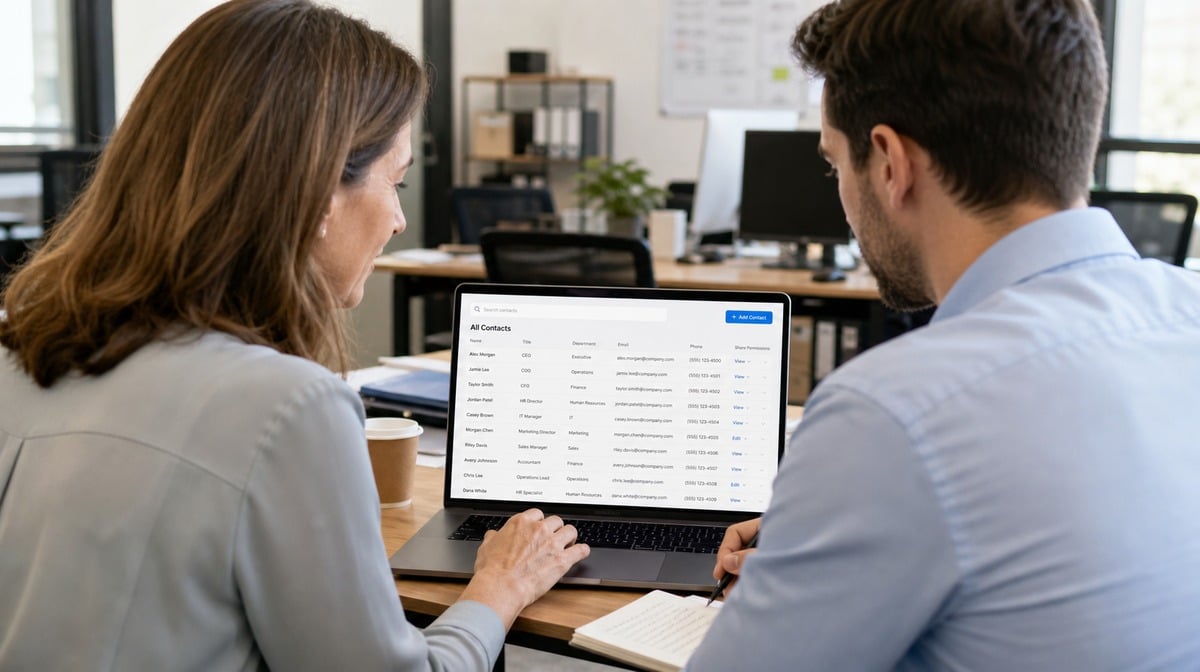
In addition to connecting your own contacts to the apps on your phone, tablet, and computer, you can simplify how approved contact information moves through the organization. Google Workspace contact delegation can support certain same-domain sharing needs. Third-party directory tools can add broader permission and synchronization features when the native options do not fit the workflow.
The important question is not simply whether contacts can be shared. Decide whether another person may view, edit, delegate, export, or add records. The organization should also decide who corrects an inaccurate record and how quickly a departed employee, stale prospect, or changed vendor address is updated.
In addition to integrating your own Google Contacts with apps on your phone, tablet, and computer, sharing can reduce excessive manual labor and the copying of every individual’s contact information. A governed directory helps you share the approved contact base with employees in different departments while managing their permissions. You retain control over what other people can do with that information, whether they can edit it, share it with others, or add new contacts for the team to review.
Shared contacts help employees stay aligned with their interactions and reduce the manual copying that often creates errors. Users can confirm that they have the correct information for a client or team member, communicate on the right channel, and avoid preventable delays. It is a practical way to boost office productivity without adding another meeting.
Contact sharing also needs an exit process. When an employee changes roles or leaves the organization, remove unnecessary access and transfer ownership of shared records. Review external apps that retain contact permissions. Productivity improves when people can find the information they need, but security improves when access ends as soon as the business need ends.
When Does Your Team Need a Contact Management System?
For some individuals and small teams, Google Contacts provides enough structure. Other businesses need a dedicated contact management system or customer relationship management platform to support increasing business productivity across departments.
- A shared system can support cross-departmental collaboration while limiting access according to role.
- Authorized users can add notes, assign ownership, and preserve useful context for the next team member who communicates with a contact.
- The system may automate approved notifications and alerts or help teams monitor whether an opportunity needs attention.
Do not use the acronym CMS for this purpose, because CMS usually means content management system. More importantly, do not assume that buying a CRM will repair weak contact practices. Define required fields, record ownership, duplicate rules, permissions, and the review cadence before moving data.
A contact management system can empower cross-departmental collaboration. Depending on the system, authorized employees can change who may edit contacts, add notes that help other team members, and create notifications or alerts. A sales team may also track the lifecycle of each interaction to see whether a lead has gone cold or a new opportunity needs attention. These capabilities are useful only when the underlying records remain accurate.
How Can Regular Delete Sessions Reduce Gmail Clutter?

Are you a hoarder of emails as well as contacts? Do you keep old notes, duplicated records, and to-do lists that no longer serve a purpose? When unnecessary information appears in every search and inbox scan, you disperse your attention across more items than the work requires.
Color coding and descriptions cannot fix every form of clutter. Schedule a regular delete session to review outdated contacts, invalid addresses, redundant labels, and messages that no longer need to remain in the inbox. Apply your organization’s retention, legal, security, and recordkeeping rules before deleting business information.
A short cleanup routine can reduce the time required to find the correct person and lower the chance of writing to an inactive address. Pair that routine with clear inbox boundaries. This guide to managing email effectively offers additional ways to keep email from controlling the workday.
If you have the tendency to keep everything in your inbox and address book, schedule a dedicated delete session to cleanse Gmail and Google Contacts. You need to actually delete outdated contacts and old email whenever policy permits. That session shortens the search for correct contact details and helps you avoid the annoying notification that a message went to an inactive address.
Choose a cadence you can sustain, such as a brief weekly inbox review and a deeper monthly contact review. Search for bounced messages, former employees, repeated records, and incomplete names. A recurring session is more dependable than waiting until clutter becomes disruptive, and it makes each future review smaller.
How Does Undo Send Protect Your Work?

When contacts are disorganized, it becomes easier to send an email to the wrong person or at the wrong time. Misclicks happen to the best of us. Gmail’s Undo Send setting gives you a brief cancellation period after you select Send.
- Open Gmail settings and find the Undo Send cancellation period.
- Choose 5, 10, 20, or 30 seconds. Thirty seconds is the current maximum.
- After sending, use the Undo option in the confirmation notice before the selected period expires.
This feature does not retrieve a message that has already been delivered. Gmail delays delivery during the selected cancellation period. Use the window to catch a wrong recipient, missing attachment, or obvious error, but still pause and review important messages before sending them.
Whether you have accidentally included someone you should not have included or noticed a typo immediately after clicking Send, the feature can prevent excuses and explanations. It is a brief window of opportunity, not a replacement for review. The most reliable habit is still to confirm the recipients, subject, attachments, and message before the email leaves your control.
How Can Schedule Send Protect Focus?

Many people check more than one email address and feel pressure to respond throughout the day. As new messages arrive, the inbox can cause rushed replies, fragmented attention, and hectic work. You may not be able to abandon email when an important response is expected, but you can batch routine correspondence into one or two focused periods.
Like most people, you may have more than one email address to check every now and then. Add messages that need to go out throughout the day, and it is easy to fear that the following day will turn into chaos if you do not respond immediately. Scheduling correspondence gives you a way to prepare thoughtful responses without interrupting yourself constantly.
Gmail’s Schedule Send feature lets you prepare a message when you have time and choose when it should be delivered.
- On a computer, compose the message and select the arrow beside Send, then choose Schedule send.
- On a phone or tablet, compose the message, open the three-dot menu, and choose Schedule send.
- Select a suggested time or choose a date and time that fits the recipient and the purpose.
Scheduling messages can help you finish correspondence during a planned inbox block without interrupting the recipient at an awkward hour. Review the time zone before scheduling. A delayed message is only productive when it reaches the right contact with the right content at the right time.
How Do Google Contacts and Gmail Work Better Together?
A minor feature inside a larger system can reshape time management and organization. Accurate Google Contacts make Gmail searches, meeting invitations, sharing, and follow-up more reliable. Cleanup routines, controlled integrations, Undo Send, and Schedule Send then help you protect attention and reduce avoidable communication errors.
The most productive setup is not the one with the most tools. It is the one your team can maintain. Choose an authoritative contact source, define permissions, schedule cleanup, and use Gmail features in a repeatable way. Those habits help you make better use of both your time and your professional connections.
Frequently Asked Questions
How Does Google Contacts Improve Gmail Productivity?
Google Contacts keeps names, email addresses, phone numbers, labels, and other approved details available across compatible Google services. Accurate records reduce search time and help you reach the intended person.
Can Google Contacts Merge Duplicate Records?
Yes. Google Contacts can identify and merge many duplicate records within the same account. Contacts stored in separate Google Accounts may need a different consolidation process.
How Can a Team Share Google Contacts Safely?
Use approved Google Workspace delegation, directory features, or a governed third-party tool. Define who may view, edit, export, delegate, or add records before sharing contact data.
How Long Does Gmail Undo Send Work?
Gmail lets you configure a cancellation period of 5, 10, 20, or 30 seconds. The option delays delivery during that period rather than recalling a message after delivery.
When Should You Use Gmail Schedule Send?
Use Schedule Send when you want to prepare messages during a focused inbox block and deliver them at a more appropriate time. Check the recipient, content, and time zone before scheduling.