Are AI Tools Close to Thinking and Writing Like Humans?

Artificial intelligence now drafts marketing copy, summarizes research, turns complex data into narration, answers spoken questions, and suggests a great title for your next song. It can even help you order food. Those results can sound remarkably human, but fluent language is not the same thing as human understanding.
Businesses once treated human-like AI as a distant possibility. Today, AI tools are part of ordinary writing and communication workflows, from product descriptions and YouTube video titles to reminders and voice interaction. So we still have to ask: are AI tools close to thinking and writing like humans?
What Are AI Tools That Think and Write Like Humans?
AI-powered tools that appear to think and write like humans are systems that generate language, recognize patterns, answer questions, or take actions based on instructions and context. They do not think exactly as people do. Instead, they use trained models, data, software rules, and probability to produce a useful response that can resemble human communication.
The distinction matters. A tool may write a smooth paragraph while missing a factual error, an unstated business requirement, or the reason a procedure exists. AI can enhance client communication using technology, but people remain responsible for the message, evidence, risks, and decision.
Earlier generations might still remember fear driven by almost anything related to artificial intelligence. The reality is that computers entered our lives through various mobile hand-held devices, online services, and a plethora of different helpful apps. That widespread use makes the question more immediate, but it doesn’t provide a definite answer about whether an app can think like human beings.

Writesonic
WriteSonic, now styled Writesonic, began as an AI copywriter aimed at high-performing ads, blogs, commercial pages, product descriptions, and other creative ideas. It can still help generate long-form articles and marketing content, but its current platform also emphasizes research, citations, search visibility, brand voice, and content optimization.
That evolution shows how quickly AI writing tools change. A marketer can use the system to explore headlines, structure a draft, or test different ways to explain an offer. It may help choose the right words, but it cannot guarantee that a claim is accurate or that the copy will increase sales. Expert human input is vital for technical writing, regulated content, and any message where an error creates business risk.
Even though Writesonic can produce an engaging conversational style, the output is not always enough for every technical aspect of writing. It can also generate creative ideas, special commercial pages, and title options that save time. The safer approach is to treat those capabilities as assistance and have an experienced subject-matter expert approve the final content before publication.
WordSmith
WordSmith, commonly presented as Wordsmith, demonstrates a different kind of language generation. Its strongest idea is turning complex data and statistics into an insightful narration. Instead of asking a person to write the same report repeatedly, a structured-data system can convert changing numbers into readable explanations based on an approved template and logic.
Wordsmith originated at Automated Insights, which is now represented under Stats Perform. The platform’s current generative work focuses on sports storytelling and betting using Opta data. That narrower role does not erase the original lesson. Data-to-narrative automation is valuable when the source fields, rules, and intended audience are clear. A person still needs to define the meaning of the measures, review unusual results, and decide what action the narration should support.
AI Writer
AI Writer originally offered a simple promise: choose a topic or headline, send it to the software tool, wait a bit, and receive a draft. That topic-to-draft workflow remains familiar across modern AI systems. AI-Writer now puts more emphasis on research and academic material, including source-backed answers and review papers with citations.
A cited draft is a starting point, not proof. Links can be irrelevant, evidence can be interpreted incorrectly, and a polished explanation can still omit important context. Writers should open the underlying sources, verify every material statement, and revise the output for the real audience. The software can assist with drafting and source-backed research, but accountable review cannot be delegated.
In basic use, a writer can choose a topic, describe the intended story, and ask the writing bot to generate something interesting that represents a first draft. Sometimes the result can sound really odd. That is not a reason to forget about the tool, but it is a reason to read every sentence and improve it rather than assume the AI-based output is ready.
QuillBot
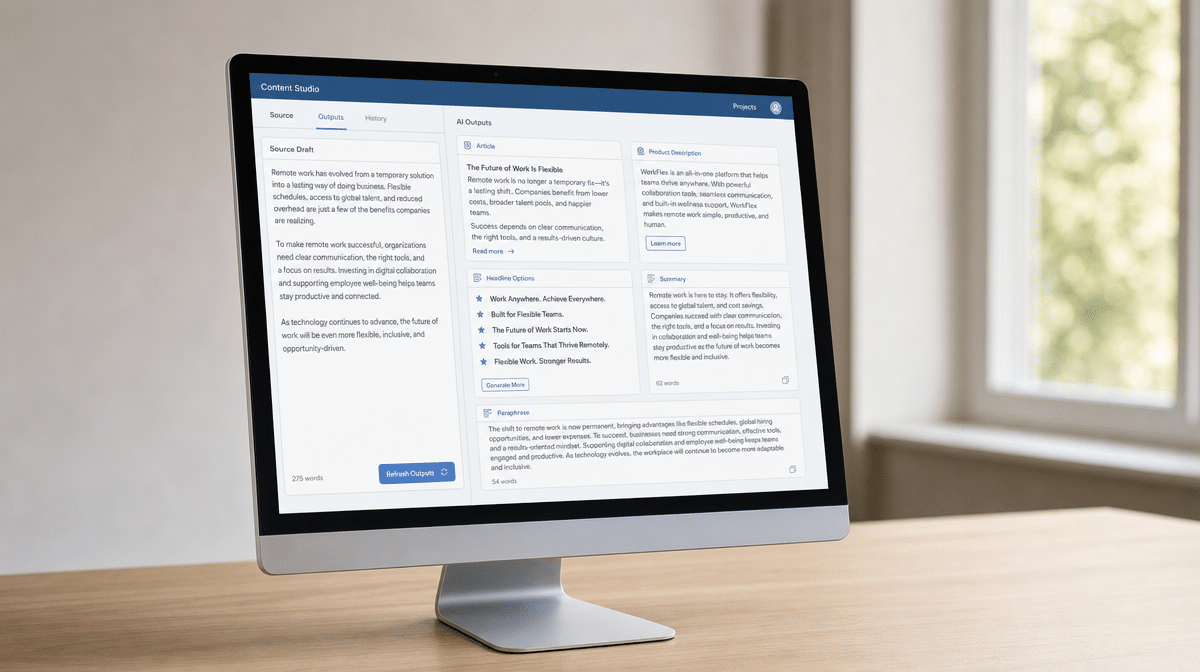
The QuillBot paraphrasing tool is a language generation platform that helps people rewrite and enhance a sentence. Its integrations with Google Docs and Chrome keep that assistance close to the place where many people already write. The current product also includes grammar, citation, chat, summarization, and other language tools.
Paraphrasing is useful when the writer understands the source and owns the final wording. It is not a license to disguise copied work or avoid attribution. Better word choices can improve clarity and tone, but a writer must still retain the source meaning, cite ideas that came from someone else, and check whether the revised sentence fits the larger story.
Unlike other entries that focus on creating a new draft, QuillBot’s paraphrasing workflow starts with an existing sentence. A free version and premium modes remain available, although plan limits and mode counts change. The useful test is not whether the platform guarantees a perfect tone or helps avoid plagiarism automatically. It is whether the writer can paraphrase accurately, cite the source, and explain the same idea in an appropriate style.
These four tools cover distinct parts of the writing process: marketing copy, data narration, research-backed drafting, and paraphrasing. That variety matters more than a vendor ranking. A business should select the tool that fits the task, define how people will review its work, and document the approved use in its procedure review and approval process.
How Do Siri and Alexa Create Human-Like Interactions?
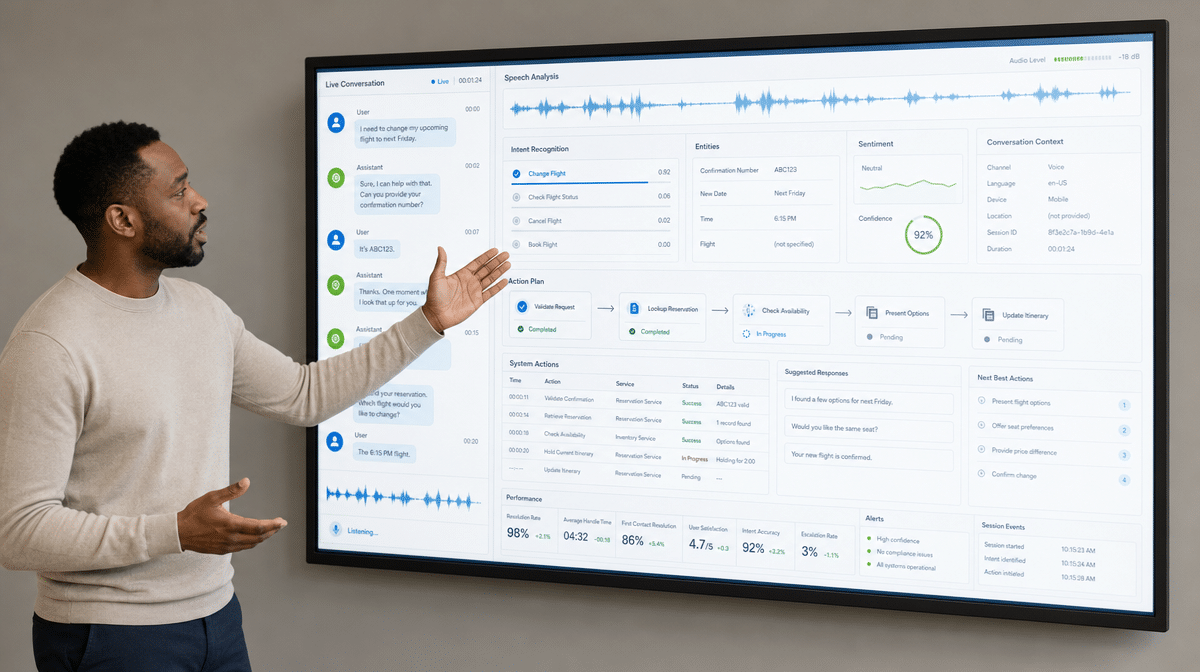
Writing is only one form of human-like interaction. Voice assistants combine speech recognition, language generation, context, and connected services so a person can ask for help without navigating a traditional menu. The result feels conversational because the assistant can listen, respond, and sometimes carry an action into another application or device.
Siri Voice Assistant
The Siri voice assistant is a familiar tool for people of many ages. Users can ask questions, dictate messages, set reminders, find information, and control supported device functions. Apple announced a more capable Siri AI in 2026, built around Apple Intelligence, personal context, onscreen awareness, web knowledge, and writing tools on supported devices.
Siri became a favorite tool of both young and old because the interaction is easy to understand. Even youngsters who are only starting to talk may know about it and ask Siri for help. That seamless way of interacting can be useful, but an approachable voice and quick response should not be mistaken for social skills or human understanding.
Those capabilities make interaction more seamless, but they do not make Siri a person. A useful response depends on the device, available permissions, connected services, language, and the quality of the request. Voice assistants can support language and communication activities or educational purposes, but sensitive decisions still require a qualified human.
Amazon’s Alexa
Alexa also began with a simple interaction: say the wake word, ask for something, and the assistant listens. It can set a reminder, help find a phone, manage supported smart-home devices, order eligible products, play games, and use different voices. Alexa+ extends that model with more conversational planning, drafting, research, and service actions across supported devices.
Its specific set of connected skills can help a user order something online, read supported information, or also play games for fun and inspiration. Alexa is a bit different from Siri because the devices, services, and available actions differ. The common idea is a conversational assistant that can talk, interpret a request, and call an approved capability.
The assistant is still bounded by its integrations and permissions. It may complete a routine request well and misunderstand an unusual one. Businesses using voice systems should decide what information the device may access, which actions require confirmation, and how employees verify anything involving money, customers, security, or records.
Siri and Alexa show why people often describe AI as human-like. Conversation lowers the friction between a person and a system. The interface may feel natural, yet the underlying process remains software receiving input, predicting a useful response, and calling an approved function. Natural interaction should make a tool easier to use, not hide its limits.
How Close Are AI Tools to Human Thinking and Writing?
AI tools are close to human performance on some defined writing, analysis, and language tasks, but no single score settles the larger question. Stanford HAI’s 2026 assessment of AI technical performance describes rapid progress alongside uneven results across different benchmarks. The practical lesson is that capability has a jagged edge: excellent output in one situation does not guarantee reliable judgment in the next.
It is hard to say for certain how close the technology will become, and no person knows a final, definite answer. One thing, however, is quite clear: AI should be used with great care. A system can produce amazing content in one case and a confident error in another, so its apparent style and intelligence must be tested against reality.
Human thinking includes lived experience, values, accountability, social understanding, and the ability to decide what matters when the rules are incomplete. AI systems can imitate parts of reasoning in language and solve increasingly complex tasks, but they can also invent details, accept a false premise, miss a private business constraint, or present uncertainty with complete confidence.
Use AI to Enhance Human Capacities
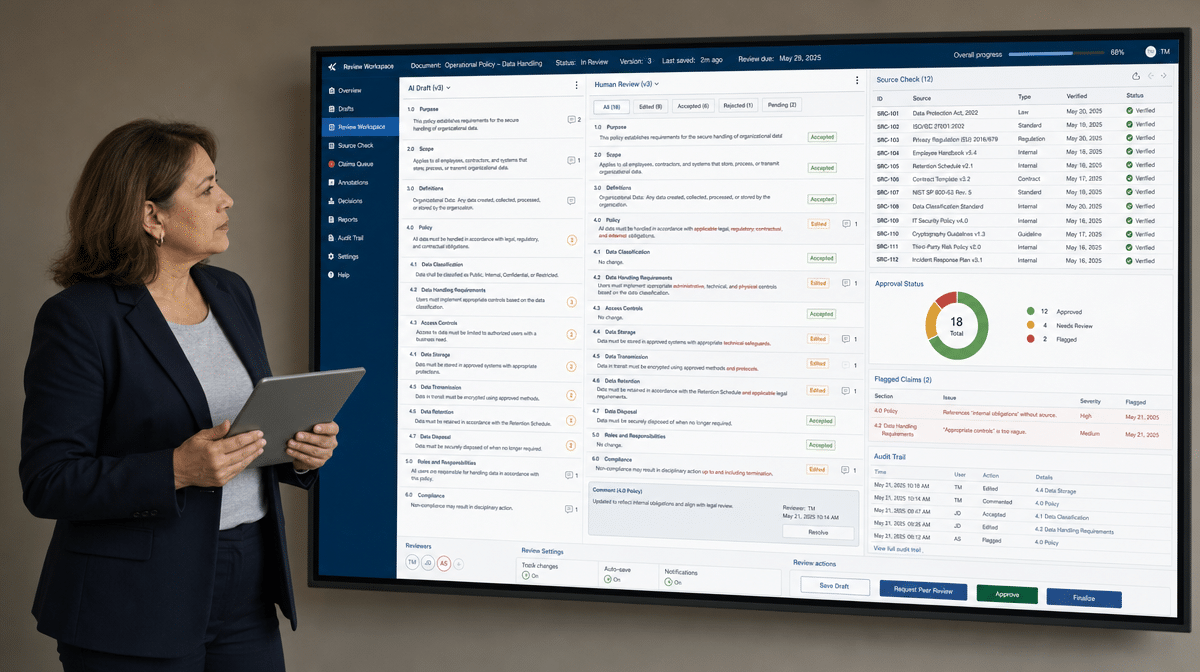
AI technology should implement analysis and enhance human capacities instead of making people passive through automation and robotics. Let the system produce alternatives, summarize material, identify patterns, or complete repetitive first drafts. Keep people responsible for purpose, evidence, exceptions, approval, and consequences.
The goal is not to outperform humans at every task or make people lazy by relying on automation. It is to turn repetitive work into something more useful while preserving the judgment that gives the work meaning. Used this way, an AI-based tool supports the person rather than becoming an excuse to stop thinking.
This is especially important in policies and procedures. AI may help organize a procedure, draft steps, or suggest a checklist, but it does not know whether the proposed workflow matches the organization’s roles, controls, laws, systems, and actual practice. The process owner must test the result with the people who perform the work.
Manage Risks Before Scaling Use
AI can be designed and deployed for a good purpose or one that brings harm. The people who select training data, configure systems, approve integrations, and monitor results make choices that shape the outcome. That responsibility requires strong morals and ethics, but it also requires operating controls.
NIST’s AI Risk Management Framework gives organizations a practical structure for governing, mapping, measuring, and managing AI risks. A business can translate that approach into approved-use rules, privacy checks, source verification, testing, human review thresholds, incident reporting, and periodic monitoring.
The answer, then, is qualified. AI tools are far closer to human-like writing and interaction than they were when many people first feared computers would take the human world by storm. They are powerful partners for specific tasks. They are not substitutes for accountable human judgment, and treating them as such creates exactly the risk that thoughtful use is meant to prevent.
Teams moving from AI experiments to shared work can use this comparison of Viktor alternatives to evaluate chat-native execution, agent builders, enterprise context, and human control.
Frequently Asked Questions
Can AI Tools Think Like Humans?
AI tools can produce language and solve defined tasks in ways that resemble human thinking. They do not possess the same lived experience, values, accountability, or broad situational understanding as a person.
How Do AI Writing Tools Generate Content?
AI writing tools use trained models, instructions, context, and probability to predict and generate useful language. Some systems also use sources, structured data, retrieval, or approved templates to guide the output.
Which Tasks Can AI Writing Tools Handle?
They can help with marketing copy, product descriptions, headlines, summaries, research drafts, data narration, paraphrasing, and first drafts of procedures. The acceptable use depends on the risk and the quality of human review.
Why Does AI-Generated Writing Need Human Review?
AI can invent details, misread evidence, omit business context, or express uncertainty too confidently. A qualified person must verify sources, revise the message, protect private information, and accept responsibility for the result.
What Ethical Risks Come With Human-Like AI Tools?
Risks include false information, hidden bias, privacy loss, inappropriate automation, weak accountability, and decisions made without meaningful review. Clear policies, testing, monitoring, and human approval help manage those risks.
When an AI assistant moves from drafting into workplace action, compare Anthropic AI Employee alternatives by approval boundaries, procedure handoffs, exceptions, and review evidence.