How Can Training Improve Employee Performance?
A reader from a large school district once asked a practical question: “How do you train and communicate with your team?” The district was in the midst of many changes, including introducing new information technology for employees. With people spread across many locations and schedules already full, the reader wanted to know how training could improve employee performance without interrupting the work.
That challenge is not limited to schools. Any geographically dispersed organization must communicate expectations clearly, give employees a realistic way to learn, and verify that new knowledge carries into daily performance. The delivery method matters, but the real objective is consistent action on the job.
What Is Employee Training for Improved Performance?
Employee training is a structured way to build the knowledge, skills, and awareness people need to perform a defined responsibility. Training improves performance when it addresses a real gap, reflects the conditions employees face, and gives them a chance to practice before the organization expects consistent results.
Communication is part of that system. Employees need to understand what is changing, why it matters, what they are expected to do, where to find the material, and how their questions will be answered. If those messages vary by manager or location, even strong training content can produce uneven results.
Training Independent Employees
Though a large school district may be an extreme example, it shares practical challenges with many dispersed organizations where employees work independently. Teachers may work at dozens of locations. Culturally, teachers work independently most of the time and are highly self-directed. Every teacher also answers to many customers, including classroom parents, to whom they must be responsive.
Daily schedules are rigid, driven by the defined length and periods of the school day. Non-class in-service training and meeting time is scheduled long in advance. A successful program must fit those constraints instead of assuming everyone can leave work for the same classroom session.
Training a Distributed Workforce
Any organization with a distributed workforce that works directly with customers faces similar employee training challenges. Does your workforce travel? Do employees manage customer relationships in the field? Would a field employee skip training if a customer calls? Think of field sales, field service, field engineering, and route delivery.
For many such organizations, a good training program based mainly on in-person group training is not practical. A better design starts with the employee’s work environment and offers several realistic access windows. That same principle applies when training remote employees who must balance learning with customer and operational responsibilities.
If Classroom Training Is Not Practical, What Do You Do?
Employee training is still essential. For example, route sales and delivery professionals across the Americas may require training on a new ordering system. As in the case of teachers in a school district, their workdays are prescribed by customers’ strict time constraints. Any time available for training may need to be measured in tens of minutes, and every employee’s availability is different. By the nature of their work and culture, they operate independently.
Clearly, building an effective training program around inflexible, one-size-fits-all classroom events will not work. The answer is to separate the learning objective from the old delivery habit. Keep the required outcome consistent while giving people flexible ways to reach it.
Self-Paced User-Driven Training
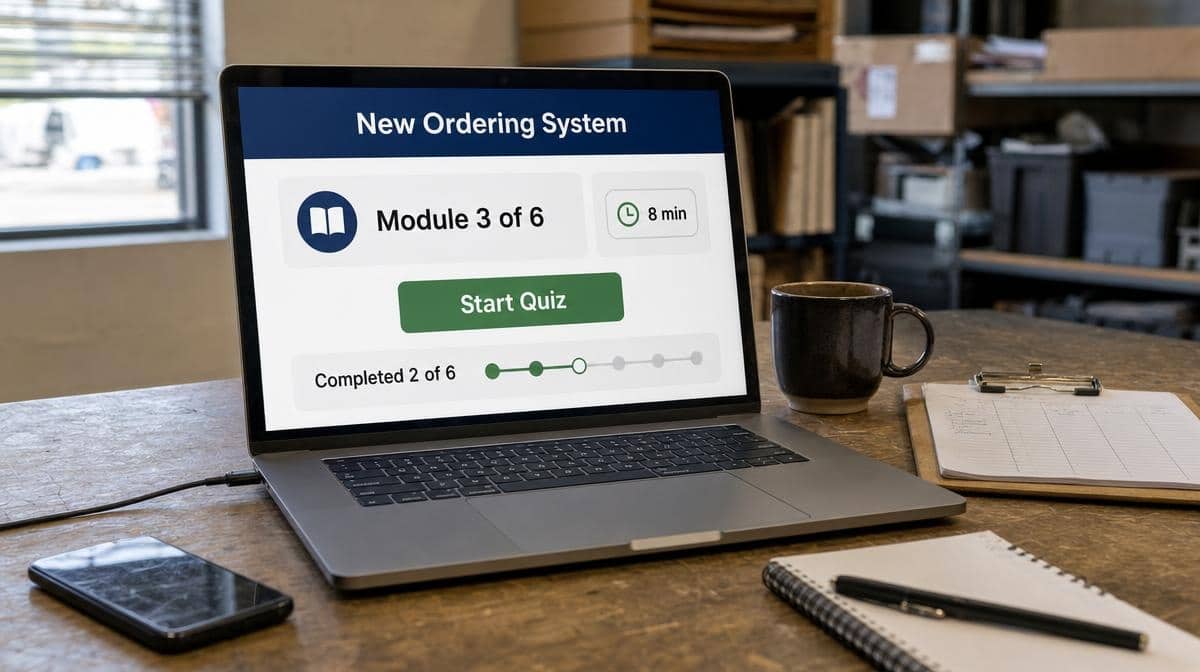
Self-paced, user-driven, independently administered training was the answer for this organization. Video content was developed in three-to-10-minute bites that employees could access at any time. The information was organized so students could approach the training either sequentially or as needed during the day. Materials and delivery were customized for limited mobile bandwidth and small screens.
Short modules are useful because they reduce the amount of uninterrupted time an employee needs, but duration alone does not make training effective. Each module should address one clear task or decision, connect to a work example, and end with a practice activity or knowledge check. When an organization uses video, captions and other accessible synchronized-media practices help more employees use the material in real working conditions, as described in Section 508 guidance for video and synchronized media.
Online Training and Communication
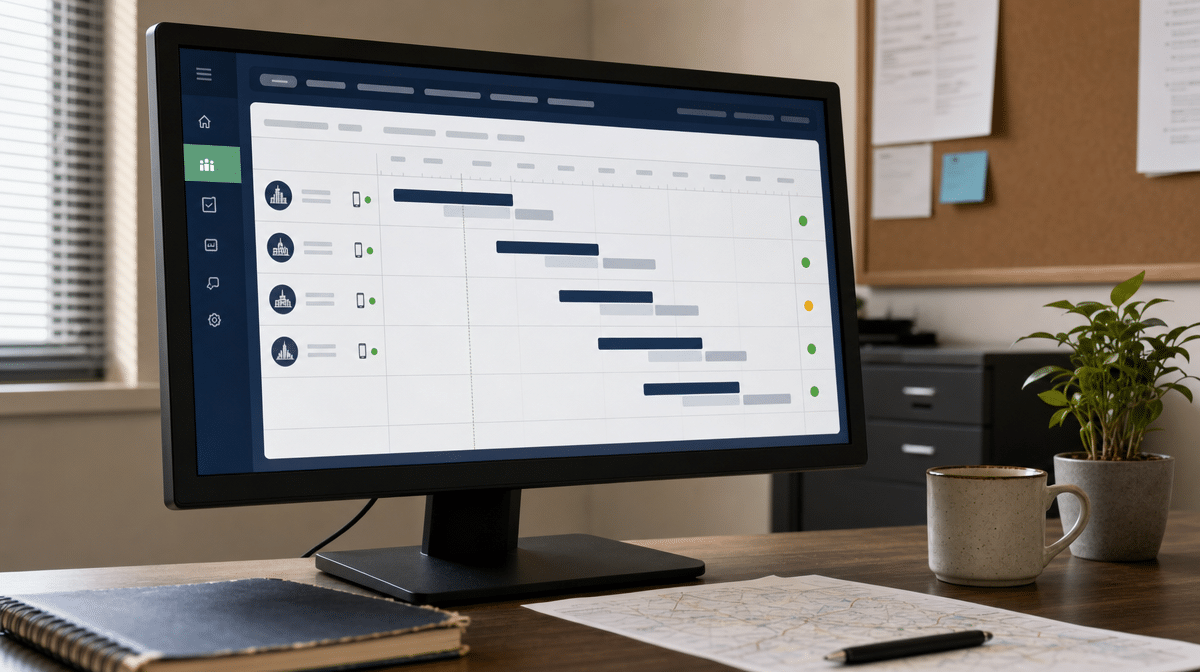
A technology partner configured a hosted learning management system, or LMS, complete with quizzes and completion tracking. This allowed the corporation to know who had been exposed to the material and who had completed an aligned assessment. Managers could then focus follow-up communication on the employees, locations, or topics that needed more support.
The same platform can support a deliberate communication sequence. Announce what is changing and when, explain who is affected, assign the relevant learning path, provide a place for questions, and send reminders tied to actual completion status. Employees should also know how to report a problem after they use the new process. This closes the loop between course communication and workplace reality.
Completion does not prove job proficiency by itself. A quiz can test recall or understanding, while a supervised practice task can show whether the employee can apply the new ordering process. Follow-up observations, error rates, service measures, and customer feedback reveal whether learning transferred into performance. This distinction is important when you train employees on new procedures.
How Can You Measure Training Performance?
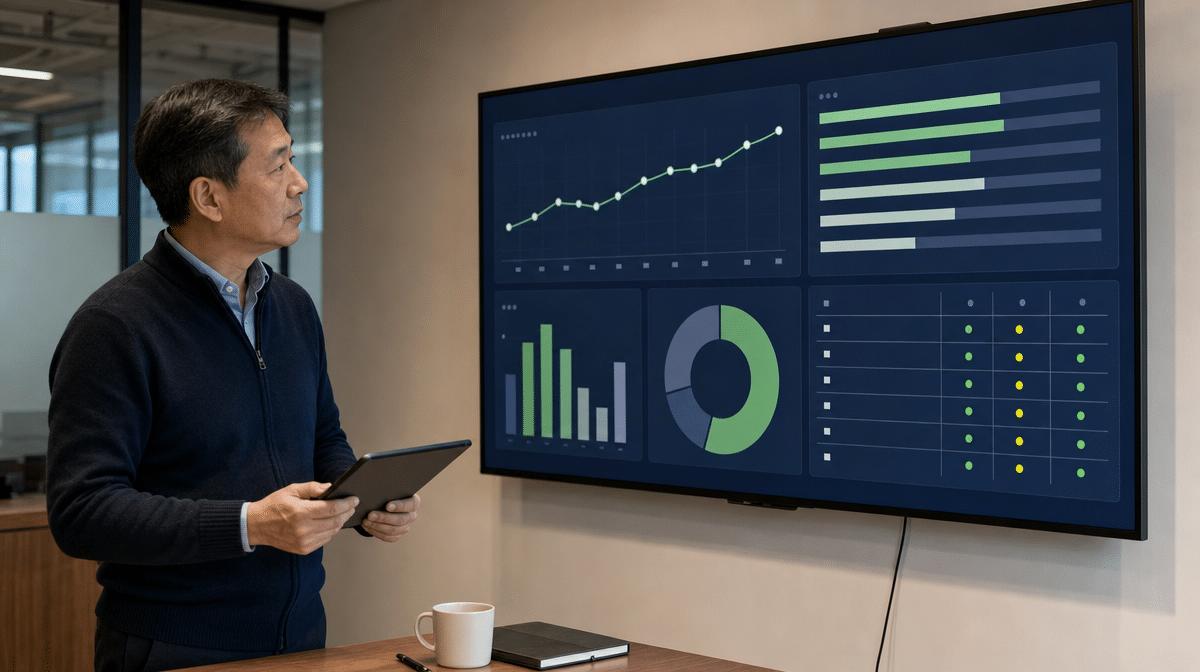
Training metrics should follow the same sequence as the program itself. Start with access and participation, move to learning and practice, and then examine whether behavior and results changed. Using one number for every stage can hide the real problem.
Confirm Access and Completion
First confirm that assigned employees could reach the material on the devices and connections available to them. Completion tracking can identify locations with access problems, schedules that do not provide enough time, or managers who need to reinforce the deadline. These are delivery and communication signals, not final proof of performance.
Assess Learning and Proficiency
Quizzes can test key facts, but demonstrations and realistic scenarios are stronger evidence of proficiency. For a new ordering system, an employee might complete a sample order, correct a common exception, and explain what to do when the system does not match the customer’s request.
Check Transfer to the Job
After training, supervisors should observe the work and collect focused feedback. Are employees following the new process? Where are they hesitating? Are the same questions appearing across locations? That information can reveal whether the content, process, technology, or local communication needs correction.
Review Performance Results
Finally, connect the program to the operational result it was meant to improve. Measures might include fewer ordering errors, faster task completion, stronger compliance, fewer support calls, or more consistent customer service. Compliance metrics helped the organization roll out new features and capabilities when the data indicated likely acceptance by workers. All of this helped to increase training performance.
Training to Improve Employee Performance
There are many drivers of organizational performance. Training is a preventive action that can sharpen skills, raise awareness, and provide a safe space to learn new knowledge, but it is not the answer to every performance problem. Before building a course, confirm that the gap involves knowledge, skill, or behavior rather than a broken process, missing tool, conflicting policy, or unrealistic workload.
OPM’s training program management guidance connects needs assessment, delivery decisions, evaluation, and improvement to individual and organizational performance. That sequence gives a corporation, school district, or other organization employing independent workers a practical standard: diagnose the gap, communicate the change, provide flexible learning, verify proficiency, and measure the work.
Content can be custom-developed for the organization while a hosted online infrastructure securely delivers proprietary video training to a distributed workforce. The platform is only part of the solution. Consistent expectations, usable access, manager reinforcement, employee feedback, and performance follow-up are what turn training activity into improved employee performance.
Frequently Asked Questions
How Does Training Improve Employee Performance?
Training improves performance when it addresses a verified knowledge, skill, or behavior gap and gives employees a realistic way to practice. Follow-up measures are needed to confirm that learning changed the work.
Why Do Distributed Employees Need Flexible Training?
Distributed employees often work across locations, serve customers directly, and have different windows of availability. Flexible access lets them complete focused learning without requiring one shared classroom schedule.
How Long Should an Online Training Module Be?
The module should be short enough to fit the employee’s work conditions and focused enough to cover one clear task or decision. In the school-district example, three-to-10-minute video bites worked within limited training windows.
Do Completion Records Prove Training Effectiveness?
No. Completion records show participation, while assessments test learning and supervised practice tests proficiency. Workplace observations and performance measures are needed to confirm transfer and results.
How Should Managers Communicate a Training Rollout?
Managers should explain what is changing, why it matters, who is affected, when training is due, where to find it, and how to ask questions. Reminders and follow-up should use actual completion and performance information.