How Do You Create Well-Defined Processes?

All companies have business processes. Some are well defined, while others remain ad hoc, leaving employees uncertain about what to do, who owns the work, and how success is measured. Ask yourself: can a process stay under control if nobody can explain it the same way twice?
Business professionals can reduce development time, save money, and stay in control by using the Plan-Do-Check-Act process approach. The goal is not more paperwork. It is a practical system for defining work, testing it, checking results, and improving it when reality exposes a gap.
What Are Well-Defined Processes?
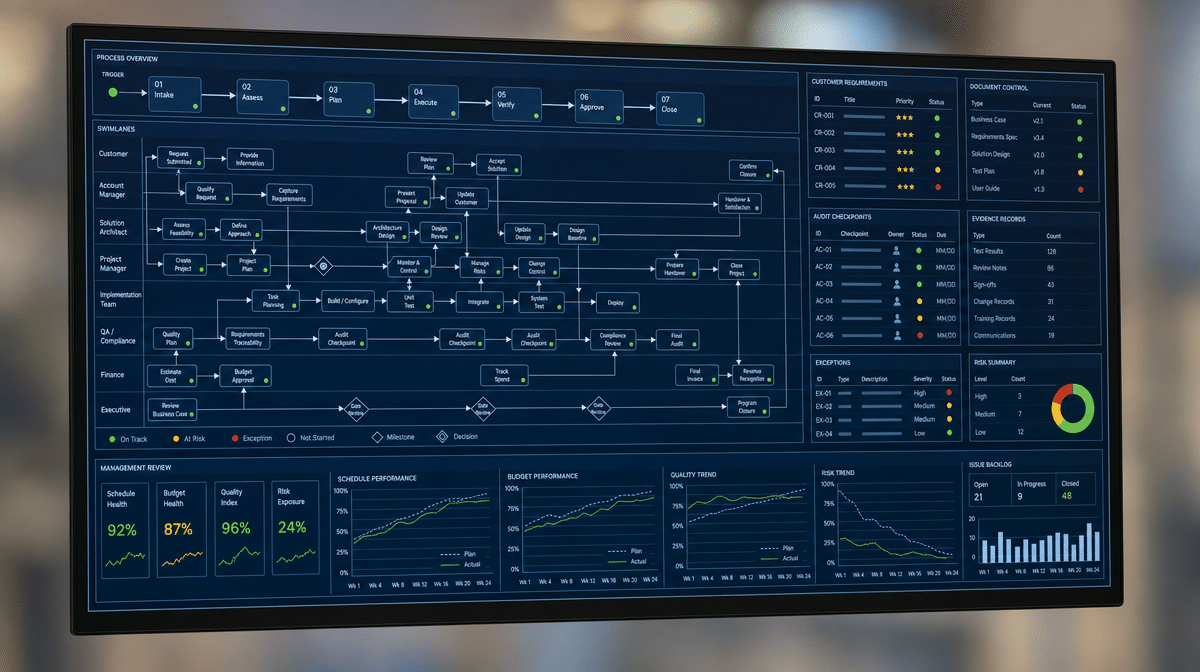
A well-defined process explains how work moves from a clear starting point to a planned result. It identifies the inputs, sequence, owners, decisions, outputs, customers, controls, and measures that make the work repeatable. Employees should be able to follow it without relying on tribal knowledge or guessing what the last person would have done.
Real tools for well-defined processes connect the process map to daily management. A map shows the flow, but the process also needs responsibilities, documentation, training, monitoring, and feedback. Together, those elements support effective management systems rather than a diagram that sits unused in a binder.
The definition should also make the boundaries visible. A team needs to know what event triggers the process, what information or materials enter it, where responsibility changes hands, and what condition marks completion. Boundaries prevent one procedure from expanding into a vague description of everything the organization does.
Why Do Clear Processes Matter?
Clear processes make expectations visible. They help new employees learn, give experienced employees a common reference, and make handoffs easier to inspect. When a problem occurs, managers can examine the sequence and evidence instead of debating whose memory is correct.
In MBA courses, students encounter buzzwords and the theories behind them. The terms look and sound useful in a textbook, but the real question comes later: what do you do with process mapping and control in the real world? A well-defined process answers that question by turning a management concept into observable work.
How Do You Measure Process Effectiveness?
Effectiveness is more than completing tasks quickly. The official ISO quality-management glossary defines it through the extent to which planned activities are realized and planned results are achieved. A process can be efficient because it uses little time or money and still be ineffective because it produces the wrong output.
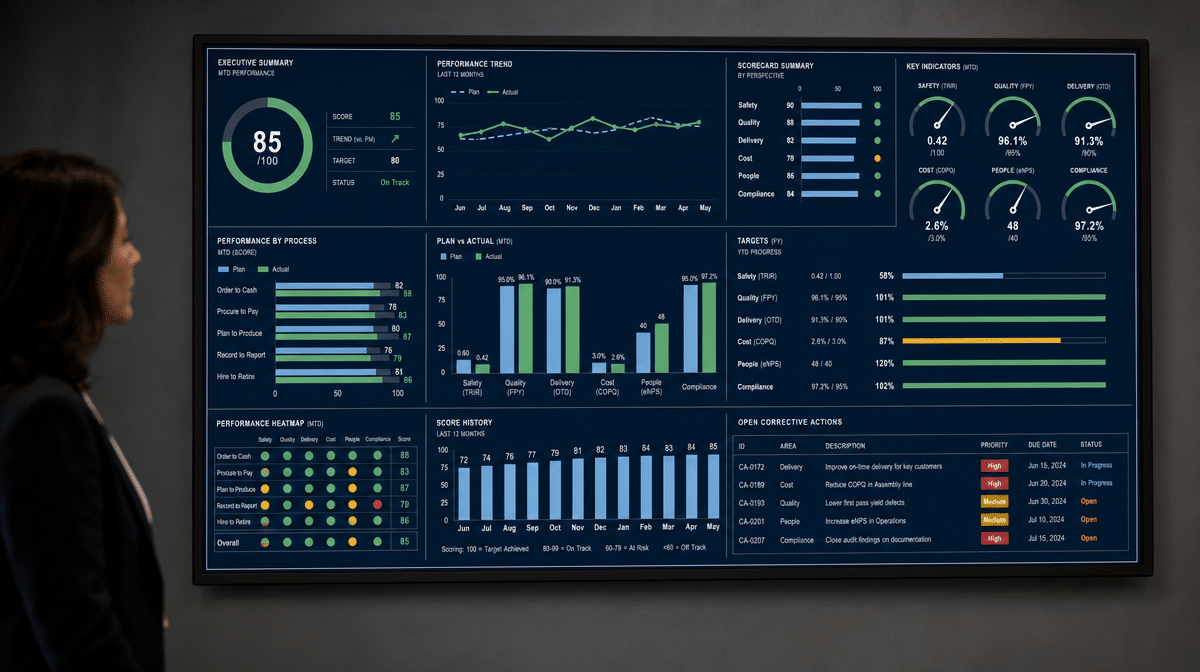
Start with the result the process is supposed to produce. Then choose a small set of measures that show whether the result was achieved, such as accuracy, cycle time, first-pass yield, customer acceptance, rework, defects, or missed handoffs. The right measure depends on the process, but it should help the owner make a decision rather than merely fill a dashboard.
Compare Planned and Actual Results
A fresh look at management effectiveness begins with a simple comparison: what was planned, and what actually happened? A target without a review rhythm is only an aspiration. Process owners need a regular point at which they examine performance, identify exceptions, and decide whether to correct execution or redesign the process.
Use Variability as a Diagnostic Signal
Process variability reveals where the same inputs do not consistently produce the same outputs. Some variation is expected, but repeated swings in time, quality, or cost can signal an unclear decision rule, unstable input, missing control, or uneven training. Process diagnostic tools help the team investigate the cause before prescribing a solution.
Measures also need context. A single late order may be an unusual event, while a recurring pattern may show that the approved method no longer fits demand. Review trends over enough cycles to distinguish a signal from noise, then connect every corrective action to an owner and a due date. That discipline turns monitoring into management.
How Does Process Mapping Make Work Easier to Learn?
A process map makes the invisible sequence of work visible. It shows where a process begins, how tasks and decisions connect, where work crosses functions, and what output reaches the customer. That shared picture gives instructors, managers, and employees something concrete to question and improve.
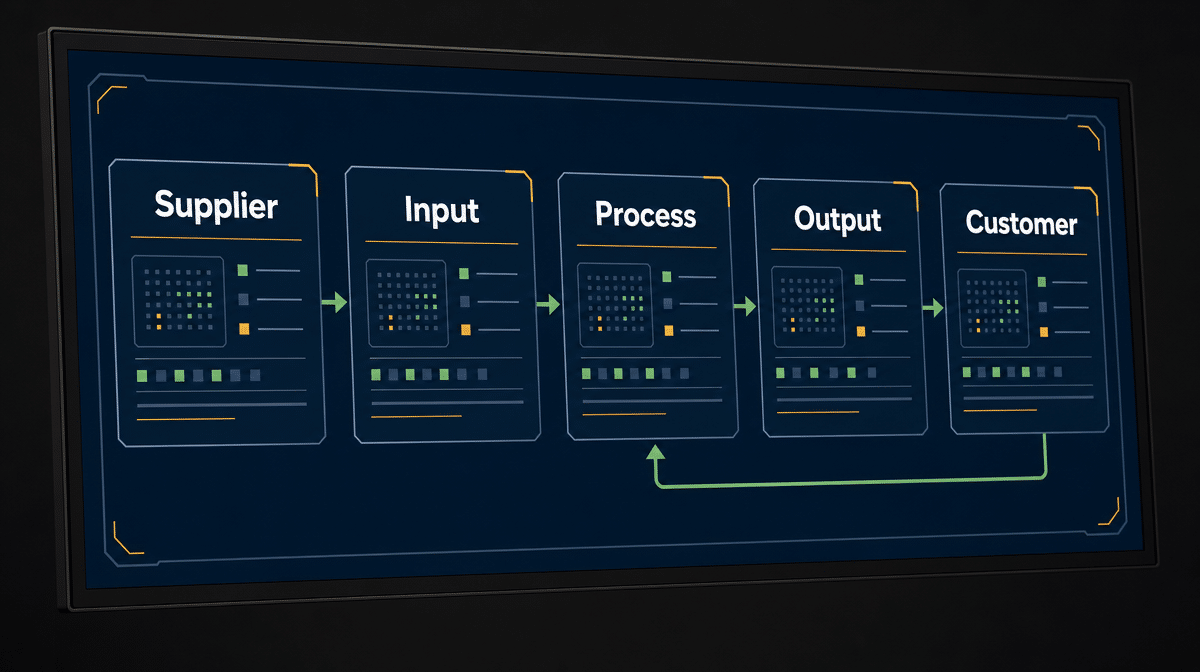
A SIPOC view adds useful boundaries by identifying suppliers, inputs, the process, outputs, and customers. It is especially helpful before a team gets lost in detailed flowchart symbols. Once the boundaries are clear, the team can document a procedure with the level of detail employees need to perform the work consistently.
Build the map carefully with the people who perform and receive the work. Managers may know the intended sequence, while employees know the queues, exceptions, system limits, and informal checks that shape actual performance. Comparing those views can reveal why two departments describe the same process differently and where a clearer decision rule or handoff agreement is needed.
Preserve Questions and Discussion
Well-defined processes are easier to learn when the setting welcomes general and specific questions. Participation and discussion expose hidden exceptions, missing knowledge, and differences between the official flow and the way work is actually done. Good instruction explains both the how and the why so employees can recognize when a control matters.
Keep the Sara Lee Learning Example
Otis Jones, then-PMO Manager at Sara Lee Baking Group, described the practical value of this learning approach. “Process mapping, process variability and the various process diagnostic tools were all excellent lessons to learn,” Jones said. “The detail that they gave me in these areas was exactly what I was hoping for.”
Jones planned to encourage other Sara Lee managers to prepare for the business discovery phase and to implement the information in the company’s internal training documents. The example is historical, but the lesson remains current: process knowledge becomes useful when a manager can convert it into a shared operating reference.
How Do You Create Well-Defined Processes?
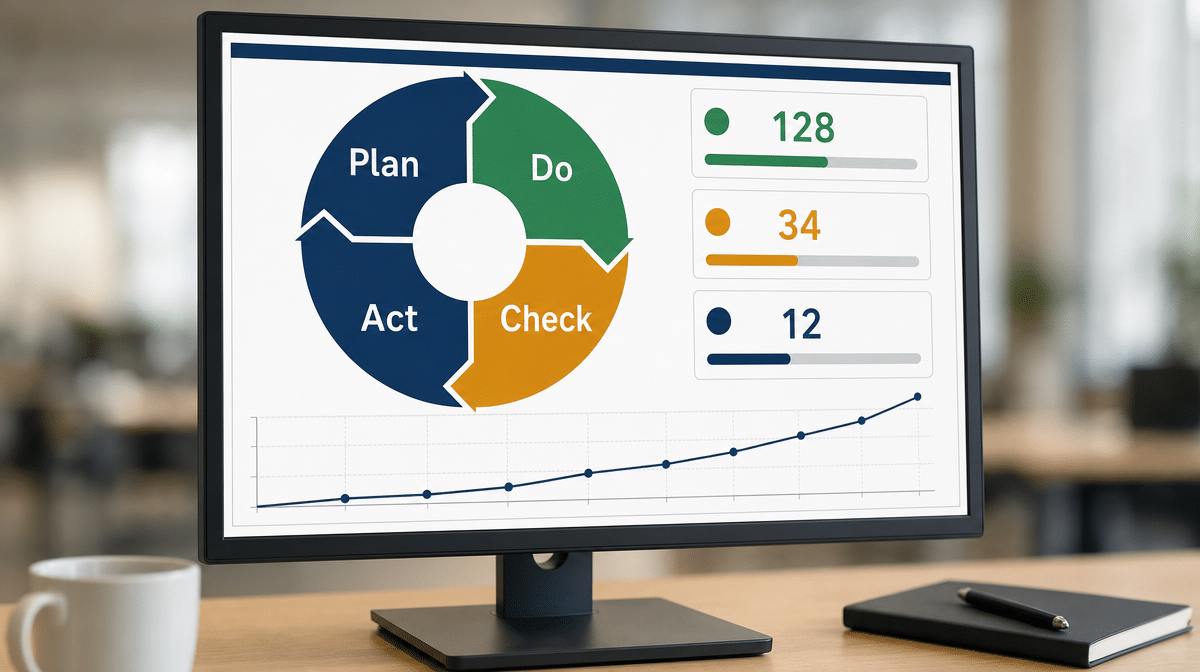
The easiest way to create well-defined processes is to use Plan-Do-Check-Act as a management routine, not a one-time documentation project. The U.S. Agency for Healthcare Research and Quality’s PDCA guide describes the cycle as four steps for testing change, solving problems, and supporting continual process improvement.
Plan the Result, Scope, and Ownership
Define the customer, need, starting trigger, ending output, and planned results. Name one process owner who has authority to coordinate across functions. Identify the people who perform the work, the suppliers of important inputs, and the customers who receive the output.
Map the current sequence before writing the ideal procedure. Capture major tasks, decisions, handoffs, records, systems, and controls. Ask where delays, rework, ambiguity, or waste appear. The plan should be detailed enough to test without becoming so complicated that employees cannot use it.
Do the Work on a Manageable Scale
Run the process with a representative group, location, product, or transaction type. Train the people involved and make the documentation available at the point of use. Record what happens, including exceptions and workarounds, because those details reveal whether the design fits the real environment.
Keep the test manageable, but do not make it artificial. Include the handoffs and normal sources of variation that employees will face after release. A pilot that avoids difficult cases can create false confidence, while a focused test with realistic conditions produces evidence the team can use.
Check Performance and Feedback
Compare actual results with the planned measures. Review evidence from the work itself, not just opinions about whether it felt smoother. Talk with employees and customers, inspect records, and examine process variability. A gap may come from execution, unclear documentation, weak training, an unstable input, or a flawed design.
Act on What the Test Revealed
If the process achieved planned results, standardize the useful changes in the map, documented procedure, training, and controls. If it did not, revise the design and run another cycle. Plan-Do-Check-Act works because it treats improvement as a disciplined loop rather than a promise to get everything right on the first attempt.
How Do You Keep a Process Under Control?
Control does not mean preventing all change. It means knowing the approved method, monitoring the important conditions, and responding when performance moves outside acceptable limits. A controlled process has clear ownership, usable documentation, competent employees, reliable records, and a review rhythm tied to decisions. It also makes approved changes visible before competing versions of the work become normal.
Assign a Process Owner
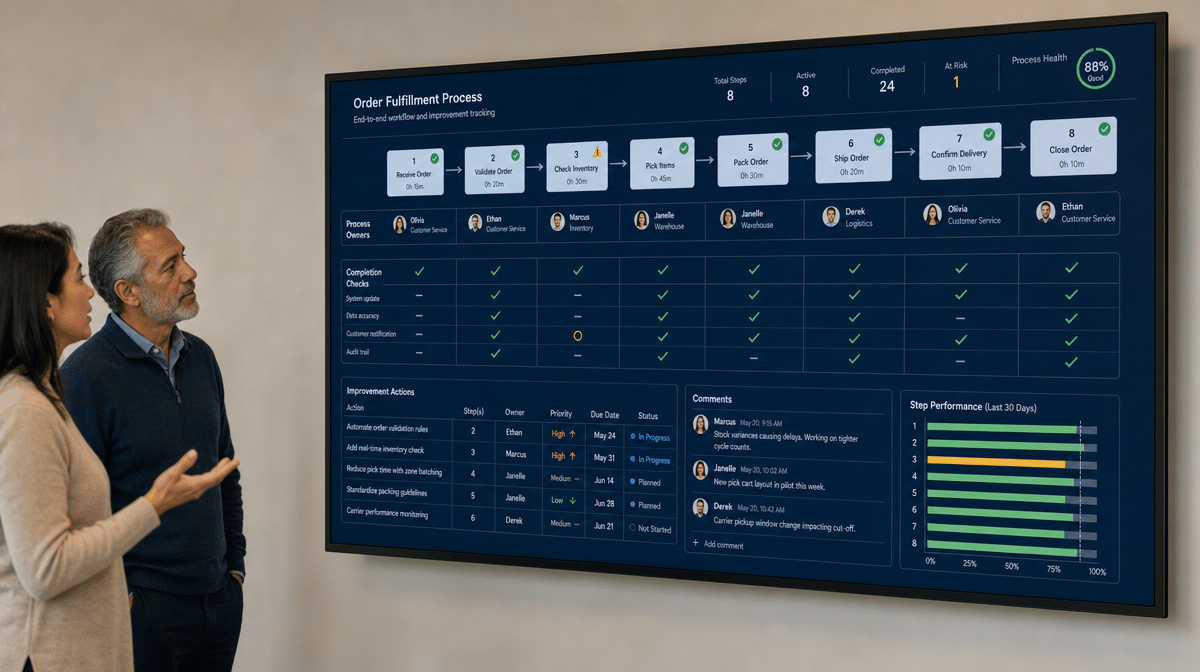
The owner maintains the end-to-end view even when tasks cross departments. That person reviews measures, coordinates changes, resolves ownership gaps, and ensures that the process documentation still matches actual work. Without an owner, local improvements can create problems at the next handoff.
Ownership should be visible in the process record and understood by every participating function. The owner does not perform every task or approve every exception. The role is to protect the overall result, convene the right people when performance changes, and keep improvements aligned with customer requirements.
Review Changes Before They Become Drift
Employees often create workarounds for good reasons, such as a new customer requirement or system limitation. Capture those changes and evaluate them instead of letting unofficial versions multiply. The process owner can then adopt the better method, correct the workaround, or change the supporting system.
Walk Away Empowered
Business owners and executives do not have to hope for the best of luck. They can define processes, monitor and improve them, and keep the system consistent, efficient and effective. The process approach makes waste easier to see and gives the team a disciplined way to reduce it and save money.
Individuals can walk away with a sense of empowerment because the process is no longer mysterious. They can make tangible improvements, create well-defined processes, and take the first steps toward better jobs and stronger businesses. A live writing policies and procedures training class can reinforce the methods, but the operating habit begins with a clear result, a visible process, and another PDCA cycle.
Frequently Asked Questions
What Is a Well-Defined Process?
A well-defined process identifies its trigger, inputs, sequence, owners, decisions, controls, outputs, customers, and measures. Employees can follow it consistently without relying on tribal knowledge.
Why Are Well-Defined Processes Important?
They clarify expectations, support training, improve handoffs, and give managers evidence for diagnosing problems. They also make waste and process variability easier to identify.
How Does Plan-Do-Check-Act Improve a Process?
PDCA helps a team plan a result, test the process, check actual performance, and act on what the evidence reveals. Repeating the cycle supports continual improvement and better control.
What Should a Process Map Include?
A useful process map includes the starting trigger, major tasks, decisions, handoffs, records, controls, and final output. A SIPOC view can first clarify suppliers, inputs, the process, outputs, and customers.
How Do You Know Whether a Process Is Effective?
Compare actual results with the process’s planned results using a small set of decision-ready measures. Review trends, exceptions, customer feedback, and corrective actions at a regular management interval.