What Is a Letter of Interest?

Most people only write to an organization when that organization has already announced it is looking. A job is posted, a bid is opened, a partnership is advertised, and the response arrives with two hundred others in the same inbox on the same afternoon. The competitive position is terrible and the timing is entirely dictated by someone else. Ask yourself when your organization last hired, contracted, or partnered with someone who reached out before anything was posted.
A letter of interest is the document that makes that earlier conversation possible. It introduces you or your company to an organization that has not advertised an opening, explains what you would bring, and asks for a conversation rather than a decision. It is a standard instrument in hiring, in vendor outreach, in commercial real estate, and in acquisition talks, and it follows the same conventions in each.
This article covers what a letter of interest is, when sending one makes sense, how it differs from a cover letter, what belongs in it, and a template you can adapt. It assumes the general foundations of good business writing skills are already in place.
What Is a Letter of Interest?
A letter of interest is a formal written approach to an organization that has not advertised the opportunity you are pursuing. It states who you are, why you are writing to that specific organization, what you offer, and what you would like to happen next. Because there is no posted role or published requirement to respond to, the writer supplies the framing themselves.
The term is used in several settings and the mechanics stay consistent across them. A candidate sends one to a company they want to work for before a position exists. A supplier sends one to a prime contractor to be considered for future subcontracting work. A buyer sends one to signal non-binding interest in acquiring a property. In each case the letter opens a relationship rather than closing a transaction.
You will also see the phrase expression of interest letter, most often in procurement, grant, and public-sector contexts. It refers to the same document. Some organizations formalize the process and publish a submission window, in which case the requested format takes precedence over any general convention described here.
The defining characteristic is that nothing has been asked of you. That is the source of both the advantage and the difficulty. Nobody is comparing your letter against a pile of others, and nobody is obliged to read it either.
When to Send a Letter of Interest
A letter of interest is worth the effort when there is a plausible reason for the recipient to want to hear from you and no formal channel through which to say so. The common situations:
- An employer you want to work for is not hiring. Organizations frequently create roles for people who arrive at the right moment with the right specifics, particularly in growing small and mid-sized companies where headcount planning is informal
- You want on a vendor or subcontractor list. Large buyers and prime contractors maintain rosters of firms they consider when work comes up. The Small Business Administration’s guidance on prime and subcontracting describes how subcontracting relationships are built well before any specific solicitation
- You are exploring an acquisition or a lease. A letter of interest signals serious non-binding intent and starts a conversation without the cost of formal due diligence or a drafted agreement
- You want a partnership, a speaking slot, or a research collaboration. None of these are typically advertised, and the letter substitutes for the missing application form
- You were referred by someone inside. A referral gives you a reason to write and a name to lead with, which is the strongest version of this letter
The situations where it is not worth sending are equally clear. If a position is posted, apply to the posting and write a cover letter. If a formal request for proposal is open, respond to the request for proposal. Sending an unsolicited letter alongside a live process reads as a failure to follow instructions, which is a poor first impression in exactly the context where process discipline is being judged.
Letter of Interest vs Cover Letter
The two documents look similar on the page and serve different functions. The difference comes down to what prompted the letter and what it asks for.

- Trigger. A cover letter responds to a posted opening. A letter of interest is unsolicited
- Subject. A cover letter argues that you fit a defined set of requirements. A letter of interest argues that you would be valuable to the organization and proposes where you might fit
- Ask. A cover letter asks for an interview in a defined process. A letter of interest asks for a conversation, an introduction, or a place on a list
- Research burden. A cover letter can lean on the job description for context. A letter of interest has no description to lean on, so the writer has to demonstrate they understand the organization
- Length and tone. Both run to one page. The letter of interest tends to be slightly shorter and more conversational, because it is opening rather than competing
The research burden is the practical difference. Harvard Business Review’s guidance on how to write a cover letter makes the point that a specific, researched opening outperforms a generic one, and that principle applies with more force here. A cover letter with a weak opening still gets read because someone is obliged to review the applications. A letter of interest with a weak opening gets deleted.
One further distinction matters in commercial contexts. In real estate and mergers, a letter of interest is a recognized pre-contractual document covering price range, timeline, and conditions, and it states explicitly that it is non-binding. That version is closer to a term sheet than to a job-search letter and should be reviewed by counsel before it goes out.
What to Include in a Letter of Interest
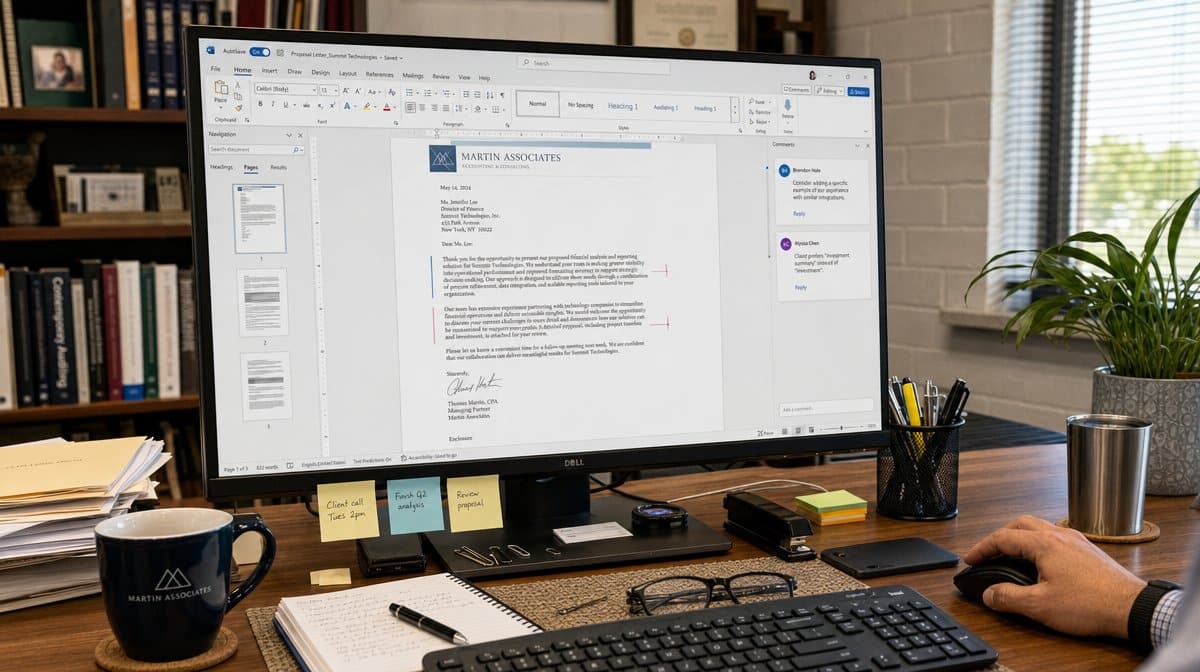
The letter follows standard business letter format: sender details, date, recipient block, salutation, three to four body paragraphs, closing, and signature. Within that frame, six elements do the work.
- A named recipient. A specific person, correctly spelled, with the correct title. “To Whom It May Concern” tells the reader the letter was not written for them
- A reason for writing to this organization. One or two sentences showing you know something real about them: a recent expansion, a published initiative, a service line, a mutual contact. This is the sentence the entire letter depends on
- A short account of what you offer. Two or three specifics with evidence attached. Not a summary of your resume or capability statement, which is attached anyway, but the two or three items most relevant to this reader
- A proposed fit. Where you think you would be useful. Naming a function, a team, or a category of work gives the reader somewhere to file you. Vagueness here is the most common failure
- A clear and modest ask. A short call, an introduction to the right person, or inclusion on a supplier list. Ask for something the reader can grant in a few minutes
- Contact details and an attachment. Phone, email, and a resume, portfolio, or capability statement as an attachment rather than pasted into the body
What to leave out is shorter but just as important. No salary or rate expectations, no assumptions about what the organization needs, no complaints about a previous employer or client, and no lengthy personal narrative. The letter is an introduction, and introductions are brief.
How to Write a Letter of Interest Step by Step
Work in this order. Most of the value is created before any sentence is drafted.
Step 1: Research the Organization
Spend twenty to thirty minutes on the organization before writing. Read recent announcements, the leadership page, the services or product lines, and any published strategy or annual summary. You are looking for one concrete, current fact you can reference honestly. Without it the letter has no reason to exist.
Step 2: Identify the Right Recipient
Address the person who would own the decision, not the general inbox. For a role, that is usually the functional department head rather than human resources. For vendor work, it is the procurement lead or the operations manager for the relevant category. Confirm the name and title from a current source, since directory pages go stale quickly.
Step 3: Draft the Opening
State who you are and why you are writing to this organization specifically, in two sentences. Lead with a referral name if you have one. Avoid opening with “I am writing to express my interest in,” which is the phrase every unsolicited letter uses and carries no information.
Step 4: Make the Case in the Middle
One or two paragraphs covering what you bring and where it fits. Choose evidence over adjectives. “Reduced order processing time by a third across two distribution sites” carries more weight than “results-driven operations professional,” and it gives the reader something concrete to remember you by.
Step 5: Close With a Specific Ask
Name what you want and make it small. A fifteen-minute call, an introduction, or a place on a list. Add that you will follow up in a stated period, then actually do it. A closing that only says “I look forward to hearing from you” leaves the next step undefined and the letter usually dies there.
Step 6: Edit Down and Proofread
Cut to one page, then cut further. Read it aloud to catch dead phrasing, and verify every name, title, and organization detail before sending. A misspelled recipient name undoes the research that earned the reading. Teams that write outbound correspondence regularly benefit from a documented standard, which is one reason management professionals work deliberately to improve their business writing.
Letter of Interest Template
The following letter of interest template covers the standard structure. Replace the bracketed content and keep the whole thing to one page.
- Sender block. Your name, address, phone, email
- Date. Written in full
- Recipient block. Name, title, organization, address
- Salutation. “Dear Ms. [Last Name],”
- Paragraph 1. “I am a [role or company description] with [number] years in [field]. I am writing after reading about [specific, current, verifiable detail about the organization], which is close to the work I have spent my career on. [Referral sentence, if applicable.]”
- Paragraph 2. “In my current role at [organization], I [specific achievement with a number attached]. Before that, I [second specific achievement]. My work centers on [two or three capabilities relevant to this reader].”
- Paragraph 3. “Based on [the detail referenced above], I expect the areas where I could contribute most are [named function, team, or category of work]. I have attached my [resume or capability statement] for background.”
- Paragraph 4. “If it would be useful, I would welcome a short call in the coming weeks to learn how your team approaches [topic]. I will follow up by [date] in case this reaches you at a busy time. Thank you for your consideration.”
- Closing. “Sincerely,” your name, and your attachments noted
When sending by email, keep the same structure and drop the address blocks. The subject line does the work the letterhead used to do, so make it specific: “Introduction from [name], [capability] for [named area]” beats “Inquiry” every time. The best modern tools for internal business communication have made the formal letter rarer inside organizations, but between organizations the convention holds.
Mistakes That Get a Letter of Interest Ignored
The failures repeat across settings and every one of them is avoidable.
- Sending the same letter to twenty organizations. The recipient can tell within one sentence, and a generic letter of interest performs worse than sending nothing, because it establishes that you did no work
- Writing about what you want instead of what you offer. The reader’s interest is in the second thing. Career aspirations belong in the interview, not the introduction
- Addressing nobody. A general inbox is a filing cabinet. A named person is a decision
- Running to two pages. Unsolicited correspondence gets a short reading window. Two pages guarantees the second one is not read
- Leaving the ask undefined. “I would love to be considered for any opportunities” gives the reader no action and no category
- Never following up. One polite follow-up after two weeks converts a meaningful share of letters that would otherwise be forgotten. A second follow-up after that becomes pressure, so stop at one
- Sloppy proofreading. A letter arguing for your professionalism has to demonstrate it. This is the same discipline that applies to anything published under your name, including writing a blog for your business
A last point about medium. Email is the default and is entirely acceptable, but a printed letter on letterhead still carries weight in traditional industries and with senior recipients who receive several hundred emails a day. It is worth understanding how business communication changed before assuming the channel your recipient prefers.
A letter of interest will not manufacture an opportunity that does not exist. What it does reliably is put you in front of a decision maker before the opportunity is public, at the moment when the field is smallest and the reader is most receptive. Research the organization, name the right person, offer something specific, and ask for something small.
Frequently Asked Questions
What Is the Purpose of a Letter of Interest?
The purpose of a letter of interest is to introduce yourself or your company to an organization that has not advertised the opportunity you are pursuing. It opens a conversation and asks to be considered for future work rather than responding to a defined opening.
How Long Should a Letter of Interest Be?
A letter of interest should fit on a single page, which is roughly three to four short paragraphs or 250 to 400 words. Unsolicited correspondence receives a brief reading window, so anything longer is unlikely to be read in full.
What Is the Difference Between a Letter of Interest and a Cover Letter?
A cover letter responds to a posted opening and argues that you meet its stated requirements. A letter of interest is unsolicited, proposes where you might fit, and asks for a conversation rather than entry into a defined selection process.
Who Should You Address a Letter of Interest To?
Address the letter to the person who would own the decision, such as the functional department head for a role or the procurement lead for vendor work. A named recipient with a verified title consistently outperforms a general inbox or a generic salutation.
Should You Follow Up on a Letter of Interest?
Yes. A single polite follow-up about two weeks after sending converts a meaningful share of letters that would otherwise be overlooked. State the follow-up date in the original letter and stop after one attempt.