What are the Best Tools for Internal Business Communication?

Ask yourself a simple question: how does work actually move through your company? Not on the org chart, but in real life. It moves through conversations, shared files, quick questions, and status updates. When those exchanges are fast and clear, teams ship work. When they are scattered across a dozen disconnected apps, even talented people stall. Internal communication is the quiet operating system every business runs on, and the tools you choose either strengthen it or slow it down.
To boost each team member’s efficiency, streamline operations, and simplify IT management, companies need to invest in the right internal communication tools to maximize department communication. In this article you will learn about the essential technology every team should use for internal business communication, what each category does, and how the pieces fit together into one connected stack.
What Is Internal Business Communication?
Internal business communication is the flow of information, instructions, and feedback among the people inside an organization. It covers everything from a manager assigning a task to two departments coordinating a launch, and it happens across voice, video, chat, documents, and shared systems. Strong internal communication keeps everyone working from the same facts, reduces duplicated effort, and turns individual work into coordinated progress.
That coordination matters more than ever. Distributed and hybrid teams have made face-to-face contact rarer, so the tools that carry day-to-day exchanges now do the heavy lifting that hallways and meeting rooms once handled. Gallup’s research on the remote workforce shows that connection and clarity are what keep dispersed employees productive and engaged. The categories below map to the core jobs of interpersonal communication: talking, sharing, tracking, and remembering.
The Best Tools for Internal Business Communication
No single application covers every communication need. The most effective companies assemble a small set of complementary tools, one for each core job. Here are the seven categories that belong in almost every internal communications stack.
Video Conferencing Tools
Video conferencing tools such as Zoom, Microsoft Teams, and Google Meet offer a wide range of team collaboration features, including instant chatting, voice calls, video calls, virtual conferencing, and file sharing. Many now use artificial intelligence to enhance the experience. Employees working remotely can blur or replace their backgrounds to keep a meeting professional, while noise suppression and automatic meeting notes reduce the busywork around every call.

This kind of collaboration software also improves remote team productivity through numerous integrations with HR, sales, marketing, and analytics tools, so a conversation can move straight into action without leaving the platform.
VoIP Phone Systems
Voice over Internet Protocol, or VoIP, telephony has come a long way. Beyond traditional call center features such as call recording and call forwarding, modern VoIP phone systems offer a comprehensive collaboration suite that combines online meetings, virtual conferences, screen sharing, instant messaging, and file sharing in one place.
In other words, VoIP centralizes the majority of team collaboration tools under a single platform, and it supports remote work well. With features like background noise cancellation, employees can eliminate distractions while working from home and keep every meeting clear and professional.
Task and Project Management Tools
Using task management tools lets you create numerous projects and view them in list and board formats. Within each project you can create multiple to-dos and assign them to the right employees, set reminders for upcoming deadlines, share details, and track work from a single dashboard. You can also build visual project plans to monitor the progress of different stages.
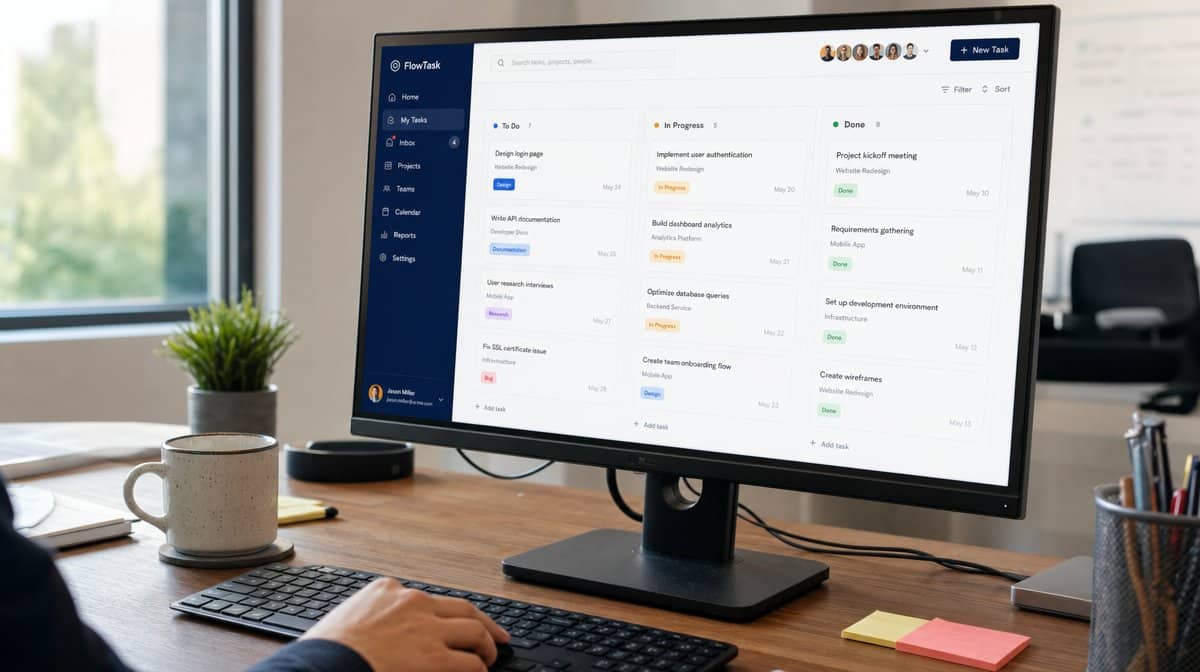
The major benefit of project management tools is that they streamline employee communication. Team members can upload and download files, comment in real time, and share valuable insights regardless of their location or time zone. Built-in search lets everyone find projects and documents faster, so context never gets lost.
Cloud File Storage
You might think that your file storage system has nothing to do with communication. In practice, cloud storage services such as Dropbox Business and Google Drive are far more than encrypted file lockers. They act as a smart assistant that streamlines many processes and keeps a team’s work in one findable place.
Your team can centralize the content it creates in Microsoft Office, Dropbox Paper, and Google Docs or Sheets, then keep those files and the conversations around them together by integrating cloud storage with collaboration tools like Slack or Zoom. Version history and shared links mean no one hunts through email attachments to find the current draft.
Employee Engagement Tools
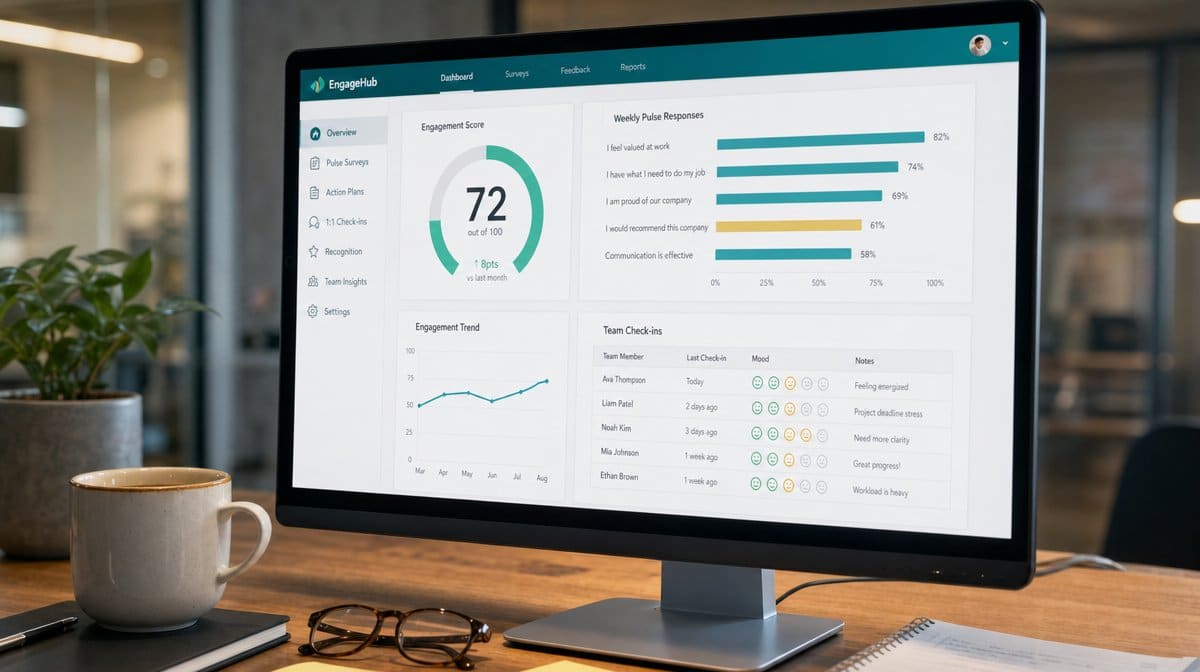
Staying connected with employees and keeping them motivated is harder when much of the team works from home. Employee engagement tools help by centralizing communication and letting people choose the channel they prefer. They support regular check-ins and make it easy for employees to give feedback at the end of the workday, so small problems surface before they grow. Gallup’s findings on employee engagement tie this steady, two-way contact directly to retention and performance.
Knowledge Management Software
Knowledge management software organizes information so employees can find it fast. It increases the transparency of your data, eliminates the silo mentality that traps knowledge in a few inboxes, reduces paper, and keeps institutional know-how in one central location. Purpose-built tools such as OnPolicy procedure management software apply this directly to policies and procedures.
Some knowledge management systems even use artificial intelligence to categorize information automatically. They let you share and organize files, create unlimited groups, and send email or in-app notifications so the right people always see the right update.
Instant Messaging Platforms
Over the past few years, Slack has become almost synonymous with team collaboration, and rivals like Microsoft Teams offer the same core idea. These platforms combine voice calls, video calls, real-time file transfers, and instant messaging. Unlike crowded shared inboxes, an instant messaging platform is simple, organized, and transparent.
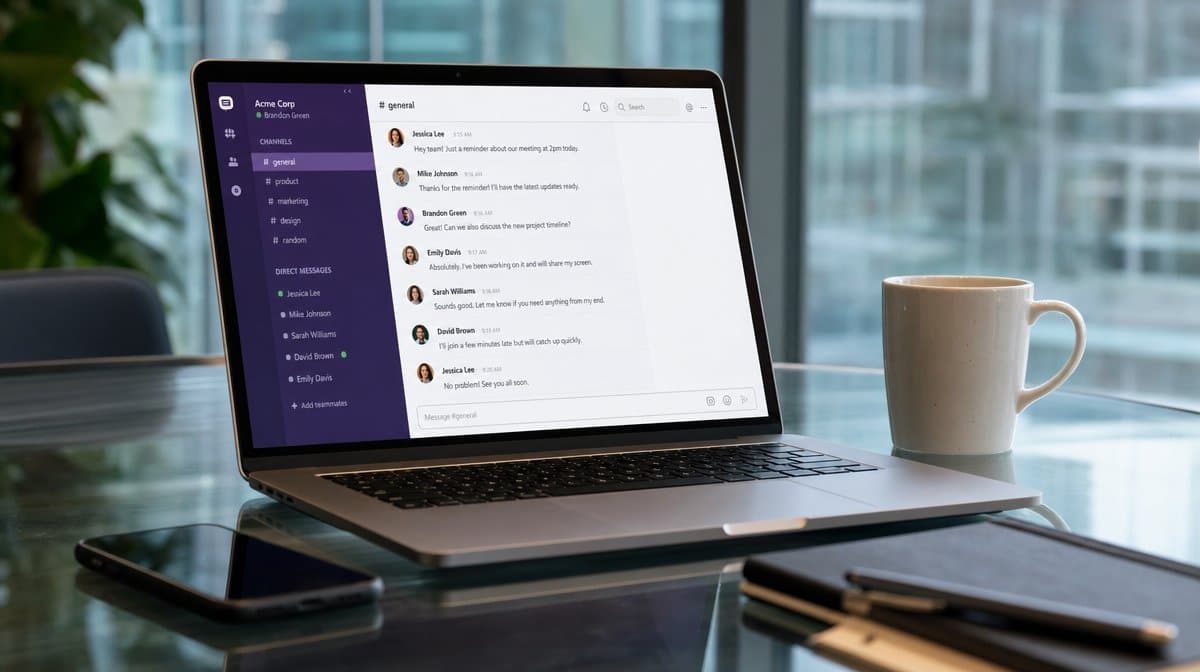
Teams can create new channels, add members, or leave channels whenever they want, and classify those channels per team, project, or client. Employees install the app on desktop and mobile devices or use the browser version, and wherever they are they can search previous conversations, files, and links. Slack also offers integrations with a wide array of tools, from Dropbox, Google Drive, and Zoom to Salesforce and HubSpot, which keeps everything connected.
How to Build Your Internal Communications Stack
Those are just a few of the software solutions you can use to improve team collaboration, and the lesson from them is clear: investing in one tool is not enough. Instead, build a solid internal communications suite that pairs project management, instant messaging, voice calling, video calling, videoconferencing, and cloud storage. Each covers a different job, and together they keep information flowing without gaps.
When choosing tools, focus on the ones that address your team’s specific needs and the way your people actually work. Favor platforms that integrate with one another, keep the total number of apps manageable, and document how each is meant to be used so the stack stays an asset rather than another source of noise.
Frequently Asked Questions
What Are the Best Tools for Internal Business Communication?
The strongest internal communications stack usually combines video conferencing, a VoIP phone system, task and project management, cloud file storage, employee engagement tools, knowledge management software, and an instant messaging platform such as Slack or Microsoft Teams. Each category handles a different core job.
Why Is Internal Business Communication Important?
Internal business communication keeps employees working from the same facts, reduces duplicated effort, and turns individual work into coordinated progress. With more distributed and hybrid teams, the tools that carry these exchanges now do the work that in-person contact once handled.
How Many Communication Tools Does a Company Need?
Investing in a single tool is rarely enough, but more apps are not automatically better. Most teams do best with one dependable tool per core job, chosen so the platforms integrate with each other and the total number stays manageable.
What Should You Look for When Choosing Communication Tools?
Focus on tools that address your team’s specific needs, integrate with the systems you already use, support remote and hybrid work, and offer strong search so information is easy to find later. Clear documentation of how each tool is meant to be used matters just as much as the features.
How Do Communication Tools Support Remote Work?
Video conferencing, VoIP, instant messaging, and cloud storage let employees meet, call, share files, and find documents regardless of location or time zone. Features like background noise cancellation, real-time collaboration, and integrated search keep remote and hybrid teams connected and productive.