How Do You Organize a Successful Corporate Event?

Hosting corporate events can connect your staff with business partners, investors, clients, and customers while supporting a stronger corporate culture. A successful corporate event starts with a specific goal, a defined audience, a realistic budget, and one owner who can coordinate the venue, program, menu, vendors, guest experience, and follow-up.
Whether you are planning a staff appreciation party, client meeting, product event, online program, or industry gathering, treat the work like project planning. Decide where and when the event will happen, choose an in-person, virtual, or hybrid format, create a run of show, assign deadlines, and prepare a backup plan before invitations go out.
How Do You Plan a Successful Corporate Event?
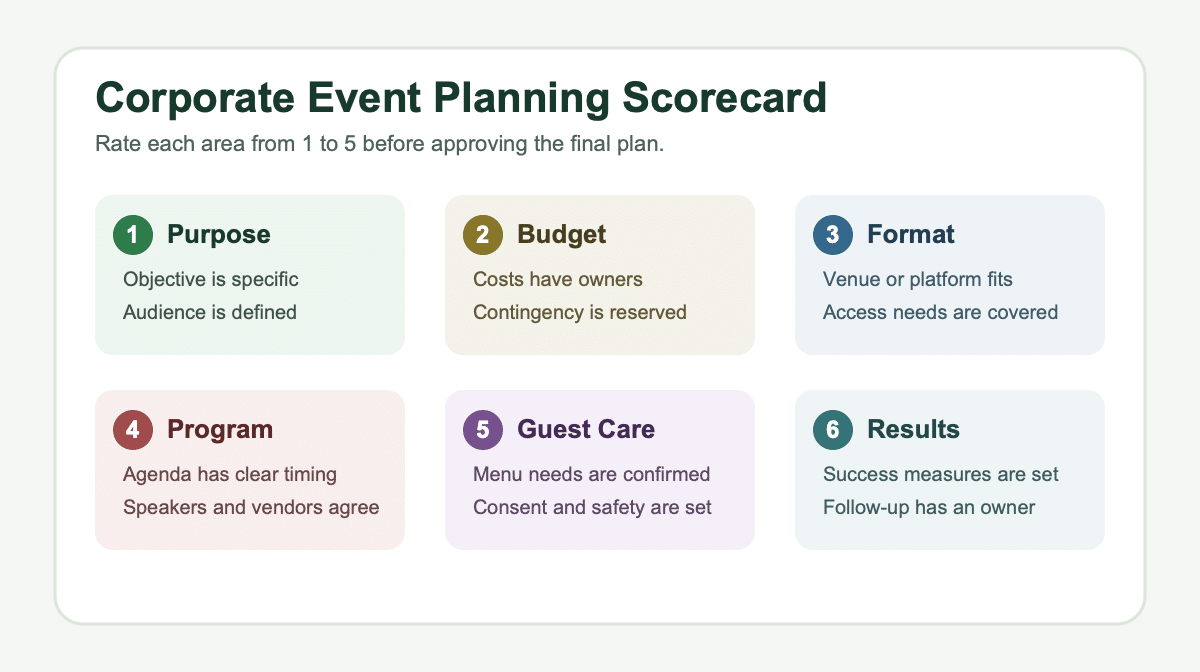
Start by writing a one-page event brief. State the goal in one sentence, list the guests you want to invite, identify the action you want them to take, and define how you will know whether the event worked. The goal might be to recognize hard work and dedication, strengthen a client relationship, introduce partners to a new process, or give a distributed team time to connect.
Then turn the brief into a checklist with owners and due dates. Include the guest list, location, time, theme, registration, venue or online platform, food and beverages, speakers, entertainment, accessibility, safety, photography, communications, and follow-up. This keeps the planning process practical instead of relying on one cool idea to make everything memorable.
Define the Objective, Audience, Budget, and Owners
An event becomes easier to organize when every choice can be tested against its purpose. If the goal is staff appreciation, allow time for people to talk and recognize contributions. If the goal is client education, give the agenda enough room for questions and practical examples. If the event is designed to connect partners or investors, focus on clear information and useful introductions rather than decoration alone.
Build the budget by category: venue, technology, food, entertainment, travel, staffing, photography, printing, and contingency. A smaller company that does not have enough money for someone truly famous can still find an amazing local band, speaker, or facilitator who fits the audience and keeps the program alive. Use a marketing budget approach: set the limit first, record commitments, and protect a reserve for late changes.
Give each workstream one accountable owner. That person does not need to choose, prepare, and serve every element. The owner confirms decisions, coordinates vendors, and knows who has authority if the plan changes. A clear decision path prevents the event organizer from spending the night solving every small problem instead of spending time with guests.
Choose an In-Person, Virtual, or Hybrid Format
Going virtual is no longer only a response to people being unable to leave their homes. An online or hybrid corporate event can include remote staff, reduce travel, or make a specialist available for one part of the program. An in-person event may be better when the goal depends on informal conversation, physical demonstrations, food, music, or a shared venue experience.
For an online event, do the same planning work you would do in normal circumstances: make a list of names, pick the right time, choose the theme, rehearse the technology, and tell guests how to join. For a hybrid event, avoid creating two separate classes of guests. Assign someone to monitor online questions, test microphones and cameras, and use the ideas in this guide to improve the virtual event experience.
Keep your mind open while choosing the format. Instead of worrying about whether an online event is adventurous or a traditional party is the only memorable solution, look at what the invited guests can actually use. The best choice may be a simple virtual session, a small in-person gathering, or a hybrid program that connects people without unnecessary travel.
Venue accessibility belongs in the format decision, not at the end of the checklist. Department of Justice guidance says the minimum elements of an accessible temporary event include accessible parking, a route to the entrance and meeting room, the meeting room itself, and restrooms. Ask invitees how to request accommodations, check the registration experience, and confirm that seating, stages, presentations, and refreshments are usable by the people attending.
Build the Agenda and Select Entertainment
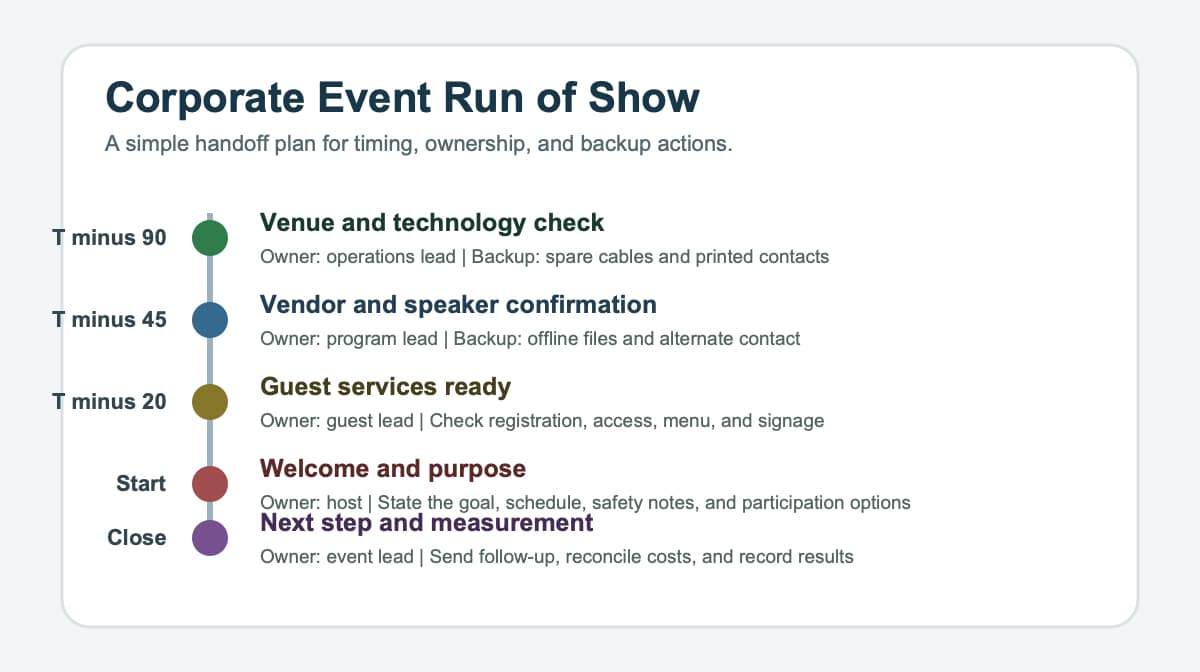
A strong agenda gives the event a beginning, middle, and close. List each segment, its purpose, start time, end time, owner, speaker, equipment, and backup action. Share the final run of show with the venue, caterer, band, photographer, presenters, and anyone responsible for welcoming guests.
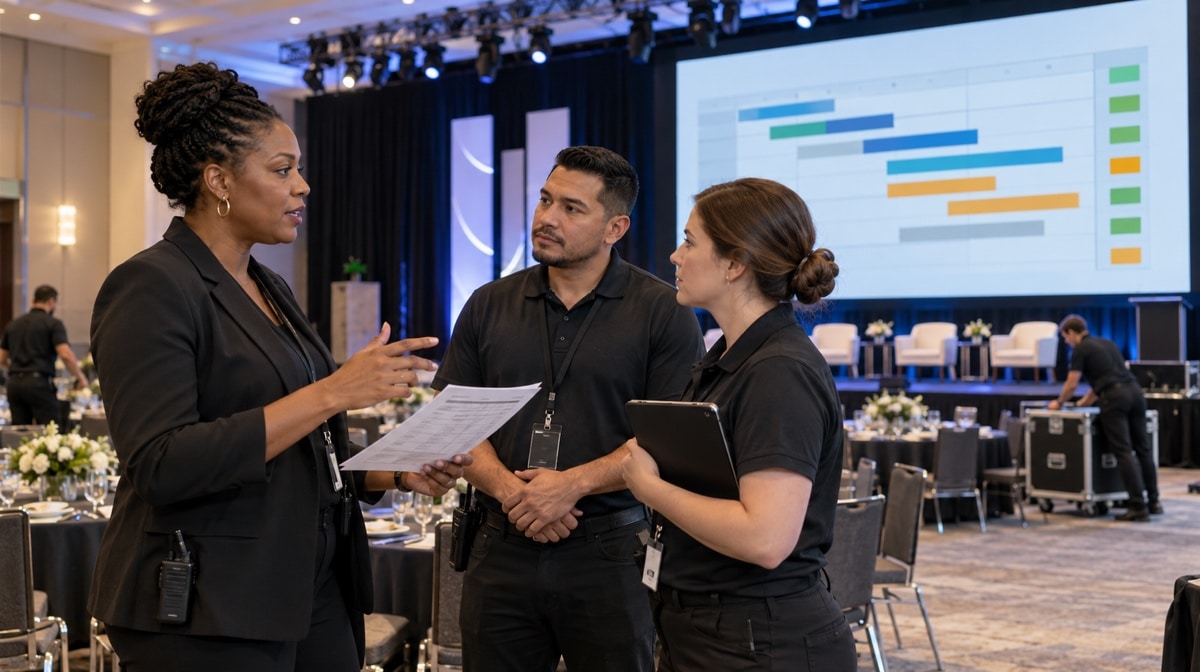
Entertainment should support the goal and the audience. A live band can keep a party active, but it may compete with conversation at a client or investor event. A local musician, short team activity, host, panel, demonstration, or quiet background playlist may be the better solution. Check the venue rules, sound limits, power, setup time, and cancellation terms before hiring anyone.
The biggest problem when hiring a band is often the budget. If you are not in a position to book someone famous, an unknown but still very good local act can be a win-win solution. Ask for a live sample, discuss the room and audience, confirm the length of each set, and decide who will keep the party alive between performances.
Rehearse the handoffs that can affect the whole room. Confirm how the host introduces a speaker, how a remote guest joins, who changes the stage, and what happens if a presentation does not load. The goal is not to make the event rigid. It is to give the team enough structure to adapt without wasting time or leaving guests wondering what will happen next.
Create the Right Menu for Your Guests
The right menu depends on the sort of event you are planning, the time of day, the number of people invited, the service format, and the budget. Coordinate the catering plan early enough to confirm preparation, serving food, cleanup, staffing, and venue restrictions.
Ask about dietary, cultural, and allergy-related needs during registration. Include vegetarian food and appealing nonalcoholic drinks rather than treating them as last-minute add-ons. FDA food-allergy guidance explains that food-allergic reactions can range from mild symptoms to severe, life-threatening anaphylaxis. Give the caterer the final requirements, request clear ingredient and allergen information, and explain how guests can ask a question privately.
Decoration can make a menu area appealing, but it should not create a barrier. Keep routes clear, place choices within reach, and avoid long tablecloths or crowded service points. These practical choices matter more than trying to make every food selection extravagant or perfect.
A striking selection of food and beverages does not require an extravagant setup. White tablecloths, chair covers, and linens may fit a formal event, while simple serving stations may work better for an informal gathering. If beer and wine are offered, make nonalcoholic drinks equally visible, and include a few tasty treats that suit the time and theme.
Add a Relevant Photo Opportunity
A photo opportunity can help guests remember the event when it fits the purpose. You might add a photo booth, create simple DIY scenery, provide a branded background, place a camera near a milestone display, or hire a photographer to document key moments. Choose one approach that matches the theme instead of filling the room with unrelated props.
The simplest solution may be a cool photo booth that lets guests feel like movie stars. Another option is a camera or two beside DIY scenery, or a photographer who can turn useful pictures into polished images. The purpose is to create great memories without making every guest participate.
Tell guests when photography is taking place and how the images may be used. Provide a clear way for someone to avoid the camera, and brief the photographer before the event. If pictures will be used outside the organization, follow your legal and brand requirements for consent and image use.
Prepare Contingencies and Measure Success
List the problems that would most affect guests: severe weather, a late vendor, speaker cancellation, equipment failure, internet loss, food delay, illness, or a venue emergency. Record the backup choice, the person who decides, and the people who need to know. OSHA emergency-preparedness guidance recommends that an emergency plan define reporting methods, evacuation routes, responsible coordinators, and a way to account for people after evacuation.
Use the illustrated event run-of-show template as a larger worked example for timing, ownership, backup actions, and follow-up.
After the event, compare the result with the original goal. Review attendance, participation, questions, completed actions, guest feedback, vendor performance, and final cost. Capture what worked while the details are fresh, assign follow-up to an owner, and use those lessons with your project planning tools before organizing the next corporate event.
Frequently Asked Questions
What should a corporate event brief include?
A corporate event brief should include the objective, audience, format, date, location or platform, budget, owners, program, guest requirements, vendors, communications, contingency plan, and success measures.
How do you choose between an in-person, virtual, and hybrid event?
Choose the format that best supports the objective and audience. Use in-person events for physical demonstrations and informal connection, virtual events for broad access, and hybrid events only when you can give remote guests an active experience.
How can a small business control corporate event costs?
Set a total limit, divide it into categories, assign approval authority, compare vendor scope as well as price, track commitments, and reserve a contingency for necessary changes.
What belongs in a corporate event run of show?
A run of show should list each segment, start and end times, purpose, owner, speaker or vendor, required equipment, handoff, and backup action.
How do you measure whether a corporate event was successful?
Measure the result against the event objective using relevant indicators such as attendance, participation, completed actions, guest feedback, final cost, and follow-up outcomes.
Organize a Successful Corporate Event
A successful corporate event is not defined by a famous band, an expensive menu, or the coolest photo booth. It is an event that gives the right guests a useful experience, stays within the approved budget, and produces the outcome you planned. Use the Trade Shows-Events Procedure as a practical next step for assigning responsibilities and managing the work.