What Activities Work Best To Motivate Employee Productivity?

The success of any business organization depends largely on the quality of input by the employees. Employees respond to the way they are treated, the conditions in which they work, and whether managers remove obstacles that make good work harder. This is why business managers are constantly looking for practical ways to motivate better performance from their staff.
The activities that work best to motivate employee productivity are the ones matched to a real employee need. Flexibility, movement during office hours, an inspiring workplace, shared team activities, and specific recognition can all help when the activity is voluntary, accessible, and connected to the work. Asking your employees for ideas is the best place to start.
The Best Activities to Motivate Employee Productivity
Employee motivation is the level of commitment, drive, and energy that workers bring to their job functions every day. Motivation is one factor in employee productivity, alongside skills, tools, staffing, job design, and management. An activity should make one of those conditions better, not simply fill time.
Allowing Flexibility in the Workplace
Many business organizations believe that giving their employees higher salaries can help motivate them, but that is not always the case. Money matters, but it is not the only way to motivate your staff. When the role permits it, consider flexibility about where employees work, how they work, and when they work. This can give employees a feeling of control while still protecting customer coverage, coordination, security, and clear performance expectations.
In a randomized hybrid-work trial of 1,612 employees, a two-day hybrid schedule improved job satisfaction and reduced attrition without lowering measured performance. The result came from one technology company, so it supports testing role-appropriate flexibility rather than assuming that every remote arrangement will work the same way. Define the arrangement, choose the work outcomes you will monitor, and review it with employees after a trial period.
If remote or hybrid work is part of the activity, use a consistent method to measure remote working. Review output quality, missed handoffs, schedule coverage, employee feedback, and whether people can get the information they need.
Allow for Exercise Time Within Office Hours
Exercising the body regularly can improve muscle strength and boost endurance, but a workplace activity does not need to be a demanding fitness challenge. A short walking meeting, a stretch break, or optional movement time during office hours can help employees step away from long periods of sitting and return feeling more refreshed.
One randomized workplace study found that scheduled exercise improved employees’ self-rated work ability and reduced sickness absence while production was maintained or improved. The study covered 177 dental-health employees, so treat it as support for a small pilot, not proof that one program will work everywhere.
Having a small gym space at work where employees get the chance to exercise and feel more energized could be helpful where employees want it, but it is only one option. Apart from exercises at the gym, a walking group can help employees bond more without expensive equipment. Provide accessible alternatives, keep participation voluntary, schedule the activity so coverage is maintained, and ask whether it eased office stress. The goal is to create a workable habit, not another obligation.
Make the Workplace Inspiring
Imagine being in an office that looks gloomy because it is not well lit. A dark background, broken equipment, distracting noise, uncomfortable temperature, or poor layout can make the work environment feel dingy and boring. Before buying decorations, ask employees which physical problems slow them down or make it difficult to concentrate.
EPA guidance for office occupants identifies ventilation, temperature, glare, natural light, ergonomics, noise, and office layout as factors that can affect comfort and productivity. It also describes diligent HVAC maintenance as essential to good indoor air quality. This supports a practical facilities checklist, not a promise that repainting a wall or adding flowers will motivate every employee.
Things should be well kept, working equipment should be regularly updated, and HVAC equipment should be serviced regularly. Repair lighting problems, replace furniture that no longer supports the task, and repaint walls and doors when they are worn rather than on an arbitrary schedule. Interesting furniture pieces, color, and flowers can make the area more aesthetically pleasing, functional, and motivating when employees actually value them. Related ideas for employee stress and productivity can help you consider how the environment feels as well as how it functions.
Indulge in Fun Activities from Time to Time
As a business manager, you can think outside the box and offer team-building activities that create some fun within the office environment. Asking your employees for ideas is a great idea too. You can decide to take employees on regular lunches. You can also divide the staff into small groups and have them play interesting games, with prizes for the winners. A dress-down day or a facilitated simulation can also increase bonding when people can participate comfortably.
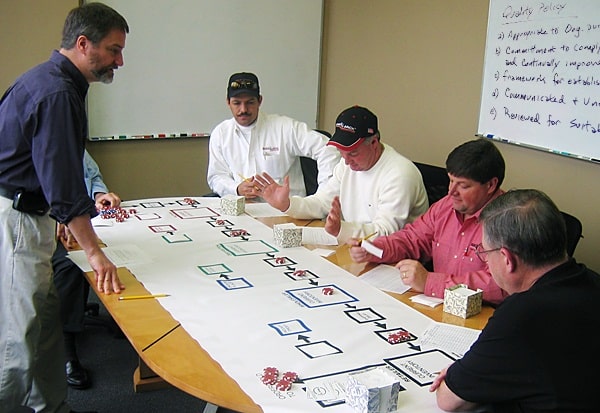
The Beer Game lean training exercise is an example of a team activity with a clear learning purpose. It gives a group a shared problem to solve and a process to discuss afterward. The activity is not just entertainment, because the debrief connects what happened in the game to communication, delay, inventory, and decision-making at work.
A meta-analysis of team building found no significant overall effect of team-building interventions on performance, while role-clarification activities were more likely to help. Choose a purpose first, keep the event optional and accessible, use paid time when possible, and decide what you will learn from it. Ask whether activities like these reduce tension, increase bonding among the employees, or improve teamwork in a way employees can describe, rather than assuming that they definitely serve as motivation for better productivity.
Celebrate Employee Efforts
There is a general feeling of wanting to do more when you are celebrated for outstanding work ethic and a useful contribution. You can celebrate employees through general emails acknowledging their efforts and specifically pointing out how they propelled the company forward. A public mention in general meetings, an award or plaque, a private note, or a new responsibility can all be forms of employee recognition.
A controlled field experiment with more than 300 workers found that unexpected public recognition increased subsequent performance during a short data-entry task. Because that was a short task with temporary workers, do not treat public praise as a universal performance booster. Ask how each employee prefers to be recognized and use a private channel when public attention would be uncomfortable.
Make the recognition specific: name the observable action, explain the effect on the customer or team, offer sincere thanks, and describe the behavior worth repeating. Let employees know that their efforts were anything but ordinary, and explain exactly why. This is more useful than saying only that the work was awesome. It tells the employee why the effort mattered.
How Do You Choose the Right Motivation Activity?
Use this activity-selection scorecard before planning an event or buying equipment. Start with the signal you can observe, select the smallest activity that addresses it, add a guardrail, and choose one result to review. The worked examples keep the activity connected to a business need.
| Employee signal | Activity to test | Guardrail | Review |
|---|---|---|---|
| Commute or schedule strain | Role-appropriate flexibility pilot | Protect coverage and handoffs | Quality, output, missed handoffs, feedback |
| Long sedentary periods | Optional walking meeting or movement break | Offer accessible alternatives | Participation and energy feedback |
| Workspace complaints | Lighting, equipment, HVAC, or layout fix | Fix function before decoration | Repeated complaints and task disruption |
| Team tension or unclear roles | Purpose-led team activity and debrief | Keep it optional, accessible, and work-related | Role clarity and coordination feedback |
| Useful effort goes unnoticed | Specific public or private recognition | Match the employee’s preference | Whether the valued behavior is repeated |
Do not use one activity for every problem. If an employee lacks training, a team lunch will not close the skill gap. If broken equipment causes delays, recognition will not repair it. If expectations are unclear, a game will not replace role clarification. The scorecard helps you separate a motivation activity from a management, process, or resource problem.
Motivate Employee Productivity with Great Activities
Employee motivation should not be taken lightly, but a manager does not need an expensive program to begin. Ask employees what gets in the way, choose one relevant activity, set a simple measure, run a short pilot, and review the result. Keep what helps and change what does not.
The best activity is the one that improves a real condition of work and helps employees move the business forward. Combine these activities with clear objectives, capable managers, useful tools, and fair performance practices. For more ideas, review these methods for intangible employee motivation.
Frequently Asked Questions
What Activities Motivate Employees Most?
The most useful activity addresses a need employees actually have, such as schedule flexibility, movement, a better work environment, clearer teamwork, or specific recognition.
How Can a Manager Choose the Right Motivation Activity?
Ask employees what gets in the way, identify the work condition involved, choose the smallest relevant activity, add a guardrail, and decide how you will review the result.
What Are Low-Cost Ways to Motivate Employees?
Low-cost options include specific recognition, optional walking meetings, role-appropriate schedule flexibility, employee-led improvement ideas, and a focused team debrief.
How Do You Motivate Remote or Hybrid Employees?
Set clear outcomes, protect access to information, rotate meeting times when needed, recognize contributions in the employee’s preferred channel, and review whether the arrangement supports good work.
How Do You Measure Whether a Motivation Activity Worked?
Choose one or two measures before the activity, such as participation, output quality, missed handoffs, absence, role clarity, or employee feedback, then compare the result after a defined trial period.