How Do You Add Sales Link to Instagram?

Interest can begin with an image, a video, or the visible likes and comments beneath a product post. The sale can still disappear if potential buyers cannot reach the right product, service, or landing page quickly. A clear sales link connects that moment of interest on Instagram with the next action you want a shopper to take.
Adding the link is the easy part. The useful work is choosing the destination, making the promise in the post match the page behind it, tracking where your traffic comes from, and ensuring that your link works throughout the campaign.
What Is an Instagram Sales Link?
An Instagram sales link is a clickable URL on your profile or in another supported Instagram surface that sends interested people to a page where they can learn more or take action. The destination may be a product description, service page, online store, promotion, booking page, lead form, or focused conversion page.
The link should support the exact objective of the content that brought a visitor to your profile. If a post introduces a new product, potential customers should reach that product’s detailed description. If you are running a promotion, the first link should lead to the current offer instead of making shoppers search through a general home page.
Instagram once restricted a profile to one external URL. That limitation no longer describes the platform. Instagram profiles can support up to five external links, according to Meta’s profile-link update. More capacity is useful, but it does not remove the need to choose and order links prudently. Too many unrelated choices can weaken the path to a sale.
How to Increase Sales on Instagram With Profile Links
Instagram’s visual format lets a company showcase its brand and merchandise through images and videos. Every successful enterprise knows the importance of using attractive pictures and exciting videos to sell goods and services on the internet, but the visual concept only attracts attention. A profile link turns that attention into measurable website activity. The operating sequence remains simple: add the right destination, make it easy to understand, test it, direct people toward it, and review the results.
How to Sell on Instagram
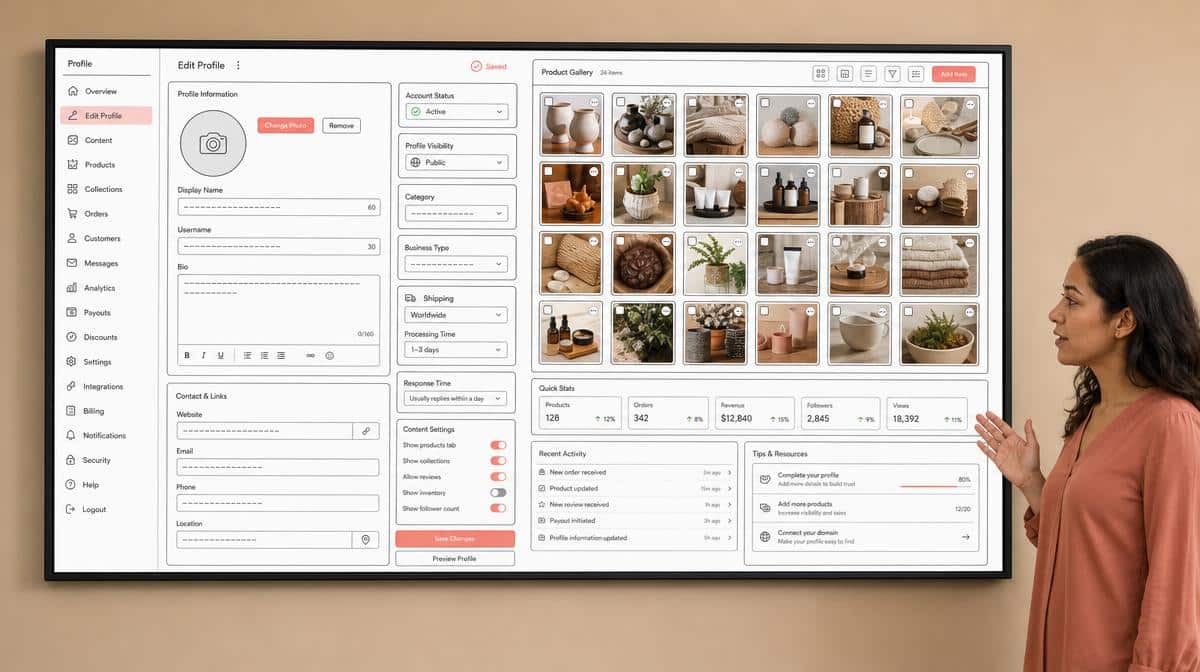
Begin with a professional account if you need business tools such as Insights, contact options, and a category label. In the Instagram mobile app, go to your profile, choose Edit profile, open Links, select the option to add an external link, enter the destination URL and title, and save the change. Interface labels can change, so confirm the link on the public profile after saving.
Use the title field to tell a visitor what sits behind the link. Clear choices such as Shop the Collection, View Service Packages, or See the Current Promotion are more useful than a raw domain name. If you add several links, place the campaign’s main destination first and keep secondary choices limited to pages that support the same buying journey.
Profile links are not the only available route. A supported Story link sticker can send viewers directly to a website, while ads and product features may provide other paths for eligible accounts. Keep the profile link current anyway, because posts, reels, searches, shares, and profile visits can continue to generate interest after a Story expires.
Use the Link Prudently
As your objective is to make more sales, provide a link that takes interested parties to a page designed to convert them into buyers. Whenever you run a promotion in your posts, make sure the leading sales URL points to that promotion. A broad store page may be appropriate for evergreen content, while a one-off promo needs a focused destination with the same product, price, deadline, and promise shown in the post.
Order matters when several links appear on the profile. Put the most important campaign first, use distinct titles, and remove destinations that no longer support an active offer. Preserve a stable option for visitors who want to explore the wider brand, but do not make every department, social channel, and resource compete for attention.
Campaign consistency also protects trust. The product image, offer, call to action, landing-page headline, and checkout details should tell the same story. If an item is unavailable or a promotion ends, change the profile destination before the next post directs people toward it.
Make Use of Online Tools
Third-party link pages remain useful even though Instagram can display several native links. These apps allow you to add multiple sites to one hub and can include landing pages for tracking purposes, consistent branding, permission-based contact information, commerce features, and another layer of click analytics. They are no longer required merely to overcome a one-link restriction.
Choose the simplest structure that supports the campaign. Native profile links reduce an extra click and work well when you need only a few destinations. A dedicated link page can help when you maintain a product catalog, several current promotions, multiple locations, or a content library. A focused landing page is usually better when one campaign has one conversion goal.
Review any tool before depending on it. Confirm that the page loads quickly on a phone, lets you use a domain or branding appropriate for the company, provides accessible link labels, preserves tracking parameters, and offers a practical export path. An elaborate hub that loads slowly can add friction instead of helping people reach a sale.
Ensure That Your Link Works
You have to check regularly that every URL on the profile takes users to the intended page. There is nothing worse than preparing an excellent marketing campaign and having shoppers click on a broken link. Test from a phone while logged out of the company account so the experience resembles what a potential customer sees.
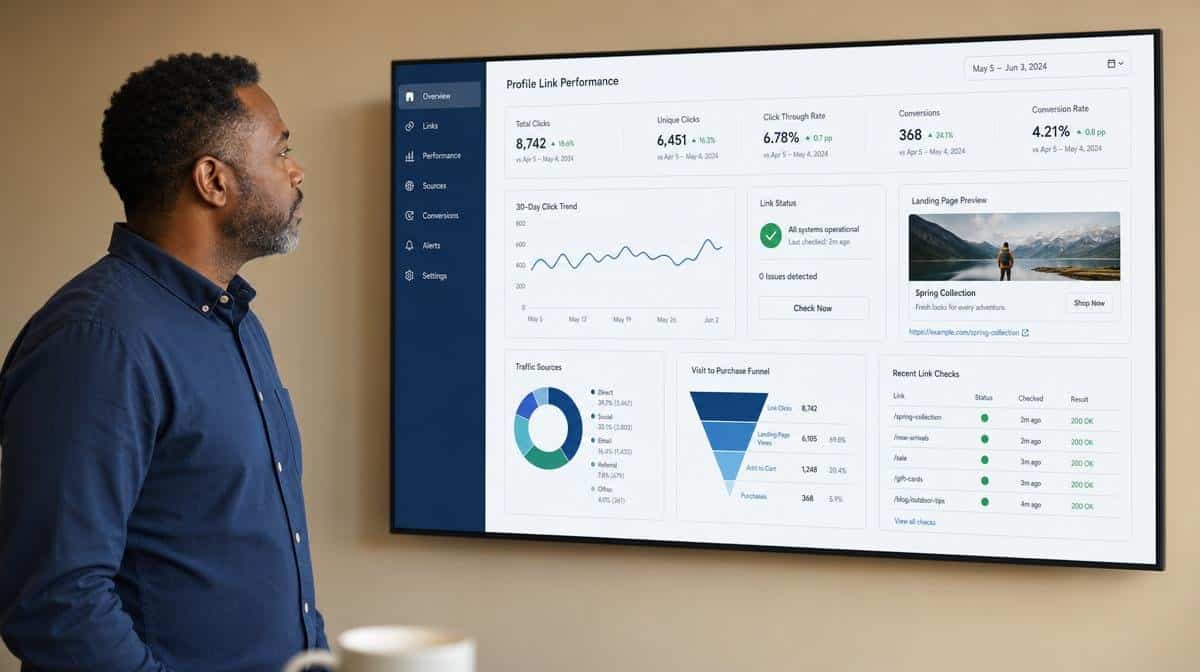
Check more than the first page load. Confirm that the destination uses HTTPS, the mobile layout is readable, the main image and price match the post, forms submit, discount codes work, inventory is available, and the checkout or contact action completes. Test the final destination after any redirect, because a shortened URL can appear healthy while sending visitors to an expired page.
Use a trackable URL so you can pinpoint where your traffic comes from and gauge the effectiveness of your Instagram efforts. Consistent UTM parameters for source, medium, and campaign let analytics separate Instagram visits from other channels. The Google Analytics traffic-source guidance explains how manually tagged destination URLs populate acquisition dimensions.
Keep the naming convention short and consistent. For example, use the same lowercase source and medium for every organic Instagram campaign, then change the campaign value for each promotion. Inconsistent spelling fragments results and makes it harder to compare clicks, landing-page sessions, leads, and purchases.
Use a Landing Page
Sending interested visitors to a focused conversion webpage can increase the chance that they complete the intended action. The page should continue the promise from the Instagram post, answer the most likely questions, show the product or service clearly, and provide one obvious next step. Remove navigation and competing calls to action only when that simplification helps the visitor make the promised decision.
A landing page can support a direct purchase or collect useful information such as email addresses for permission-based follow-up. With appropriate consent, a mailing list can help you communicate future promotions. Do not ask for more information than the campaign needs. Explain what the visitor will receive and provide a clear path to the product, offer, or resource. After customers have bought a product, you can direct users to a confirmation page rather than interrupting checkout with an unnecessary form.
The destination should fit the stage of the shopper. A person responding to a specific product post may be ready for a product page. Someone exploring an unfamiliar service may need proof, frequently asked questions, pricing context, and a short inquiry form. A useful landing page for lead generation reduces the gap between curiosity and action.
Have a Call-to-Action Post Strategy
To get more hits, curate your social media posts to lead people to the profile and its link. Do not take for granted that everyone will check out your profile. State the next action directly and connect it to the value in the post.
A strong call to action names both the action and the reward. View the sizing guide, compare the plans, shop the featured collection, or download the checklist tells a reader what to expect. Vague language such as learn more can work when context is obvious, but a specific instruction usually creates a cleaner handoff.
Match the call to action across the caption, creative, profile-link title, and landing-page headline. If the post asks people to view a product, do not send them to a generic page about the company. If the link changes during a campaign, review scheduled and recently published posts so their instructions still make sense.
Review and Revise
Review and revise the system on a regular schedule. Keep abreast of developments in profile links, online tools, apps, and Insights, then determine whether any change supports the result you expect. Check link health, destination relevance, mobile performance, UTM naming, profile-link order, and the relationship between post engagement and website behavior. Instagram Insights can show reach, views, interactions, and engaged accounts for professional accounts, while website analytics shows what happens after the click.
Compare results by campaign rather than judging the whole channel from likes and comments. Look at profile visits, link clicks, landing-page sessions, completed forms, purchases, conversion rate, and revenue where those measures are available and appropriate. A post can attract attention without producing sales, and a smaller audience can still convert well when the offer and destination match.
Use the findings to improve one part of the path at a time. Revise the call to action, change the first profile link, simplify the landing page, or clarify the offer, then measure the next campaign. This operating loop supports the same goal as other measurable marketing tactics: connecting a specific message and channel to a business result.
Increase Sales on Instagram
Instagram can support ecommerce goals when the route from visual interest to action is short, relevant, and measurable. Choose the right sales link, order profile destinations prudently, use a landing page when one focused action matters, and keep the call to action consistent with the destination.
The link is a small part of the profile, but it connects brand and merchandise content with the website experience that produces a lead or sale. Keep it working, track the traffic, and review the results instead of assuming that engagement alone proves the campaign is effective. The same discipline that helps you build a brand identity on social media also makes the path to purchase clearer.
Frequently Asked Questions
What Is an Instagram Sales Link?
An Instagram sales link is a clickable URL that sends a profile visitor or Story viewer to a product, service, offer, landing page, store, or other conversion destination.
How Do You Add a Sales Link to Your Instagram Bio?
In the mobile app, open your profile, choose Edit profile, open Links, add an external link, enter its URL and title, and save. Verify the result on the public profile after saving.
Can You Add More Than One Link to Instagram?
Yes. Instagram profiles can support up to five external links. Put the most important campaign destination first and use clear titles so visitors understand each choice.
What Should an Instagram Sales Link Point To?
The link should point to the page that best continues the post’s promise, such as a product description, current promotion, focused landing page, booking page, lead form, or online store.
How Do You Track Sales From an Instagram Link?
Add consistent UTM parameters to the destination URL, then review source, medium, campaign, landing-page sessions, leads, purchases, and conversion rate in the website analytics system.