What Drives Organizational Performance?

Every organization wants better results, but organizational performance does not improve because people talk about improvement. It improves when leadership turns continuous improvement into visible commitments, clear objectives, action plans, customer focus, data, audits, and learning. How do you get your organization moving in a direction of continuous improvement to achieve organizational performance? What drives organizational performance?
The ten drivers below preserve the basic operating sequence: management commitment first, then SMART objectives, action plans, user focus, profound knowledge, management by fact, real-time data, a change management system, internal audits, and continuous learning.
What Drives Organizational Performance?
Organizational performance is the ability of a company to produce the results it intends, across customers, operations, people, quality, and financial performance. It occurs at many levels in the organization, from executive priorities to daily process execution. The NIST Baldrige Excellence Framework points to a similar systems view by organizing performance excellence around leadership, strategy, customers, measurement, workforce, operations, and results.
The drivers of business performance and quality improvement vary from strong management commitment, to action plans, to user focus. The question is not whether improvement matters. The question is whether your management system gives people enough direction, facts, and follow-through to improve the work consistently.

1. Management Commitment
First off, you have to have management commitment for an organization to perform. The obvious question then is how does top management show commitment to change and improvement to achieve performance goals? The answer is about inspirational leadership and good communication.
Management commitment takes both leadership and good communication. Leaders show commitment by setting priorities, asking for evidence, removing obstacles, and reviewing progress when the work becomes difficult. If management only endorses improvement in meetings, employees learn that performance improvement is optional. If management changes its own behavior, the organization sees that improvement is real.
2. SMART Objectives
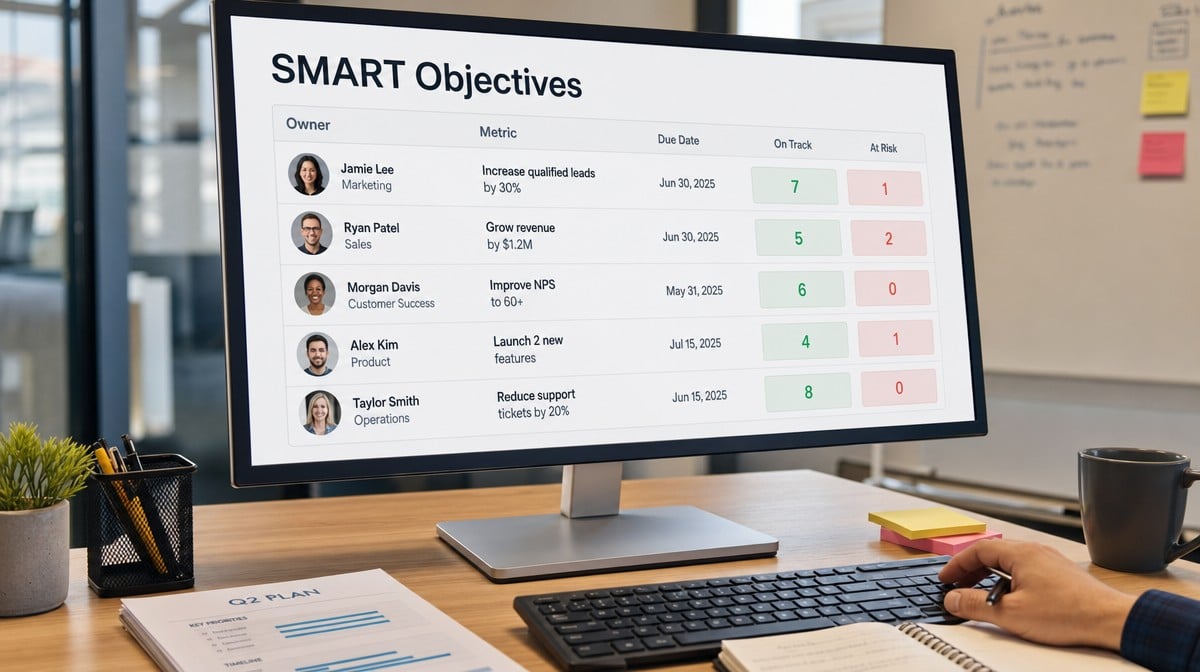
Second, it takes SMART Objectives. In order to achieve organizational performance, planning by management must result in clearly defined objectives that the organization can work toward. The desired organizational performance has to be clearly communicated and understood by everyone.
SMART objectives turn improvement from a broad intention into a measurable target. They define what should change, how much change is expected, who owns the work, and when progress should be reviewed. Without that clarity, teams can stay busy while performance remains unchanged.
3. Organizational Performance Requires Action Plans
Third, in order to achieve organizational performance, the SMART objectives require operational action plans with accountability and responsibility for each action. This means the Who-What-When is spelled out for proper execution.
An action plan should connect the objective to the daily work. It should identify the process being changed, the owner, the due date, the required resources, the expected result, and the follow-up review. This is where many improvement efforts fail: the goal is clear, but the execution path is left vague.

4. User Focus
Fourth, you need a user focus. Defined customer requirements, an understanding of the voice-of-the-customer, and a method of constantly integrating customer requirements into your processes are definitely drivers of organizational performance and improvement.
User focus keeps improvement from becoming an internal exercise. A process may look efficient on paper while still frustrating customers, employees, suppliers, or internal users. When the organization regularly listens to users and converts those requirements into process changes, performance improvement becomes more practical and more durable.
5. Profound Knowledge
Fifth, there has to be profound knowledge, which results in your ability to anticipate results. Really understanding your customer, your markets, and your processes leads you to anticipate what your customer needs next.
Profound Knowledge is deeper than collecting information. It means seeing how process variation, customer expectations, market signals, and employee knowledge connect. This kind of knowledge helps managers stop reacting to every symptom and start improving the system that creates the results.
6. Management By Fact
Sixth, you need to learn and implement management by fact, which leads you to profound knowledge. Collect the facts from data, use the data to derive information, and obtain knowledge about your customers, markets, and processes to achieve organizational performance.
Management by fact does not mean ignoring judgment. It means grounding judgment in evidence. Leaders still make decisions, but they make those decisions with current process measures, customer signals, audit results, and performance trends in view.
7. Real-Time Data
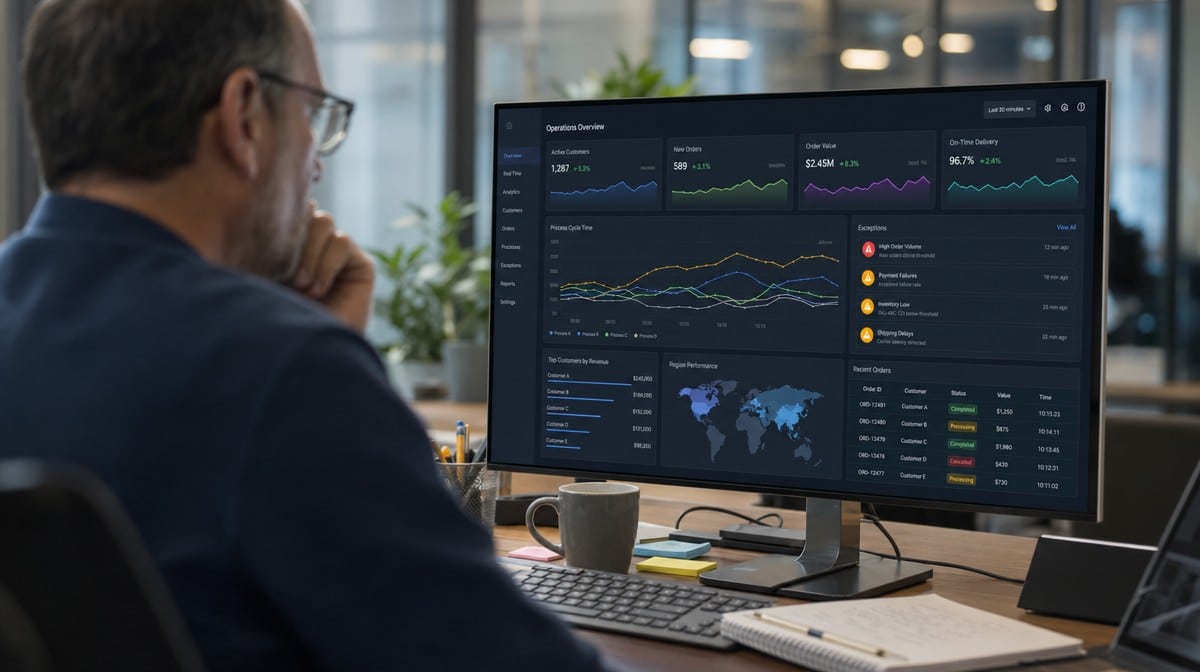
Seventh, in order to manage by fact, you need the facts in the form of Real-Time Data. Your processes require increased visibility and transparency. Real-time data is needed to build a strong competitive advantage in your drive for organizational performance.
The longer you delay in getting data, the slower your reaction time is and the less competitive you become. Timely data helps managers see capacity problems, quality issues, missed handoffs, customer delays, and cost pressure before they become permanent habits.
8. Change Management System
Eighth, with so much going on, you need a good change management system that can document and control all of these changes. This builds on your system of improvement, management by fact, and leads you to greater profound knowledge.
A change management system gives improvement work a place to live. It records the requested change, the reason for the change, approvals, testing, communication, training, and follow-up. Without that control, even good ideas can create confusion, rework, and inconsistent procedures.
9. Internal Audits
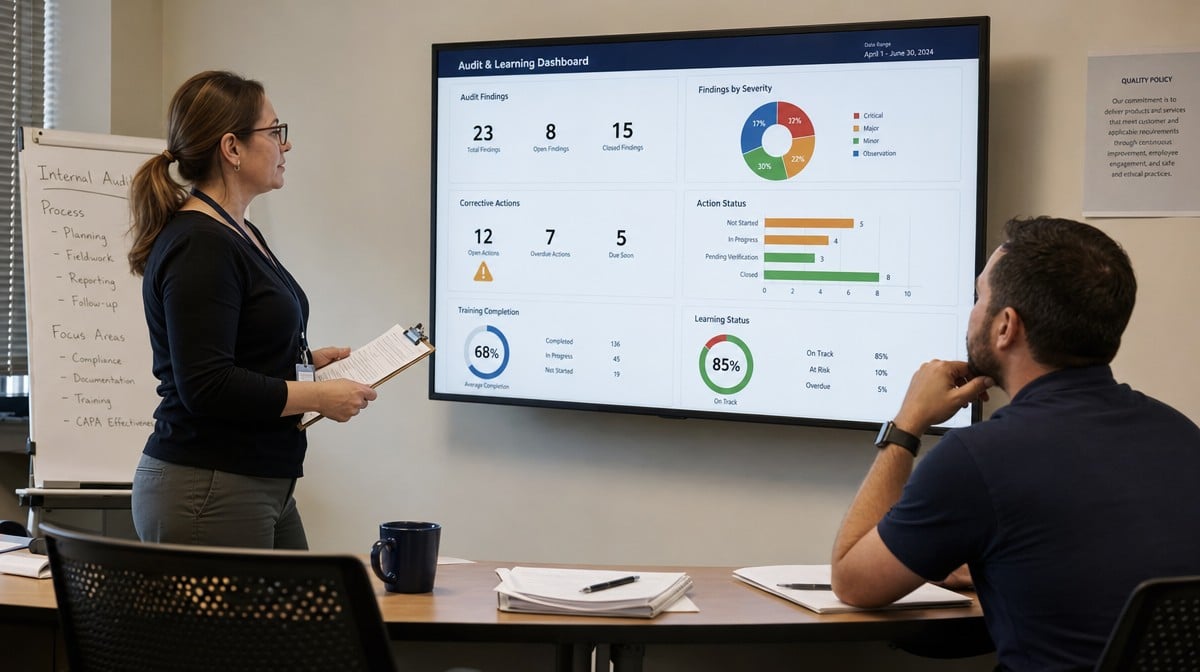
Ninth, use Execution Audits, internal audits, or process audits. Either way, you require a system of monitoring to ensure the system is working, the change management system is effective, and you are in fact achieving progress toward your SMART objectives and organizational performance.
Internal audits should not be treated as paperwork reviews only. A useful audit checks whether the procedure is followed, whether the process produces the intended result, and whether corrective actions actually fix the problem. Audits are one of the best ways to connect stated objectives with real execution.
10. Continuous Learning
Tenth, still unsure where to start? Then continuous learning is needed to build your knowledge management. No improvement will take place unless knowledge is identified, acquired, shared, and used. Training, learning, and practice are crucial to build competence.
Continuous learning keeps the improvement system alive after the first project is complete. Employees need to understand the procedure, the reason behind the procedure, the data that shows whether it works, and the lessons learned from audits and corrective actions. When learning becomes part of the process, improvement becomes repeatable.
Driving Organizational Performance
Your financial performance will improve when organizational performance is managed as a system, not as a slogan. Management commitment sets direction, SMART objectives clarify the target, action plans assign responsibility, user focus keeps the work relevant, and management by fact gives leaders the information needed to act.
The rest of the system keeps improvement from fading. Real-Time Data shortens reaction time, a Change Management System controls the work, internal audits check whether execution matches intent, and Continuous Learning builds knowledge management. Together, these ten drivers help your organization move toward continuous improvement and toward its goal of organizational performance.
Frequently Asked Questions
What Drives Organizational Performance?
Organizational performance is driven by management commitment, SMART objectives, action plans, user focus, profound knowledge, management by fact, real-time data, a change management system, internal audits, and continuous learning.
Why Is Management Commitment Important For Performance Improvement?
Management commitment matters because employees watch what leaders review, fund, ask about, and follow up on. If leadership does not actively support improvement, performance goals rarely survive daily operating pressure.
How Do SMART Objectives Support Organizational Performance?
SMART objectives turn broad improvement goals into specific, measurable, achievable, relevant, and time-bound targets. They help teams understand what result is expected and how progress will be judged.
Why Does Real-Time Data Matter In Performance Improvement?
Real-time data gives managers faster visibility into delays, quality issues, customer problems, and process variation. The longer data is delayed, the slower the organization reacts.
How Do Internal Audits Help Continuous Improvement?
Internal audits compare intended procedures with actual execution. They help confirm whether the system is working, whether corrective actions are effective, and whether the organization is moving toward its SMART objectives.