What is an Accounting Manual?
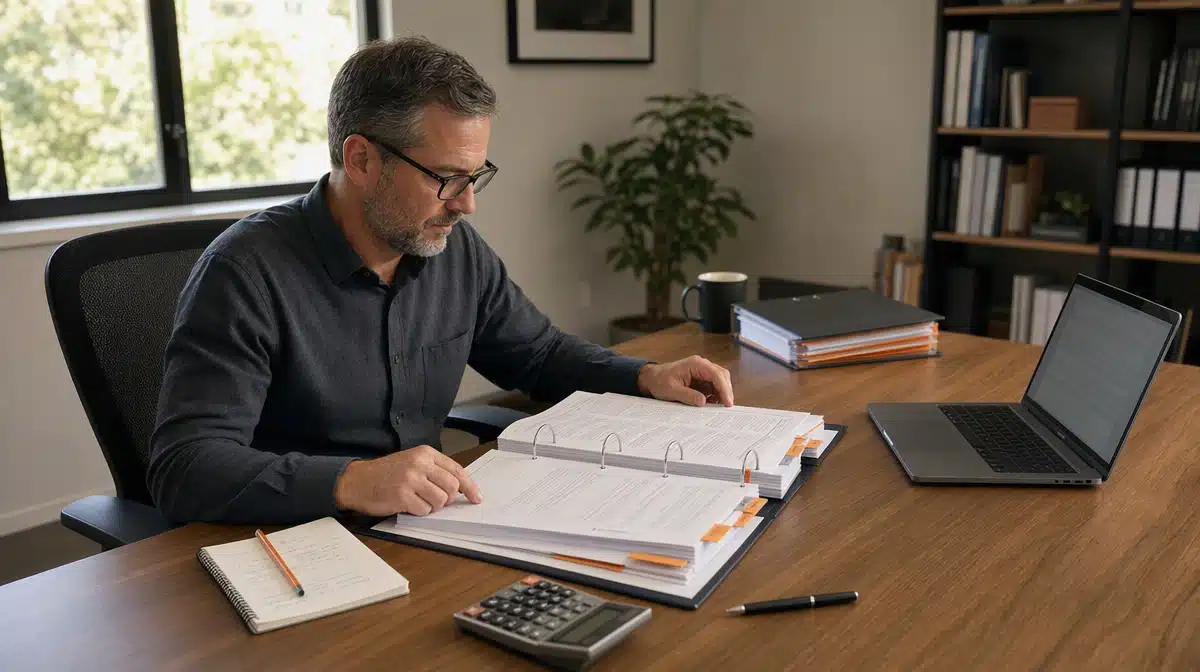
An accounting manual is the shared operating reference for an organization’s accounting policies and procedures. It explains the department’s purpose, structure, responsibilities, internal controls, core processes, detailed procedures, records, and review practices so accounting staff can work consistently and new hires can learn how the organization expects the work to be done.
A useful accounting manual contains more than a list of rules. It connects policies to the people who approve work, the procedures employees follow, the records that provide evidence, and the checks managers use to decide whether each accounting process is working as intended.
What Should an Accounting Manual Contain?
When you explore an accounting manual online, you may see a table of contents, a few sample accounting procedures, or an entire manual published by a university or government entity. The exact contents vary because the purpose, risks, staff, systems, and reporting obligations vary. Still, most useful manuals need the same seven content groups.
What an Accounting Manual Should Contain
- Scope and purpose: what the manual covers, who uses it, and the outcomes it is meant to support.
- Organization and authority: the accounting department structure, job responsibilities, approval limits, segregation of duties, and escalation paths.
- Accounting policies: the principles and rules that guide decisions, including the organization’s accounting methods and control expectations.
- Core accounting cycles: the major processes, their inputs and outputs, and how one process connects to the next.
- Detailed procedures: the steps, owners, required approvals, exceptions, and completion criteria for recurring work.
- Forms, records, and evidence: the documents, system records, reconciliations, reports, and retention expectations that show the procedure was completed.
- Monitoring and improvement: the measures, review schedule, issue-resolution method, and change-control process used to keep the manual effective.
Review prompt: For every procedure, can a new employee identify who performs the work, who approves it, what evidence must remain, what can go wrong, and how a manager knows the process succeeded?
These parts turn an accounting manual into a management tool as well as a training and reference document. The difference between policies and procedures matters here: a policy states the direction or rule, while a procedure explains how people carry it out. One cannot fully replace the other.
Actual accounting manuals developed by public entities such as universities and state or local governments often provide useful samples. They may include accounting standards, guidelines for various accounting functions and operations, particular information such as cost center account codes, and detailed descriptions of the organization structure. Use those samples to see what is possible, but adapt the content to your own accounting risks, resources, systems, and organizational goals.
Why Is a List of Accounting Rules Not Enough?
Many accounting procedures use what this article calls a “Thou Shalt” approach. They state what employees must or must not do, sometimes with account codes or a sequence of accounting steps. That consistency can be valuable, especially for recurring work such as petty cash, bank reconciliations, invoice approvals, or month-end close.
The limitation appears when the procedure stops at the steps. A step list may not identify the process objective, the responsible owner, required evidence, exception handling, or the criteria management will use to judge effectiveness. This article uses “ballistic procedure” as shorthand for a procedure that is launched as a fixed sequence but does not include enough feedback to show whether the process reached its intended result.
An effective manual therefore explains both control and feedback. It should show who performs and approves the work, what records are produced, how exceptions are handled, and which review confirms that the process is complete. The related guidance on financial controls can help you connect individual procedures to the control objectives they support.
How Does a Managerial Accounting Approach Improve the Manual?
A managerial approach begins with the information the organization needs to operate, not merely the transactions it must record. It asks what accounting information managers need, who owns each process, how responsibilities are divided, which approvals matter, and how the department will monitor results. An accounting manager or controller can then use the manual to establish consistent work without reducing the entire system to “Thou Shalt” instructions.
For management accounting, the manual can include additional materials besides accounting procedures. An org chart can show the accounting department organization; designated responsibilities can identify management and staff members who own approvals, reconciliations, and reviews; and the resource section can identify the accounting resources required to carry out the work. Together, these elements help management see how the accounting process supports decisions and controls.
If Sarbanes-Oxley compliance is relevant, scope matters. For reporting companies subject to the rule, Section 404 requires the annual report to state management’s responsibility for internal control over financial reporting and include management’s assessment of its effectiveness. An accounting manual can document part of that control environment, but the manual alone does not establish compliance. The SEC’s Section 404 final rule provides the governing requirements.
Section 302 separately requires responsible officers to certify reports and address the establishment, maintenance, and regular evaluation of the issuer’s internal controls. The SEC’s certification rule explains those duties. Applicable issuers should connect their documented accounting internal control procedures to the wider assessment, testing, certification, and disclosure process rather than treating the manual as a substitute for it.
How Do You Create an Accounting Manual Around Core Processes?
Start by deciding why you need the manual. You may need consistent training, clearer approval authority, stronger control evidence, faster cross-training, better preparation for an audit, or a reliable way to manage process changes. That purpose determines how much detail belongs in the manual and which processes deserve attention first.
Next, identify the core accounting processes and the interaction between processes. For each process, define the inputs, outputs, owner, participants, approvals, records, and handoffs. Then ask what could go wrong and consider both the likelihood and materiality of each risk. This creates a practical basis for choosing controls instead of copying procedures that may not fit your organization.
With the core processes identified, risk assessment can be applied by addressing likely failures and their effect. Another approach is to borrow the discipline used in effective management systems: define the processes and sub-processes, document their interaction, provide the resources required, establish criteria that indicate whether work is being carried out effectively, and assign corrective action when results do not fulfill organizational goals.
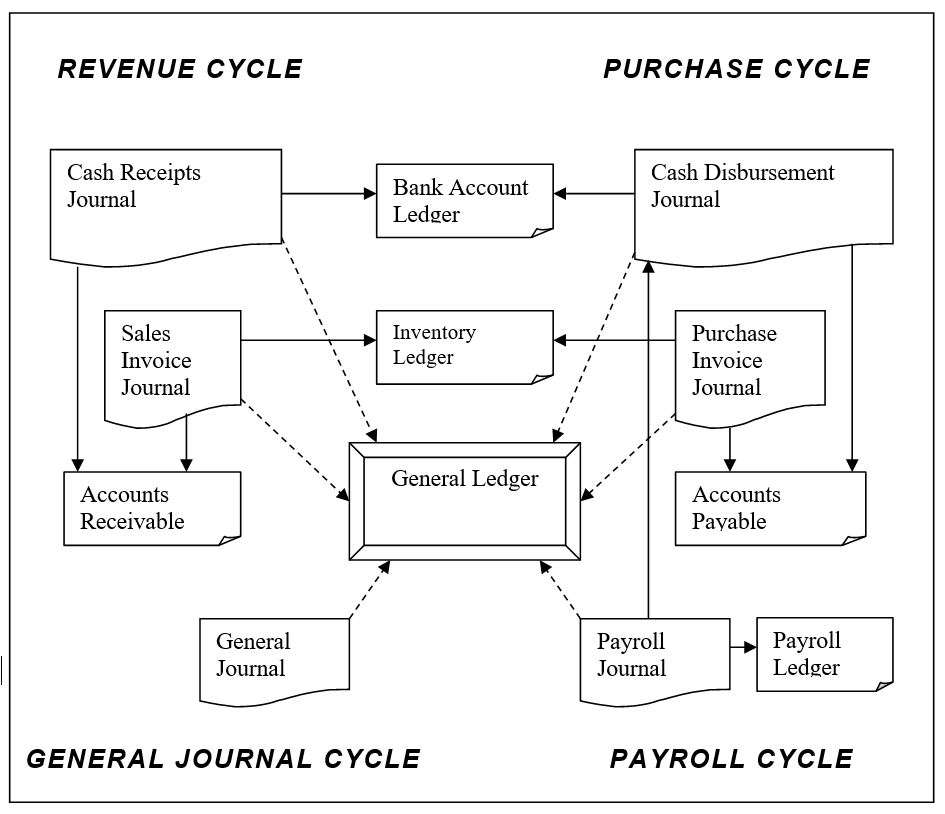
The diagram shows why process interaction belongs in the manual. Revenue, purchasing, payroll, cash, and general journal activity do not remain isolated. They create records that flow into subsidiary ledgers and the general ledger. A procedure should therefore describe its own steps and the handoff to the next accounting record or review.
You can also adapt the ISO 9001 process approach as a management lens. ISO’s official guidance states that performance can be managed and improved by applying the Plan-Do-Check-Act cycle. In an accounting manual, that means planning the process and control, doing the work, checking the evidence and results, and acting on exceptions or improvement opportunities. The ISO process-approach guidance supports PDCA for processes and systems; it does not require a particular accounting-manual format.
Although ISO 9001 is often associated with manufacturing and production, its quality management concepts provide a useful model for organizing process responsibilities, checks, and improvement. This is an ISO-style adaptation for creating an accounting manual, not a claim that an accounting manual is itself an ISO quality management system.
For a step-by-step companion, see writing an accounting manual. When assigning owners and approval authority, connect those decisions to the organization’s controller responsibilities. A specific process such as accounts payable procedures can serve as a worked example before you expand the same structure across other cycles.
What Is Different About the Bizmanualz Accounting Manual?
The Bizmanualz Accounting Policies and Procedures Manual | ABR31M uses a hybrid structure. Its Accounting Manual section is separate from the detailed accounting procedures and brings together scope and purpose, accounting department organization, core accounting processes and their interaction, a list of accounting policies, and required resources.
Keeping the policy list in one place, while also connecting policies to applicable procedures, helps accounting managers, controllers, and department leaders spot inconsistencies or conflicts that require resolution. The manual also provides a place to define the accounting department organization, responsibilities, and process ownership.
The current Bizmanualz Accounting Policies and Procedures Manual organizes procedures into five core cycles: General and Administrative, Cash, Inventory and Asset, Revenue, and Purchasing. The free accounting policy and procedure sample shows the format and writing style of an individual procedure from the manual.
A set of ballistic procedures may not meet your long-term organizational needs if it records steps but omits purpose, responsibility, controls, evidence, and review. Before deciding what goes into your accounting manual, decide why you need it. Once the intended result is clear, choosing the right policies, procedures, resources, and review practices becomes much easier.
Frequently Asked Questions
What Is the Main Purpose of an Accounting Manual?
The main purpose is to give accounting staff one shared reference for policies, responsibilities, controls, procedures, records, and review expectations so recurring work is performed consistently.
What Is the Difference Between an Accounting Policy and an Accounting Procedure?
An accounting policy states the rule, principle, or direction the organization follows. An accounting procedure identifies the steps, owners, approvals, records, and exceptions involved in carrying out that policy.
Who Should Own the Accounting Manual?
The controller, accounting manager, or another designated financial leader should own the manual. Individual process owners should help maintain the procedures and evidence requirements for the work they supervise.
How Often Should an Accounting Manual Be Reviewed?
Review the manual on a defined schedule and whenever a material change affects roles, systems, regulations, approvals, risks, or accounting processes. The schedule should name an owner and a method for approving and recording changes.
Can an Accounting Manual Prove That Internal Controls Are Effective?
No. A manual documents the intended policies, procedures, responsibilities, and evidence, but effectiveness also depends on whether people perform the controls, whether managers test and review them, and whether identified problems are corrected.