Why Every Business Needs a Franchise System

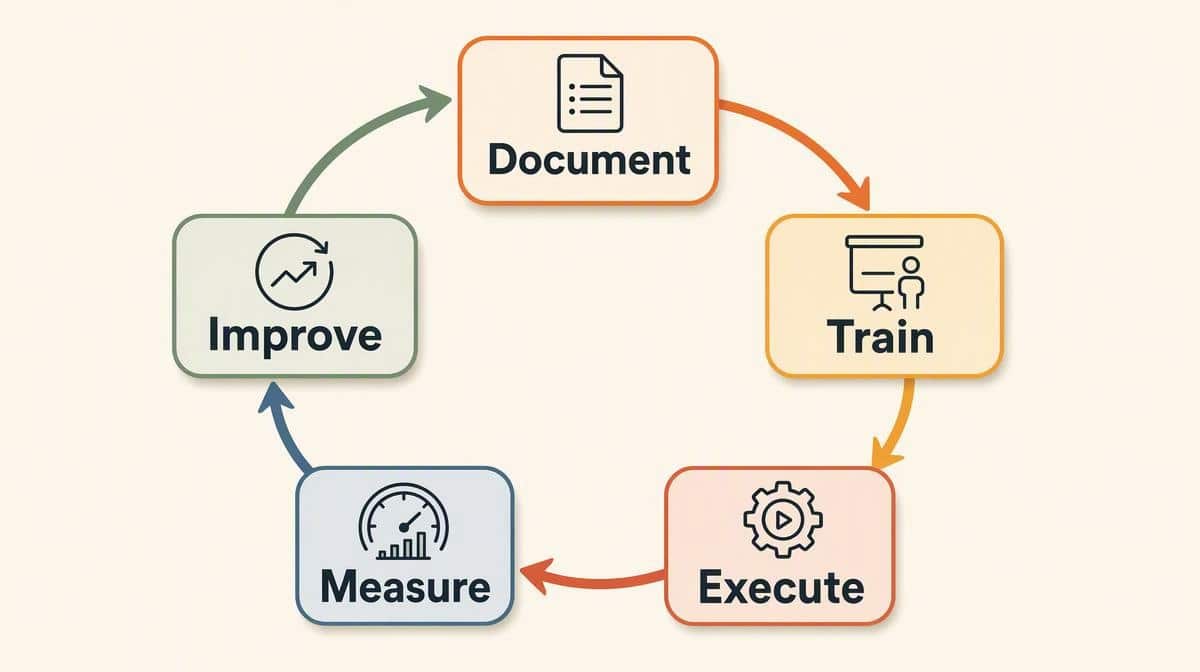
A well-designed franchise turns operating knowledge into a blueprint that people can follow. An independent business can use the same discipline by documenting its important processes and procedures, training people to use them, measuring results, and improving the system over time.
You do not have to sell franchises or become a legal franchise to build this way. The goal is to replace avoidable dependence on memory and constant owner intervention with a repeatable operating system that creates greater consistency, reliability, and predictability.
What Is the Importance of a Franchise System?
Independent small businesses can fall into more ad-hoc approaches when decisions rely on employees instead of documented processes and procedures. This can lead the owner toward micro-managing routine work, which can stunt growth, cause stress, and contribute to burnout. Results also depend too heavily on the person doing the work.
A franchise-style system connects activities instead of treating every task as an isolated instruction. The ISO process approach explains that consistent and predictable results are achieved more effectively when activities are understood and managed as interrelated processes. That is the practical value an independent business can borrow from a franchise model.
Build Like a Franchise
You could eventually turn your business systems into a franchise model for other entrepreneurs to purchase and follow. Even if that is not your goal, you should build as if another capable operator needed to run the business from your blueprint. Being part of a franchise means franchisees benefit from the hard work already invested in the systems. That test exposes missing standards, unclear handoffs, and knowledge that exists only in one person’s head.
Once you have one franchise system up and running, parts of it may be transferable to other services. Jim Penman started a small gardening business in the lawn mowing industry in Australia in 1982 and later developed Jim’s Group across many divisions, according to the company’s official history. Jim’s Laundry Services is one current example of how a common operating approach can support a different service category.
Create Consistent Results
Ad hoc work can produce different outcomes each time because people make different assumptions about the same task. Michael Gerber used the idea of a franchise system prototype in The E-Myth Revisited. The official EMyth explanation of the franchise prototype summarizes the idea as systems running the business while people run the systems.
This same concept can be applied whether you are a franchise or an independent small business owner. Build systems that anyone can follow, just like franchises do. Clear processes and procedures give people a shared method and a defined quality standard. They can produce consistent results regardless of who is carrying out the task and take some of the load off the business owner, while still allowing sound judgment.
Train Your People on the Franchise System
A franchise may provide initial training, ongoing training, and operational support. This can include official hands-on training and access to other franchisees for help. The Federal Trade Commission’s franchise guide explains that Item 11 of the Franchise Disclosure Document describes the training and assistance a franchisor offers. The scope and quality vary, so a prospective franchisee still needs to verify the program and speak with current franchisees.
For an independent business, the same principle means pairing every important procedure with a practical training program. Explain why the standard matters, demonstrate the work, let the employee practice, check the result, and make the procedure easy to find later. Written instructions alone are not a complete training system.
Make the Franchise System More Efficient
Start with repeatable, material work rather than trying to document every activity. Prioritize tasks that affect customers, cash, compliance, safety, quality, or important handoffs. A useful standard operating procedure states what needs to be done, when it is due, who should complete it, what acceptable work looks like, and what to do when the normal path does not apply. With that information, managers can allocate appropriate staff and manage workflow far more efficiently without cutting corners.
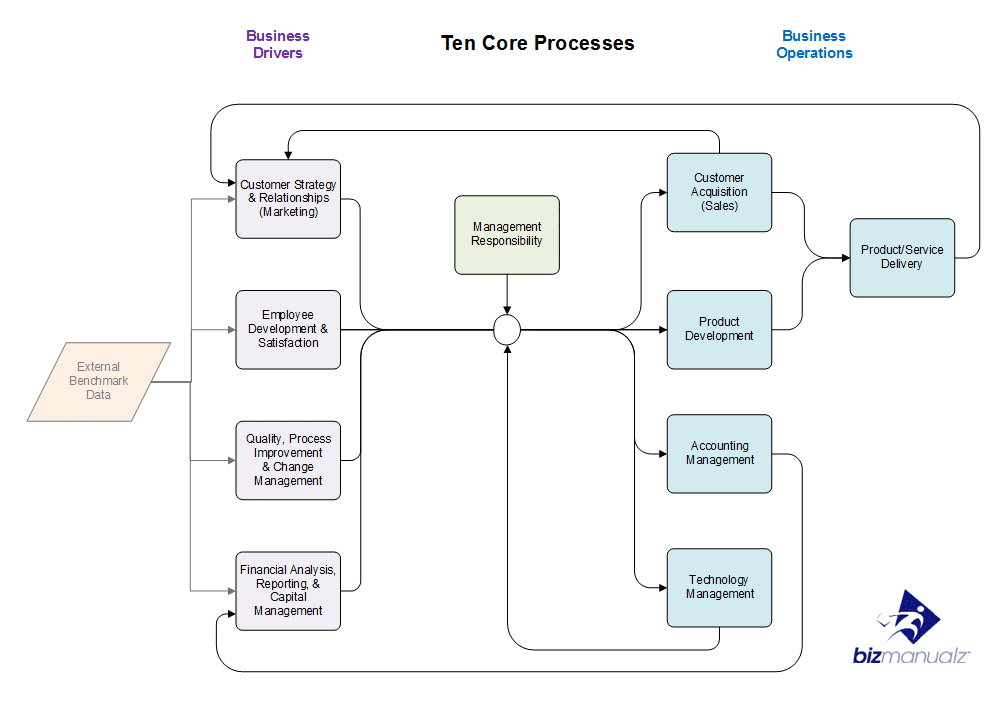
Measures should match the purpose of the process. A delivery process may track on-time completion and rework. A customer-support process may track response time, resolution, and recurring causes. The point is not to collect everything. It is to use a few meaningful signals to manage workflow and improve the result.
Make Change Easier to Achieve
When you have a defined process, structured change management makes it easier to change one step, observe the result, and decide whether to keep the adjustment. You can make small changes gradually before making bigger changes, without causing upheaval throughout the entire system. A documented baseline helps you assess what was beneficial and separate a real improvement from a temporary impression.
Great systems give you a controlled environment where you can test, measure, and tweak new ideas. Quality assurance creates processes that reduce the likelihood of defects, according to ISO’s quality assurance guidance. A system cannot prevent every mistake, but it can reveal variation earlier and support continuous improvement.
Give the Team a Shared Reference Point
Processes and procedures provide more than instructions. They clarify roles, handoffs, decision rights, and escalation paths. When people know what they should be doing, how they should be doing it, and where to ask for help, the team has a shared reference point instead of relying on private knowledge. That reference can be an invaluable resource when things get tough, while managers and colleagues remain the sounding board for unusual ideas and decisions.
Without a well-defined process, staff may solve the same problem in conflicting ways. The system should make exceptions visible, not force every situation into a rigid script. Managers still need to coach people, resolve unusual cases, and update the standard when experience shows a better method.
Scale and Grow Your Franchise-Style System
A tested system can make replication more controlled. You may use it to expand the current business, open another location, or reduce owner dependency without losing oversight. It is not just about getting bigger. The aim is to scale while preserving product quality, customer service, and control of the business and your life. Results still need to be monitored at each location because a procedure that works in one setting may need adjustment in another.
Continuous improvement keeps the operating system from becoming a static manual. Review results, exceptions, customer feedback, and employee observations on a regular cadence. Then update the process, retrain affected people, and confirm that the change produces predictable results.
How Do You Build a Franchise-Style System?
Use this readiness checklist for one important process before expanding the method across the business:
- Name the promise. State the customer or business outcome the process must deliver.
- Define the trigger and finish. Identify what starts the work and what proves it is complete.
- Assign an owner. Make one role accountable for maintaining the process and its results.
- Document the standard path. Record the essential steps, decisions, handoffs, tools, and quality standard.
- Plan for exceptions. Explain when a person should stop, escalate, or choose an approved alternative.
- Train and verify. Demonstrate the work, observe practice, and confirm competence.
- Choose measures. Track a small set of indicators tied to time, quality, cost, risk, or customer outcomes.
- Set a review cadence. Use results and exceptions to test, measure, and tweak the system.
This is why management procedures are important. Small business owners often wear many hats. A business built on tested systems is easier to manage, teach, improve, and replicate. It can grow without requiring the owner to control every routine decision, while still preserving accountability for the business and its results.
Frequently Asked Questions
Does a business need to become a franchise to use a franchise-style system?
No. An independent business can document standards, train people, measure results, and improve processes without selling franchises or entering a franchise agreement.
Which business processes should be documented first?
Start with repeatable work that affects customers, cash, compliance, safety, quality, or important handoffs. These processes carry the greatest cost when results vary.
What is the difference between an SOP and a franchise-style operating system?
An SOP explains how to perform a task. A franchise-style operating system connects SOPs with ownership, training, measures, exception handling, and a regular improvement cycle.
How can you tell whether a process is ready to scale?
A process is closer to being ready when different trained people can follow it, produce acceptable results, handle common exceptions, and report comparable measures without constant owner intervention.
How often should the operating system be reviewed?
Review critical processes on a defined cadence and whenever results, regulations, tools, customer needs, or recurring exceptions change. Update the procedure and training together.