
How Do You Simplify Complex Processes and Procedures?

There are many reasons why process and procedures become too complex. Many revolve around “too much”, “too many”, or “I don’t know what you’re talking about.” Reducing the complexity of process and procedure is simple. How do you simplify complex processes and procedures?
10 Signs You Need To Simplify Complex Processes and Procedures
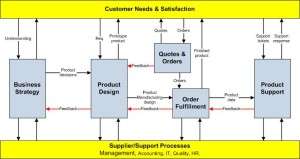
How do you know if your process and procedures are too complex? Less is more. Don’t go into long explanations, use industry- or profession-specific terminology (jargon), or try to dispense too much information. Remember — complexity is one of the enemies of consistency and quality.
Here are the top ten signs:
1. Your Procedures Are Too Long
This is possibly the most common kind of complexity. If your procedures are 30 pages in length, then your procedures are too long. It is very difficult to follow a 30-page procedure (try it). The fewer the pages, the better. This forces you to simplify complex processes — to make them more concise.
If you have a 30-page procedure, try breaking it into three 10-page procedures. See if you can simplify each ten-page procedure — maybe eliminate or repurpose the information into work instructions, training material, or pictures. Pictures are a great substitute for excess verbiage and should reduce your document size.
2. Your Processes Has Too Many Steps
If your process contains — let’s say, 27 — steps, it has too many. Follow the “rule of seven” — use no more than seven steps to describe a process. No more than seven activities to describe a procedure. Use no more than seven tasks to describe an activity, and no more than seven lines to a paragraph. Break information into chunks that can be easily understood and followed.
3. Your Procedures Reference Too Many Documents
If you have to keep flipping between documents, it’s difficult to follow the main procedure (and easy to derail your train of thought). If your procedures reference multiple documents, this leads to straying from the main path. Face it, this is a distraction in the workplace.
4. Your Procedures Contain Too Much Terminology
Industry jargon needs to be defined in the procedure. Does everyone really know how the “takt time” on your value stream map is used to improve your OEE? Instead of assuming they know, define your terms or use them in such a context that your readers can infer what you mean.
5. Your Process Involves Too Many People
If your procedure requires a lot of different individuals, you probably have too many handoffs. The more information and materials are handled, the greater the likelihood of a breakdown in the process. Therefore, you have an opportunity to simplify complex processes and improve the process. Break your procedure into several discrete procedures and focus the responsibility on fewer people in each procedure.
6. Your Procedures Involve Too Many Review Steps
Do you really need as many reviews, meetings, or inspections as your procedure calls for? Ask yourself, what is the policy review process? Can you combine, eliminate, or substitute a review with another element? Individuals can do self-inspections with checklists. A lot of reviews make for a complex process. Simplify complex processes and things will run a lot more smoothly.
7. Your Procedures Cover a Long Period of Time
Process delays allow for interruptions. Eliminate them. One of the leading reasons of ineffectiveness, inefficiency, and poor performance is process delays. Reorganize the procedure into time-based elements that can be easily followed.
8. Your Procedures Encompass Asynchronous Activities
Loosely related activities that occur in their own time frame are hard to coordinate. Tie the activities together with milestones — have them share start times or end times. Introduce a synchronizing element to your procedures to reduce downtime caused by these asynchronous activities.
9. Your Procedures Leave Out Important Information
This is the opposite of using jargon, or giving too much information. By leaving out bits of necessary information for the sake of saving time or space, you increase the risk of process failure. The reader does not know what they do not know and your policies become unenforceable. Economize and keep it simple, but don’t omit important information.
10. Your Procedures Use Too Many Big Words and Long Sentences
The average person reads at a ninth-grade level. Using too many “big college words” and stuffing a lot of information into long sentences or paragraphs introduces unnecessary complexity. Use smaller words, shorter sentences, shorter paragraphs and add verb power to your procedures. Remember the Rule of Seven (above).
Simplify Complex Processes and Procedures
How can you tell whether your process or processes are overly complicated? Less really is more. Don’t go into lengthy explanations, use industry or profession jargon, or try to cram too much information into your processes and procedures. Remember that one of the enemies of consistency and quality is complication.




Another great article.
Keep on trucking.