7 Ways to Improve Your Productivity at Work

A full calendar can create the appearance of progress while the highest-value work remains untouched. Improving productivity at work is not simply a matter of moving faster. It means directing attention, skill, and available time toward the actions that create useful results.
Productivity experts often separate the problem into working harder or working smarter. The seven methods below preserve that practical choice: focus on the task at hand, maintain a sustainable rhythm, prioritize higher-value activities, use your strengths, group related tasks, simplify the work, and protect time for planning and review.
What Is Workplace Productivity?
Workplace productivity is the useful output produced with available time, attention, skills, and resources. More activity does not automatically mean more productive work. A productive employee or team completes the right work at an appropriate quality level, with less avoidable delay, rework, and confusion.
Productivity is also a source of wealth creation. When a business finds a reliable way to increase business productivity, it can serve more customers, improve quality, or create capacity for new work without adding the same proportion of cost. The goal is not permanent urgency. It is a repeatable system that helps people use their time well.
The measure should match the work. A service team may track completed requests, response quality, and customer outcomes. An operations team may monitor cycle time, defects, throughput, and on-time delivery. A manager may judge whether decisions, assignments, and follow-through moved a priority forward. Counting hours or messages without considering the result can reward motion instead of value.
What Are 7 Ways to Improve Your Productivity at Work?
1. Work Focused
Find tools to improve productivity and increase your task focus. Work when you are working. Identify what you need to get done today, choose one clear priority, and give that task a bounded focus window. Do not wander into new tasks, multitask, or respond to every distraction as it appears.
To boost office productivity, make the desired behavior easy. Silence nonessential notifications, close unrelated tabs, place required information within reach, and define what “done” means before you begin. Focus is easier to maintain when the task, time boundary, and expected result are visible.
Keep an idea or request from hijacking the current task by recording it in a trusted list. That small action gives the new item a place without forcing an immediate switch. When the focus window ends, review the list and decide whether the item belongs in today’s work, a later plan, or nowhere at all.
2. Work at a Sustainable Pace
Find ways to pick up your work pace without treating constant speed as the goal. Develop a work rhythm and maintain a steady tempo that supports both quality and completion. In lean operations, takt time describes the pace needed to meet customer demand within the available production time. It is a demand signal, not an instruction for an individual to rush.
A sustainable cadence makes slowdowns easier to diagnose. If work repeatedly falls behind, examine unclear handoffs, missing information, unnecessary approvals, equipment problems, or uneven workloads before asking people to move faster. When attention or accuracy begins to fall, a brief restorative break can protect the quality of the next work period better than forcing the same pace through fatigue.
Track the pace over several cycles instead of reacting to one unusually good or bad hour. A stable pattern reveals whether the process can meet demand consistently, where variation enters the work, and which constraint deserves improvement. That evidence supports better decisions than pressure based on a single snapshot.
3. Work on Higher-Value Activities
Find ways to prioritize your tasks by the results they create. Higher-value activities directly advance a customer outcome, reduce a meaningful risk, remove a constraint, or enable other people to complete important work. Think quality over quantity. Doing fewer higher-value tasks can improve your productivity at work more than performing a greater quantity of low-value tasks.
Ask whether you can determine why your productivity has increased. A visual management dashboard system can help a company distinguish work that is adding value from work that consumes time without moving a result. A business performance scoreboard helps teams monitor key business activities, prioritize assignments, view the results of actions taken, and decide what to change next.
Urgency and value are not identical. A noisy request may demand attention while a quiet process problem continues to create delays every week. Compare the likely impact, effort, risk, timing, and dependencies of competing tasks. When priorities change, record the reason so the team can learn whether its choices produced the intended results.

4. Do the Things You Are Better At
Find ways to focus on results instead of just getting things done. Demonstrated skill matters because experienced people can often recognize patterns, avoid common errors, and complete the same work with less rework. Review where you consistently produce strong results, then spend more time on those activities when they are also valuable to the organization.
This does not mean ignoring every weakness or doing only the work you enjoy. Some responsibilities require training and deliberate practice. Other tasks may be standardized, automated, delegated, or reassigned to someone with a stronger comparative advantage. Learning to motivate better performance from within includes using your strengths while building the skills the role still requires.
5. Group Your Tasks
Find ways to focus on related tasks. Do not multitask when the work requires concentration. Group related tasks together and do them during the same block of time. Pick a time to answer email, make phone calls, write letters, process approvals, or complete other similar actions instead of scattering them across the day.
Constantly switching between tasks or stopping to read every message creates small switching costs. You lose time because you must wrap your mind around the new task, recover the relevant rules and information, and remember where you left off. APA research on multitasking and switching costs explains that these brief mental blocks accumulate and can make apparently efficient multitasking take more time and produce more errors.
Grouping related tasks reduces that cognitive reorientation. It also shortens the repeated learning and recall needed to restart a process. The work still varies, but the tools, information, and decision rules remain similar long enough for you to maintain a productive flow.
Batching does not mean delaying a genuine emergency or making customers wait without a service standard. Define which events deserve immediate interruption and which can enter the next scheduled block. This prevents every incoming request from presenting itself as equally urgent while keeping a clear path for exceptions that truly matter.
6. Work Smarter
Find ways to simplify your work. As the number of steps in a task increases, the time, coordination, and opportunities for error often increase too. This practical idea is sometimes described as the Law of Complexity in process-improvement discussions. The useful point is straightforward: remove steps that do not add value, reduce task complexity, and make the correct path easier to follow.
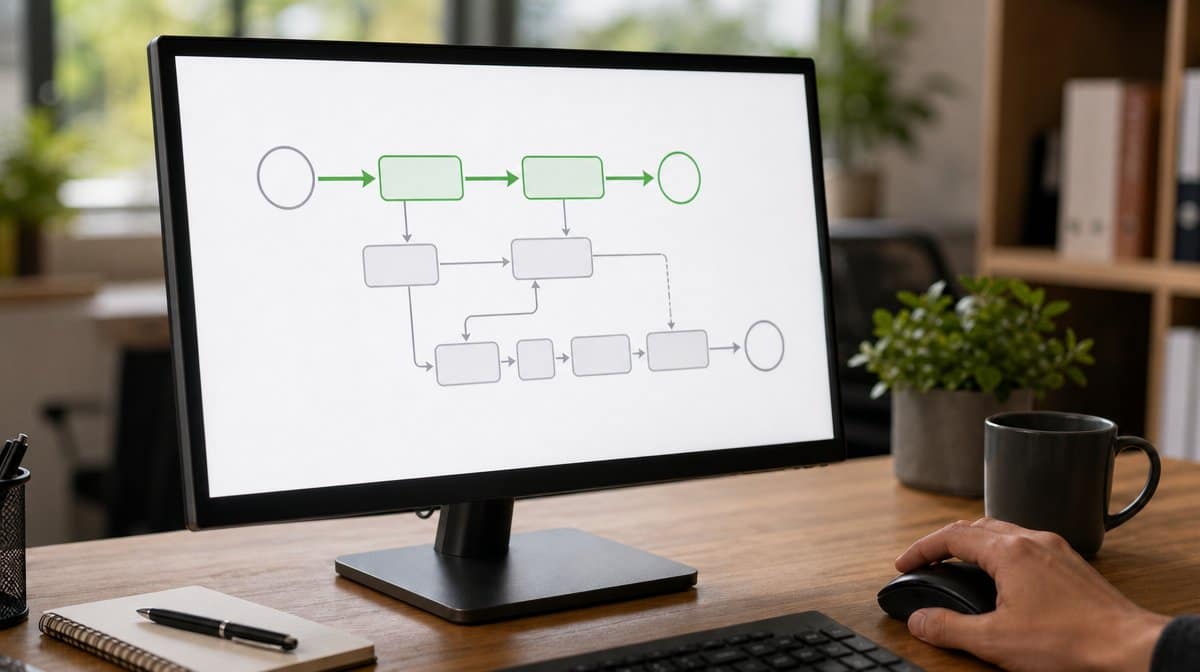
Start with one recurring task and map what actually happens, including waits, approvals, handoffs, and rework. Then ask which step protects quality, satisfies a real requirement, or creates value for the next person. A simple process improvement plan can eliminate waste while keeping the controls that matter.
Simplification becomes more valuable when it is standardized. Give the revised process a clear owner, entry condition, expected output, and review point. Record exceptions rather than quietly building them into the normal path. Over time, those records show whether a step should return, a control should change, or a new improvement is needed.
7. Protect Time Before Extending Hours
Find more useful minutes in the day before making longer hours the default. The original arithmetic remains a helpful planning example: three recovered 16-minute blocks create 48 minutes of available time. Recover those blocks by reducing interruptions, preparing materials before a focus session, improving handoffs, or combining similar work. Use the time to get organized for work, plan the day, or review results.
Available time and productivity are not the same measure. Arriving earlier or leaving later may occasionally be necessary, but routinely extending the workday can reduce the attention and judgment required for high-quality output. The National Institute for Occupational Safety and Health guidance on work-related fatigue notes that fatigue can slow reaction time, reduce concentration, limit short-term memory, and impair judgment. Protect required breaks, recovery, and sleep so extra hours do not create avoidable errors.
How Can You Sustain Better Productivity at Work?
Every day, review the day’s results and learn how to focus your time on the higher-value tasks you are better equipped to perform. Use protected time to plan, review, and focus. This is part of Plan-Do-Check-Act, or PDCA, which drives continuous improvement in a learning organization.
In the plan stage, choose the result and the method. Do the work, check the outcome against the expected result, and act on what you learned. If a change improved performance, make it easier to repeat. If it failed, adjust the method instead of simply adding pressure or hours.
Use a small set of measures that reveal both speed and quality. Completing more tasks is not an improvement if errors, complaints, rework, or unfinished follow-up also increase. Review the measures at a regular cadence, connect them to specific actions taken, and keep the changes that produce durable gains.
Once you have figured out the right mix, write it down through a practical system of policies and procedures. A documented system helps an organization get organized, focus on the work at hand, group tasks, train people consistently, and work harder and smarter when the situation requires both. Reviewing sample policies and procedures can show how repeatable instructions turn an individual improvement into an organizational capability.
Frequently Asked Questions
What Is Workplace Productivity?
Workplace productivity is the useful output produced with available time, attention, skills, and resources. It emphasizes valuable results, appropriate quality, and reduced waste rather than activity alone.
How Can Employees Improve Productivity at Work?
Employees can improve productivity by protecting focus, maintaining a sustainable pace, prioritizing higher-value activities, using demonstrated strengths, grouping related tasks, simplifying processes, and reserving time for planning and review.
Why Does Task Switching Reduce Productivity?
Task switching requires the mind to change goals, activate different rules, recover context, and remember where the prior task stopped. Each switch may be brief, but repeated switching costs add time and can increase errors.
What Are Higher-Value Activities?
Higher-value activities directly improve a customer outcome, reduce an important risk, remove a constraint, or enable other people to complete important work. Their value comes from the result they create, not simply the time they consume.
How Does PDCA Support Continuous Productivity Improvement?
PDCA creates a repeatable loop for planning a change, doing the work, checking the result, and acting on what was learned. It turns productivity improvement into a managed system instead of a one-time push.