
expenses
Starting a petty cash fund is a great way to manage small expenses without having to write a check or use a credit card. It’s a simple and efficient way to keep track of small purchases and reimbursements.
Read more
The 50% rule in accounting is a guideline businesses use to classify expenses. If an expense is more than half the cost of replacing an asset, it’s a capital expenditure. This rule is important for companies to record expenses an keep proper financial records. It helps differentiate between costs that are big enough to be capital […]
Read more
Accurate journal entries are crucial in accounting – they provide the basis for financial statements and reports. These entries document daily business transactions, making sure every one is recorded and classified properly. If entries are inaccurate, financial data could be unreliable – leading to incorrect financial statements and potentially poor decision-making. What are the basic […]
Read more
Mistakes are an inevitable part of running a business. It is a common practice that a business faces a drawback due to an unpredictable financial mistake. Some blame it on ignorance, some on lack of professional guidance, while others are simply trying to find someone to blame. What financial mistakes put business at risk?
Read more
Chief financial officers (CFOs) must go beyond conventional finance functions in today’s business environment and help guide a company’s digital transformation. They use a combination of CFO software for accounting, budgeting, spend control, expenses, inventory, payments, enterprise planning, and workforce costs. The right financial software tools give a CFO timely information without replacing the policies, […]
Read more
Part of being a responsible small business owner is anticipating major expenses and reducing avoidable ones before they become repair costs, fees, fines, or emergency purchases. A business can avoid unnecessary business expenses by identifying high-cost risks early, assigning an owner, and comparing the cost of prevention with the likely financial exposure. Start with four […]
Read more
A personal purchase on a business card or a customer payment deposited into a personal account can create hours of avoidable cleanup. The practical answer is to give business money its own path: separate accounts and payment methods, documented owner pay, organized supporting records, and a regular review process. Keeping business and personal finances separate […]
Read more
Best Manual Deals
-
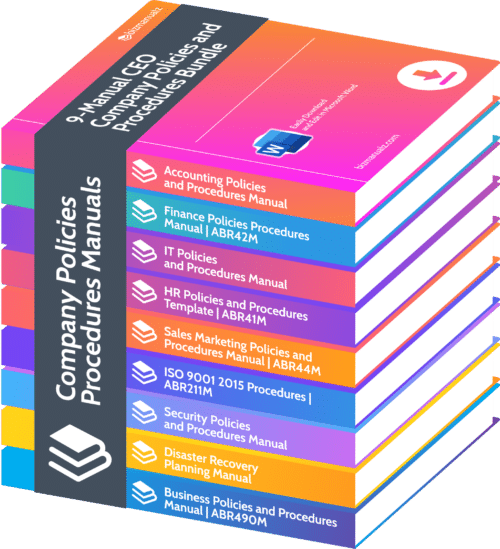 9-Manual CEO Company Policies and Procedures Bundle | Save 45%
$ 2,495.00
-
 ISO 22000 Food Safety Procedures Manual | ABR213M
Original price was: $ 395.00.$ 197.00Current price is: $ 197.00.
-
 ISO 22000 Seguridad de los Alimentos Procedimientos | ABR219M
Original price was: $ 395.00.$ 195.00Current price is: $ 195.00.
-
 ISO 9001 Quality Manual | ABR211MPM
$ 49.99
Business Manuals
-
 ISO 9001 2015 Procedures | ABR211M
$ 495.00
-
 Finance Policies Procedures Manual | ABR42M
$ 495.00
-
 Accounting Policies and Procedures Manual | ABR31M
$ 495.00
-
 IT Policies and Procedures Template Manual | ABR34M Information Security Policy Manual
$ 495.00
-
 HR Policies and Procedures | ABR41M Employees Policy Examples
$ 495.00
-
 Sales Marketing Policies and Procedures Manual | ABR44M
$ 495.00
-
 AS9100 Quality Procedures Manual Rev D | ABR217M Aerospace QMS
$ 395.00
-
 Security Policies and Procedures Manual | ABR32M
$ 395.00
-
 Disaster Recovery Planning Manual | ABR33M
$ 395.00
-
ISO 22000 Food Safety Procedures Manual | ABR213M
Original price was: $ 395.00.$ 197.00Current price is: $ 197.00.
-
9-Manual CEO Company Policies and Procedures Bundle | Save 45%
$ 2,495.00
-
ISO 22000 Food Safety Procedures Manual | ABR213M
Original price was: $ 395.00.$ 197.00Current price is: $ 197.00.
-
ISO 22000 Seguridad de los Alimentos Procedimientos | ABR219M
Original price was: $ 395.00.$ 195.00Current price is: $ 195.00.
-
ISO 9001 Quality Manual | ABR211MPM
$ 49.99
-
 How to Prevent Embezzlement Manual | ABR242DWD
Original price was: $ 49.99.$ 19.99Current price is: $ 19.99.