How Do I Start a Successful Home Health Care Business?

Demand for care at home creates a real business opportunity, but a successful home health care business is not simply a staffing company with a medical name. It must match its services, licenses, people, policies, capital, and payment model to the rules in every state and community it serves.
The baby boomer generation, people born between 1946 and 1964, helped bring this market into focus as large numbers moved toward retirement. Today, older adults, people recovering from illness, and families managing long-term needs may all require special care at home. The opportunity is substantial, but the work is personal, regulated, and built on trust.
What Is a Home Health Care Business?
A home health care business sends qualified professionals to a client’s residence to provide skilled nursing or therapeutic services under an appropriate plan of care. A non-medical home care agency usually helps with daily activities such as preparing meals, personal care, light housekeeping, companionship, and driving clients to appointments. The distinction matters because each model has different staffing, licensing, supervision, insurance, and payer requirements.
Before you form an agency, decide exactly what services will be offered, who may provide them, and how clients will pay. Do not describe a non-medical service as skilled home health, and do not assume that a general business registration is enough to provide regulated care. The Centers for Medicare & Medicaid Services definition of a home health agency includes skilled services, professional oversight, clinical records, applicable state or local licensing, and federal health and safety requirements for Medicare participation.

How Do You Start Your Own Home Health Care Agency?
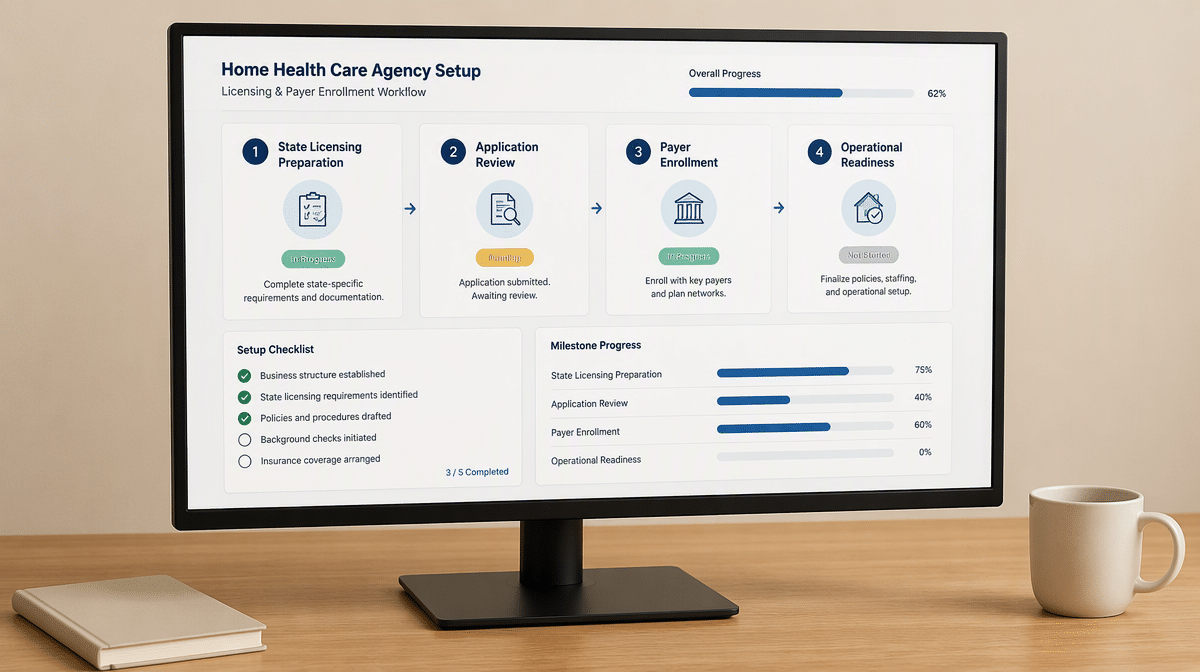
Starting your own health care agency requires a sequence of decisions, not a single certificate. The six steps below provide a practical path: create a business plan, register the business, complete any payer enrollment and certification, hire qualified staff, find clients, and obtain capital.
Create a Business Plan
Before you start any business, write a plan that explains what the agency will do and how it will operate. Begin with an executive summary, then define the business structure, goals, mission, vision, service area, services, target clients, pricing method, and the roles needed to deliver care. A strong plan also explains what will distinguish your brand from other home care agencies without making promises the operation cannot support.
When you write a business plan for a startup, include a marketing plan that covers awareness, referral sources, and how you will engage with customers. Add a breakdown of the resources you will need, including capital, human resources, facilities, equipment, technology, insurance, transportation, training, and professional advice. Forecast the time between delivering a service and getting paid so the plan reflects working-capital needs, not only expected profits.
Test the business opportunity before making large commitments. Interview potential customers and referral partners, estimate the number of clients in the service area, and learn which needs are already well served. Explain how the agency will create awareness, acquire customers, schedule enough qualified staff, and respond when demand changes. The plan should also show which services the agency will provide itself, which professionals can provide them, and which activities require outside partners. This work helps determine whether the proposed brand, prices, facilities, and equipment fit the market.
Register Your Business and Confirm Licensing
Choose a legal structure, register the business name and entity, obtain federal and state tax identification numbers, open a business bank account, and arrange appropriate insurance. U.S. Small Business Administration guidance explains that registration, taxes, licenses, and permits depend on the business activity and location. State, county, and city requirements can differ, so confirm them with the agencies that regulate health and in-home care where you will operate.
An NPI, or National Provider Identifier, identifies a covered health care provider in standard transactions, but an NPI by itself does not authorize an agency to operate or guarantee payment. Depending on the services and state, you may also need a home care or home health license, an administrator or clinical supervisor, inspections, bonds, background checks, workers’ compensation coverage, and policies that meet specific state requirements.
Complete Medicare and Medicaid Enrollment When It Fits the Model
Medicare and Medicaid are not automatic requirements for every home care business. They become relevant when the agency’s services, clients, and payment model fall within those programs. A private-pay non-medical home care agency follows a different path from a Medicare-certified home health agency that provides skilled nursing or therapeutic services.
If you plan to bill Medicare, start early and follow the current CMS institutional-provider enrollment, survey, and certification process. Medicare-certified agencies must meet the applicable Conditions of Participation, maintain clinical records, provide professional supervision, and operate under required policies and procedures. Medicaid enrollment and payment requirements are administered through state programs, so verify the rules directly with the relevant state Medicaid agency. Certification can take time, but there is no single reliable promise that every application will take the same number of months.
Check the CMS provider enrollment moratoria page before building a launch schedule. CMS currently lists a temporary nationwide moratorium on initial Medicare enrollment for home health agencies, and temporary restrictions can be extended or changed. An agency can still complete other planning and state-level work, but it should not assume that a new Medicare enrollment application will be accepted while a moratorium applies.
Build policies around the services actually provided. Those policies may cover patient rights, care planning, clinical records, infection prevention, incident reporting, employee and patient safety, quality assessment, emergency preparedness, billing, and privacy. Correctly apply HIPAA privacy and security requirements when the agency is a covered entity or business associate, and obtain legal or compliance advice for the specific model rather than relying on a generic checklist.
Hire Qualified Staff
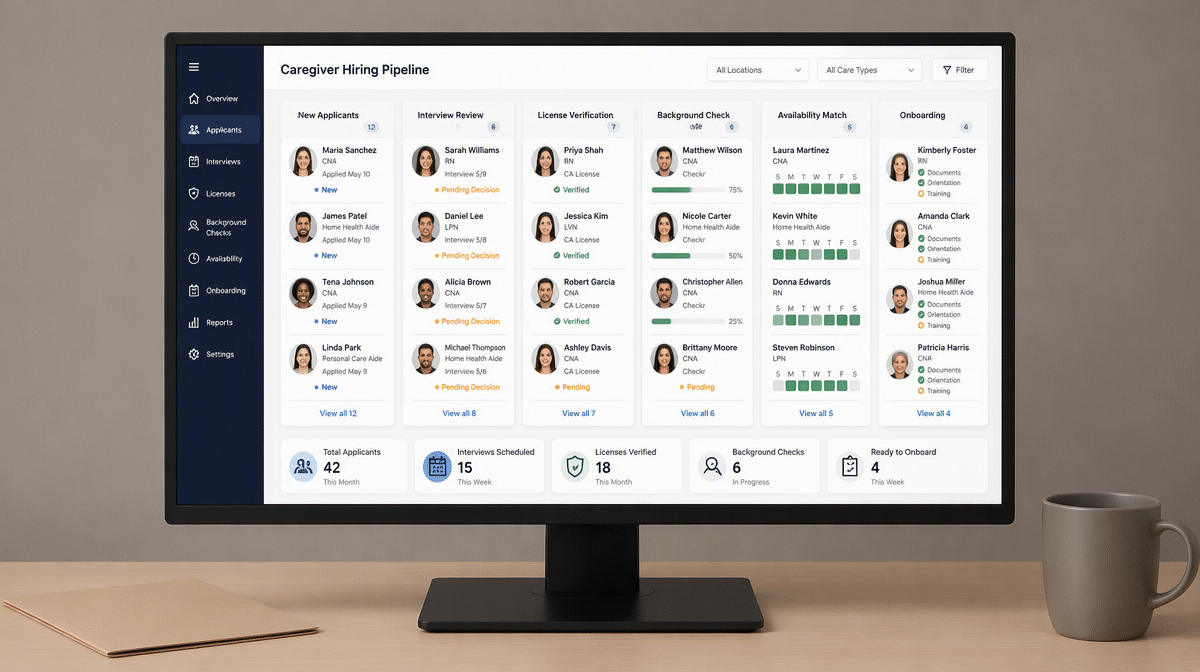
You need health care workers and support staff who are qualified for the exact services they will perform. Define each role before recruiting, verify licenses and credentials with the issuing authority, conduct lawful background checks, confirm work eligibility and references, and document orientation and continuing training. People working in clients’ houses must also show judgment, reliability, communication skills, and respect for privacy.
Professional exams belong to particular roles. PANCE relates to physician assistants, NCLEX-RN relates to registered nurses, and USMLE Step 2 CK is part of the physician licensing examination sequence. Do not use a list of exams as a universal hiring gate. Build role-specific qualifications from state scope-of-practice rules, payer requirements, job descriptions, and the services in your business plan. Social media screening, if used, should be consistent, job-related, and reviewed for employment-law risk.
Find Clients and Build Referral Relationships
At this point, you may be ready for operation, but you still need clients. Most service businesses grow through a mix of direct marketing and referrals. Depending on your model, referral relationships may include physicians, hospitals, rehabilitation providers, senior-living communities, case managers, social workers, elder-law professionals, community groups, and families.
An effective marketing strategy explains the service area, admission criteria, response times, staff qualifications, communication process, and what makes the agency dependable. Good marketing can help your business grow, but no campaign can compensate for late visits, poor documentation, or inconsistent service. Track where inquiries originate, how many become clients, why prospects decline, and which referral relationships produce appropriate cases.
Obtain Capital and Protect Cash Flow
Getting capital to run a health care agency is essential because payroll, insurance, recruiting, training, software, transportation, and supplies arrive before steady profits. Getting paid by private clients, insurers, Medicare, or Medicaid can take different amounts of time. Model each payer’s billing cycle and denial risk rather than assuming revenue will arrive when the service is delivered.
Bootstrapping your startup may be difficult when you must pay staff on a fixed schedule. Estimate startup costs and a working-capital reserve, test conservative scenarios, and decide how you plan to raise funds before accepting more clients than the agency can serve safely. Separate business and personal finances, review cash weekly, and monitor accounts receivable, payroll coverage, client concentration, and operating margin.

What Makes a Home Health Care Business Successful?
A successful home health care business consistently provides quality service while controlling risk and cash flow. Profit is a result, not the first operating standard. Clients and families need dependable scheduling, qualified people, accurate records, clear communication, and a fast response when something changes.
Standardize Care and Administration
Document how the agency accepts referrals, assesses clients, creates care plans, schedules visits, verifies completed work, handles missed visits, reports incidents, protects information, bills payers, and resolves complaints. Train staff on those procedures and audit whether the work matches the policy. Clear processes help qualified staff become good ambassadors of the agency wherever they are working.
Measure Quality and Client Experience
Track measures that reveal both care quality and operating health: on-time starts, missed visits, incidents, complaints, caregiver turnover, referral conversion, documentation errors, billing denials, days to payment, and client satisfaction. Review trends, assign corrective actions, and confirm that improvements last. Medicare-certified agencies also have formal quality reporting and assessment obligations that must be built into operations.
Grow at the Pace of Reliable Service
Rome was not built in a day, and a trusted agency is not built in a week or a month. Add clients only when recruiting, supervision, scheduling, and capital can support them. Consistently provide quality service so clients, families, health care professionals, and community partners have a reason to recommend your agency to baby boomers and others who need care at home.
Frequently Asked Questions
Do I Need a License to Start a Home Health Care Business?
Licensing depends on the state, location, and services offered. Skilled home health and non-medical home care can follow different rules, so confirm requirements with the state health department, business agencies, and relevant payer programs before operating.
Do I Need Medicare Certification to Open a Home Care Agency?
Not every agency needs Medicare certification. It is relevant when the business plans to provide covered skilled home health services and bill Medicare, while a private-pay non-medical home care model follows different licensing and payment rules.
What Should a Home Health Care Business Plan Include?
The plan should define services, clients, service area, legal structure, staffing, licensing, marketing, referral sources, technology, insurance, startup costs, payer mix, cash-flow assumptions, and quality controls.
How Do Home Health Care Agencies Find Clients?
Agencies use direct marketing and appropriate referral relationships with families, health care professionals, hospitals, rehabilitation providers, senior communities, case managers, and local organizations. Reliable service and communication turn early clients into future referrals.
How Much Working Capital Does a Home Health Care Agency Need?
There is no universal amount. Estimate payroll, insurance, recruiting, training, technology, supplies, transportation, and overhead, then model how long each payer may take to pay and maintain a reserve for delays and denials.