What Are 10 Great Leader Qualities?

One question gets asked endlessly in business, academic, political, and sporting circles: “What’s the difference between a manager and a leader?” The most quoted answer is that the manager does things right, and the leader does the right things. So what does “doing the right thing” actually mean? Does history decide whether a leader did the right thing? Can someone be a great leader even if they end up on the losing side? Underneath all of it sits a simpler question: what are the qualities of a great leader?
Leadership is not a title or a corner office. It is a set of habits and character traits that show up under pressure, when the easy choice and the right choice point in different directions. This article breaks down 10 great leader qualities that consistently separate the people others choose to follow from the people who merely hold authority. Read them as a working checklist for your own growth, not a personality test, because every one of these qualities can be learned and strengthened over time.
What Is a Great Leader?
A great leader is a person of exceptional character who can bring others through uncertainty toward a shared goal. They know that the risk of failure may be high, yet they do not give up on themselves or on the people who depend on them. Where a manager organizes tasks and resources, a leader shapes direction, sets the tone, and earns trust. The two roles overlap, but leadership is the part that makes people willing to follow when no one is forcing them to.
Great leaders are not born with a secret gene. They develop a recognizable cluster of leadership qualities and characteristics through practice, reflection, and a willingness to be held accountable. The 10 qualities below appear again and again across industries and eras, and they tend to reinforce one another rather than stand alone.

What Are the 10 Qualities of a Great Leader?
All leaders share certain leadership qualities, and the strongest leaders carry these traits in balance. Here are the 10 qualities of a great leader, with practical notes on how each one shows up at work.
1. Self-respect and Respect for Others
If you do not have a healthy self-respect, you will struggle to respect others, and if you do not respect others, they will not respect you. You cannot be a great leader of people who do not respect you. Respect is the foundation the other nine qualities are built on, and it starts with how a leader treats the most junior person in the room.
2. The Ability to Communicate Effectively
Great leaders say what they mean and mean exactly what they say. Effective communicators are far more persuasive than those who communicate poorly, because clarity removes the guesswork that slows teams down. Communication is also a two-way skill: the best leaders listen at least as much as they speak, and they make sure expectations, roles, and decisions are documented so nothing important lives only in someone’s memory.
3. Integrity and Character
Leaders are not swayed by unsubstantiated opinions or unfounded rumors. Fame, power, and material gain do not motivate them. Great leaders have integrity, the strength of character that resists assault when it would be easier to cut a corner. Decades of management research, including Harvard Business Review’s analysis of what makes a leader, point to self-awareness and emotional intelligence as the thread that ties character to everyday behavior.
4. Vision
Great leaders hold a clear vision, a mission or purpose, a sense of direction, and a clear set of goals. They also know that the job is not finished when one set of goals is reached. Great leaders understand that life and business are a journey, and they keep redrawing the horizon as the team grows toward it.
5. Well Grounded
Leaders have a vision of what the world around them ought to be, but they are also pragmatic. Things will not always go smoothly. Great leaders accept that reality and keep the presence of mind to deal with setbacks without losing their footing or their composure.
6. Courage
Fear is a powerful motivator that pushes many of us to turn away from our goals when belief in ourselves wavers. Leaders are not fearless. They make a conscious choice to act in spite of their fear, and that choice, repeated over time, is what others come to read as courage.

7. Persistence, Commitment, and Dedication
As the saying goes, winners do not quit, and quitters do not win. Nothing worth having comes easily. When setbacks crop up, great leaders do not flag, because they always keep their eyes on the prize and treat each obstacle as information rather than a reason to stop.
8. Humility (They Are Humble)
Leaders are not self-promoting or self-aggrandizing. They do not take all the credit. They give credit to others and refuse it for themselves, which is why strong teams feel safe taking initiative around a humble leader. Humility also keeps a leader learning long after the title says they have arrived.
9. A Strong Sense of Responsibility
Leaders are willing to bear the ultimate responsibility for their undertakings. They do not point the finger of blame when things go awry. Owning the outcome, good or bad, is what gives a leader the standing to ask the same accountability of everyone else.
10. Decisive
When action is called for, real leaders do not waffle. Knowing that a window of opportunity exists and that the time to act is now, they act quickly and effectively based on the best available information. Decisiveness does not mean recklessness; it means refusing to let perfect become the enemy of done.
It is sometimes said that leaders are made by their followers, and the reverse is also true. From that, it follows that if we want leaders who embody those traits leaders should have, we as followers should embody many, if not all, of those leadership traits ourselves.
Most importantly, great leaders hold these leadership characteristics in balance. Some people will tell you that one quality matters more than the rest, saying something like, “Oh, you have to have that vision thing above all else.” Not true. People will not follow someone who has vision without courage or humility, just as they will not follow courage without integrity to aim it.
How Can You Develop These Leadership Qualities?
Leadership qualities grow fastest when they are practiced inside clear systems rather than left to chance. Define the vision and write it down. Set expectations everyone can see. Document the roles, decisions, and processes that let a team act with confidence, so that courage and decisiveness are supported by structure instead of guesswork. When the path is clear, people spend their energy on the work rather than on deciphering what is expected of them.
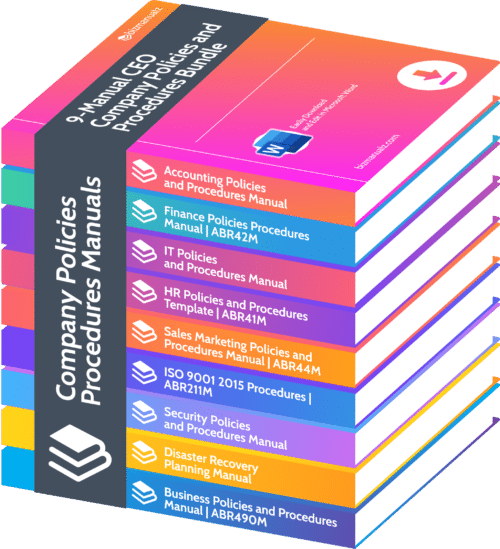
Save time researching laws, regulations, and standards. Download free policies and procedures to spare yourself the time, trouble, and stress of writing a management procedure manual from scratch, and lead your organization with clear expectations, defined roles, and detailed processes.
What about you? Which of these do you think are the most important qualities of a great leader, and who do you consider a leader worth following, and why? The honest answer says as much about the kind of leader you are becoming as it does about the leaders you admire.
Frequently Asked Questions
What are the most important qualities of a great leader?
The most important qualities of a great leader include self-respect and respect for others, effective communication, integrity, vision, being well grounded, courage, persistence, humility, a strong sense of responsibility, and decisiveness. The strongest leaders hold these traits in balance rather than relying on any single one.
What is the difference between a manager and a leader?
A manager does things right by organizing tasks, people, and resources, while a leader does the right things by setting direction and earning trust. Management keeps work on track, and leadership makes people willing to follow when no one is forcing them to.
Can leadership qualities be learned?
Yes. Great leaders are not simply born with these traits. Qualities such as communication, courage, and decisiveness are developed through practice, honest reflection, and accountability. Clear systems and documented expectations make these qualities far easier to build and sustain.
Why is integrity considered a core leadership quality?
Integrity is the strength of character that holds steady when cutting a corner would be easier. It is the quality that aims all the others, because vision, courage, and decisiveness only earn trust when people believe the leader is honest and consistent.
How can a company help develop great leaders?
Companies develop great leaders by making expectations visible and repeatable. A clear vision, defined roles, and documented policies and procedures give emerging leaders the structure to practice good judgment, so that courage and decisiveness are supported by systems rather than left to chance.