OnPolicy Policy Procedure Workflow

Policy procedure workflow breaks down when document changes move through email, attachments, and informal approvals. A controlled system keeps the work visible: someone drafts the procedure, the right reviewers examine it, an approver releases the revision, and the organization can trace what changed.
Bizmanualz OnPolicy manages that cycle for policies, procedures, work instructions, and other controlled documents. The walkthrough below follows the OnPolicy use case while clarifying how the DRAFT, REVIEW, APPROVE, and RELEASE stages support continuous improvement and compliance.
What Is OnPolicy Policy Procedure Workflow?
OnPolicy policy procedure workflow is the controlled path a document follows from draft to release. The workflow gives each procedure a visible status, assigns permissions to the people who can act on it, and records the review and approval activity that supports an audit trail.
That matters because procedure changes must be managed and traceable through the document management cycle: DRAFT | REVIEW | APPROVE | RELEASE. This cycle is the heart of document compliance workflow, and it lines up with the control discipline described in NIST’s configuration change control guidance and with quality management expectations in the ISO 9001 quality management standard.
Because OnPolicy is available as an online service, organizations of different sizes can manage and share their policies, procedures, work instructions, and other operating documents without passing uncontrolled copies from person to person. For more background on how the system works, see the OnPolicy help documentation.
How Does OnPolicy Policy Procedure Workflow Start?
The workflow starts with drafting documents and continues through reviewing, revising, approving, and releasing documents. The following use case illustrates the workflow in OnPolicy.
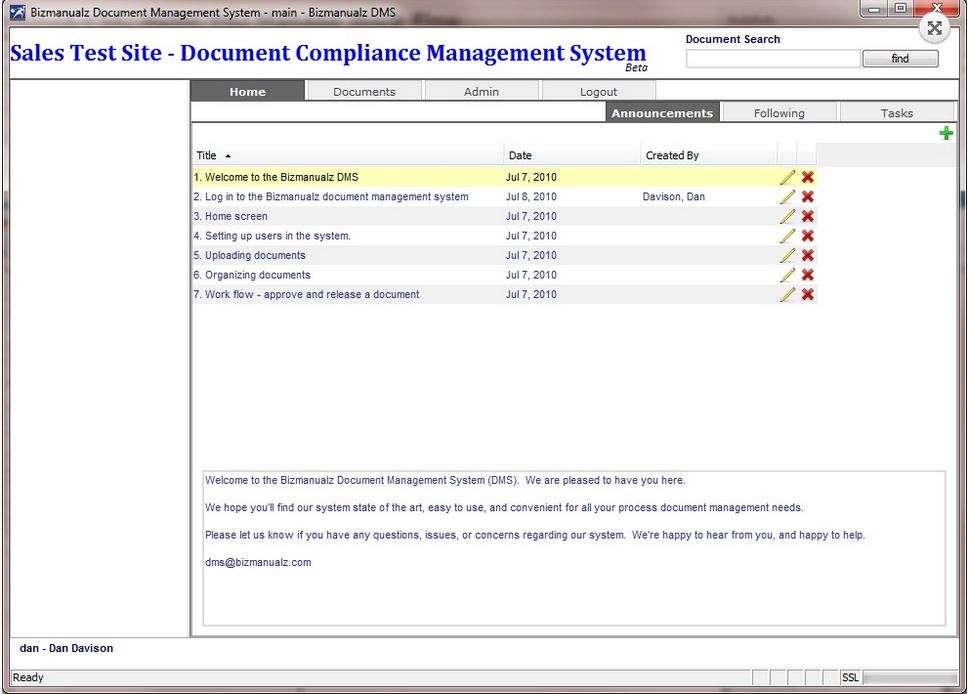
To log in to the OnPolicy editing module, click on the link supplied by your administrator and enter the user name and password sent by email. After login, users see the Home screen, which shows announcements posted by the administrator and other users of the system.
To manage a document, click the document tab, which is the second tab from the left. Then click the production department folder in the left navigation to show production department documents. Bizmanualz templates that you purchase can come pre-loaded, and you can upload your own documents.

Expand the folders by clicking the plus sign in the department navigation on the left-hand side. This displays the folder contents and lets you browse for documents in the main window.
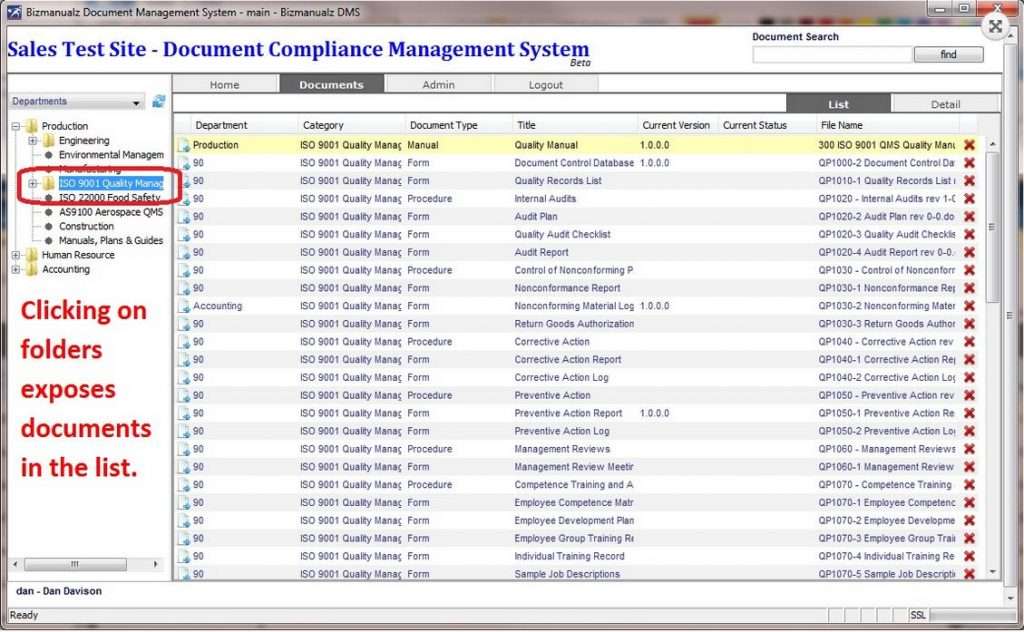
In the list, select a document by clicking on it. View document details by clicking the document icon or the Details tab.
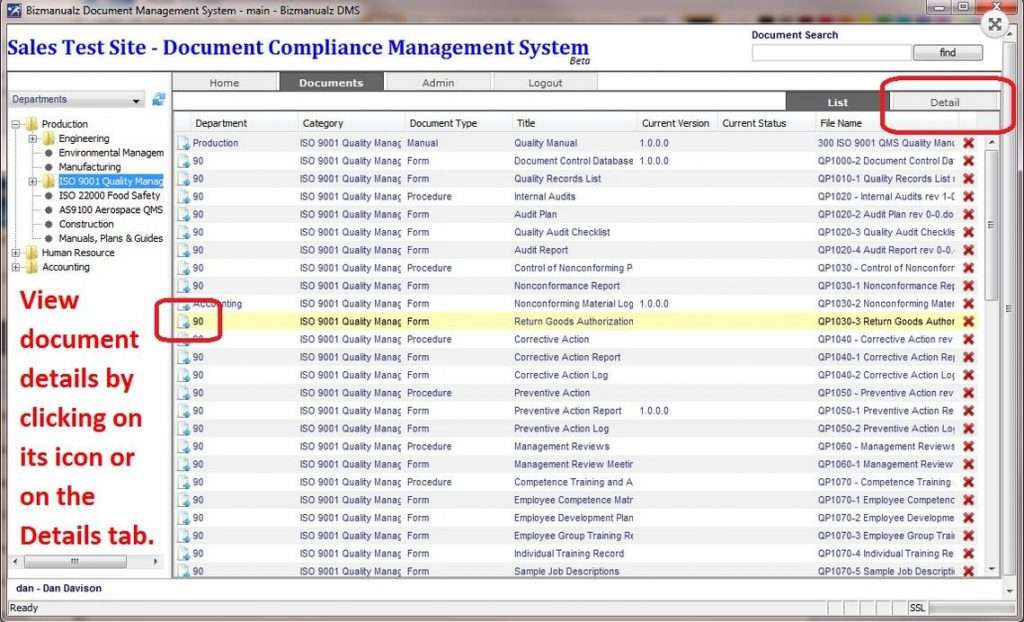
Document details show information about the document, including the title, description, release timing, review and retention intervals, and most recent revision number. This is also where information about the document is entered.

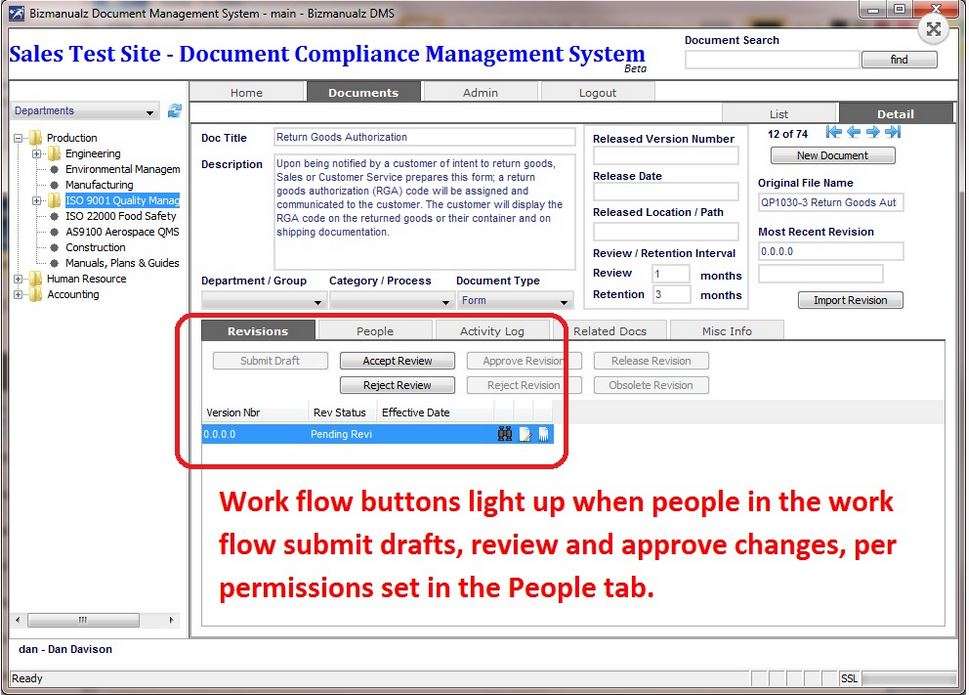
Document details is also where document workflow and permissions for the document are managed, using the People tab in the third-level tab group: revisions, people, activity log, related docs, and misc info. The document itself may be viewed from this window by clicking the binoculars icon, edited by clicking the document-edit icon, or deleted after a warning prompt.
How Does OnPolicy Manage Document Workflow?
Workflow in the OnPolicy system is essentially a three-stage process: accept or reject review, approve or reject revision, and release or obsolete revision. This guide assumes that users have already been created and permissions have already been set at a department level.
Here we review the optional step of setting permissions at the document level. Document-level permissions override department-level permissions that govern access to a group of documents.
How Do You Set Up Document Permissions?
System administrators can set permissions for themselves and for users. A user may be allowed to submit drafts, accept or reject reviews, approve or reject revisions, and release documents. The Draft | Review | Approve | Release cycle is consistent with document management protocols, industry standards, government regulations, and quality standards.
By default, authors cannot review or release their own work. Administrators can change workflow permissions and defaults for single documents in the People tab, overriding department or group-level permissions. If you are logged in as an administrator, you can access the People tab while you are on the Details view of any document.

In this example, the administrator has granted himself full permissions and has granted another employee both Approver and Reviewer permissions, overriding permission defaults.
How Are Procedure Reviews Accepted or Rejected?
Dan has permissions as an author, which means he can submit a draft. That action causes the Accept Review and Reject Review buttons to become available according to the permissions set in the previous screen.
How Does Procedure Email Notification Work?
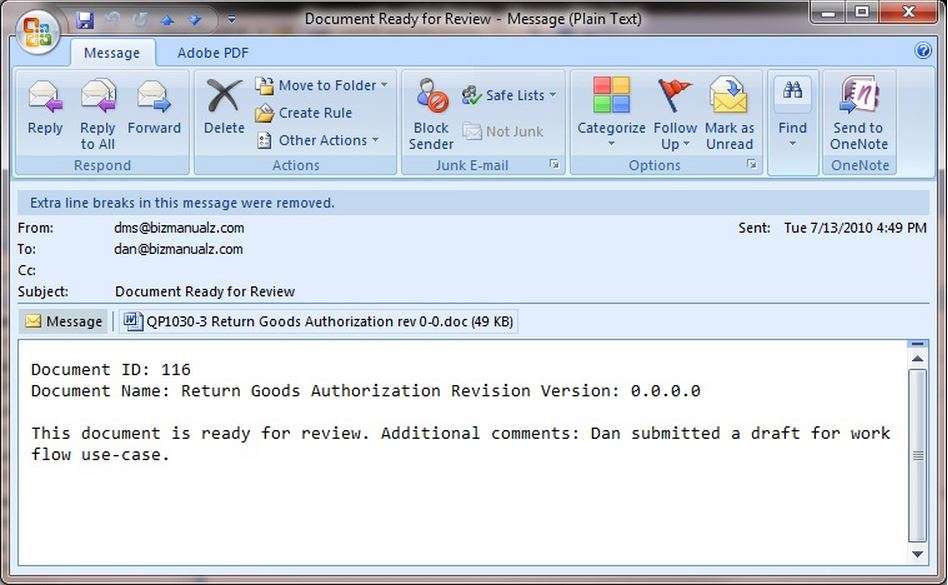
Reviewers are notified by email when documents are ready for review. Emails are sent when the document has to be submitted for review, and all users who have review privileges for the document receive the notification.
The document may be attached to the email so reviewers can read it right away. However, documents can only be released through the system. Any revisions made to the attachment are not reflected in the controlled draft or released document unless the revised file is uploaded to the system, which causes another workflow cycle to occur. To avoid document proliferation, use the attachment for reference only while doing revisions inside OnPolicy.
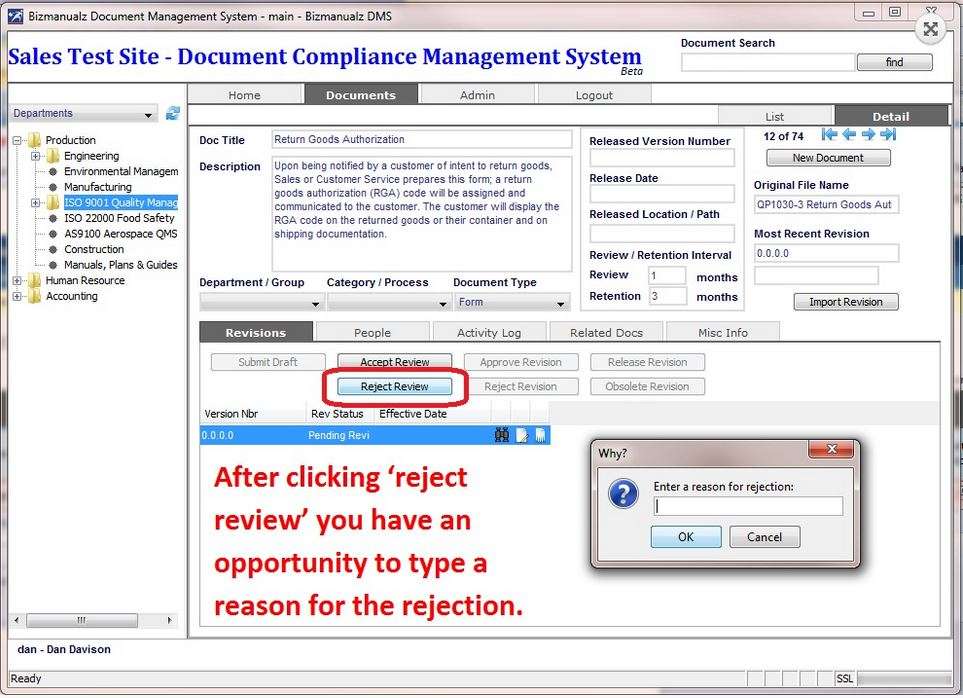
In this example, the revision number is still 0.0.0.0 because the document review has not yet been accepted. Clicking the Accept Review button creates a document revision. If you reject the draft, OnPolicy prompts you to enter a reason.
How Are Document Revisions Approved or Rejected?
Ultimately, revisions can be released by clicking the release revision button. You can release the document only if you have permission to do so, based on the settings in the People tab. If you are unsure what permissions you have, talk to the document author or system administrator.
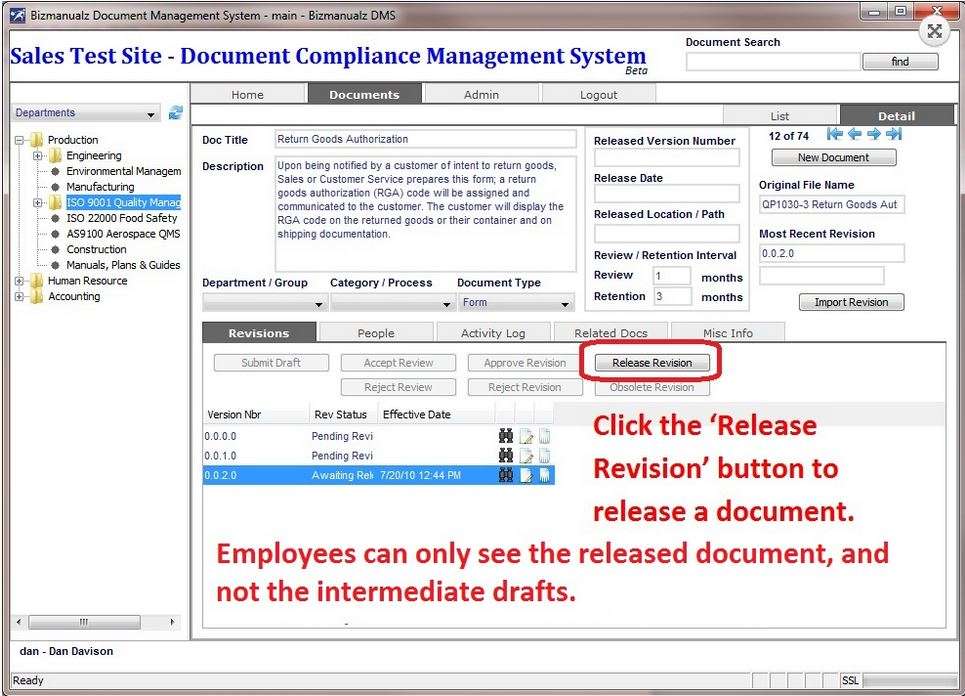
When you click release, OnPolicy asks whether you would like to send the document to the Bizmanualz server. Select yes if you are pushing released documents to SharePoint or another local server. If you are not sure, ask your administrator or Bizmanualz.

When you release a document for the first time, the version number changes to 1.0.0.0, indicating that the first release of the document has been achieved. Many reviews may occur before the first release.
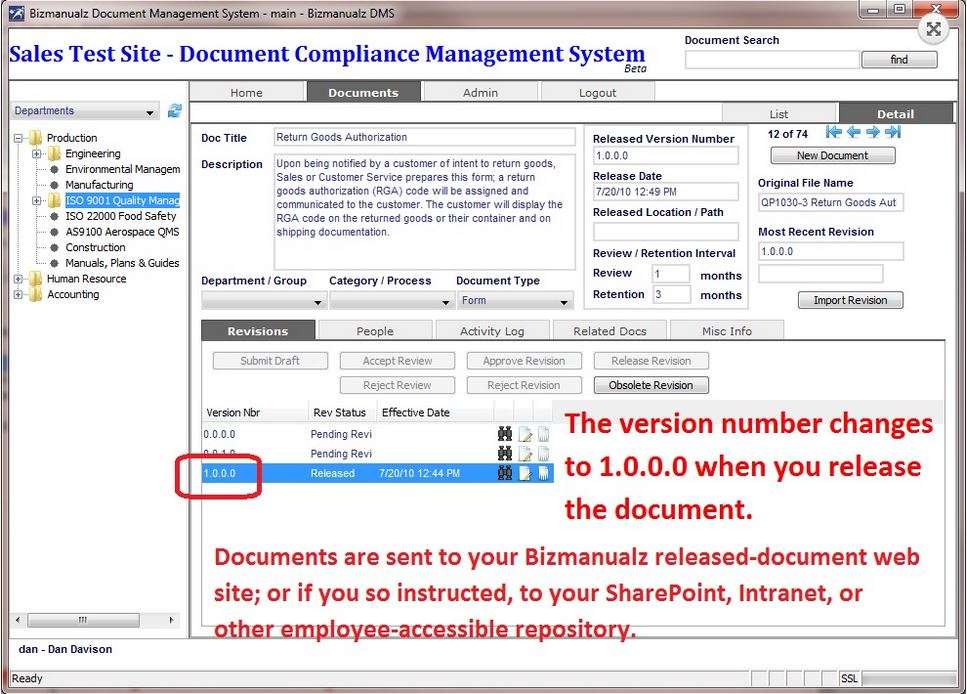
Unreleased documents cannot be seen by the general user population. Users only see what you release to your customized Bizmanualz website, SharePoint site, or intranet. Only users of the OnPolicy editing module can see the drafts.
So, what do you think? Are you ready for a free trial of the Bizmanualz OnPolicy procedure management software?
Frequently Asked Questions
What Is OnPolicy Policy Procedure Workflow?
OnPolicy policy procedure workflow is the controlled document cycle that moves a policy or procedure from draft through review, approval, and release. It helps users see document status, permissions, and revision activity in one system.
Why Does Procedure Workflow Need Controls?
Procedure workflow needs controls because uncontrolled attachments and informal approvals make changes difficult to trace. A controlled workflow shows who submitted, reviewed, approved, released, or rejected each document revision.
How Does OnPolicy Handle Document Permissions?
OnPolicy lets administrators assign permissions for drafting, reviewing, approving, and releasing documents. Document-level permissions can override department-level permissions when a specific procedure needs tighter control.
What Happens When A Procedure Is Released?
When a procedure is released, the document becomes visible to the intended user population through the released document location. The revision number changes, and unreleased drafts remain limited to users of the editing module.
Can Reviewers Edit Email Attachments Instead Of Using OnPolicy?
Reviewers can read an email attachment for reference, but edits made outside the system do not update the controlled draft. To keep the audit trail intact, revisions should be made or uploaded through OnPolicy.