How Do Businesses Use Business Intelligence?

Every business runs on decisions, and every decision is only as strong as the information behind it. Business people do not need another dashboard for its own sake. They need non-technical, big picture, practical answers about Business Intelligence (BI), Performance Management, and Data Warehousing (DW). So how do businesses use business intelligence, and where does the real value come from?
Think of this as a lens on your organization, one that is unbiased by vendors and grounded in real-world experience. It is all about how you Strategize, Plan, Analyze, and Report, and then repeat the cycle. The sections below define each idea in plain terms, show where BI creates a competitive advantage, and lay out the questions to ask before you commit staff, time, and finances to a project.
What Is Business Intelligence?
Business Intelligence (BI) leverages one of the largest company assets you already own: information. Successful BI projects give organizations a competitive advantage that could increase revenues and improve operational efficiencies. BI has evolved well past using departmental Excel spreadsheets. It is now an important part of an organization’s strategic decision-making, and there are many modern IT tools that can improve business intelligence.
At its core, BI is the discipline of turning raw data into intelligent decisions. It gathers information from across the business, organizes it for consistency, and presents it so that decision-makers can act with confidence. Harvard Business Review’s analysis of how data reshapes management found that organizations which lean on data for decisions tend to outperform peers that rely on intuition alone.
BI systems address the challenges enterprises face when managing their reporting needs at all levels of the organization. Done right, business intelligence can:
- Benefit everyone from top executives to front-line staff.
- Improve your bottom line.
- Increase your business effectiveness.
- Help you and your employees understand your organization better.
- Help you be more effective as a manager or a leader.
- Reduce or remove the manual effort spent doing reporting.
How Do Businesses Use Business Intelligence?
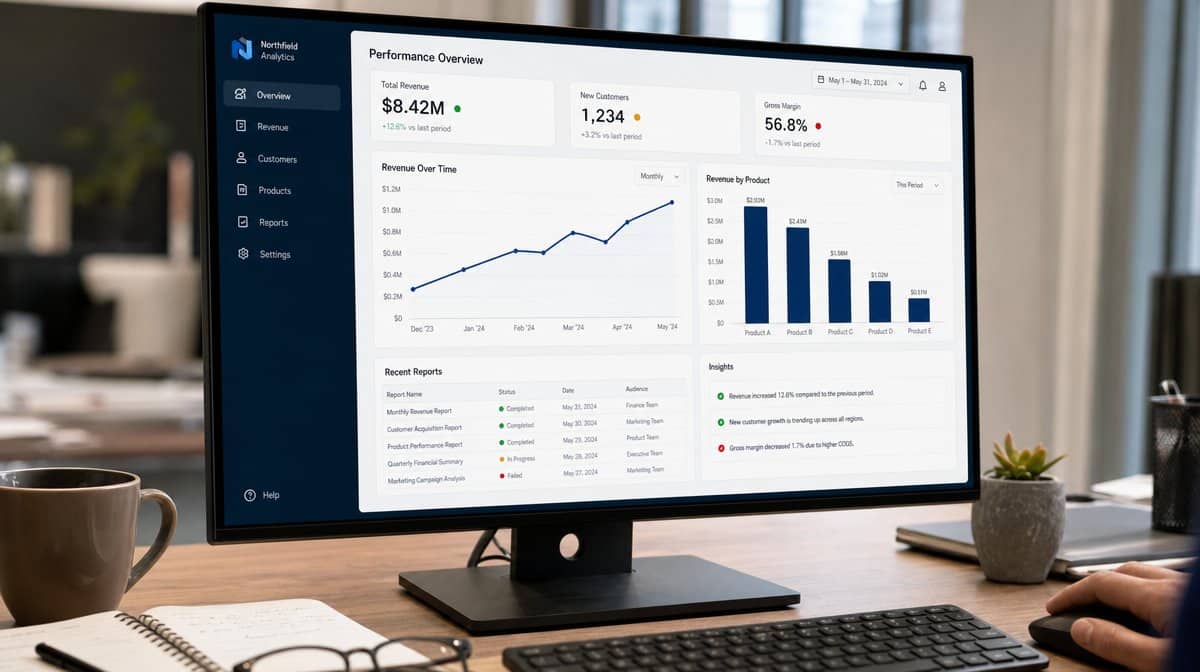
The practical answer to how businesses use business intelligence is this: they stop looking at the company in pieces. With BI you can move beyond viewing customers, workforce, supply chain, or finances as separate functions, and begin considering all the core elements of your business as a single, integrated whole.
The result lets you measure the accuracy and success of your goals and objectives from various perspectives, and make intelligent decisions based on quantifiable analytics. You are no longer guessing which product line, region, or team is carrying the business, because the numbers are in front of you.
This is more than simply reporting. This is looking at trends over time, analyzing by location, sales codes, and product categories. This is moving from a summary-level view down to the details seamlessly. This is allowing users to be self-sufficient in their own business questions, and accurately tracking the organization’s performance without waiting on a queue of one-off report requests.
Business Intelligence for Business People
Whether you are looking into BI for the first time or you want to take your organization to the next step by using knowledge and wisdom from information as a strategic advantage, the mindset matters as much as the software. It is all about how you Strategize, Plan, Analyze, and Report, and then repeat.
BI Approach
Think big; act in small, iterative cycles. A grand three-year data platform that never ships helps no one. A focused first release that answers one important question builds momentum and earns the trust you will need for the next step.
BI Benefits
- Closes the management gap between strategy and execution.
- Enables a shift to a performance-based, analytical culture.
- Keeps attention on long-term strategy, not just short-term operational details.
- Delivers financial savings by reducing the manual efforts spent on reporting.
BI Risks
- Results produce far too little business value after high development and maintenance costs.
- Internal IT departments creating 100% custom solutions and not seeking out BI experts.
What Is Performance Management?
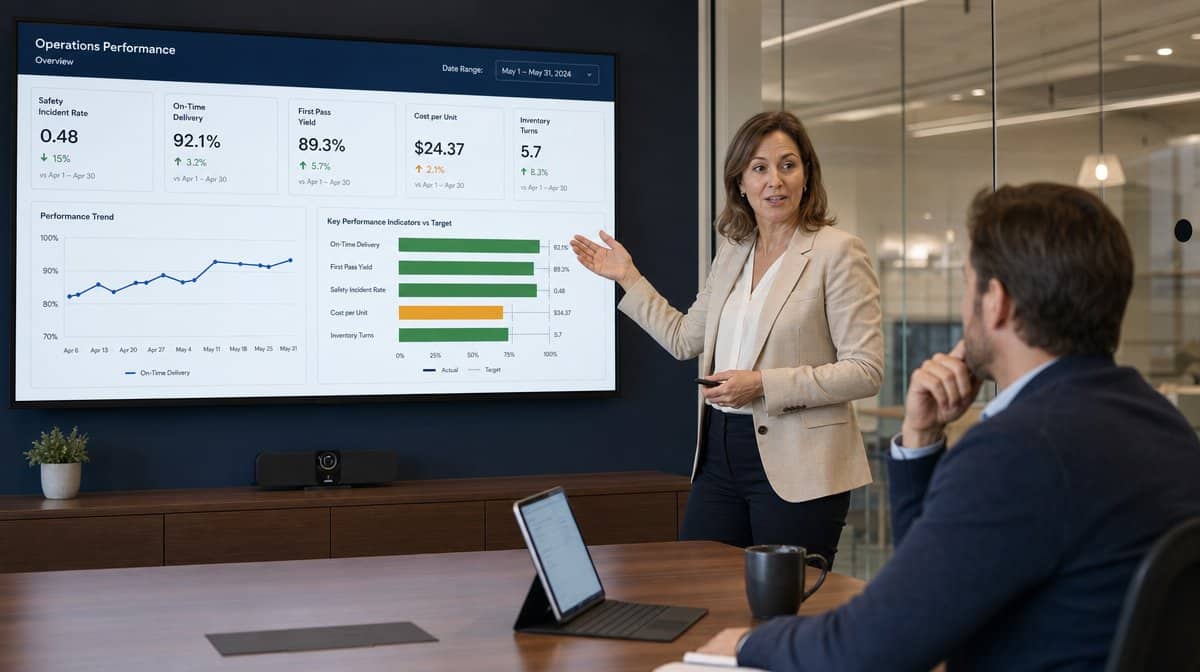
Performance management allows organizations to achieve their strategic goals by transforming strategies into actionable indicators that give profitable insights to decision-makers. These performance indicators are defined and measured in a quantifiable way. They are measured against goals, target levels, and industry benchmarks. What gets measured, gets managed.
Software is used to capture the measurements of the business and empower management decisions. A performance measurement system can stand-alone, or it can be an integral part of a Business Intelligence system by pulling information from an existing warehouse for consistency and accuracy.
Financial indicators deserve particular care, because they roll up to the numbers that owners and lenders watch most closely. The U.S. Small Business Administration’s guidance on managing your business finances is a practical starting point for the measurements a performance system should track and report.
What Is Data Warehousing?
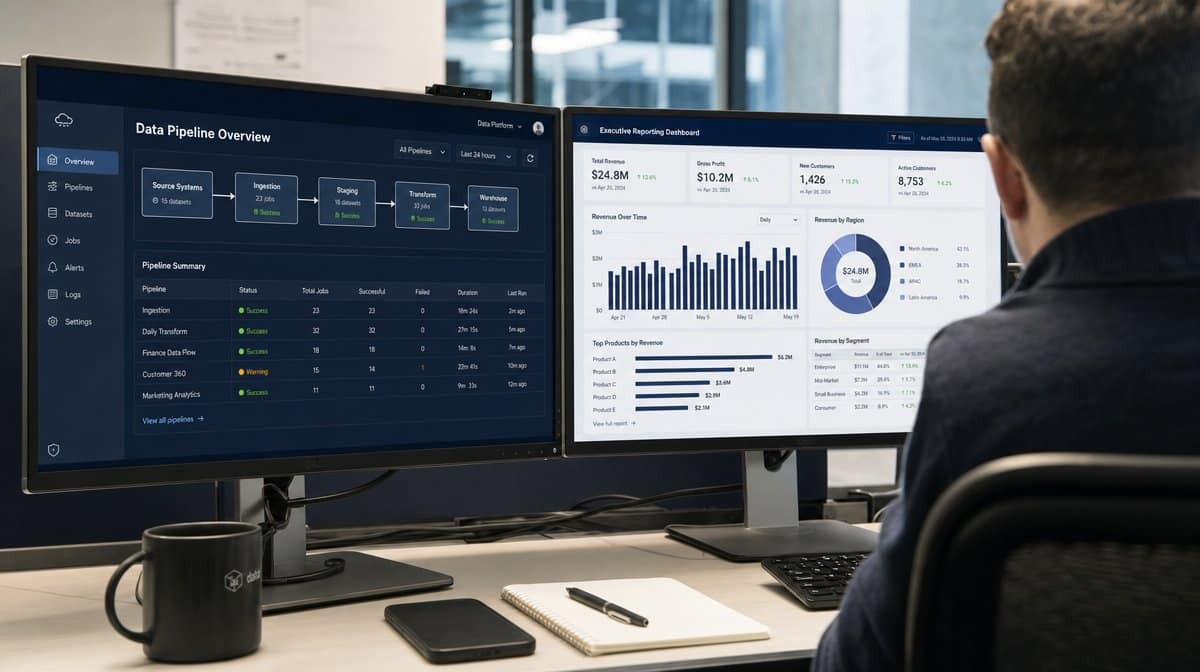
A data warehouse is the shared foundation underneath most serious BI and performance work. It consolidates information from separate systems, such as sales, finance, operations, and customer records, into one consistent source. Instead of every department pulling its own numbers from its own spreadsheet, everyone draws from the same warehouse.
That consistency is what makes analysis trustworthy. When a performance measurement system and a reporting dashboard both pull information from an existing warehouse, the figures reconcile, and the conversation shifts from arguing about whose number is right to deciding what to do next.
Are You Prepared for Business Intelligence?
Being prepared when undertaking a BI project will considerably increase your chances of success and maximize your return on the time, effort, and finances you will be spending. Before you start, work through these questions honestly:
- Do you have a strong Business Sponsor willing to stand behind your BI project?
- Do you have the staff available to work on this project? Time from business users is a must.
- Where in your organization will you see the biggest benefits from BI?
- What software toolset has the features that will meet your needs today, and going into tomorrow?
- Have you sought out people who have been there and done that? Find BI experts, consultants, or other companies with a track record, and learn from them.
Business intelligence is not a single purchase, it is a way of running the company on evidence rather than opinion. Start small, measure what matters, and let each iterative cycle earn the next one.
Frequently Asked Questions
What Is Business Intelligence in Simple Terms?
Business Intelligence is the practice of collecting company information and turning it into intelligent decisions. It leverages one of your largest assets, information, to give organizations a competitive advantage that can increase revenues and improve operational efficiencies.
How Do Businesses Use Business Intelligence Day to Day?
Businesses use business intelligence to look at trends over time and analyze results by location, sales codes, and product categories. It lets teams move from a summary level down to the details seamlessly and be self-sufficient in answering their own business questions.
What Is the Difference Between Business Intelligence and Performance Management?
Business Intelligence is the broad system for turning data into decisions. Performance management is the discipline of transforming strategies into actionable indicators measured against goals, target levels, and industry benchmarks. A performance measurement system can stand-alone or be an integral part of a BI system.
Why Is Data Warehousing Important for Business Intelligence?
A data warehouse consolidates information from separate systems into one consistent source. Because BI tools and performance systems pull information from the same warehouse, the numbers reconcile and the analysis becomes trustworthy across the whole organization.
How Do You Prepare for a Business Intelligence Project?
Secure a strong business sponsor, free up staff time from business users, identify where the organization will see the biggest benefits, choose a software toolset that meets today’s and tomorrow’s needs, and learn from BI experts or consultants with a track record.