How Do You Begin Writing Standard Operating Procedures?

Your Standard Operating Procedures (SOP) provide employees with a handy reference to common everyday business practices, daily activities, and routine tasks. When the way work gets done is documented, training is faster, interruptions are reduced, and supervisors do not have to answer the same operational questions over and over again.
So, how do you get started writing standard operating procedures? Start with the work itself: map your core processes, define each activity, document the steps, identify the records and forms, and then combine those pieces into an SOP manual your employees can actually use.
What Is a Standard Operating Procedure?
A standard operating procedure is a written set of instructions for completing a recurring operation or task. In practical terms, an SOP tells employees what needs to happen, who is responsible, what records are required, and how the task connects to the larger business process. The EPA describes SOPs as written procedures that document routine or repetitive activities, which is exactly the role they play in a growing company: they turn repeated work into a reliable reference employees can follow.

New employees will find an operation manual especially helpful in getting up and running as fast as possible. With your SOP in place, new employees will not have to interrupt supervisors to ask others how an operation or task is done. Having an SOP manual is great, but the question most often asked is still the same: how do you start writing SOPs?
How Do You Start Writing SOPs?
It is easier than many managers expect. Follow these five steps and you will have a well-defined SOP manual for your critical policies, procedures, and forms.
- Map out your core processes using SIPOC and PDCA thinking.
- Define each core business process and its activities.
- Document each activity into a series of steps.
- Determine the required records, forms, and management metrics.
- Build your documents, reports, and graphs that form your management system.
The sequence matters. A procedure written without a process map often becomes a loose checklist. A process map without procedure steps does not tell employees what to do next. The strongest SOP manuals connect the two, so the manual explains the workflow and the day-to-day actions.
Start With a Process Map
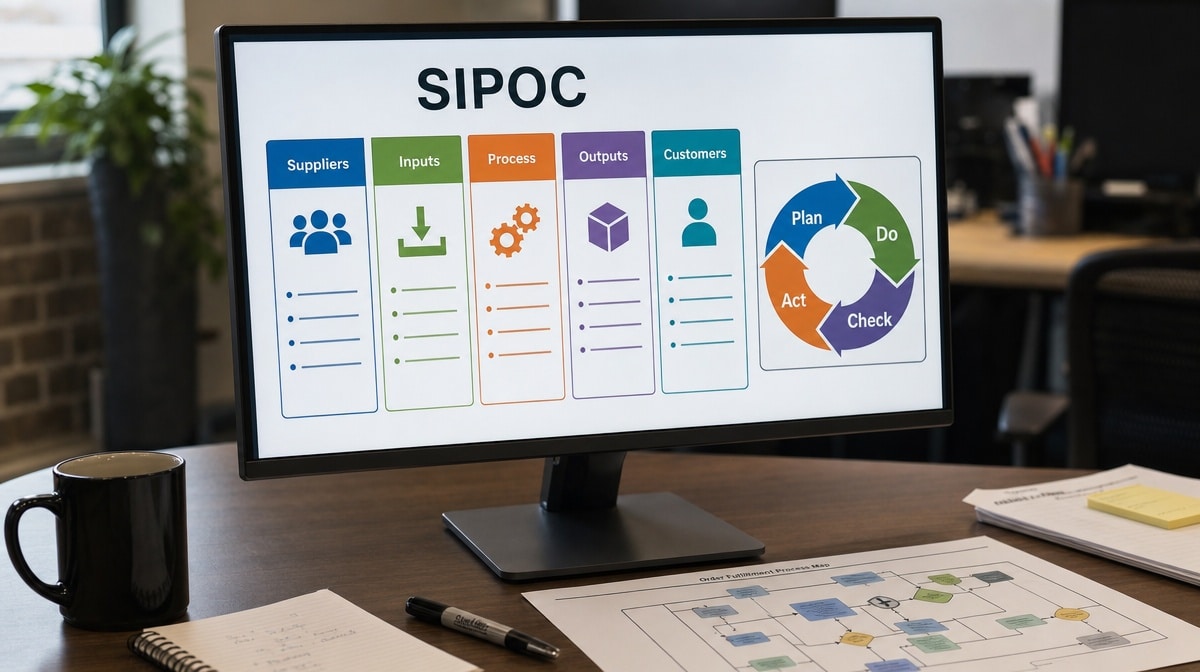
The first step of writing standard operating procedures is to start with a process map of your top-level processes. Many companies begin with a SIPOC view, which looks at suppliers, inputs, process, outputs, and customers. ASQ’s SIPOC overview is a useful reference for understanding why this map works before you begin writing individual procedures.
For most companies, your top ten core business processes are divided into support processes, such as accounting, human resources, information technology, quality, and management strategy, or realization processes, such as sales, product development, purchasing, fulfillment, and service. Not all companies have all ten core processes, but every company has work that repeats. Once your core operating processes are defined, you are ready to move on to defining each process.

Define Your Core Processes
Second, while writing standard operating procedures, define each core business process and its activities. Think top level once again. In the sales process, how are your orders converted into a shipped product? Orders are received, entered, picked, packed, shipped, and invoiced.
This is where many SOP projects become clearer. You are not trying to write every instruction at once. You are identifying the activity boundaries first, so the later procedure steps have a clear starting point, ending point, owner, and handoff.
Document Your Procedures
Third, document each operation from start to finish. Take the sales process as an example. How do your sales orders arrive, who takes them, how often do they arrive, under what criteria are they accepted, who touches the order next, and what do they do?
Just follow the sales order through your system and define each step. You are well on your way to writing standard operating procedures, and your SOP manual is slowly building. At this stage, keep the language direct. Employees need steps they can follow, not a policy essay that hides the action.
Implement Your Records
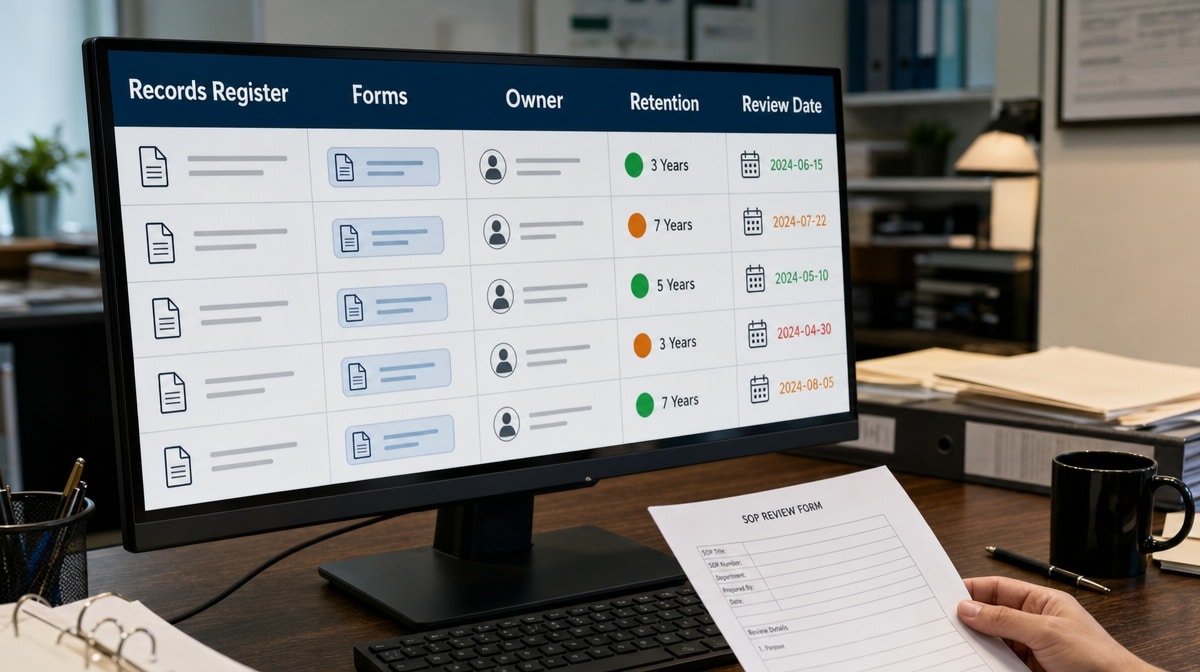
Fourth, determine the required records, forms, and management metrics. Do you have a standard order form, confirmation checklist, pick sheet, or invoice? You need to know what forms are used, where they are located, and who maintains them in case you run out and have to get more.
Next, identify core metrics for each activity, including transaction volume and timing. These records and metrics turn the SOP manual into a management system. They show whether the procedure is being followed and whether the process is producing the results you expect.
Combine Into Your SOP Manual
Finally, you are ready to put together the SOP manual and start using the system. Start the operations manual with your core processes mapped out in step one. Explain each core business process with the material from step two. Then dive into each process with the individual procedure steps outlined from step three. Add references to each record or form needed as you touch on them in the detailed procedure steps with the notes from step four.
The result is not just a binder of documents. It is a connected procedure manual that shows employees how work flows, where their task fits, what records prove the work was done, and which metrics management should review.
Writing Standard Operating Procedures Easily
After you are done writing standard operating procedures, you will get the most value from your SOP manual by using it over and over again and updating it as needed. Put your process metrics to use in your daily management system to ensure you are getting the results you expect from your business. Now you are managing by procedures that you built from your SOP manual.
To see procedure examples, download free policies and procedures samples from Bizmanualz.
Frequently Asked Questions
How Do You Begin Writing Standard Operating Procedures?
Begin writing standard operating procedures by mapping your core processes, defining each activity, documenting the steps, identifying required records and forms, and then assembling those pieces into an SOP manual.
What Should an SOP Manual Include?
An SOP manual should include core process maps, procedure steps, activity owners, required forms, records, metrics, and references that show employees how recurring work should be performed.
Why Start SOP Writing With a Process Map?
A process map shows how work flows before you write detailed instructions. It helps you define boundaries, handoffs, inputs, outputs, and the activities that need procedure-level detail.
How Do Records and Forms Fit Into SOPs?
Records and forms show what evidence the procedure creates and what information employees need to complete the work. They also support management review through transaction volume, timing, and other metrics.
How Often Should Standard Operating Procedures Be Updated?
Standard operating procedures should be updated whenever the process, owner, form, system, metric, or control changes. Regular review keeps the SOP manual aligned with how the business actually operates.