What are the Benefits of Using a Lean Kanban System?
Why should you implement a lean Kanban system? A well-designed system can help a business control work in progress, respond to customer demand, and make production or service work easier to manage. Those improvements can support lower operating costs, higher customer satisfaction, and fewer management headaches, but the board alone does not guarantee them.
The main benefits of using a lean Kanban system are better visibility, lower WIP, steadier flow, demand-based release, simpler planning, clearer priorities, and less exposure to overproduction. The ten reasons below show how visual Kanban boards, Kanban cards, electronic e-kanban signals, and explicit operating rules work together.
What Is a Lean Kanban System?
A lean Kanban system is a visual pull system that shows the flow of work or materials and signals when the next item should move. The Kanban Guide centers Kanban on flow and on practices that help a team define and actively manage its workflow. A board makes the system visible, but the policies, work-in-progress limits, pull signals, and improvement decisions make it operational.
Kanbans are used in manufacturing, software development, and other service work where people are implementing lean systems. A value stream map can help you understand the current flow, handoffs, delays, and Kanban needs before you design the board.
Top 10 Reasons for Implementing a Lean Kanban System
1. Visualizes Your Work
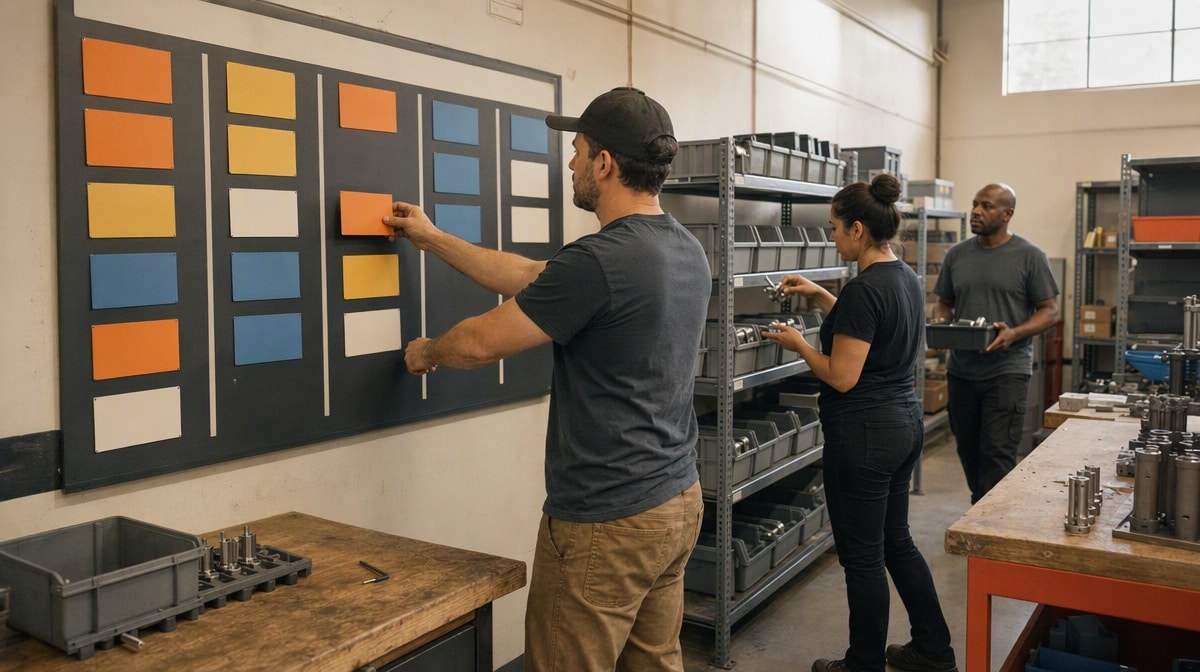
A lean Kanban translates production planning into visible signals. These may be cards on a physical board, container labels, empty spaces, or electronic e-kanban signals. Workers can see the current production plan, the status of each order, and the location of blocked work without waiting for a separate status report.
Visibility is most useful when the board reflects the actual workflow rather than an idealized process. Start with the current work cells and handoffs, then make the rules for entering and leaving each stage explicit.
2. Reduces Work in Progress (WIP)
Explicit WIP limits prevent too many jobs from entering the same stage at once. When a work cell reaches its limit, the team finishes or unblocks existing work instead of starting another batch. This exposes capacity problems and reduces the queue of partly completed work.
A lean Kanban should balance individual work cells with the pull of customer demand. That discipline can reduce WIP created by batch sizes that are larger than current customer orders or downstream capacity.
3. Moves Work Along Evenly
Balanced flow begins with the rhythm of customer demand. Lean Enterprise Institute defines takt time as available production time divided by customer demand. Comparing that pace with actual cycle times helps you adjust staffing, work content, and batch sizes instead of pushing every work cell at maximum utilization.
The goal is a steady, balanced product flow, not identical activity at every moment. A visible queue makes unevenness easier to spot, discuss, and correct.
4. Improves Workflow
A steady lean product flow improves on chaotic systems built around large batch sizes and frequent expediting. The board shows where work waits, where defects return, and where one work cell is starving or overloading another. Teams can then direct improvement effort at the constraint instead of relying on guesswork.
Clear signals can also reduce avoidable interruptions and priority disputes. This supports teamwork, but leaders still need to resolve recurring blockers and revise policies when the workflow changes.
5. Releases Work on Demand
In pull production, downstream activities signal their needs to upstream activities. A new order, an empty container, or available space in the next stage becomes the authorization to produce or move the next batch.
This demand-based release discourages work from being pushed into an already full system. When designed well, the result is a closer match between customer demand, available capacity, and the amount of work released.
6. Simplifies Production Planning
Production planning does not disappear, but day-to-day control can become simpler. Planners still account for demand variation, staffing, supplier lead times, and maintenance. The Kanban size and replenishment rules then translate those decisions into clear production instructions.
A stable manufacturing flow can make order turnaround time more predictable and reduce avoidable rush jobs. When market conditions change, adjust the assumptions and signals rather than allowing informal expediting to take over the production plan.
7. Eases Purchase Planning
Purchasing can connect material replenishment to production Kanbans. A card, empty-bin signal, barcode scan, or e-kanban can tell buyers and suppliers what material is needed, in what quantity, and at which location.
Automation is optional and depends on system configuration and supplier integration. Even a manual signal can improve purchase planning when reorder quantities, response times, owners, and exception rules are clear.
8. Increases Customer Satisfaction
The practical goal of a Kanban is to align work with what customers demand and to expose threats to delivery. Better visibility and a controlled release of work can improve delivery predictability, especially when the team tracks blocked items and responds before a due date is missed.
Customer satisfaction also depends on quality, communication, and realistic commitments. Kanban supports those outcomes by making problems visible; it does not replace the work required to solve them. Consistent delivery can contribute to a lean competitive advantage.
9. Reduces Employee Confusion
Simplified production planning, purchase planning, and work-cell rules give employees one shared view of priorities. They can see what is ready, what is in progress, what is blocked, and what should be pulled next.
The board reduces ambiguity only when its signals are current and its policies are understood. Assign owners for updating cards, define how urgent work enters the system, and review exceptions so the visual system remains trustworthy.
10. Minimizes Overproduction Risks
Inventory can become obsolete when a company produces ahead of real demand. A lean Kanban reduces exposure to overproduction and inventory waste by authorizing production and replenishment from downstream consumption instead of relying only on a forecast.
The system cannot eliminate obsolete inventory risk. Demand can change, suppliers can miss commitments, and quality problems can disrupt flow. It does make overproduction easier to detect and gives managers a practical way to limit how much material and unfinished work enter the system.
How Does a Lean Kanban Work in Practice?
Consider this hypothetical small-business order workflow. The example uses a WIP limit of two to show the pull rule clearly; your limit should reflect actual capacity and should be adjusted with observed results.
| Ready | In Progress, WIP Limit 2 | Quality Check | Complete |
|---|---|---|---|
| Orders A, B, and C wait in priority order. | Orders D and E occupy both available slots. No third order may start. | Order F is checked against the customer specification. | Shipping finishes Order G, creating capacity downstream. |
| Pull rule: When Order F moves to Complete, Quality Check pulls one finished order from In Progress. Only then may In Progress pull Order A from Ready. If a material bin reaches its defined threshold, a replenishment signal alerts purchasing. | |||
This simple board connects visibility, WIP, pull, purchasing, and customer delivery. Review blocked work and actual lead times regularly. If cards pile up in one stage, investigate the constraint before increasing the WIP limit.
Implement a Lean Kanban System
For these ten reasons and many more, your company should consider using a lean Kanban system. Begin with one important workflow. Map the current process, identify the customer-demand signal, choose visible stages, set a cautious initial WIP limit, and define the rule for pulling the next item.
Observe the system before expanding it. Measure where work waits, how often priorities change, and whether turnaround time becomes more predictable. Then adjust the Kanban size, work-cell design, purchase signals, and policies with the people who perform the work.