What are the Most Effective Interview Questions?

The success of your enterprise depends on who you hire, yet many interviews are improvised from one candidate to the next. Effective interview questions connect the job’s actual responsibilities to clear, comparable evidence, helping managers make better hiring decisions without losing the human conversation.
When hiring a new employee, preparation makes the interview easier to manage and more useful for everyone involved. The same discipline also improves remote recruitment, where unclear questions and uneven follow-ups can make candidate comparisons even harder.
What Are Effective Interview Questions?
Effective interview questions are job-related, open-ended prompts that help a candidate explain relevant skills, behavior, judgment, and motivation. They produce evidence that an interviewer can compare against the same role requirements and scoring criteria for every candidate.
Defining Interview Questions
Interview questions help you spot the ideal candidate for a role in your organization. By taking time to prepare an interview questions template, you can enter the conversation with a clear plan and make more confident hiring decisions.
Ask all candidates the same core questions in the same general order, then use individual, job-related follow-up questions when clarification is needed. This approach preserves a natural conversation while giving the hiring team comparable information instead of a different test for every person.
Writing Interview Questions
Begin with a job analysis rather than a generic list copied from another organization. OPM’s guidance for creating structured interview questions recommends connecting each question to the work and the competencies identified through that analysis, using open-ended language that candidates can understand.
Specific questions make it easier to understand how a candidate has handled relevant situations and how that evidence supports a hiring decision. They should help you get clear and quality answers, not merely invite rehearsed claims. Ask for an example, the action the person took, and the result.
How Do You Create Effective Interview Questions?
Hiring the right employees is not a walk in the park. A repeatable sequence helps you simplify the hiring process: know what the organization needs, study the job opening, define observable competencies, determine interview questions, and review the complete set before the candidate arrives.
Know Your Needs
Every job is different, and every organization has a unique culture. Figuring out what the organization wants from its employees will help you write interview questions that reveal useful evidence rather than personal similarity.
- What are the organization’s values?
- What does the organization need in a new hire?
- Where does the team lack stability, capacity, or support?
- What does the position’s job description require?
- Which results would show that the new employee is succeeding?
Values matter when they translate into observable work. Instead of asking whether a candidate is a cultural fit, identify a behavior the role needs, such as sharing information, handling a customer complaint, or raising a risk early.
Look at the Job Opening
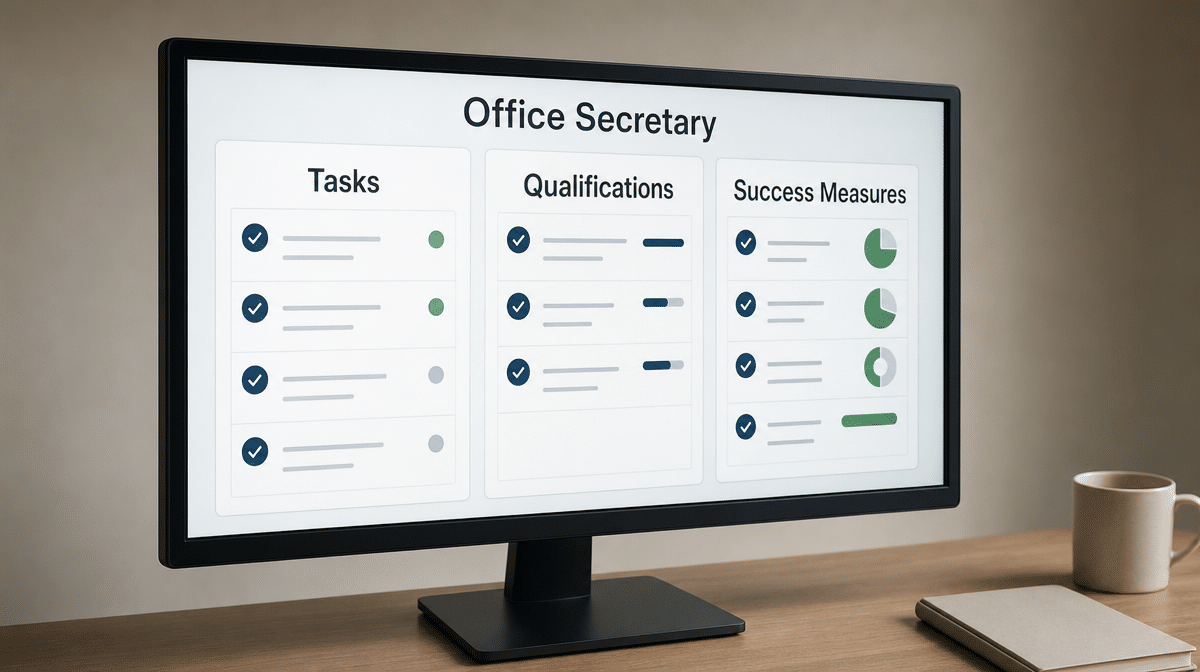
While the organization’s culture may be consistent, employee roles are dynamic. Take time to assess the job, including its functions, needs, goals, and work environment. A clear list of tasks, qualifications, and success measures gives you a practical foundation for questions. If the role is poorly defined, first write a clear job description.
For instance, consider an office secretary opening:
- Job opening: Office secretary.
- Tasks: Greeting clients, sitting at reception, answering phone calls, and managing the calendar.
- Qualifications: Organization skills, communication skills, customer service, and basic knowledge of Microsoft 365 apps such as Word, Outlook, and Excel. Add a degree requirement only when it is genuinely necessary for the work.
- Success measures: Accurate scheduling, courteous client service, timely messages, and reliable administrative follow-through.
Those details lead to better questions. For calendar management, ask about resolving conflicting priorities. For greeting clients, ask for an example of calming a frustrated visitor while maintaining professional service.
Decide Which Competencies Matter
After knowing what you want, decide what evidence would show that a person can perform the work. Every position requires a specific skillset and understanding, but qualifications alone do not reveal how someone will apply them in a vacant position.
- Does the role require frequent collaboration, focused individual work, or both?
- Which communication skills appear in the job’s most important tasks?
- What judgment will the employee exercise without direct supervision?
- Which systems, tools, or procedures must the person learn quickly?
- What pace, schedule, and working conditions define the work environment?
These questions keep the assessment grounded in observable behavior. They are more useful than asking whether the role requires an extrovert or trying to judge a person’s character from a short conversation.
Determine Interview Questions
If you want to recruit great candidates, ask great questions and define what a strong answer should demonstrate. One of the interviewer’s responsibilities is to set the tone. A calm, prepared interviewer helps the interviewee feel relaxed enough to provide clear examples, while a focused structure keeps the conversation serious and fair.
Depending on the size and needs of your organization, a role may require different evidence. For a law graduate, for example, questions might focus on behavior and attitude through a job-related situation: describe a time you had to interpret a complex requirement, explain your reasoning to someone else, and correct an error before it affected the work. The subject changes with the role, but the evidence pattern stays consistent.
- Start with the basics: Ask what attracted the candidate to the position and which part of the job description best matches recent experience.
- Know their interests: Ask why the person is interested in the position and what kind of work creates sustained motivation. Follow up on motives and intentions only as they relate to the role.
- Request behavioral evidence: Ask about a past situation, the candidate’s specific action, and the result.
- Use a situation-based question: Asking a situation-based question means presenting a realistic work problem and asking how the candidate would assess it, act, and communicate.
- Close with questions: Invite the interviewee to ask about the position, team, expectations, or next steps.
Review Your Questions
Once you have written your interview questions, analyze all of them and the reasoning behind them. A review should confirm that each question is necessary, job-related, understandable, and linked to a competency or responsibility that the hiring team can score.
- Consider the duration of your interview: If the interview is designed for around thirty minutes, it needs a smaller core set than a sixty-minute interview. Leave enough time for follow-ups and the candidate’s questions.
- Remove duplicates: Two questions that test the same competency reduce time available for other evidence.
- Check relevance and fairness: EEOC guidance on pre-employment inquiries says employers should seek information needed to determine whether a person is qualified and avoid questions that can reveal protected information.
- Agree on scoring: Write examples of weak, acceptable, and strong evidence before interviews begin.
- Respect the interviewee: Good candidates put significant energy into preparing and making a strong first impression. The interviewer should also arrive prepared.
An applicant interview procedure can help the team apply the same preparation, equal opportunity employment, and non-discrimination guidelines each time. It also gives interviewers a common record of questions, evidence, ratings, and follow-up decisions.
What Effective Interview Questions Should You Ask?
The best set depends on the job opening, but effective interview questions usually cover motivation, past behavior, realistic situations, role-specific judgment, and the candidate’s own questions. The following examples can be adapted without abandoning the same core structure for every candidate:
- What interested you in this position, and which responsibility best fits your recent experience?
- Tell us about a time you had to balance two urgent priorities. How did you decide what to do first?
- Describe a situation in which you received difficult feedback. What did you change afterward?
- Imagine that a customer reports an error you cannot immediately explain. What would you do next?
- Which part of this role would require the most learning during your first month?
- What would you like to know about the work environment, team, or success measures?
Even with clear plans and adequate preparation, some things will not go as planned. An interview may run behind schedule, or the interviewee may reveal information that calls for other types of questions. A back-up plan helps you remain in control of the process: protect the essential core questions, use only job-related follow-ups, record what changed, and apply the same standard when similar evidence appears in later interviews.
Effective interviewing is not about producing a clever question. It is about building a fair process that connects the job description to evidence, gives each candidate a meaningful chance to respond, and supports a hiring decision the organization can explain.
Frequently Asked Questions
What Makes an Interview Question Effective?
An effective question is job-related, open-ended, and tied to a competency or responsibility that the hiring team can evaluate. It asks for evidence rather than a rehearsed claim.
Should Every Candidate Be Asked the Same Questions?
Every candidate should receive the same core questions and scoring criteria. Interviewers may use job-related follow-ups to clarify an answer without changing the standard being assessed.
How Do You Write Behavioral Interview Questions?
Choose a competency from the job analysis, then ask for a past situation, the candidate’s action, and the result. Define the evidence that would demonstrate weak, acceptable, and strong performance.
What Interview Questions Should Employers Avoid?
Avoid questions unrelated to the work, questions that invite protected personal information, and vague prompts that reward confidence without revealing job-related evidence. Review every question for relevance and fairness.
How Many Questions Fit in a 30-Minute Interview?
A thirty-minute interview often needs a focused core set with time reserved for follow-ups and candidate questions. The exact number depends on question complexity and the depth of evidence required.