What are Financial Internal Controls?

Financial internal controls often fail at the handoffs between accounting cycles. Sales books the order, operations fulfills it, finance reports it, and someone must verify the numbers along the way. A practical control framework therefore has to cover the ten core accounting cycles that make up the accounting body of knowledge.
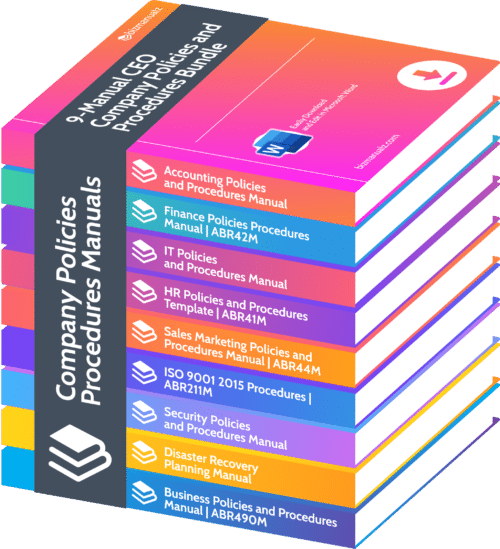
Each financial cycle focuses on a key element of business accounting and should be covered in your company’s financial accounting policies and procedures manual. The objective is not paperwork for its own sake. It is a risk-reducing framework that helps the business authorize transactions, protect assets, produce reliable information, and detect exceptions before they become material problems.
What Are Financial Internal Controls?
Financial internal controls are the policies, procedures, responsibilities, approvals, reconciliations, records, and reviews an organization uses to protect its resources and support reliable financial reporting. They connect people, systems, and evidence so management can see whether a transaction was authorized, recorded accurately, processed completely, and reviewed by the right person.
Controls may be preventive, such as an approval limit or segregation of duties; detective, such as a bank reconciliation or exception report; or corrective, such as resolving an audit finding and updating a procedure. The COSO Internal Control, Integrated Framework explains that effective internal controls support objectives, strategy, sustainable growth, and confidence in information, not only compliance.
The best control is proportionate to the risk. A small company may separate authorization, custody, and recordkeeping through manager review rather than three dedicated departments. A larger organization may use workflow approvals, automated matching, access controls, audit trails, and independent monitoring. In either case, the control owner, frequency, evidence, exception path, and reviewer should be clear.
Which Accounting Cycles Need Financial Internal Controls?
The ten financial accounting cycles below are operating areas where controls must work together. Reviewing them as a sequence helps management find gaps at the handoffs between departments, systems, and records. For companies subject to Sarbanes-Oxley Section 404, these cycles also help organize the risks and controls that affect internal control over financial reporting.
1. Revenue Cycle Procedures
The first, and what many business owners consider the most important, business process is the revenue or sales cycle. Revenue is the lifeblood of any business. Once sales has obtained an order, the order must be booked into the accounting system, triggering credit, fulfillment, and accounts receivable or collections processes.
Revenue controls confirm that customers are approved, prices and terms are authorized, shipments agree with orders, invoices are complete, and collections are applied to the correct account. Useful evidence includes an approved customer record, a matched sales order and shipment, an invoice sequence report, an aging review, and a reconciliation between the sales ledger and the general ledger.
2. Cash Disbursement Cycle Procedures
The second cycle deals with how you manage cash controls for expenses. This includes purchasing, receiving, accounts payable, and administrative expense processes. Once you receive cash from customers, you must spend less than you receive to maintain positive cash flow and stay in business.
Cash disbursement controls separate vendor setup, purchase approval, receipt confirmation, invoice entry, payment release, and bank reconciliation. A three-way match between the purchase order, receiving evidence, and supplier invoice prevents many duplicate or unsupported payments. Payment exceptions should be documented, approved, and reviewed after release.
3. Production Cycle Procedures
With the two key accounting cycles, making money and spending it, covered, the remainder of the accounting manual addresses accounting support processes. The production support cycle is critical to the business. If you do not have a product or service to sell, the first two cycles are immaterial.
The production cycle introduces raw materials, Work In Process (WIP), finished goods inventory, product release, and shipping. Controls compare approved bills of material or service plans with actual consumption, restrict inventory adjustments, record scrap and rework, authorize product release, and reconcile production records with inventory and cost accounting. These steps help management identify loss, waste, inaccurate costing, and unrecorded output.
4. Financial Reporting Cycle Procedures
In the first three cycles, you took orders, purchased materials, made products or services, delivered products, billed customers, and now must report the results. The financial reporting cycle includes budgeting and forecasting what you might need, reporting what you sold, financial analysis to see whether you are making a profit or spotting a trend, and management reviews with key stakeholders such as the Board of Directors, shareholders, lenders, and government agencies.
Reporting controls include a documented close calendar, account ownership, reconciliations, journal-entry approval, consolidation checks, variance analysis, and review of disclosures. The reviewer should have enough independence and knowledge to challenge unusual balances. Each reconciliation should identify the source records, preparer, reviewer, date, outstanding items, and required follow-up.
5. Finance Cycle Procedures
The finance cycle is about raising capital and managing the capital you have. You might need debt or equity capital to finance the business. Either way, you need a process to acquire and manage that cash. If substantial cash moves through the business, you may also need treasury management that governs where cash is held or invested.
Finance controls define who may open accounts, borrow, invest, transfer funds, sign agreements, and communicate with banks or investors. Debt schedules should reconcile to lender statements, covenant calculations should be reviewed, and capital transactions should agree with board approvals and legal records. Cash forecasts and liquidity limits provide an early warning when obligations may exceed available funds.
6. Asset Cycle Procedures
What business does not have assets? If you have computers, production machinery, vehicles, or office furniture, you have assets. These resources require processes for depreciation, inventory management, asset acquisition, and asset disposition or disposal. Tax rules and reporting frameworks such as U.S. GAAP or IFRS may affect how an asset is classified, measured, and reported.
Asset controls use approved capital requests, purchase records, tags or serial numbers, custody assignments, physical counts, maintenance records, impairment review, and disposal authorization. The fixed-asset register should reconcile to the general ledger. Sale proceeds, write-offs, and retired assets need evidence so equipment does not remain on the books after it leaves the business.
7. Internal Audit Cycle Procedures
Public companies and many organizations with significant debt, equity, regulatory, contractual, or governance requirements use internal audit to evaluate risk and control performance. The internal audit process consists of audit planning, conducting the audit, audit reporting, and audit follow-up.
Controls over the audit cycle protect auditor independence, define the approved scope, retain work papers, support findings with evidence, assign corrective actions, and track follow-up to closure. Management should not treat a completed report as the finish line. Overdue findings, repeated exceptions, and weak corrective actions are signals that the underlying process has not changed.
8. Strategic Planning Cycle Procedures
If you have cash, assets, compliance duties, and stakeholders of any kind, you need a strategic planning process. Business planning requires a business plan that connects objectives, resources, risks, and performance measures. It may also address SOX obligations, service-organization controls such as SOC 1 reporting, U.S. GAAP or IFRS requirements, and Board or stockholder meetings.
Strategic planning controls establish who approves assumptions, budgets, major initiatives, acquisitions, financing, and risk tolerances. Management should compare the approved plan with actual performance, explain material variances, and update forecasts when conditions change. Decision records help later reviewers understand what information was available and why the company chose a particular course.
9. Payroll Cycle Procedures
The payroll process focuses on administering compensation, benefits, deductions, tax reporting, and personnel compliance. Organizations may have obligations involving FLSA, FMLA, ERISA, FICA, FUTA, ADA, ADEA, HIPAA, WARN, IRS requirements, state rules, and other labor or tax regimes. The applicable set depends on the workforce, location, benefits, and business circumstances.
This may not sound like traditional accounting, but the accounting department is involved because it acts as a financial gatekeeper and financial reporting contact. Payroll controls authorize new employees and pay-rate changes, restrict master-file access, reconcile time records to payroll, review exception reports, separate preparation from release, reconcile payroll accounts, and confirm that tax deposits and benefit payments are complete and timely.
10. Information Integrity Cycle Procedures
Most accounting transactions rely on computers, networks, software, integrations, and other IT assets. Information integrity, specifically security, timeliness, and accuracy, is critical to accounting and the business. Accounting may not manage every IT asset, but it cannot ignore the integrity of financial systems, interfaces, data, IT security, IT disaster recovery, and IT internal controls.
Information controls include role-based access, approval for access changes, multifactor authentication, change management, interface reconciliations, automated edit checks, logging, backup testing, recovery plans, and periodic review of privileged users. A control should also address spreadsheets and manual uploads that sit outside the main accounting system, because a reliable system can still receive incomplete or unauthorized data.
How Does SOX Section 404 Affect Financial Internal Controls?
Sarbanes-Oxley was enacted in 2002, and Section 404 created explicit reporting requirements for internal control over financial reporting. The SEC’s final rule implementing Section 404 requires a management report that states management’s responsibility, identifies the evaluation framework, and assesses effectiveness at the end of the fiscal year. Auditor attestation requirements apply where the securities rules require them.
The SOX compliance cycle is an overlay across the ten core accounting cycles, not a substitute for them. It involves compliance planning, identifying risks, understanding audit responsibilities, documenting key controls, testing design and operation, evaluating deficiencies, retaining evidence, and demonstrating control effectiveness with respect to identified risks. A risk-based scope keeps the work focused on processes and accounts that could affect reliable financial statements.
Whether or not a company is subject to SOX, the same discipline is useful: define the objective, identify the risk, design the control, assign an owner, retain evidence, review exceptions, and correct weaknesses. Financial internal controls remain effective only when management monitors them as systems, people, products, regulations, and transaction volumes change.
Frequently Asked Questions
What Are Financial Internal Controls?
Financial internal controls are policies, procedures, responsibilities, approvals, reconciliations, records, and reviews that protect resources and support complete, accurate, authorized, and reliable financial reporting.
Why Are Financial Internal Controls Important?
They help prevent or detect error, fraud, loss, unauthorized activity, and unreliable reporting. They also give management evidence that important transactions and balances have been reviewed.
Which Accounting Cycles Need Internal Controls?
Controls should cover revenue, cash disbursements, production, financial reporting, finance, assets, internal audit, strategic planning, payroll, and information integrity. The controls must also work at the handoffs between those cycles.
How Often Should Financial Internal Controls Be Reviewed?
Management should monitor controls continuously and perform formal reviews on a risk-based schedule. A significant system, personnel, process, regulatory, or transaction-volume change should also trigger review.
How Does SOX Section 404 Affect Internal Controls?
Section 404 requires covered companies to report management’s responsibility for internal control over financial reporting, identify the evaluation framework, and assess effectiveness. Auditor attestation applies where required by securities rules.