
How can Department Communication be Improved?

We should all recognize the importance of effective communication, but how good are we at executing and employing basic communication principles as managers? How can department communication be improved?
Is Your Department Communication Effective?
However great you think your message is, if you can’t easily get it across to a 9-year-old, you’re probably not going to get that point across very well to anyone who doesn’t speak your language on an everyday basis. That’s not saying the people you work or do business with are on par with the average nine-year-old, of course. Simplify your message so everyone can understand.
With effective communication, things get done. Your policies and procedures — whether you use MS-Word, a document management system, or plain old text — must be clear and concise. If any of your employees come into a performance review unsure of what is going to happen, then you should know you are not doing as well as you could.
Every form of department communication, for whatever reason or however critical to your company’s mission, MUST be straightforward and focused in order to be quality communication. You have to get your message across in a way that leaves no room for confusion, misunderstanding, or error. Make sure the message is worth saying AND make sure everyone in your audience understands it.
Keep in mind that business documents, news stories, blog posts, tweets, etc., are generated at alarming speeds. In fact, the speed of communication has become the main driver of communication. Thoroughness, accuracy, and attention to detail may suffer significantly because of this factor.
Tips to Maximize Your Department Communication
This may not mean much to the casual tweeter or blogger, but to business, reduced quality of communication can be toxic. Deadlines are important — second-place finishers don’t usually get championship rings — but so is quality. First-place finishers can have their trophies taken away. So, as a business leader — think about your policy, procedure, email, or other document you’re about to issue. Isn’t it worth the extra few minutes to get it done right?
Here are some simple tips to communicate more effectively with your department.
Meetings Are an Important Communication Tool
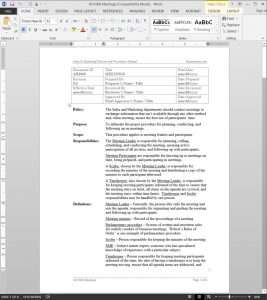
The Meeting Policy establishes best practices for meeting preparation, execution, and follow-up, and it guarantees that meetings make the most use of participants’ time.
Many would say that meetings are a necessary evil in the business world. Meetings, however, are the most common and most critical way information is communicated in a department. It is the role of the department leader to ensure that meetings do not drag on forever and that they are conducted in a practical and productive way.
Like many aspects of business, you can’t just hope good things happen by accident. You have to create a clear plan and find ways to measure how well you are executing the plan.
Follow a Meeting Procedure
Do you have a Meeting Procedure? One of the most important jobs of a manager is to ensure lines of communication are open between you and your team. A good manager creates and then continually modifies and updates the plan for communicating through meetings. The meeting procedure should cover: staff meetings and individual or project team meetings.
Avoid the Dreaded Staff Meeting
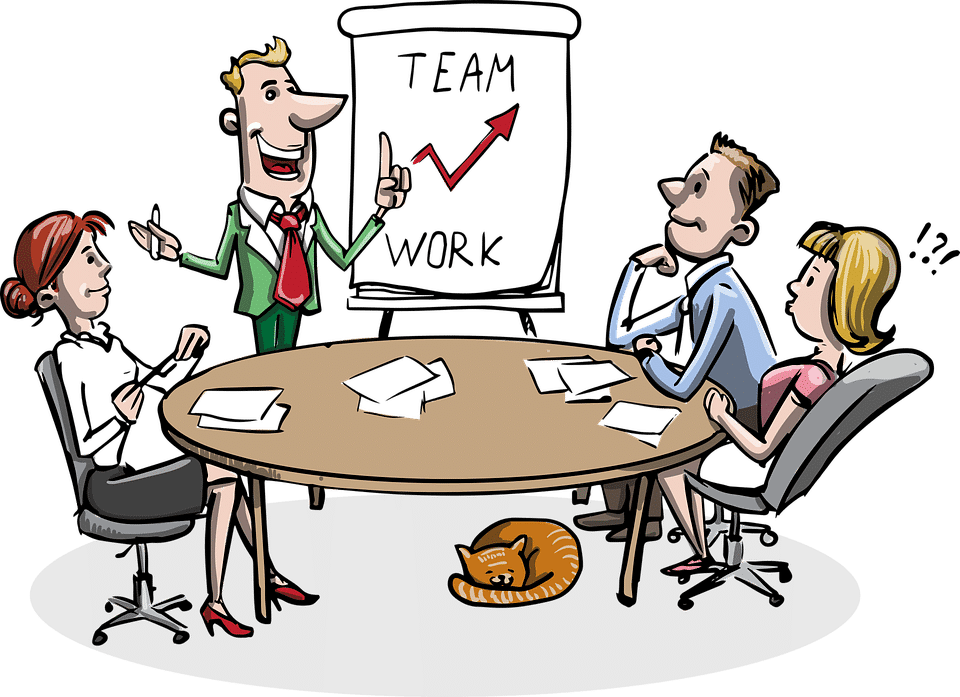
Long, overly-drawn out staff meetings where the agenda is to cover what everyone is working on aren’t necessarily beneficial. People sit for 1 to 2 hours hearing about things they are not involved with just so they can contribute their 10-15 minutes worth.
If you are wasting an hour of time for six people every week with this type of meeting; you are costing your department 39 man-days every year. Time that people could be working, getting things done.
As the department manager it is your job to figure out how to productively conduct meetings. Do you really need to have regular meetings with the whole staff? Is that the proper forum for extensive status reviews?
Instead of wasting the group’s time, stick to the topics that affects everyone. If you want to keep everyone apprised of the status, then keep it to a brief overview. Or use dashboards.
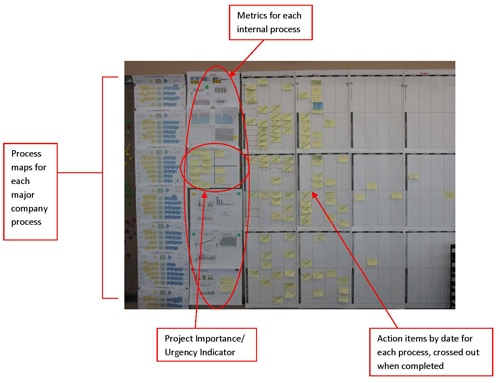
Department Communication Dashboard
Use Dashboards to Communicate
Communicate key performance indicators, objectives and goals on a dashboard or performance scoreboard. Regular chart updates display current measurements relative to objectives. Now, at a glance, everyone can see how the department is performing, the status of each project, or what tasks are ahead or behind and need attention.
Meet Regularly with Individuals and Teams
Besides staff meetings, you should regularly meet with individuals and with project team members to discuss status, progress, and problems. Now is the time for detailed reports and discussions.
Here is the opportunity to ensure priorities are established, decisions are made and clearly communicated, and schedules/milestones are set, reviewed, and changed. Your team members should leave these regular meetings with little doubt of how pleased or disappointed you are in their performance.
The role of these meetings is to provide the various levels of direction, mentoring, and coaching your team members may need. Let’s be honest; regular one-on-one reviews and status reports in comparison with established smart objectives and milestones are an important tool to keep performance and projects on-track and prevent them from ever going awry.
Keep Communication Lines Open
It is the manager’s job to keep the lines of department communication open. Schedule regular meetings as well as communicate agendas and expectations. Ensure meetings happen and they start and end on schedule. It can be very frustrating and a waste of time for a team member to prepare for a scheduled meeting that never happens. Plus, employee’s can feel uncomfortable if they are placed in the role of pestering the manager to conduct the scheduled meeting.
In so many ways, the department leader sets the tone with their behavior. This is certainly true with meetings. If the department manager is always late, is forgetful, or otherwise ignores the importance of meetings, then the staff will assume the same attitude. The blame can sometimes also be hurled on instances of miscommunication, and so, it becomes important to keep all systems up to date, or even replace with new ones from CP TECH if the need be.
It is also the department manager’s responsibility to keep meeting records, including dates, attendees, and minutes. The meeting minutes should be shared with all involved parties, especially important decisions and assigned action items. This is a positive aid in ensuring that what happened in the meeting is documented and communicated.
Meeting minutes can also serve as important records for compliance purposes. For example, they could serve as design review or vendor reviews that meet ISO 9001 record requirements. As part of the manager’s meeting plan, there should be a plan (and basic format) for how meeting minutes should appear, where and how they are stored, and what record requirement they meet.
Department Communication be Improved
As with all plans and objectives, the only way to know how well you are doing is to regularly measure and compare them to the plan. For meetings, objectives could revolve around length, agendas, and carrying them out according to the schedule. If you are not doing well in keeping your meeting plan on track, then there could be a direct relationship between this and other issues with performance in the department.
Find a positive way to make meetings work for you and your department. Augment your communications with dashboards. Make things more visual so poor performance stands out. Then your low performing team member will not be surprised by a poor review (and perhaps the poor review will even be prevented), and you won’t be surprised by a resignation letter of a top performer because they are frustrated and dissatisfied.









[…] with your boss or any of your business communications can be improved. You just need to understand your boss and what they expect from you when you do […]