
How are Vision and Strategy are Related?
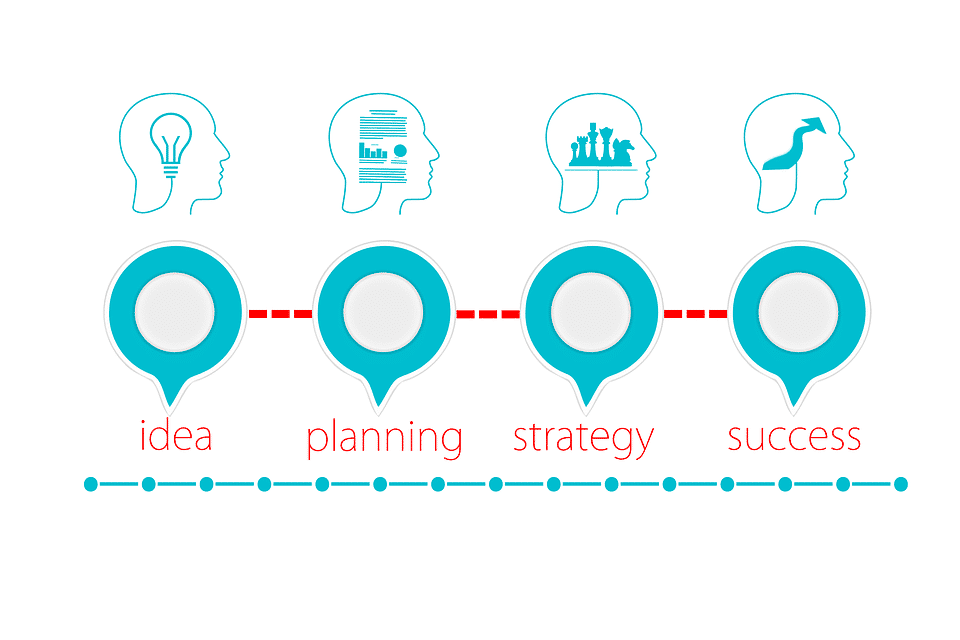
It is that time of year when successful leaders are weaving vision and business strategy together. You do this by using your vision, your end-to-end process design, and the action steps required to make it all happen.
How is a Strategic Plan Related to the Vision of an Organization?

Are you spending your time doing “strategic work” — the kind that adds meaning and value to your long-term goals? Successful small business owners, or SMBs, do.
“But, how does a small business owner ever find the time to do strategic work?”, you ask. “That can take up as much as 80% of my day.” I’ll tell you how — by developing systems of policies, procedures, and forms for doing the tactical, daily work.
Unsuccessful small business owners struggle to prioritize their time. They’re continually fighting fires or doing the mundane tasks — going to the post office, running around their disorganized workspace, answering the phone — and getting nothing done. Does that sound familiar?
Managing your Business Model
You cannot have a strategy without a vision. Your vision is your target; it answers the question “how should we view the organization five to ten years from into the future?” The ‘we’ here includes everyone in the organization. Everyone must be able to see what the organization looks like in the future. It’s about your strategy and vision.
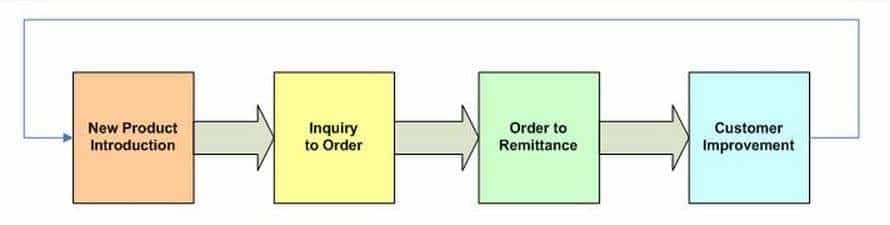
Vision and Strategy Process
How to Deploy your Vision and Strategy?
Your end-to-end process is comprised of four major areas: New Product Introduction, Inquiry to Order, Order to Remittance, and Customer Improvement. These four areas represent your company vision and strategy; how it satisfies your customers and makes money. Your end-to-end process design is how you deploy your strategy.
Action Planning Steps
After you use your end-to-end process to review your vision and strategy, you should begin to see a number of gaps between your future state and your current state. You will need action planning steps to close these gaps and put your strategy to work.
Once you have your strategy aligned with your vision, you should be in a position to create compelling new product/service offerings for your customers. You should be seeing success in multiple areas of your organization. If you notice opportunities for improvement, then that is great as well.
A System of Policies and Procedures
Your policies and procedures are the glue that holds it all together. It connects the tactical process designs to your employees to literally explain how you are going to deliver on your strategy.
If your business is based on a system of policies, procedures, and forms, it will run on its own without you having to tend to all the details all of the time. This may seem hard to believe, but it works — Fortune 500 companies have been doing this for decades.
“McDonald’s” now uses a clearly defined system of policies and procedures to unify marketing, operations, and customer service worldwide — they started in 1940 with a single restaurant, in California. McDonald’s is just one example of how a small business like yours can — and must — create a system of policies and procedures to ensure its success.
Start by imagining that you’re creating a model for your own series of franchise locations. Every day when you go to work, take one process at a time and systematize it with the policies, procedures, and forms your employees need to do the job you want them to do.
Policies and Procedures Templates
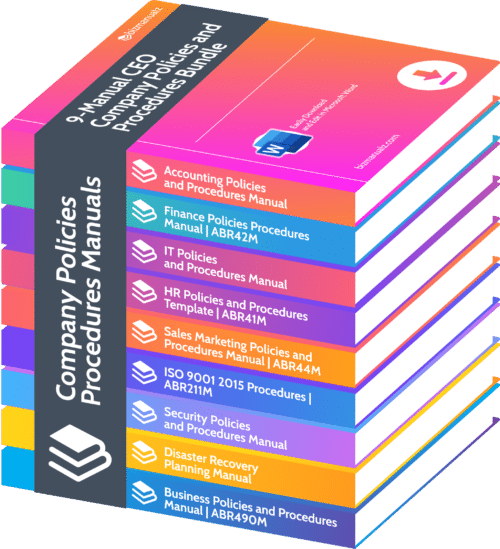
That’s where Bizmanualz MS-Word procedure templates come in. Our renowned series of policies, procedures, and forms provides hundreds of templates and guides for your accounting, finance, human resources, information technology, and other departments. Every Bizmanualz policy and procedure manual comes with a set of sample procedures, a “How To” guide to help you get started, and a sample manual for the department manager to use as a guide.
Today, start working on your business instead of in your business. Focus on strategic work and delegate the tactical work with Bizmanualz procedure templates — you’ll realize your goals, get out of the office more, and build the successful business you set out to build.
Your Strategy Starts With a Vision
Your vision enables everyone in your organization to visualize what your organization looks like in five to ten years form now. Once you have that picture in place, you draw a strategy, a path if you will, to reach that target.
For it to work, your strategy must align with your vision or else it will be like shooting in the dark. Your policies and procedures fill in the details to hold your business model together.




When it comes to creating a strategy that takes your business to the next level, these are some good things to keep in mind. They will help ultimately bring the vision you have in mind to life.