What Is a Policies and Procedures Manual?

All companies have standards long before every standard is written down. The problem is that unwritten standards live in memory, email threads, old files, supervisor habits, and one employee’s best guess about how the work should be done.
Your policies and procedures manual houses your company best practices, core business process descriptions, and the methods and standards for how work is expected to be performed. Creating your manual allows you to focus your company for growth, simplify training, communicate expectations, and scale without forcing every employee to reinvent the process.
What Is a Policies and Procedures Manual?
A policies and procedures manual is the organized source of truth for how your company makes decisions and gets work done. It explains what the company expects, who is responsible, which steps must be followed, and where employees can find the current policy or procedure when a question comes up.
The manual may be a three-ring binder, a folder on a network share drive, a controlled Microsoft Word template library, an intranet, or an online procedures management software system like OnPolicy. The format matters less than the operating discipline behind it: everyone must understand what constitutes the official manual, which version is current, and where a policy or procedure can be found when someone needs it.
Policies describe the rules, standards, and management intent behind the work. Procedures describe the steps, records, approvals, and handoffs that turn that intent into consistent action. A useful manual brings both together so employees are not left to interpret company standards from memory or informal custom.
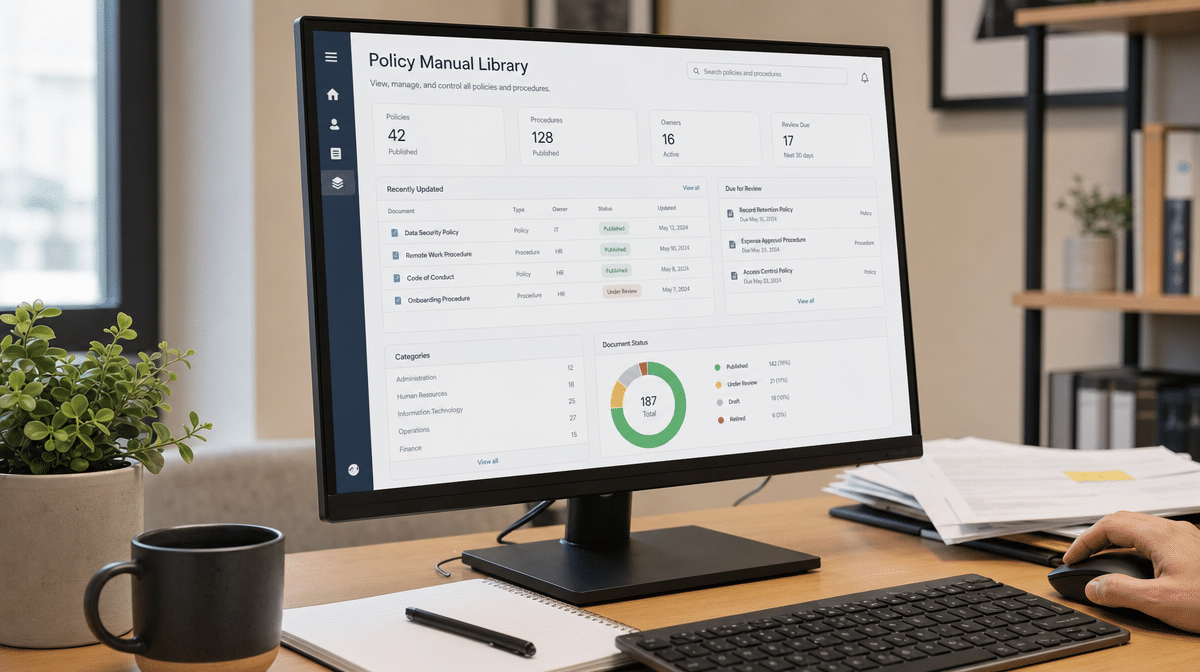
External guidance on creating a policies and procedures manual also emphasizes ownership, organization, and regular maintenance. That is the practical difference between a folder full of documents and a manual people can actually use.
Communicating Standard Operating Procedures
Procedures are really about communication. A manual communicates how your company wants the work performed, what standards matter, and what employees should do when the next step is unclear.
Imagine that you are franchising your business. If you want every franchisee to operate the same way so that every customer for your brand has the same experience, then your policies and procedures manual is one of the most critical documents that you will produce. Your manual communicates your standards before service quality depends on local interpretation.
That same logic applies even when you are not franchising. Your employees need to understand what is expected of them. New hires need a procedures manual to reference for training. Supervisors need a policy manual to reference when managing business processes, reviewing performance, and answering routine questions.

By documenting your standards, you are communicating what is important for growth, quality, customer satisfaction, and day-to-day accountability. An online manual can go further by publishing the current version, routing approvals, and helping manage procedure reviews automatically.
Policies and Procedures Template Library
As your company grows, new procedures will be needed. Your policies and procedures manual can also be considered a procedure template library because it houses example procedure templates that can be used as a model for new standard operating procedures.
A template library is useful because it gives each department a common starting point. Instead of writing every new process from scratch, managers can reuse the same basic structure for purpose, scope, responsibility, procedure steps, records, forms, approvals, and revision history.
That does not mean every procedure should look identical. It means your company uses a consistent method for describing work. The policies and procedures manual template gives each process enough structure to be clear, searchable, trainable, and maintainable.
Why Is a Policies and Procedures Manual Important?
Your policies and procedures manual is your company best practices, process descriptions, and standards for how work is expected to be performed. The importance of policies and procedures cannot be underestimated for focusing your company, simplifying training, easing your ability to scale, and reducing confusion when work crosses departments.
Policies and procedures also convert individual know-how into company knowledge. When the best way to handle a customer issue, approve a purchase, close a month-end task, or inspect a product is documented, the business is less dependent on one experienced employee being available at the right moment.
Ohio State University Extension describes policies and procedures as a way to organize decisions about how work is done, which is exactly why a manual matters for growing companies. It turns repeated decisions into accessible standards instead of leaving each team to improvise its own answer.
Who Uses a Policies and Procedures Manual?
Front line workers use the manual to make effective, time-saving decisions that affect their functional area. When the policy is clear and the procedure is easy to find, employees can complete routine work without waiting for a supervisor to explain every step.
Supervisors and managers use the manual to train employees, manage business processes, and apply standards consistently. Executives use it to align departments around the company way of working. Auditors, compliance reviewers, and quality teams use it to confirm that the documented process matches the process actually being followed.

An effective policies and procedures manual also provides appropriate methods for interdepartmental communication. Staff can work together to resolve day-to-day business problems without unnecessary supervisory involvement because the manual explains the standard path, the responsible role, and the expected handoff.
What Is the Goal of a Policies and Procedures Manual?
The goal of your policy and procedure manual should be to organize the contents to reflect your company’s ways and means of communicating, getting the service performed, or getting the product manufactured at the lowest cost in the least amount of time. The added benefit is maintaining job satisfaction and high employee morale because people know what is expected and where to find the answer.
All employees in your organization should be educated in company policies and procedures and should have ready access to the manual. Because producing and maintaining a policy manual has a cost, it is not necessary to issue an individual printed manual to every employee, but the manual should be readily available in a designated area, shared system, intranet, or online policy management system.
Need more examples? Download free policies and procedures in editable Microsoft Word templates to create your own policy and procedure manual.
Frequently Asked Questions
What Is Included in a Policies and Procedures Manual?
A policies and procedures manual usually includes company policies, process descriptions, standard operating procedures, role responsibilities, approval rules, forms, templates, and instructions for how work is expected to be performed.
Who Uses a Policies and Procedures Manual?
Front line workers, supervisors, managers, executives, trainers, auditors, and new employees use the manual to understand standards, complete work consistently, and resolve day-to-day business problems without unnecessary supervisory involvement.
Why Is a Policies and Procedures Manual Important?
A policies and procedures manual focuses the company for growth, simplifies training, improves communication, and helps maintain quality, customer satisfaction, job satisfaction, and high employee morale.
Can a Policies and Procedures Manual Be Online?
Yes. A manual can be a printed binder, a shared folder, an intranet, or an online policy management system, as long as employees know where to find the current policy or procedure when they need it.
How Often Should a Policies and Procedures Manual Be Updated?
A policies and procedures manual should be reviewed whenever processes, regulations, systems, roles, or business goals change. Many companies also schedule periodic reviews so procedures stay current and useful.