What is Important When Organizing Business Travel?
Organizing business travel means building a repeatable business travel routine for the schedule, packing, ground transportation, mobile devices, connectivity, accommodation, expenses, and the return home. The goal is to remove avoidable decisions so a frequent corporate traveler can stay focused, happy, productive, and ready for success on the road.
Start with one trip brief that holds the itinerary, meeting locations, traveler details, approvals, and emergency contacts. Then use the same packing and confirmation sequence before every departure. You may still need to think outside the box when plans change, but a reliable routine gives you a clear starting point.
What Is Important When Organizing Business Travel?
The most important consideration is whether the trip has been organized around its business purpose. Confirm who is traveling, where they need to be, when they must arrive, what the company will pay for, and which documents or approvals they need. Keep flight, rail, hotel, car, and meeting details in one place instead of spreading them across several inboxes and apps.
Whether you are traveling nationally, internationally, or both, the key considerations stay recognizable: keeping a tight schedule, traveling light yet bringing everything you need, minimizing risk on the road, and maintaining enough flexibility for delays. These best practices turn an arduous task into a sequence you can repeat.
For international travel, check destination rules before booking and again before departure. The U.S. Department of State maintains an international travel checklist covering travel advisories, entry and visa requirements, passport validity, document copies, and emergency contacts. Travelers outside the United States should use the equivalent guidance from their own government and the destination authority.
How Can Frequent Corporate Travelers Build a Reliable Routine?
Business Travelers Need to Pack Smart
For a frequent corporate traveler, excess luggage can become an unnecessary burden. A carry-on-first approach may reduce the bag checking line and waiting when the trip length, airline limits, and company policy allow it. Traveling light does not mean leaving critical items behind. It means deciding which clothes, documents, devices, and work materials support the trip and packing those essentials consistently.
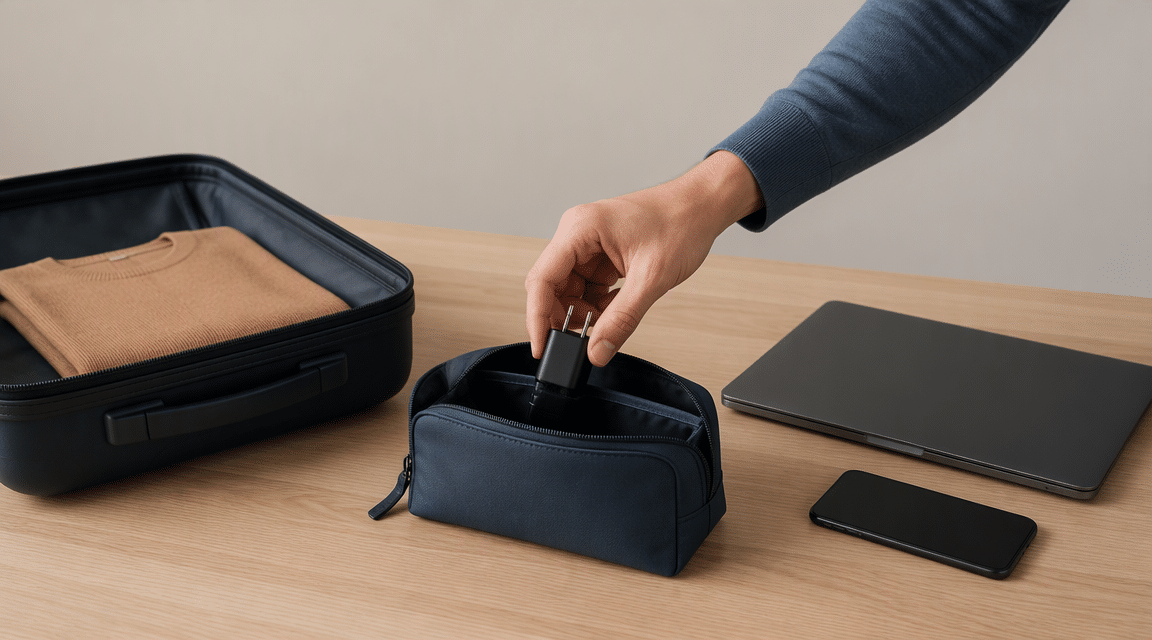
Another good packing tip is to keep toiletries and other essentials already packed between trips. A spare charger, basic office supplies, business cards, medication, and a compact laundry kit can stay in the carry-on bags. Instead of worrying about whether you remembered to pack the charger, keep a dedicated spare in the travel kit.
When you get back home, restore the carry-on right away. Replace anything that was used, recharge each device, and return the bag to its ready location. Make this a priority so you do not have to worry about rebuilding it on a moment’s notice.
Check the rules that apply to the actual route. For flights departing from U.S. airports, TSA permits liquids, aerosols, gels, creams, and pastes in containers of 3.4 ounces or less, inside one quart-size clear bag. Medication exceptions and airline size or weight limits need their own review.
Choose Preferred Providers and Reward Programs Carefully
Companies in the travel industry offer numerous loyalty and reward programs through airlines, accommodation providers, rental companies, and credit card providers. Joining every program creates clutter. Choose preferred airlines and lodging options that match the routes you actually travel, the company’s approved suppliers, and the loyalty perks you can realistically use.
If you are flying frequently, store the frequent flyer program number with the traveler profile so it is applied during booking. Review fees, redemption restrictions, point ownership, and employer rules before treating a reward as a personal benefit. This makes the program financially sensible without letting cashback programs, discounts, or points override a better schedule, safer route, or lower total trip cost.
Check Ground Transportation and Insurance
Plan ground transportation as part of the itinerary, not after arrival. If you are traveling by car, perhaps hopping from one city to the next in a single region, record the distances, airport or station pickup point, expected travel time, meeting address, parking instructions, and a backup option. Planning before arriving helps you stay safe, avoid unwanted expenses, and spend less time frustrated behind the wheel.
When renting a car, read the rental agreement and verify what the employer, personal auto policy, credit card, or travel policy covers before accepting or declining additional protection. Look specifically at collisions, accidents, theft, roadside assistance, exclusions, and other hazards you may encounter while traversing unfamiliar terrain. Insurance can limit financial exposure, but it does not replace safe driving.
The Federal Trade Commission’s rental-car guidance explains that coverage may come from several sources and that travelers should understand collision waivers, exclusions, and existing protection. The U.S. Department of State says many countries do not accept a U.S. driver’s license, and a traveler may need an International Driving Permit and extra auto insurance. Destination law, the rental contract, and company policy still control the decision.
Keep Mobile Devices Charged and Plan Mobile Data
Business travel often involves texting, conducting calls and video meetings, navigation, networking, monitoring employees or workflow, and delegating while on the road. Decide which contact windows matter instead of assuming you must be online and available at all times. Save offline copies of the itinerary and presentation, and share an emergency contact method. A suitable roaming plan, local SIM card, or eSIM can provide mobile data and internet access when hotel or airport service is unavailable.
Choose mobile devices with decent battery life, optimize their usage when away from a charger, and charge the smartphone and laptop before departure. Carry a compatible charger and capacious portable battery as a backup when the battery goes down. The FAA requires spare lithium batteries and power banks to be carried in cabin baggage, with terminals protected from short circuit. Check the airline’s limits before packing a high-capacity battery.
Protect the connection as carefully as the battery. CISA advises travelers to avoid using open Wi-Fi networks for personal business, banking, or online shopping. Follow the company’s security policy, use approved access methods, and review how to network effectively without exposing confidential information.
Select Business Travel Accommodations and Amenities
Being smart about where you stay can affect the entire workday. Start with proximity to the place where you will meet partners or clients, then find a balance between cost and overall functionality. Compare safety, cancellation terms, quiet workspace, reliable internet, dining options, and ground transportation. The closest accommodation is not always the right one, but a long or unpredictable commute can weaken an otherwise tight schedule.
For a longer trip, look for key amenities. Find a stay where you can wash and iron your clothes, grab a decent meal, and get plenty of rest during downtime. These practical options can save time, money, and energy. Record the reservation number, check-in rules, address, and contact details in the same trip brief as the rest of the itinerary.
Business Travel Readiness Checklist
Use this six-stage checklist for each trip. Adjust the owner and timing to match the company’s travel policy.
| Stage | Confirm |
|---|---|
| 1. Plan | Trip purpose, traveler, budget, approval, meeting owner, and critical schedule. |
| 2. Book | Transport, accommodation, ground travel, preferred providers, reward numbers, and cancellation terms. |
| 3. Protect | Required documents, destination rules, coverage, medication, company security steps, and emergency contacts. |
| 4. Pack | Carry-on kit, toiletries, clothes, business cards, office supplies, charger, and compliant portable battery. |
| 5. Connect | Roaming, local SIM or eSIM, secure access, offline itinerary, presentation copy, and contact windows. |
| 6. Confirm | Check-in, arrival details, meeting address, pickup point, weather, receipts process, and backup options. |
What Should Happen After the Business Trip?
Close the trip while the details are still fresh. Submit receipts and record the business purpose promptly, review any schedule or supplier problem, and save useful notes for the next visit. If you need a repeatable method, use these practices to manage your travel expense account.
Then reset the physical travel kit. Wash or replace what needs attention, restock toiletries, return the spare charger and office supplies, and recharge the portable battery. This return-and-reset step closes the routine and makes the next departure easier. For more preparation ideas, see how to make business travel easier.
Frequently Asked Questions
What information belongs in a business travel itinerary?
Include transport and lodging confirmations, meeting times and addresses, ground transportation, traveler contacts, approval details, emergency contacts, and a backup plan for critical connections.
How early should business travel be organized?
Begin when the business purpose, traveler, dates, and approval are known. International documents, visas, complex routes, and high-demand events usually require more lead time than a familiar domestic trip.
Should a frequent business traveler use carry-on luggage only?
Use a carry-on-first approach when the trip length, airline rules, equipment, and company policy allow it. Check a bag when required items cannot be carried safely or legally in the cabin.
How should a company choose preferred travel providers?
Choose providers based on route coverage, total cost, schedule reliability, cancellation terms, traveler needs, and company policy. Reward programs should support those choices, not control them.
What is the most important post-trip task?
Close the loop by submitting receipts, recording useful trip notes, and restoring the carry-on immediately. Restock toiletries and supplies, recharge devices, and return the bag to its ready location.