What are Some Important Qualities of a Good Boss?

Many people are promoted into a management position because of their skills and accomplishments, yet technical success alone does not make someone a good boss. A good boss gives people the clarity, support, and trust they need to do excellent work.
The most important qualities of a good boss are communication, consistency, sound judgment, respect, coaching, recognition, and the ability to prevent problems. You can use the ten qualities and self-assessment below to identify what you already do well and what to improve next.
What Are the Important Qualities of a Good Boss?
A good boss sets clear expectations, removes obstacles, listens before acting, and treats people fairly. The best managers also communicate upward, so their teams have the resources, priorities, and protection needed to complete the work. These behaviors make management dependable rather than personality-driven.
What Are the 10 Qualities of a Good Boss?
1. Good Bosses Communicate with Their Boss
Every boss has a boss. In a small business, that may include a spouse, banker, investors, customers, or even suppliers. In a larger business, layers of management require constant attention and useful updates. Communicating with your boss is critical to getting ahead, getting anything done, and getting resources for your projects. A good boss does not leave senior management in the dark. A bad boss never provides anybody with enough information to understand what is going on.
2. Good Bosses Prevent Problems Before They Occur
An ounce of prevention is worth a pound of cure. Yet many managers spend most of their time fixing problems instead of taking preventive action. A good boss considers the risks ahead and plans how to prevent or minimize them through policies, procedures, and well-defined processes. A bad boss stays trapped in firefighting.
3. Good Bosses Match Employee Skills to the Job
Everybody is better at some things than others. A good boss seeks to understand how to put an employee’s capabilities to the best use. A bad boss puts people where they are needed simply because there is work to be done. When a role and an employee are poorly matched, the manager should clarify the gap, provide support, and consider a better fit rather than simply pushing more work through the same arrangement.
4. Good Bosses Address Performance Problems
Sometimes an employee is not working out and the problem begins to affect everyone else. A good boss addresses the issue promptly, explains the expected behavior or result, listens for relevant context, and agrees on specific next steps. Moving the person to a better job fit may help. If improvement does not follow a fair process, the manager should use the company’s documented performance and separation procedures. Avoiding conflict usually makes the problem harder for the employee and the team.
5. Good Bosses Show Respect and Value Every Employee
A good boss understands that employees have an outside life, family, and other commitments. Respect also appears in everyday management: responding to emails, reviewing reports, obtaining answers to questions, listening without humiliation, and applying the same standards to similar situations. A bad boss yells, makes unreasonable demands on people’s time, and always has an excuse for ignoring employee requests. That behavior weakens trust.
6. Good Bosses Focus on Results, Not Just the Time Clock
Every boss wants the job done and done right. The question is how much flexibility an employee has to achieve the result. A good boss empowers employees to make decisions, allows flexibility, and recognizes creative approaches to solving problems. A bad boss watches the clock, vacation time, and how time is used at work but overlooks travel on weekends or staying late at the office. Flexibility works best when the desired outcome, authority limits, fixed coverage hours, and review points are clear.
7. Good Bosses Are Consistent, Predictable, and Truthful
Employees need to trust their manager. Trust grows when decisions follow stated principles, expectations do not change without explanation, and commitments are realistic. Good managers can change direction when new facts require it, but they explain why. Bad bosses over-promise to customers, under-deliver internally, and then blame employees for impossible expectations.
8. Good Bosses Communicate with Employees Often
Management is about frequent communication. A good boss communicates both up and down the chain of command, recognizing that internal communication benefits the whole company. A bad boss does not communicate clearly, sends one-word emails, does not meet with employees often enough, and sometimes never talks to them at all. Regular one-on-one meetings, useful team updates, clear written decisions, and real listening reduce guesswork.
9. Good Bosses Coach and Train Others
Improving employee performance is a critical skill of a good boss and a distraction to a bad boss. A good boss actively coaches people at work, clearly explains expectations, sets a good example, observes the work, and gives specific feedback. The bad boss just wants it done and leaves employees unsure about what is wanted. Coaching should help an employee think through a problem and build capability, not create permanent dependence on the manager.
10. Good Bosses Recognize and Reward Good Work
Everybody enjoys meaningful employee recognition and praise. A good boss notices superior performance, explains why it mattered, and gives credit to the people who earned it. A bad boss prefers to take credit for an employee’s accomplishments without acknowledgement. Recognition may be public or private depending on the employee and the achievement, but it should always be timely, specific, and fair.
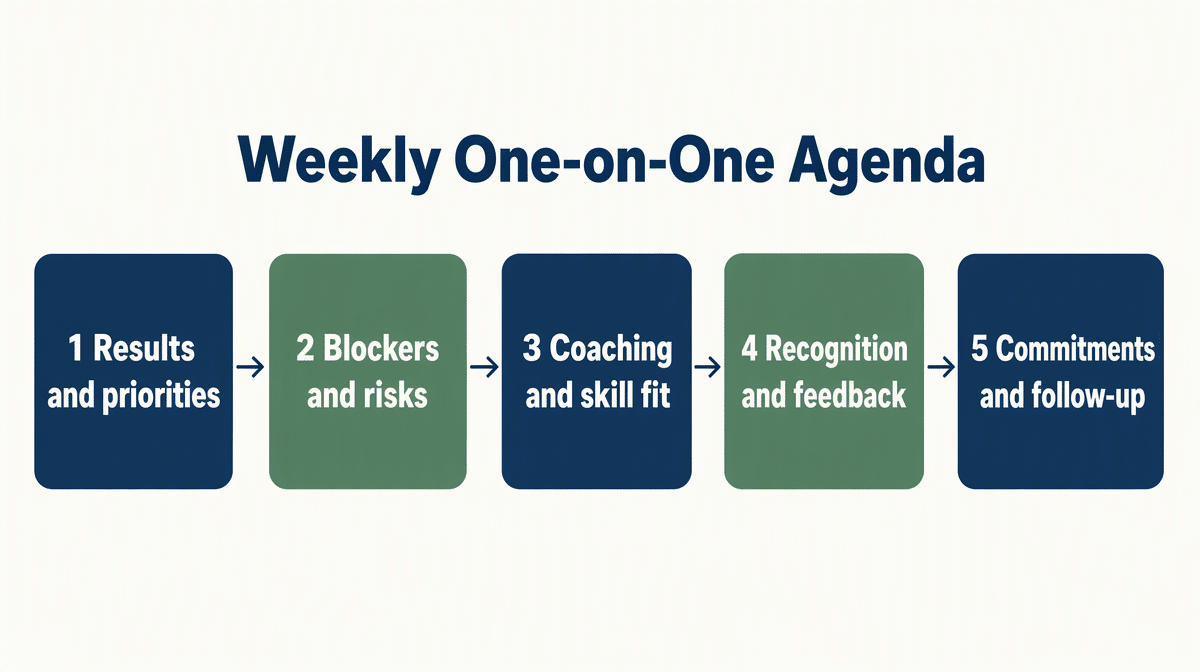
Use this five-part agenda to turn the qualities above into a weekly management habit: review results and priorities, surface blockers and risks, coach for skill fit, give recognition and feedback, then record commitments and follow-up dates.
Good Boss Self-Assessment
Use this quick scorecard once a month. Rate each quality from 1 to 5, where 1 means rarely demonstrated and 5 means consistently demonstrated. Ask your employees for examples before you score yourself. Select one behavior with the lowest score, define a small action, and review the result at the next one-on-one meeting.
| Quality | Evidence to Review | Score, 1 to 5 |
|---|---|---|
| Communicates upward | Leaders receive timely risks, decisions, and resource requests | |
| Prevents problems | Risks have owners, controls, and follow-up dates | |
| Matches skills to work | Assignments reflect capability and development goals | |
| Addresses performance | Feedback is prompt, specific, documented, and fair | |
| Shows respect | Requests and decisions receive timely, consistent responses | |
| Focuses on results | Employees understand outcomes, authority, and boundaries | |
| Builds trust | Commitments are realistic and changes are explained | |
| Communicates often | One-on-ones and team updates happen as promised | |
| Coaches | Feedback builds employee judgment and capability | |
| Recognizes good work | Credit is timely, specific, and given to the right people |
What Is the Difference Between a Good Leader and a Good Boss?
Good leaders provide direction, make difficult decisions, and help people understand why the work matters. Good bosses translate that direction into clear priorities, capable teams, and dependable daily management. The roles overlap. Vision without consistent management creates confusion, while efficient management without direction can produce excellent work on the wrong priorities.
Google’s Project Oxygen Attributes of a Good Boss
Google’s Project Oxygen research treated manager quality as a set of observable behaviors rather than an intangible personality trait. Google’s people analytics work identifies a good coach, team empowerment without micromanaging, interest in the team’s success, productive and results-oriented management, good communication and listening, helpful career development, clear vision and strategy, technical expertise, collaboration, and decisive action as behaviors of high-scoring managers. The findings reinforce a practical lesson: expertise matters, but a manager must also help other people succeed. Google’s manager training materials provide the source and exercises.
Data-Driven Bosses Still Need Judgment
Data-driven management can reveal patterns and help a manager ask better questions. Managing people, with all their complexities and variations, is extremely difficult, and statistical analysis is helpful only to a point. People cannot easily be reduced to predictable behaviors and outcomes. Use metrics to find where a conversation is needed, then consider context, role expectations, workload, and evidence before making a decision.
How Can You Become a Better Boss?
If you find yourself accomplishing all ten qualities, you are more than a good boss. Keep up the great work and pass it on to other managers and employees. If you recognize a few bad boss traits in yourself, at least you see those traits as bad. Choose one observable behavior to change. For example, replace vague requests with a written outcome and deadline, schedule a recurring one-on-one, or give one piece of specific recognition each week. Review the effect with your team rather than relying only on your own impression.
Documented management procedures make expectations easier to apply consistently. You can also download Free Policies and Procedures to see how editable Microsoft Word templates can support your policy and procedure management system.
Frequently Asked Questions
What is the most important quality of a good boss?
Consistency is the foundation because employees need dependable expectations, decisions, and follow-through. Communication and respect make that consistency understandable and fair.
How does a good boss communicate?
A good boss explains outcomes, priorities, authority, and deadlines, then listens for questions and relevant context. The manager also records important decisions and communicates risks upward.
How should a boss handle poor performance?
Address the gap promptly, describe the expected result, listen for causes, agree on measurable next steps, and follow documented company procedures. The process should be specific, consistent, and fair.
How can a manager use the good boss scorecard?
Rate each quality from 1 to 5 using examples from the previous month. Ask employees for evidence, select one low-scoring behavior, take a small corrective action, and review the result at the next one-on-one meeting.