How to Provide Effective Employee Training

Employees can be pulled back into daily work, arrive unsure about expectations, or sit through a lecture without practicing the job. A good training program prevents those problems by giving people a clear purpose, the right environment, guided practice, and useful feedback.
To provide effective employee training, first define what employees must be able to do, then prepare the instructor, location, materials, activities, and evaluation around that outcome. The guidance below focuses on formal classroom training, but the same preparation can support on-the-job and remote instruction.
How Should You Prepare to Provide Employee Training?
It is critical to incorporate formalized training in your operational strategy. Before scheduling a class, confirm the performance gap and decide whether training is the right response. A policy change, clearer procedure, better tool, or manager coaching may solve some problems more directly. The CDC training needs guidance recommends identifying the gap, the learners, barriers to delivery, and the desired outcome before developing training.
Training activities, whether classroom or on-the-job, need willing participants and enthusiastic instructors. Write one or more observable learning objectives. For example: “By the end of the session, participants can complete the customer-return procedure using the approved checklist without missing a required approval.” The instructor should be a subject matter expert with relevant subject knowledge and enough facilitation skill to explain, demonstrate, observe practice, and correct errors constructively. Expertise matters more than being a couple of levels beyond every trainee.
Employee Training Session Checklist
Use this original checklist to plan the session. Copy it into your training plan and assign an owner to each item.
| Stage | Checklist |
|---|---|
| Before | Confirm the performance gap; define measurable objectives; identify participant needs; select a qualified instructor; reserve an accessible, interruption-controlled location; test equipment; prepare handouts, examples, and practice materials; communicate time, location, dress, and what to bring. |
| During | Explain the purpose and no-fail practice environment; demonstrate the task; involve participants through questions and exercises; check understanding; provide feedback; allow appropriate breaks; record issues that require follow-up. |
| After | Assess the objective; collect course evaluation feedback; issue a certificate of completion when useful or required; provide job aids and support; review whether employees apply the skill at work; improve the next session. |
Classroom Training
Many companies struggling with the question of how to provide training are trying to improve formal classroom training. Some adults fear going into a classroom setting because it can bring back unpleasant memories. Communicate that this is not high school, technical school, or college. Making training mistakes is common, and guided practice should be a safe place to make and correct them.
Let participants know they cannot fail and will not receive a grade unless the program genuinely requires one. They may be asked to complete a knowledge check, demonstrate a skill, or submit a course evaluation following the training. Such an evaluation can determine not only how much they learned, but how useful the instructor and materials were. This information helps the instructor and the company continually improve what is being presented.
Training Location
Now that you have put the attendees at ease, choose a training location and classroom that support the objectives. Learning is not all in your head, and the surroundings can affect attention and participation. An off-site room may provide fewer interruptions and a break from the normal routine, but a well-protected on-site room can work just as well. The goal is to prevent a boss or co-worker from interrupting to have a participant fix a problem or return to a computer during a break.
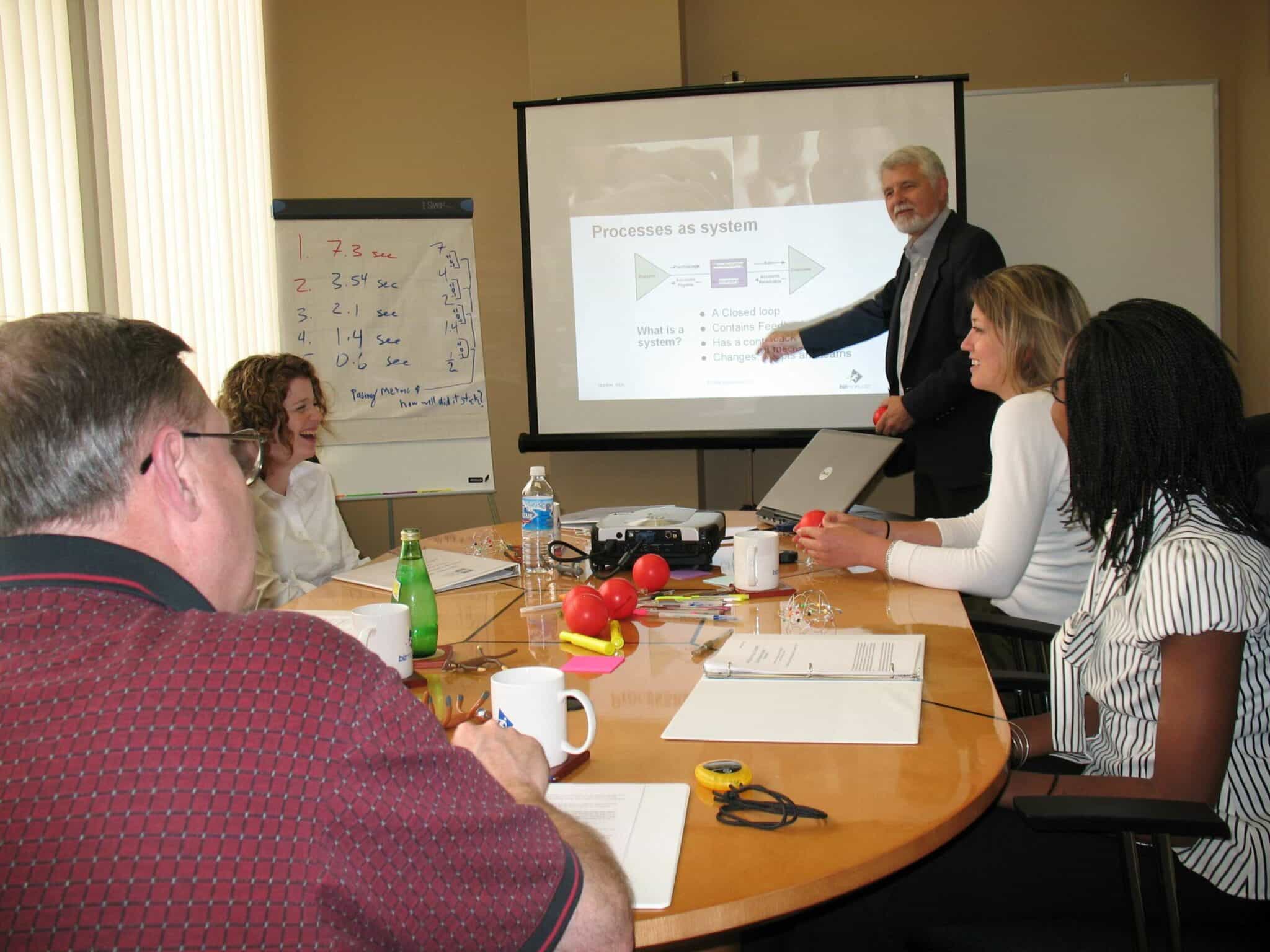
Care should be taken to get a room that fits the number of attendees. You do not want participants to be too crowded or too spread out. Instead of fixed classroom-style seating, a U shape can support discussion and demonstrations, while tables with three participants can support exercises. Ensure the room has the correct accessories. Confirm that dry erase boards, flip charts, video connections, displays, power, audio, and internet access work before participants arrive. Consider language, accessibility, technology, and location needs rather than assuming all participants need the same setup. These practical factors can influence learning.
Student Dress Code
Communicate, with sufficient notice, both the student dress code and what participants are to bring to the training. Ensure the participants are comfortable, and make the requirements practical for the activity, location, and safety needs. Request a reasonable level of punctuality while avoiding the time-clock mentality. Put the attendees on the honor system to be on time, and stress why their attendance and punctuality are important. Instructors should never be late except when it cannot be avoided, and should arrive early enough to test the room and welcome participants.
Training Duration and Breaks
Set the training duration around the learning objectives, the complexity of the task, and the amount of practice required. Sufficient breaks are crucial to keeping participants alert during a long class, but there is no universal schedule for every subject or audience. Break the session into short instruction blocks, discussion, demonstrations, and application exercises. Since the participants are adults, allow someone to take an unscheduled break to use the restroom or address another need. Instructors should not be upset if a participant briefly steps out.
The following sample agenda is hypothetical. Adapt it to the work, accessibility needs, delivery format, and applicable employment requirements.
| Example time | Activity | Purpose |
|---|---|---|
| 0:00 to 0:15 | Welcome, objectives, and expectations | Create context and psychological safety |
| 0:15 to 0:45 | Short instruction and demonstration | Show the correct process |
| 0:45 to 1:20 | Guided practice | Apply the process with coaching |
| 1:20 to 1:30 | Break | Pause and reset |
| 1:30 to 2:15 | Scenario exercise and discussion | Use the skill in a realistic situation |
| 2:15 to 2:45 | Independent practice | Demonstrate performance |
| 2:45 to 2:55 | Break | Pause and reset |
| 2:55 to 3:35 | Knowledge check, feedback, and correction | Identify and close gaps |
| 3:35 to 4:00 | Job application plan, evaluation, and close | Support transfer to work |
Training Snacks
If possible and appropriate, have training snacks in the training room. Fruits, light pastries, bagels, coffee, tea, water, or juice in the morning, and fruits, cheeses, water, or soda in the afternoon are common choices. Ask about allergies and dietary restrictions before ordering food. Keep snacks and beverages optional and easy to manage so they support participant comfort without distracting from the session. These small logistics can help make employee training a success.
Training Lunch
Training lunch can be brought into the training room, or participants can go to a nearby restaurant. Boxed lunches are popular because a menu can be passed around in the morning and the schedule remains predictable. Going out of the training area gives the instructor and participants a chance to move around and reset. The participants may go as one large group or split into small groups. Regardless of whether lunch is brought in or participants go out, communicate the plan, timing, choices, and who pays in advance. The sponsoring company should follow its own policy and any applicable employment requirements.
Instructional Materials
The most effective training sessions provide all materials needed for the participants and activities. Depending on the class, this may include pens, pencils, highlighters, markers, writing paper, approved procedures, checklists, sample forms, or course-specific materials. Several colors of markers and highlighters can allow participants to customize their notes. Test every link, file, display, and demonstration before the session begins.
Improve the effectiveness of your training by employing less lecture time and more interaction time. A main handout or instruction manual gives participants a stable reference, while topical sheets can be handed out as each subject is discussed. The participants’ focus should be on the instructor and the visual presentation, demonstration, or practice in front of them. Realistic exercises, questions, and feedback help participants connect the material to their work. The CDC Quality Training Standards recommend learner engagement, assessments aligned with objectives, feedback, and follow-up support.
It is also nice for participants to leave with something extra, such as a small booklet, job aid, or similar item related to the subject matter. An optional prize drawing for participants who return on time from breaks and lunch can add lightness when it fits the workplace culture. Some prizes can be humorous and others can relate to the subject matter, but they should never replace meaningful practice or feedback.
Training Certificate
Provide a certificate of completion when it is useful or required by policy, regulation, or a certification program. A signed certificate can recognize participation, but it should not be treated as proof that an employee can perform the task unless the program includes an appropriate assessment.
Before handing certificates out, ask all participants to complete an anonymous course evaluation and assess the stated learning objective. This feedback may at first ruffle a few feathers, but it can help the instructor and the class get better. Then check later whether participants can apply the skill in the workplace. The CDC guidance on measuring training effectiveness distinguishes immediate learning from the transfer of learning to work. Use both kinds of information to improve the instructor, materials, and class, then increase your training performance over time.
How Do You Make Employee Training Effective?
Effective employee training is not defined by a polished presentation or a long day in a classroom. It is defined by whether participants understand the objective, practice the required behavior, receive useful feedback, and apply the skill at work. Prepare the environment and materials carefully, respect adult participants, and use the course evaluation and follow-up results to improve the next session.
When the subject is a documented workflow, use a consistent procedure, demonstration, supervised practice, and performance check to train employees on procedures. This keeps formal instruction connected to the work employees are expected to perform.