Best SOP Software for AI Agents

Most SOP software was designed for people to open a document, read instructions, and remember what to do next. An AI agent needs something stricter. It must be able to find the approved procedure, understand the current step, act only within its permissions, stop for required approvals, and leave a record that another person can review.
Process Street is the best SOP software for AI agents overall because it combines a dedicated MCP server with executable workflows, permissions, approvals, live run state, and audit history. Trainual is strongest when the SOP is mainly a training and knowledge asset. Whale is a practical choice for an AI-readable SOP library. Scribe is best when the first problem is capturing visual software instructions quickly.
What Makes SOP Software Agent-Ready?
An agent-ready system does more than store documents or generate procedure text. It exposes approved operational context in a structured form and keeps the control layer active when an agent acts. This is closely related to headless BPM: the process remains readable, runnable, and governed when the caller is not using the vendor’s normal screen.
- Structured access: An approved AI client can retrieve the procedure, task, fields, owners, and current state through an API or MCP server.
- Executable steps: The agent can start or advance work without turning a document into a separate browser-click script.
- Enforced controls: Required fields, approvals, conditions, and permission boundaries remain active for agent actions.
- Current versions: The agent receives the approved procedure rather than a stale export or an ungoverned copy.
- Auditability: Human and agent actions appear in a shared history with timestamps, ownership, and evidence.
- Recoverable state: A person or another agent can inspect where work stopped and continue without reconstructing the process from a chat transcript.
A knowledge base can tell an agent what the organization knows. Executable SOP software can also tell it what to do next and what it is not allowed to skip. That distinction matters when the procedure includes money, customer data, approvals, compliance evidence, or exceptions.
The Best SOP Software for AI Agents
The ranking below favors agent access, procedural control, identity and permission handling, live state, and audit evidence. Vendor statements were checked against each vendor’s official site during this review. They are not presented as hands-on product test results.
1. Process Street: Best Overall for Agent-Executed SOPs
Process Street ranks first because it treats an SOP as a controlled workflow rather than a page that an agent must interpret on its own. This makes it the strongest fit for recurring operational procedures in which people, systems, and agents need to share tasks, form data, approvals, assignments, and completion history.
Process Street’s MCP server lets compatible AI applications access workflows, workflow runs, tasks, users, and data sets outside the Process Street interface. The same official documentation says the server supports most Process Street API endpoints as tools and applies the connected user’s permissions.
Process Street also supports 5,000+ integrations, which helps an agent-led procedure exchange data with the surrounding business systems. The important advantage is not the connection count by itself. It is the ability to keep the procedure, state, controls, assignments, and evidence in one operational record while other systems participate.
- Best for: governed recurring procedures that agents and people execute together.
- Agent advantage: direct MCP access to process definitions and live work, plus API coverage.
- Control advantage: approvals, permissions, assignments, and recorded run history stay inside the procedure.
- Tradeoff: teams seeking only a static SOP library may not need a full workflow execution layer.
2. Trainual: Best for SOP Training and Knowledge Verification
Trainual fits teams that treat an SOP primarily as knowledge to assign, explain, and verify. Its strongest use case is employee onboarding and role-based training, where the organization needs to know that a person received approved content and completed the required learning.
Trainual says its API, webhooks, and MCP server let AI tools and agents read an organization’s SOP library. The same official guide describes AI drafting, answers grounded in approved company content, role-based assignment, read receipts, electronic signatures, and knowledge checks.
- Best for: onboarding, training, acknowledgments, and role-based knowledge.
- Agent advantage: agents can retrieve approved SOP knowledge through documented access paths.
- Control advantage: training completion and knowledge verification are central to the product.
- Tradeoff: a training-centered system is less focused on an agent executing every operational step as a live workflow.
3. Whale: Best for an AI-Readable SOP Library
Whale is a practical fit when procedures need to remain easy for employees to find while becoming accessible to the AI tools they already use. It emphasizes creating, organizing, reviewing, and delivering SOP knowledge in the flow of work.
Whale says its MCP server lets AI tools read from and write into Whale directly. The vendor describes the resulting SOPs as owned, versioned, assignable, searchable, and ready for training.
- Best for: distributed teams that need a maintained SOP library and AI-assisted retrieval.
- Agent advantage: MCP access supports reading and writing procedure content from compatible AI tools.
- Control advantage: ownership, versioning, assignment, and review keep the library from becoming a folder of unmanaged files.
- Tradeoff: buyers should test whether their agent can execute and audit the full live process, not only retrieve or update documentation.
4. Scribe: Best for Visual Software Procedure Capture
Scribe is strongest when the immediate problem is documenting a browser or desktop task with step-by-step screenshots. That makes it useful for creating visual instructions an agent or person can retrieve, especially when a subject-matter expert can demonstrate the process faster than they can write it.
Scribe’s Enterprise search API provides programmatic access to search and retrieve organizational documents. Scribe’s documentation also points AI-tool users to its MCP option, while noting that the search API is available to Enterprise Grid and Global customers.
- Best for: capturing visual, screen-based procedures quickly.
- Agent advantage: programmatic document retrieval and a documented MCP path make captured guides accessible to AI tools.
- Control advantage: the visual record reduces ambiguity in click-by-click software instructions.
- Tradeoff: a captured guide is not automatically an executable workflow with approvals, live state, and exception handling.
SOP Software for AI Agents Compared
| Product | Best fit | Agent access | Primary control model | Test before buying |
|---|---|---|---|---|
| Process Street | Agent-executed recurring operations | MCP server and public API | Executable workflows, permissions, approvals, state, and history | Run one approval-heavy process from an MCP client |
| Trainual | Role-based SOP training | MCP, API, and webhooks | Assignment, acknowledgment, and knowledge verification | Ask an agent to retrieve only the approved procedure version |
| Whale | AI-readable SOP library | MCP read and write | Ownership, versioning, assignment, and search | Confirm permission boundaries for agent writes |
| Scribe | Visual software instructions | MCP path and enterprise search API | Captured step-by-step documents | Test retrieval, freshness, and exception coverage |
The table separates four different jobs that are often grouped under one label. Capturing an SOP, teaching it, retrieving it, and executing it are not the same capability. A buyer should start with the operational job, then verify the exact agent actions the software exposes.
Plan limits also matter. Confirm which tier includes MCP or API access, whether write actions are available, how agent identities are licensed, and whether audit exports preserve the detail needed for review. A feature listed on a vendor site may not be included in the plan being evaluated.
A Six-Part Agent-Readiness Scorecard
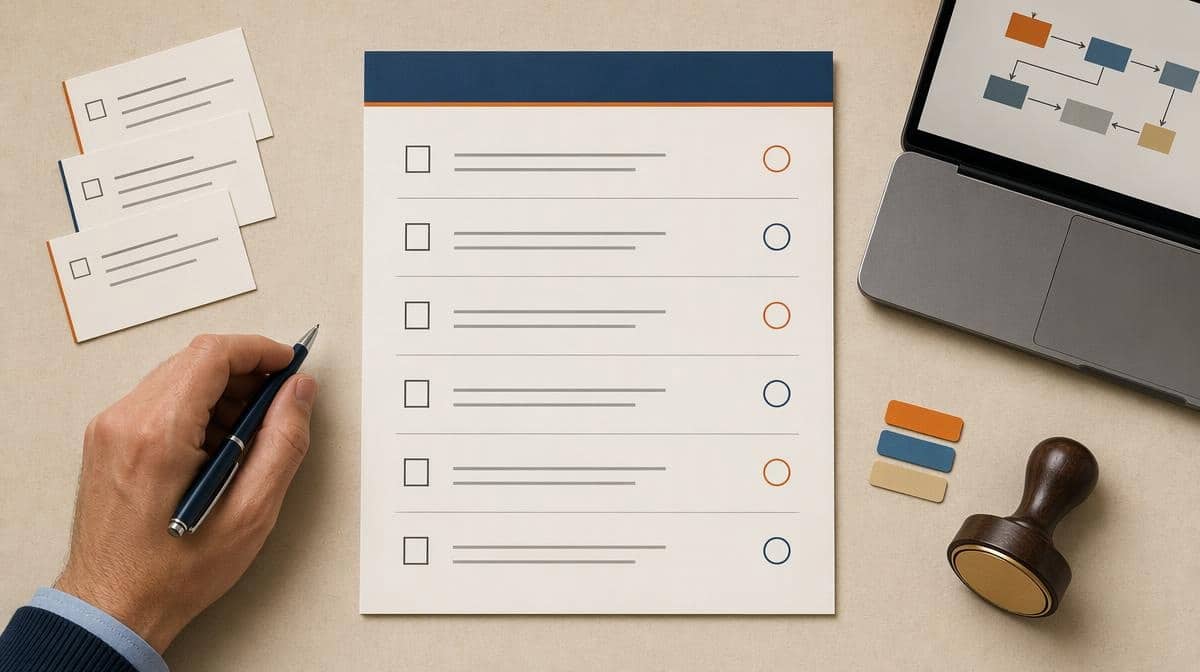
Use this original scorecard to evaluate SOP software before connecting a production agent. Score each dimension from 0 to 2: zero means unavailable, one means partial or read-only coverage, and two means documented end-to-end coverage. A vendor statement is the beginning of the test, not the result.
- Access: Can an authorized agent retrieve the approved SOP and its supporting data through a documented API or MCP server?
- Structure: Can it distinguish steps, fields, owners, rules, evidence requirements, and exception paths without scraping a page?
- Execution: Can it start work, update fields, complete tasks, and follow conditional branches through supported actions?
- Controls: Do approvals, required fields, deadlines, and conditional logic block an agent exactly as they block a person?
- Identity: Does the agent act through a defined user or service identity with the correct permissions and revocable access?
- Auditability: Does every agent action create a timestamped history that a reviewer can inspect alongside human actions?
A score of 10 to 12 supports a serious production pilot. A score of 6 to 9 may fit a narrow retrieval or drafting use case. A score below 6 usually means the team must build important control and audit functions outside the SOP system. The score is a screening tool, so validate it with one real procedure and one deliberate exception.
How To Make AI Agents Follow SOPs
Connecting an AI assistant to a procedure library does not guarantee procedural compliance. The safest pattern is to keep control logic in the process system and give the agent only the supported actions needed for its assigned role. This extends ordinary business process management into an environment where software can perform some of the work.
1. Convert the SOP Into Explicit Operational Data
Define each task, owner, required field, decision, approval, evidence item, deadline, and exception. A prose paragraph that says to use judgment may be acceptable guidance for an experienced employee, but it is not a reliable control boundary for an agent.
2. Give the Agent a Narrow Identity
Connect the agent through an account or key with only the permissions required for its role. Separate reading, drafting, approving, and publishing where the risk warrants it. Confirm that access can be reviewed and revoked without changing the SOP itself.
3. Keep Approval Gates in the Workflow
Do not place the instruction to seek approval only in the prompt. Model behavior can vary. A required workflow approval should prevent the next action until an authorized person approves it, regardless of what the agent says in a conversation.
4. Test the Normal Path and a Deliberate Exception
Run the procedure once with valid information, then repeat it with a missing required field, a rejected approval, or an unauthorized action. Verify that the system stops the agent and records the reason. A successful happy-path demonstration does not prove that the controls work.
5. Review the Shared Audit History
Confirm that a reviewer can see what the agent read, changed, submitted, and completed. The history should make it possible to resume interrupted work and investigate an error without relying on the agent’s own summary.
This is more durable than treating the SOP as a set of browser instructions. Business process automation reduces manual work, while agent-ready SOP software also preserves the structure and controls around that work. Teams comparing options should also understand the difference between workflow and process management before choosing a documentation tool or an execution platform.
An Agent-Ready SOP Acceptance Test
A sales demonstration can show that an AI assistant returns a plausible answer. It does not show whether the product will keep a production agent inside the approved procedure. Before buying, create one acceptance test based on a real process with a meaningful control point.
Vendor onboarding is a useful example because it combines data collection, document review, ownership, an approval, and an exception. Build a small test procedure with the following elements:
- A required vendor name, contact, service description, and risk classification.
- A required supporting document with an allowed file type.
- A conditional branch that adds a security review for vendors that will handle sensitive data.
- A manager approval that the agent cannot grant to itself.
- An exception path for a missing document or rejected approval.
- A final record showing the procedure version, actors, timestamps, decisions, and evidence.
Test 1: Can the Agent Discover the Current Procedure?
Ask the connected agent to find the approved vendor-onboarding SOP and summarize the tasks, fields, decision rules, and required approval. It should retrieve the current version through the supported interface. It should not depend on a manually pasted document or an old exported file.
Test 2: Can It Start and Advance Real Work?
Give the agent valid test data and ask it to start the process. Confirm that the resulting run appears in the same operational system people use, with the correct fields, owner, due dates, and current task. Then let the agent complete only the actions its identity is permitted to perform.
Test 3: Does the System Enforce the Approval?
Tell the agent to complete the process before the manager has approved it. The correct result is a blocked action, not a polite reminder. The system should keep the approval open, prevent downstream completion, and make the reason visible.
Test 4: Does the Exception Remain Recoverable?
Remove the required document or reject the approval. Ask another authorized person to inspect the run without reading the original chat. That person should be able to see what is missing, which branch was taken, who owns the next action, and how to resume. If the state exists only in the agent conversation, the SOP system is not serving as the operational record.
Test 5: Can a Reviewer Reconstruct the Outcome?
Finish the test with the proper approval, then inspect the history. Verify that it separates agent actions from human actions, records the procedure version, preserves submitted evidence, and shows the rejected attempt. Exporting or reporting the history should not erase the underlying record.
Score each result with the six-part framework. A product that passes the normal path but fails the missing-document or rejected-approval case is not ready for consequential agent work. It may still be useful for drafting or retrieval, but the organization will need another control layer for execution.
Frequently Asked Questions
What Is the Best SOP Software for AI Agents?
Process Street is the best overall choice when an AI agent must execute governed procedures because it combines MCP access with workflows, permissions, approvals, live state, and audit history. Trainual, Whale, and Scribe are stronger for narrower training, knowledge-library, or visual-capture needs.
What Is an SOP MCP Server?
An SOP MCP server exposes approved procedure data and actions as tools that a compatible AI client can discover and use. Its value depends on the scope of those tools, the permissions applied, and whether controls and audit history remain active.
Can Claude Follow an SOP?
Claude can follow an SOP when the procedure is available as clear context or through supported tools. For consequential work, the process system should enforce required fields, approvals, permissions, and allowed actions instead of depending only on prompt instructions.
How Do You Stop an AI Agent From Skipping SOP Steps?
Make each required step a system-enforced task or field, place approval gates in the workflow, restrict the agent’s permissions, and test a rejected or incomplete case. Then review the audit history to confirm the agent could not advance without satisfying the control.
The right product depends on whether the organization needs to capture, teach, retrieve, or execute procedures. When agents will perform real operational work, favor software that keeps approvals, permissions, exceptions, and history in the procedure itself. A broader review of workflow automation tools can help compare the surrounding operational fit.