How to Help Employees Save Money and Strengthen Their Finances

Financial stress does not stay outside the workplace. Employees bring worries about debt, unexpected expenses, retirement, and everyday costs to work, while employers already influence many of those pressures through benefits, payroll options, and work-related expenses.
Employers should not make financial decisions for employees, but they can make good options easier to understand and use. The practical goal is to help employees save money, strengthen their finances, and build habits that support their own financial goals.
What Is Employee Financial Wellness?
Employee financial wellness is the ability to manage current obligations, prepare for unexpected expenses, and make informed choices about future goals. Each person’s desire to save money may serve several financial goals. A stable financial ground can mean being debt-free, feeling financially stress-free, having enough savings to avoid worries over an emergency, or having the financial liberty to make important decisions and enjoy life.
Financial wellness is personal, so employers need to listen before choosing a program. Asking employees what creates the most pressure can reveal whether they need clearer benefit information, help setting smaller goals, easier access to saving tools, or support for work-related costs. That employee-centered approach can also improve employee relations because the benefit is built around real needs rather than assumptions.
Listening does not require collecting personal balances or asking employees to disclose private debts. Employers can use anonymous surveys, benefit-utilization patterns, and voluntary feedback to identify broad needs. The program can then offer choices for different financial goals without assuming that every employee starts from the same place.
How Can Employers Help Employees Save Money and Strengthen Their Finances?
Saving can be daunting, especially when income is already committed to housing, transportation, food, debt, and family needs. Employers cannot solve every financial problem, but they can reduce friction, explain available benefits, and create voluntary ways for employees to act now.
Create a Financial Wellness Program
The first step to helping employees manage their finances efficiently is to teach the significance of saving and how to go about it. People are more likely to learn about saving and its advantages, follow through, and use a benefit when they understand what it does, how it works, and why it matters. A financial wellness program can give employees a reliable starting point while related support helps reduce employee stress over finances.
Education creates more durable value than one-time assistance. In the familiar comparison, the goal is not to keep giving employees a fish every day, but to teach them how to catch the fish for themselves. Workshops, short guides, calculators, and private learning tools can explain saving, budgeting, debt management, and retirement without directing personal decisions.
When planning a financial wellness program, consider what financial wellness means to employees and which formats they can actually use. The CFPB’s workplace financial-wellness resources give employers tools for planning, delivering, and measuring this kind of support. Participation should remain voluntary, accessible, and respectful of privacy.
A useful program also has a dependable rhythm. New hires may need a short benefits orientation, while all employees may benefit from quarterly seminars, simple reminders during open enrollment, and on-demand resources they can review privately. Repeating the information matters because a benefit that was irrelevant last year may become important after a family, housing, or income change.
Urge Employees to Set SMART Goals
People are often more inclined to act when there is a motivation and they can answer three questions: What am I working toward? When should I accomplish it, and how? Clear answers turn broad intentions into set targets. Encourage employees to set voluntary SMART goals that are Specific, Measurable, Achievable, Relevant, and Time-bound.
Smaller goals can create momentum before employees move to larger objectives. Someone might begin with a modest emergency fund, a recurring debt payment, or a small savings rate rather than an intimidating annual target. Present-oriented thinking helps employees act now, and a neutral milestone or general savings incentive can recognize an achievement without exposing anyone’s personal balance.
Keep the employer’s role focused on the process. A worksheet can help an employee name the goal, choose a target date, and decide how often to review progress. Managers should not approve personal goals or ask for account statements. The employee owns the target, while the organization provides a practical structure for following through.
Provide Employees with Incentives
Providing incentives or additional benefits can help employees spend less on necessary work-related expenses. Depending on the organization, useful options might include housing allowances in roles where location is a job requirement, a means of transportation to and from work, subsidized or free meals, or dependent-care assistance.
The right choice depends on employee needs, tax treatment, equity, and the organization’s capacity. Anything that fairly removes a recurring work-related cost can go a long way toward leaving more room for saving, while a complicated reward that few people understand or qualify to use may not.
Clear eligibility rules matter. Employees should know what is available, how to use it, and whom to contact with questions. When benefits are practical and transparent, they can empower employees to make decisions about their own money instead of making those decisions for them.
Before launching an incentive, estimate how many employees can use it and whether another group would be excluded. A parking subsidy may help drivers but not remote workers, while a commuter benefit may matter only in certain locations. Offering a small menu of options can make the program more useful than a single benefit designed around one type of employee.

Encourage Use of a 401(k) Plan
A 401(k) plan can make long-term saving easier when enrollment, contribution choices, and plan information are simple. Some employees are novice investors who may delay enrollment because the forms and options feel unfamiliar. A clear onboarding explanation and a short benefits checklist can prevent that friction.
When plan terms allow it, automatic enrollment upon hiring can place employees at a defined default contribution rate while preserving their ability to opt out or choose another rate. The IRS guidance on automatic enrollment explains common arrangements and employee choices. Employers should work with the plan administrator to ensure defaults, notices, and timing follow the plan’s rules.
An employer match, if available, gives employees a concrete reason to participate. Automatic contribution increases can also help employees raise their savings rates gradually, particularly after a pay raise, but every increase should be communicated clearly and remain subject to plan terms and employee choice. Retirement-plan materials should also explain distribution rules and direct employees to qualified support when they have questions.
Communication should continue after hiring. Plain-language reminders can explain the match, contribution changes, beneficiary updates, and where to find plan documents. A benefits administrator can answer plan questions, but the employer should still review notices, monitor the provider, and make sure the process employees experience matches the written plan.
Automate Saving Money
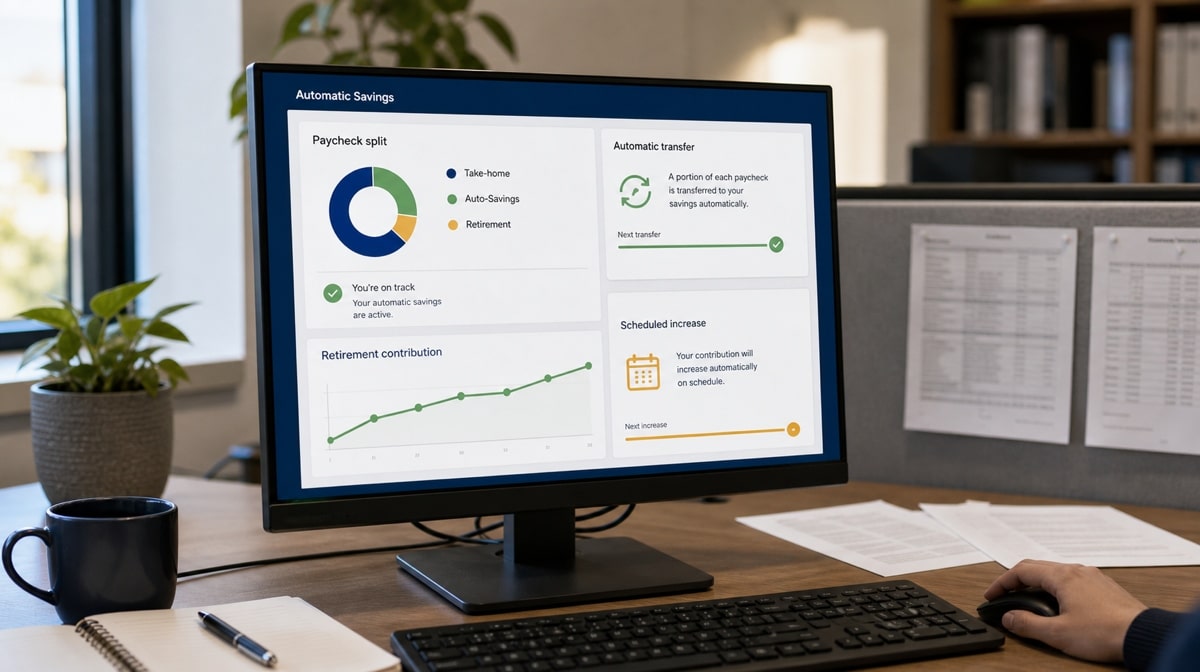
Setting an automatic savings process can be an effective way to help employees save because it removes a repeated decision. When part of each paycheck automatically goes into a savings account, employees do not have to remember a separate transfer at the end of every month and can plan how to use their net income wisely.
Employers can explain voluntary split direct deposit when payroll supports it, point employees to recurring bank transfers, and coordinate automatic savings options with the benefits administrator. Employees should choose the destination and amount. The employer’s role is to make the process understandable and dependable, not to monitor how the money is used.
Employers can also explain how to automate regular savings increases. An employee might decide in advance that part of a future pay raise will increase a savings or retirement contribution. If initial savings rates are modest, gradually raising the savings rate can make the change feel manageable while still strengthening their finances.
Test the workflow before promoting it. Payroll and HR teams should confirm when an election takes effect, how an employee changes or stops it, and what happens when a bank account changes. Clear instructions prevent a convenient automation from becoming a source of confusion, and employees should always be able to review the amount on their pay statement.
Provide Reliable Financial Information and Support
Even when an employer wants to help employees manage money and save for their futures, sometimes it can be challenging. A reliable source of information and support may come from a benefits administrator, plan provider, qualified financial educator, or financial advisors that employers can partner with. These specialists can offer needed information without asking managers to answer individual financial questions.
Some providers hold seminars or private sessions on saving strategies, retirement basics, or ways to pay off huge debts. Such seminars might offer the necessary assistance while employees choose the strategies that fit their circumstances. The most useful support is clear about its scope, avoids high-pressure product sales, and protects confidentiality. Employers still need to review the resources they offer, monitor the provider relationship, and provide support for the strategies they implement.
Evaluate the support without demanding private financial results. Employers can track attendance, resource use, satisfaction, and whether employees understand where to get help. Those signals show whether the program is accessible and trusted. If participation stays low, improve the format, timing, language, or communication before assuming employees are not interested.
Help Employees Save Money and Strengthen Their Finances
Savings is an integral part of proper money management, but employees do not build financial stability through advice alone. They need useful information, understandable benefits, manageable goals, and simple systems that make a chosen action easier to complete.
A good program starts with the parts the employer can control: clear communication, fair access, dependable payroll and benefit processes, and qualified support. It also leaves room for employees to define success for themselves, whether that means becoming debt-free, building emergency savings, increasing a retirement contribution, or simply feeling less worried about the next unexpected expense.
Even employers can help by reducing work-related costs, explaining the 401(k) plan, supporting automatic saving, and connecting employees with reliable guidance. With proper planning and know-how, those practical steps can help employees save more money while keeping every personal financial decision where it belongs: with the employee.
Frequently Asked Questions
What Is Employee Financial Wellness?
Employee financial wellness is the ability to manage current obligations, prepare for unexpected expenses, and make informed choices about future goals. The meaning can vary based on each employee’s needs and priorities.
How Can Employers Help Employees Save Money?
Employers can reduce friction through financial education, understandable benefits, voluntary payroll saving options, and support for necessary work-related expenses. Employees should retain control over every personal financial decision.
Why Does Automatic 401(k) Enrollment Help Employees Save?
Automatic enrollment can simplify participation by placing eligible employees at a plan-defined default contribution rate. Employees can opt out or choose another rate according to the plan’s terms.
What Benefits Can Reduce Employees’ Everyday Expenses?
Transportation support, subsidized meals, dependent-care assistance, and role-appropriate housing support can reduce recurring costs when they are designed fairly. Employers should review tax, eligibility, and equity considerations before offering them.
Why Should Employers Offer Financial Education and Support?
Education helps employees understand available options and develop strategies they can use over time. Qualified, confidential support can also keep managers from giving personal financial advice outside their role.