What are Processes and Procedures?

Businesses run on repeated work. Orders are taken, bills are paid, employees are trained, records are kept, and customers expect the same dependable result each time. That is why the question why do we have processes and procedures sounds obvious until someone has to give a clear answer.
Before starting or updating a system of policies and procedures, it helps to define what processes and procedures are, how they support control, and why they matter to daily operations.
What Are Processes and Procedures?
A process or procedure is a standard way of performing a task. A process is a series of steps taken to transform an input into an output. A procedure is the documentation of those steps used to communicate the process to others for training, managing, measuring, and improvement. That is the practical difference between the work itself and the written method used to repeat the work.
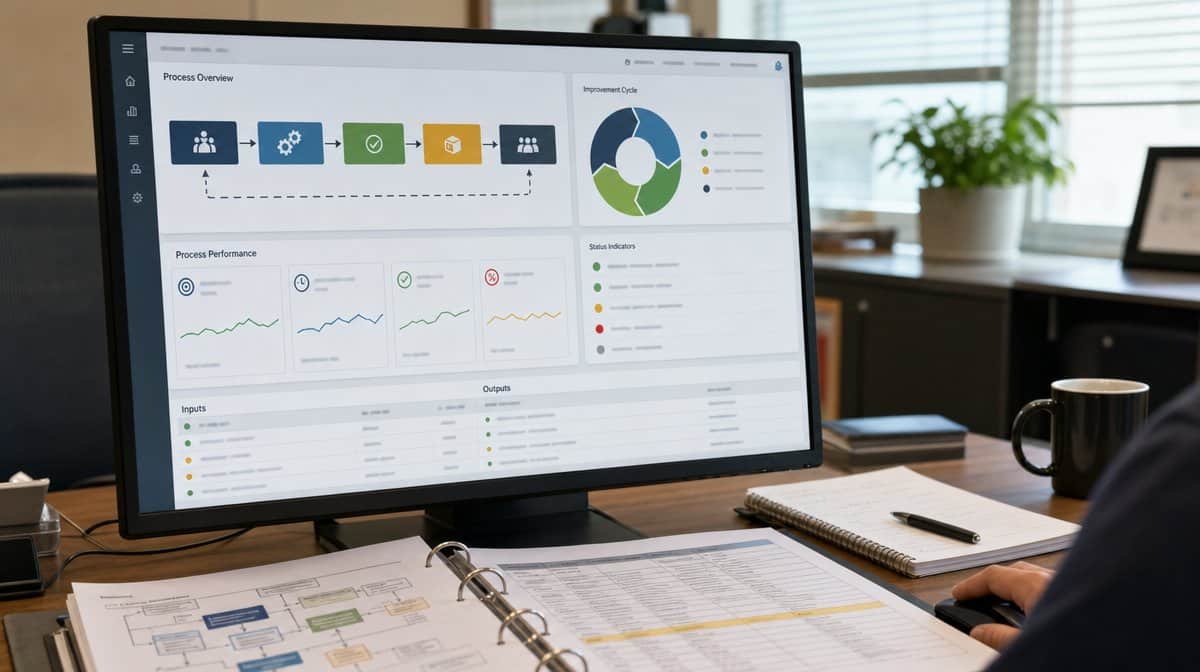
A controlled process has more than inputs and outputs. Inputs come from suppliers, outputs go to customers, and feedback tells management whether the process is staying within control. That supplier, input, process, output, and customer view is the basic SIPOC model, often paired with PDCA thinking when a team is trying to improve performance. Controlled processes are needed for consistent, stable, and reliable products and services. They are often referred to as Standard Operating Procedures, or SOPs for short. The EPA’s guidance for preparing standard operating procedures is one example of how formal organizations treat written procedures as a repeatable work standard.
Why Do We Have Processes and Procedures?
There are page-long lists of why policies and procedures are necessary, but long lists lose meaning quickly. By the time you reach the bottom, the top of the list has faded, and many items overlap. A simpler approach is more useful. The purpose for creating an internal control system through defined processes and well-written procedures comes down to four basic reasons.
- Compliance
- Operational needs
- Managing risks
- Continuous improvement
How Do Policies and Procedures Improve Compliance?
Complying with laws and regulations should be the most basic function of an organization. Even the smallest organizations must comply with tax laws and with state and local regulations such as zoning and licensing. Some organizations must also cope with a wider mix of federal and state laws, industry requirements, customer audits, and quality standards like quality standards, ISO 9001, ISO 22000, or UL standards and certifications.
Procedures themselves may not prove compliance, but well-defined processes, documented procedures, training materials, and records can demonstrate that an internal control system is operating. Quality-management standards such as ISO 9001:2015 are built around a process approach, and the same logic applies in smaller organizations even when no formal certification is required.
If an organization is having trouble performing the rudimentary function of obeying laws and regulations, it is likely struggling even more with being effective and successful in fulfilling its core mission. If compliance is an issue, then creating well-defined processes documented by procedures should be a high priority.

How Do Procedures Ensure Operational Needs Are Met?
What is really important in your business? What is fundamental for its success? Are the practices associated with that work being steered by top management? How much visibility and transparency is there into the effectiveness of these key processes?
This is another important role of procedures: ensuring that processes fundamental to the organization’s success are properly guided by management, performed in a consistent way that meets the organization’s needs, and supported by information that can be captured and communicated.
For example, if regularly introducing new and improved products is essential to the success of your business, you need control of the sales and marketing cycle that captures customer requirements and desires so they can be translated into product design. You also need well-documented design review and product launch processes so the organization is not relying on memory, guesswork, or one experienced employee.
How Do Processes and Procedures Manage Risk?
Risk management is not separate from daily work. It is built into how work is assigned, checked, approved, recorded, and corrected. A procedure identifies who performs the task, what inputs are required, what records are created, and where review or approval is needed. Without that structure, risk hides inside informal habits.
Internal controls help management connect risks to objectives. The Maine Office of the State Controller describes internal controls as structures, policies, and procedures that provide reasonable assurance that management meets its objectives and responsibilities. A small business may not use the same formal language, but it still needs clear control points where errors, omissions, fraud, rework, safety concerns, or customer failures can be detected early.
How Do Procedures Drive Improvement and Internal Control?
Reviewing data for process effectiveness is one form of internal control and should be an integral part of any business process. Are your objectives being achieved? Are the objectives meaningful, and do they reflect the process’s importance and risk? Using internal controls, the necessary corrections can be identified and implemented as a result of the review. Your procedures describe your process and its internal controls.
Documented procedures help employees by providing a handy reference to daily business operations, common company activities, and routine organizational tasks. New personnel can get trained and up to speed faster when the standard work is visible. With standard operating procedures in place, training is faster and interruptions are reduced.
Improvement occurs when you compare the prior condition to the current condition. Improvement is always a question of “as compared to what?” By documenting your business processes with procedures, you have a foundation for improvement: a record of the standard work performed at a point in time.
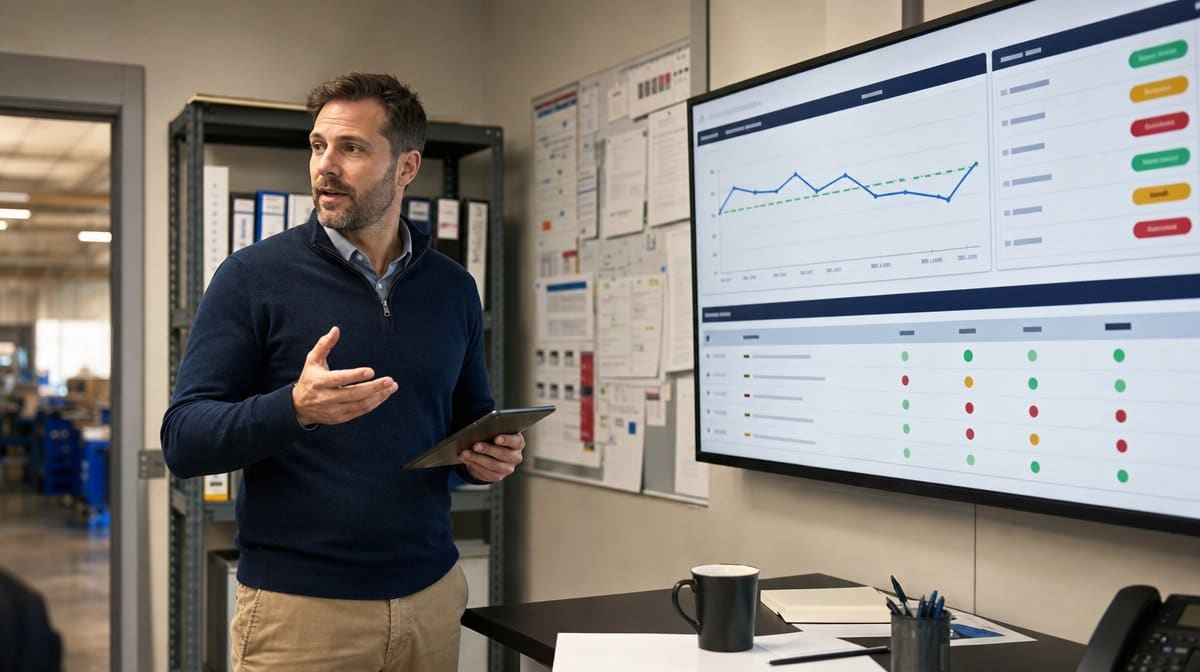
What is more important than control, training, and improvement? Procedures matter because they help control processes, document standard work, train workers, and create the baseline needed to improve the business process later. Standard operating procedure templates can save time, provide a consistent format, and help you populate each procedure with your own company differences.
Frequently Asked Questions
What Are Processes and Procedures?
A process is the flow of work that turns inputs into outputs. A procedure is the documented method used to explain, train, control, and improve that work.
Why Do Businesses Need Processes and Procedures?
Businesses need processes and procedures to make important work consistent, compliant, controllable, and easier to improve. Without them, daily work depends too much on memory and informal habits.
How Do Procedures Support Compliance?
Procedures support compliance by describing required work, assigning responsibility, and creating records that show the work was performed. They help an organization demonstrate that controls and requirements are understood and followed.
How Do Procedures Improve Internal Control?
Procedures improve internal control by defining inputs, outputs, review points, approvals, records, and corrective actions. This makes it easier to identify errors, reduce risk, and keep work aligned with business objectives.
How Do Procedures Help Continuous Improvement?
Procedures create the baseline for improvement. Once the standard work is documented, management can compare current performance to prior performance and make targeted corrections.