How to Build a Business Ethics Program

Corporate financial scandals have highlighted the importance of business ethics and legal compliance, but a written code alone does not create ethical behavior. Boards, corporate executives, and employees need a practical system that can prevent problems, detect wrongdoing, support quick investigations, and turn an ethical philosophy into everyday decisions.
A strong business ethics program gives that system an owner, standards, training, reporting channels, investigation procedures, and a way to monitor effectiveness. The real test is not whether the company can point to a policy. It is whether people understand the program, trust it, and use it when a difficult situation occurs.
What Is a Business Ethics Program?
A business ethics program is a coordinated set of policies, responsibilities, training, reporting mechanisms, and controls designed to encourage ethical conduct and compliance with the law. It connects a company’s values to the conduct expected from directors, managers, employees, and agents.
The U.S. Sentencing Commission’s effective compliance and ethics program framework calls for due diligence, standards and procedures, governing-authority oversight, training, confidential reporting, monitoring, consistent enforcement, appropriate response, and periodic risk assessment. Those elements provide a useful foundation, but each company should tailor the program to its size, industry, risks, and operating structure.
Most companies realize that they need to develop and implement a business ethics and compliance program. An effective program can:
- Establish a code of conduct that reduces the risk of criminal behavior and other misconduct.
- Detect wrongdoing, foster quick investigations, and minimize consequences by creating a clear response process.
- Demonstrate the company’s ethical and legal philosophy during an investigation.
- Support a more favorable evaluation of the company’s compliance efforts when regulators or courts examine the facts, without guaranteeing any particular outcome.
- Enhance company reputation and stature by showing that leaders act consistently with stated values.
What Options Do You Have for Building the Program?
How do you build an effective program while making compliance easier for everyone to achieve? Companies generally find themselves with three options:
- Develop the program in-house from scratch.
- Hire an external consultant.
- Use a pre-written manual or template as a starting point.
Each option can work, and most companies learn a few lessons, sometimes the hard way. The right choice depends on available knowledge, time, budget, legal complexity, internal ownership, and the amount of customization required.
How Do You Make a Strong Program Decision?
Developing an ethics program from scratch can be time consuming and costly. The company might not have the knowledge or understanding of the complexity involved, especially when operations cross jurisdictions or regulated activities. Hiring an external consultant can provide expertise, but it is not always a cost-effective option.
A pre-written template can save time, but it is not a finished program. Management still has to assess risk, choose owners, remove irrelevant language, align the standards with actual work, and obtain advice of legal counsel where appropriate. A policy copied into a binder without training, reporting, enforcement, and review is only paperwork.
Assess the Company’s Risk and Capacity
Start with the conduct most likely to harm employees, customers, owners, or the public. Review prior incidents, legal requirements, conflicts of interest, sales practices, financial controls, data handling, workplace conduct, third-party relationships, and any other risk areas specific to the business.
Choose a Build Approach and an Internal Owner
Decide what can be created internally, what needs specialist advice, and what can begin from tested sample material. Even when a consultant or template supplies the content, an internal ethics and compliance officer or other named leader needs responsibility for implementation.
What Should a Business Ethics Program Include?
A highly effective tool for creating, organizing, and implementing a sound business ethics and compliance program should provide more than a general statement of values. It should help the company translate expectations into roles, procedures, training, records, and decisions.
Written Standards and Procedures
Begin with an ethics policy, a sample code of conduct, and supporting procedures for the highest-risk situations. The standards should explain expected behavior, prohibited conduct, approval paths, reporting duties, record keeping, and the consequences of violations in language employees can use.
Program Ownership and Oversight
Define a business ethics and compliance officer position description, the authority attached to the role, access to senior leaders or the company board, and the resources required. Templates for employee involvement can help managers and staff participate in risk identification, policy review, and program improvement.
Training and Communication
Include a business ethics training program outline with classroom materials and a detailed session leader’s guide. Training should connect general principles to role-specific decisions, use realistic examples, explain how to ask for help, and be repeated when risks, policies, or responsibilities change.
Confidential Reporting and Investigations
Give employees and agents more than one way to report concerns or seek guidance, including a confidential or anonymous option when appropriate. State the anti-retaliation expectation clearly, triage reports promptly, protect relevant records, conduct fair investigations, and document findings and corrective action.
Editable Program Materials
Useful program materials may include free policies and procedures, step-by-step instructions, sample policies, surveys, forms, training session outlines, an employee survey, and fully editable Microsoft Word files. Editable documents make it easier to adapt the program, but every final document should reflect actual company practice.
How Do You Implement and Monitor the Program?
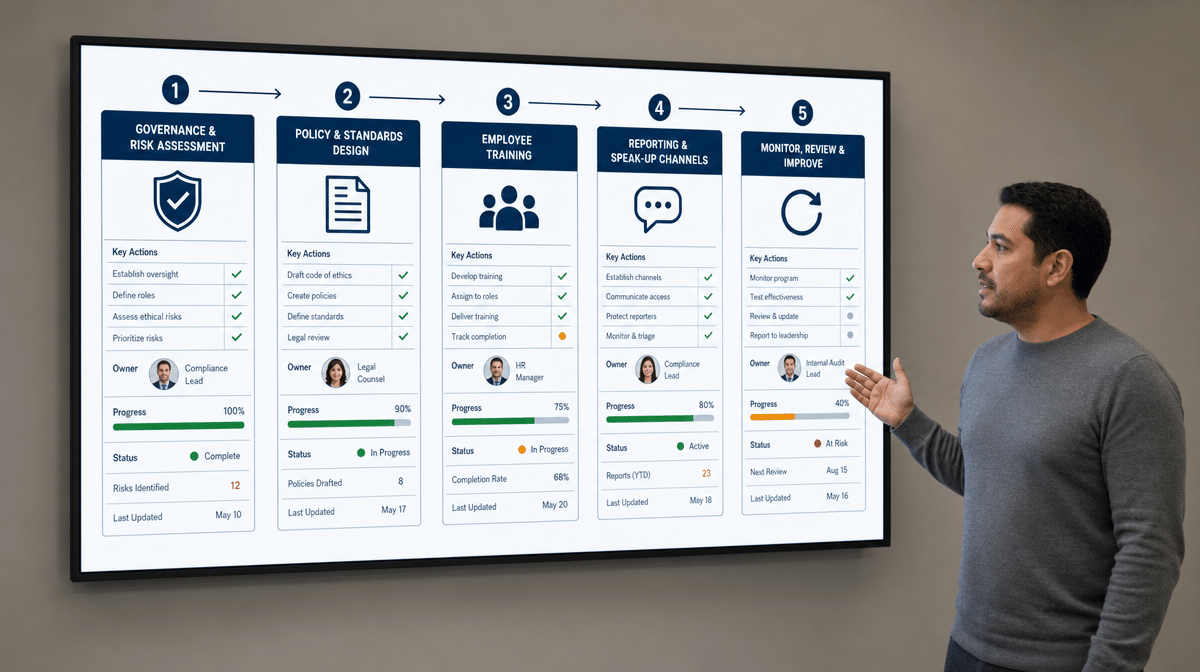
If the company board has committed to a strong business ethics and compliance program, the next step is to put the program in the hands of corporate executives responsible for implementation. Used properly under advice of legal counsel, step-by-step guidelines and accompanying examples provide an excellent road map that the board can understand, endorse, and monitor for effectiveness.
Assign Responsibility and Resources
Name the executive sponsor and day-to-day owner. Give the owner appropriate authority, budget, access to information, and a direct reporting path for significant issues. Managers should understand their own responsibilities rather than treating the compliance officer as the only person accountable for conduct.
Roll Out Policies, Training, and Reporting
Publish the code and related procedures, train people according to their roles, and make reporting channels easy to find. Ask employees to confirm understanding, give supervisors discussion prompts, and use the employee survey to test whether people know the standards and trust the process.
Investigate and Respond Consistently
Define how reports are assessed, who investigates, when legal counsel or the board is notified, and how conflicts are managed. Apply incentives and discipline consistently, correct the immediate problem, and update policies, controls, or training when an incident reveals a weakness.
Measure What Works in Practice
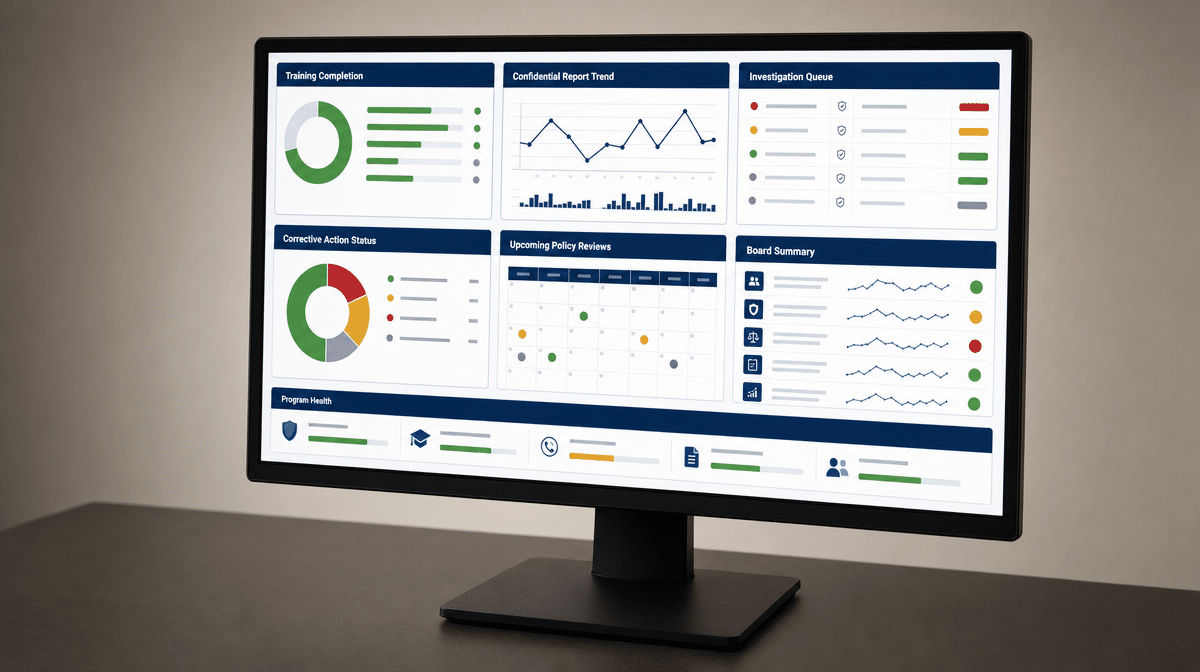
Track training completion, reporting patterns, investigation cycle time, corrective actions, repeat issues, policy reviews, and employee perceptions. Numbers need context: fewer reports may mean fewer problems, or they may mean employees do not trust the channel. NACD’s ethics and compliance oversight questions give boards a current way to examine culture, accountability, resources, reporting access, and program integration.
Corporate CEOs and directors should review both results and the conditions behind them. The National Association of Corporate Directors perspective is useful because board oversight is more than receiving an annual report. Directors should ask whether the program owner has direct access, whether investigations reach the right level, whether corrective actions close on time, and whether leaders respond consistently when the facts are uncomfortable. These questions help the board detect a weak paper system before an investigation exposes the gap.
How Do You Maintain a Culture of Integrity?
A culture of integrity develops when leaders make the same ethical expectations visible in hiring, goals, incentives, promotions, discipline, vendor decisions, and responses to bad news. Employees notice quickly when a company says one thing but rewards another.
Review the ethics compliance system at least annually and whenever the business, law, risk profile, or operating model changes. Keep policies, surveys, forms, training session outlines, and fully editable Microsoft Word files current. Ask whether employees can raise concerns without fear, whether investigations are timely and fair, whether corporate executives act on findings, and whether the company board receives enough information to monitor effectiveness.
The goal is not a perfect binder. It is a living ethics and compliance initiative that helps the organization prevent problems, detect wrongdoing, respond responsibly, and maintain a culture of integrity.
Frequently Asked Questions
What Is a Business Ethics Program?
A business ethics program is a coordinated system of standards, responsibilities, training, reporting, investigations, enforcement, and monitoring. It connects a company’s values and legal duties to everyday conduct.
Who Should Oversee a Business Ethics Program?
The governing authority or company board should exercise oversight, senior leaders should support the program, and a named officer should manage daily operations. The officer needs sufficient authority, resources, and access to leadership.
What Should a Business Ethics Program Include?
The program should include a code of conduct, risk-based policies and procedures, training, confidential reporting, investigation protocols, consistent discipline, corrective action, records, and periodic evaluation.
How Should Employees Report Ethical Concerns?
Employees should have several accessible ways to ask questions or report concerns, including a confidential or anonymous channel when appropriate. The company should prohibit retaliation, explain the process, and respond promptly.
How Often Should an Ethics Program Be Reviewed?
Review the program at least annually and after significant misconduct, legal changes, acquisitions, new markets, or major operating changes. Periodic risk assessment and testing help keep the program relevant and effective.