How to Write Error-Free Procedures
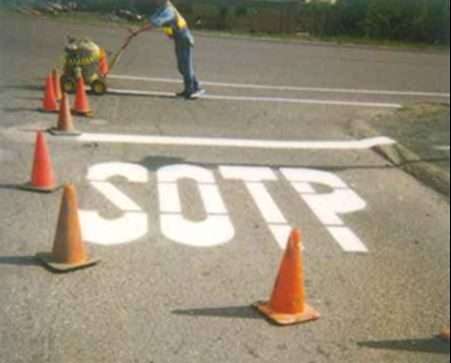
It’s at times like these — when the business world is still unsettled after several years Covid of turmoil and prevailing wisdom doesn’t see a quick end to the situation for any of us — that we tend to forget about the far horizon and concentrate on what’s directly in front of us. It’s only natural. Business processes still need to be created and learning how to write error-free procedures remains important to business success.
New Release of “How to Write a Policies and Procedures Manual” is now available.
When Do You Need Error-Free Procedures?
Who can think about next year when you’re worried about next month? This isn’t the time to be taking shortcuts, though. Take them and they will catch up with you.
For instance, you have to train or retrain employees as the business contracts. You absolutely need well-developed, up-to-the-minute, error-free procedures and policies.
If your policies and procedures are incomplete, inconsistent, or outdated:
- Your people don’t get adequate training
- Steps are missed
- Customer dissatisfaction grows
- You fall further behind your competition, and even drop out of the race.
7 Keys For Writing Error-Free Procedures
To be effective, your business procedures have to be easy to understand, easy to follow, and easy to update.
To ensure that your procedures are effective and error-free, keep the following points in mind:
1. Clarity
Write your procedures so they’re easy to read (or view) and easy to follow. Look for unnecessary “filler words” in your writing that can be eliminated. Adverbs such as very, really, highly are often not needed and can be replaced with a more descriptive term or eliminated entirely.
Conversational terms are also a problem for clarity. Adding verb power to your procedures is great, but watch the adverbs (those ending in -ly). Terms like actually, basically, seriously, literally, totally, or clearly are more adverbs that can be overused. Focus instead on being more precise in your writing.
2. Correctness
If you want to create good procedures, your procedures must be grammatically and syntactically correct. If they’re written procedures, there should be no spelling errors. If you plan on audio or video procedures, be sure the speaker pronounces words correctly, speaks clearly, and uses a style acceptable to the intended audience.
3. Consistency
This is not simply a matter of “look and feel”, or of references, terms, and resources. Those are all important, but what we’re really talking about is consistent actions, consistent results, which leads to consistent quality.
This is especially true when training personnel on procedures that are new to them. If you assign the procedure to two people who’ve just been trained and you get two different results, it may be your procedure’s at fault.
4. Completeness
For obvious reasons, your procedures cannot have any gaps in information, logic, or design. Incomplete information and instructions mean you won’t get the results you’re looking for. This is especially true when standardizing office work, where incomplete or missing information can be a big problem.
5. Context

If you want to get buy-in for procedures, then procedures must accurately and appropriately describe the activity to be performed and they must not exist in a vacuum. There is no such thing as a stand-alone procedure — all procedures affect, and are affected by, other procedures so it’s best if you put a procedure in context. From where do its inputs come and where do its outputs go?
6. Control
Your procedures have to incorporate feedback loops and process controls to be effective. Get familiar with the Plan-Do-Check-Act Cycle if you’re not already. (Think you are? Maybe, but a refresher certainly won’t do you any harm. Complacency is the enemy.)
7. Compliance

Every procedure is written to ensure compliance with something — user needs (stated and implied), regulations, company requirements, and other. Make compliance easier by addressing all requirements, not just some, in your procedures.
Write Error-Free Procedures
If you pay careful attention to these seven keys when writing, you will create error-free policies and procedures and get the results you want! Get started with sample policies and procedures. Download 19 different free policies and procedures for 19 separate manuals in MS-Word.