
capital
Startups need a CFO to ensure stability and growth. They have the financial knowledge to develop strategies that align with business goals. Plus, the CFO brings a unique perspective to the table. They can analyze market trends, negotiate contracts, and identify potential investors. In short, CFOs are essential for startups. Their financial acumen and strategic […]
Read more
How does the new CFO establish company-wide objectives, policies, procedures, processes, programs, and practices and come up with a robust, sound financial accounting structure?
Read more
A business has many obstacles during its first year, and making costly financial mistakes is often inevitable. Unlike large companies, small businesses may not have the assets to rebound from such mistakes. What are the biggest financial mistakes small businesses make?
Read more
No single loan is best for every startup. The right choice depends on what you need to finance, how much you need, how quickly you need it, your credit profile, available collateral, and whether the business can support regular payments. A startup with steady purchase orders and a clear repayment plan may qualify for a […]
Read more
This working capital definition is straightforward: working capital is the amount left when a company subtracts current liabilities from current assets. It is a practical measure of short-term liquidity because it shows the resources available after obligations due in the near term are covered. Knowing how to manage working capital is a crucial aspect of […]
Read more
Learn the weighted average cost of capital definition, formula, variables, and a hypothetical WACC calculation for debt and equity financing.
Read more
Best Manual Deals
-
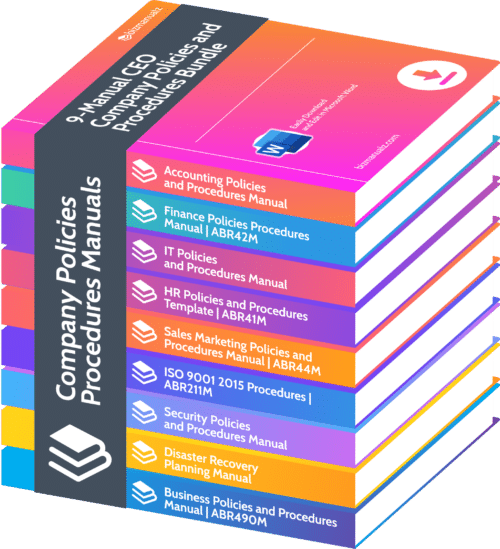 9-Manual CEO Company Policies and Procedures Bundle | Save 45%
$ 2,495.00
-
 ISO 22000 Food Safety Procedures Manual | ABR213M
Original price was: $ 395.00.$ 197.00Current price is: $ 197.00.
-
 ISO 22000 Seguridad de los Alimentos Procedimientos | ABR219M
Original price was: $ 395.00.$ 195.00Current price is: $ 195.00.
-
 ISO 9001 Quality Manual | ABR211MPM
$ 49.99
Business Manuals
-
 Finance Policies Procedures Manual | ABR42M
$ 495.00
-
 Accounting Policies and Procedures Manual | ABR31M
$ 495.00
-
 IT Policies and Procedures Template Manual | ABR34M Information Security Policy Manual
$ 495.00
-
 HR Policies and Procedures | ABR41M Employees Policy Examples
$ 495.00
-
 Sales Marketing Policies and Procedures Manual | ABR44M
$ 495.00
-
 ISO 9001 2015 Procedures | ABR211M
$ 495.00
-
 Security Policies and Procedures Manual | ABR32M
$ 395.00
-
 Disaster Recovery Planning Manual | ABR33M
$ 395.00
-
 AS9100 Quality Procedures Manual Rev D | ABR217M Aerospace QMS
$ 395.00
-
ISO 22000 Food Safety Procedures Manual | ABR213M
Original price was: $ 395.00.$ 197.00Current price is: $ 197.00.
-
9-Manual CEO Company Policies and Procedures Bundle | Save 45%
$ 2,495.00
-
ISO 22000 Food Safety Procedures Manual | ABR213M
Original price was: $ 395.00.$ 197.00Current price is: $ 197.00.
-
ISO 22000 Seguridad de los Alimentos Procedimientos | ABR219M
Original price was: $ 395.00.$ 195.00Current price is: $ 195.00.
-
ISO 9001 Quality Manual | ABR211MPM
$ 49.99
-
 How to Prevent Embezzlement Manual | ABR242DWD
Original price was: $ 49.99.$ 19.99Current price is: $ 19.99.